

Topkapı Palace, Courtyard by Courtyard
Topkapı Palace stands at the tip of the historic peninsula, on Sarayburnu, the point that looks over the Sea of Marmara, the Bosphorus and the Golden Horn at once.
Radar Türkiye24 Eyl 202642

Culture and arts guides, event recommendations and stories from the city.
Topkapı Palace stands at the tip of the historic peninsula, on Sarayburnu, the point that looks over the Sea of Marmara, the Bosphorus and the Golden Horn at once.

In Istanbul, eating on the street is not about rushing a meal; it is a way of keeping pace with the city's calendar.

Reading the sign on an Istanbul ferry pier means speaking several languages without noticing it.

Most visitors to Topkapı Palace head straight for the Treasury, the Harem and the terrace over the Bosphorus. The row of chimneys rising along the right side of the Second Courtyard usually ends up as a single snapshot.

Everyone knows the Süleymaniye, the mosque whose four minarets complete Istanbul's skyline on the hill above the Golden Horn. The life of the man who built it, however, is usually squeezed into a couple of sentences.

Istanbul is not only where two continents meet; it is also one of the most important crossing points in the world for birds.

The light comes on and a still, coloured picture falls on the white screen. A reed pipe sounds, the picture is lifted away, and a thin voiced man with an upturned moustache arrives.

The siege that ran from 6 April to 29 May 1453 is one of the most retold events in Istanbul's history.

Evliya Çelebi was a 17th-century traveller who spent more than forty years crossing the Ottoman lands and neighbouring countries and gathered what he saw into the ten volumes of his Seyahatname, the Book of Travels.

Stand in front of an Ottoman calligraphic panel and you are looking at the work of three different masters. The calligrapher wrote the text in the middle with a reed pen.

Stand for a while in front of Rumeli Hisarı, or at the edge of the pile-supported road in Arnavutköy, and look at the Bosphorus. The surface does not lie still like a lake.

Every day hundreds of thousands of people in Istanbul cross from one continent to another, and most of them barely notice.

Anyone who crosses the Bosphorus by ferry ends up asking the same question.

In Istanbul, fish is a calendar before it is a menu item.

On one side of Sultanahmet Square stands the Sultan Ahmed Mosque, on the other Ayasofya (Hagia Sophia), with its pinkish walls, four minarets and broad dome.

The Istanbul Archaeology Museums are a complex of three buildings on the slope between Gülhane Park and Topkapı Palace.
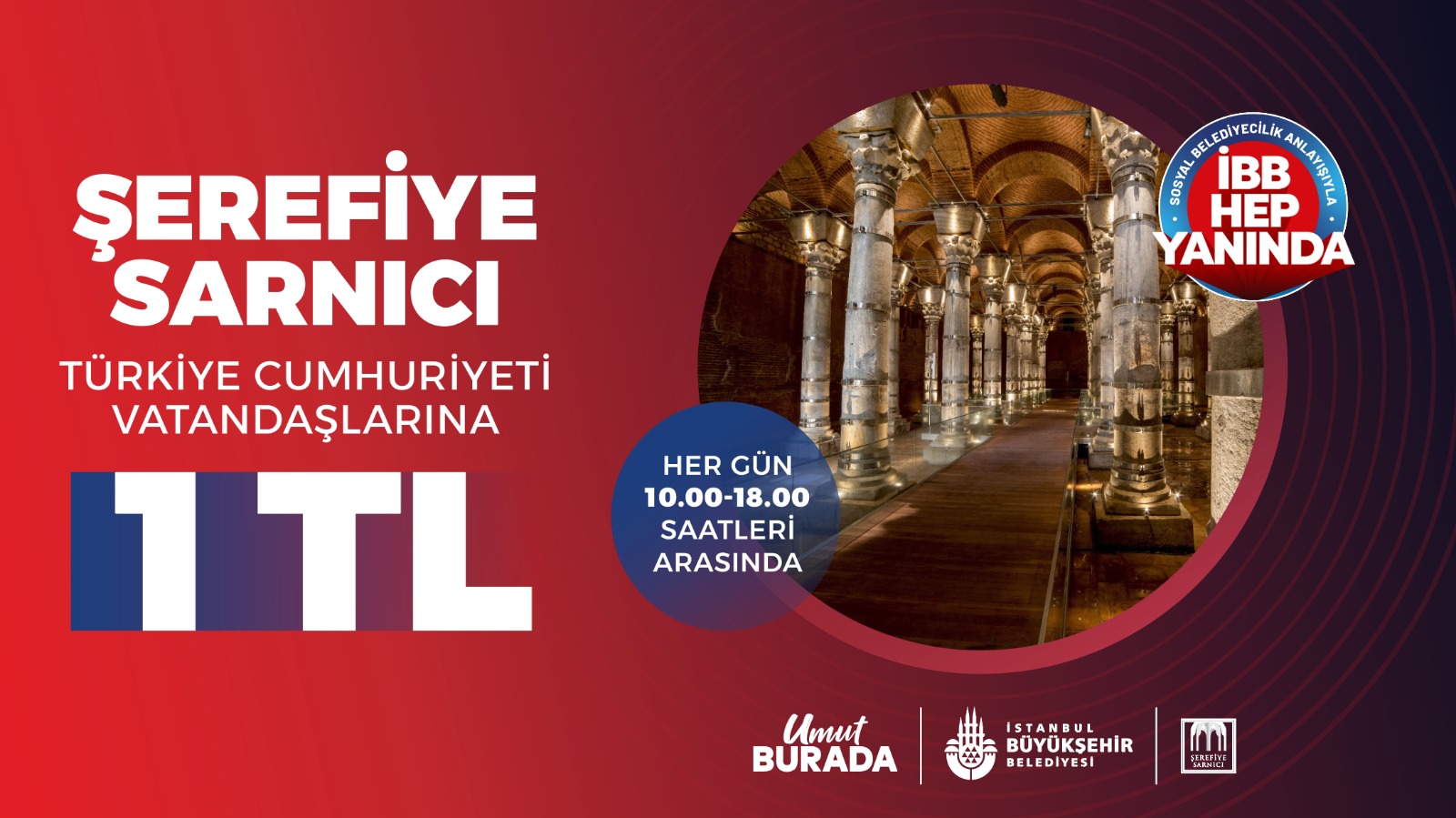
The Şerefiye Cistern, operated by Kültür A.Ş., welcomes Turkish citizens with valid Turkish national ID cards from September 17, 2026, with an entrance fee of 1 TL, between the hours of 10:00 AM and 6:00 PM.

Crossing between the two sides of Istanbul is not a tourist gesture but how the city works day to day. Splitting a day between the two sides is both more varied and, thanks to the ferry rides, more restful.

In Istanbul, sitting down with something to drink is not a break but can be the day itself.

Nightlife in Istanbul is not squeezed into a single district; each area has its own character and its own hours. Knowing what is where makes planning an evening easier.

In Istanbul the direction of the sunset is fixed; the sun drops west, behind the historic peninsula. That decides which points are good: places looking from east to west win. The list below is ordered on that logic.

Seeing Istanbul does not have to be expensive; the city's best views, its oldest buildings and several serious exhibition spaces are already free. The list below is drawn from places with no entrance fee.

What makes museum visits in Istanbul expensive or reasonable is usually planning. Two people visiting the same places on the same day can end up paying very differently; a few rules change that.

In Istanbul the ferry is not a sightseeing vehicle but part of everyday transport; yet the same fare also gives you the best view in the city.