

From Tokat Museum to Maşat Höyük, the Kazova and Zile Route
Sign in to like and rate
The west of Tokat opens towards Central Anatolia through broad plains carved by the tributaries of the Yeşilırmak. Kazova around the district of Pazar, and the Zile Plain to its west, were for thousands of years a threshold crossed by roads, armies and merchants. This route follows that threshold in a single day and, with four stops, invites you to read the province's deepest past in both its underground and its buried layers.
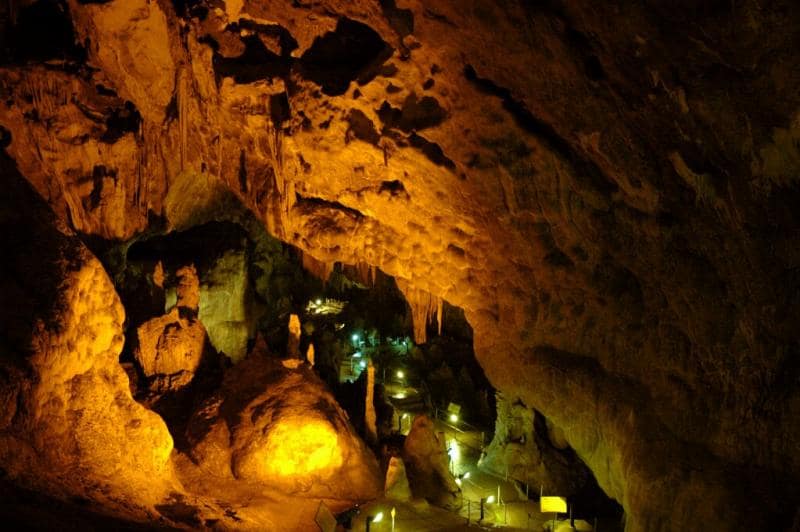
The day begins in the city centre, at Tokat Museum in the Arastalı Bedesten. There is no need to rush here, but the aim is not to see the whole museum either; you concentrate on the Maşat Höyük finds in the archaeology hall, on the Roman period works from Zile and on the coins of Zela. In this way you will already know the foundation walls, tablets and seals of the mound you will see at the end of the day. You then head west to the district of Pazar. Ballıca Cave, about seven kilometres south of the district centre, is an underground world whose age has been determined as 3.4 million years, made up of five levels and eight large halls, and it is one of Türkiye's natural sites on the UNESCO World Heritage Tentative List.
In the afternoon you reach Zile. Zile Castle, built on the mound in the middle of the district centre, is an acropolis overlooking the plain; it is associated with the words "Veni Vidi Vici" that Julius Caesar sent to Rome after defeating the Pontic king Pharnaces II on this plain in 47 BC. The Zile City Museum occupies the old barracks building at the castle entrance, and a small Roman theatre cut into the rock lies on the cliffs to the northeast of the castle. The day ends south of Zile, at Maşat Höyük in the village of Yalınyazı. At this mound, where excavations between 1973 and 1984 uncovered Hittite cuneiform tablets and the palace of a frontier lord, foundation remains can be seen in the open today.
The logic of the order is both geographical and narrative. The stops trace an arc westwards from Tokat, and from Maşat Höyük you return to the city by the same road. Putting the museum at the beginning rather than the end gives meaning to the bare stone foundations you see on the mound, because the works found there are now displayed in Tokat. Ballıca offers a geological pause in the middle of the day and lies on the way to Zile.
You travel between all the stops by car; walking is limited to the inside of the cave, the slope up to the castle and the top of the mound. Wear non-slip shoes in the cave because of its stepped walkways and damp floors. Zile Castle and Maşat Höyük are shadeless sites, so take water and a hat. Because the visiting days, hours and entry conditions of the museum and the cave can change, check the current information on the Kültür Portalı and the relevant official pages before you set out.
Sources
- Kültür Portalı, Arastalı Bedesten Tokat Müzesi, https://www.kulturportali.gov.tr/turkiye/tokat/gezilecekyer/arastali-bedesten-tokat-muzes
- Kültür Portalı, Ballıca Mağarası, https://www.kulturportali.gov.tr/turkiye/tokat/gezilecekyer/ballica-magarasi
- Tokat İl Kültür ve Turizm Müdürlüğü, Tabiat Parkları, https://tokat.ktb.gov.tr/TR-231640/tabiat-parklari.html
- Kültür Portalı, Zile Kalesi, https://www.kulturportali.gov.tr/turkiye/tokat/gezilecekyer/zle-kales
- Kültür Portalı, Zile Kent Müzesi, https://www.kulturportali.gov.tr/turkiye/tokat/gezilecekyer/zile-kent-muzesi-
- Tokat İl Kültür ve Turizm Müdürlüğü, Kaleler, https://tokat.ktb.gov.tr/TR-231605/kaleler.html
- Zile Kaymakamlığı, Tarihçe, https://www.zile.gov.tr/tarihce
- Kültür Portalı, Maşathöyük, https://www.kulturportali.gov.tr/turkiye/tokat/gezilecekyer/zle-masathoyuk
- Tokat İl Kültür ve Turizm Müdürlüğü, Antik Kentler, https://tokat.ktb.gov.tr/TR-231603/antik-kentler.html
- GoTürkiye, Tokat, https://goturkiye.com/tokat/see
Route Stops
Tokat Museum (Arastalı Bazaar)
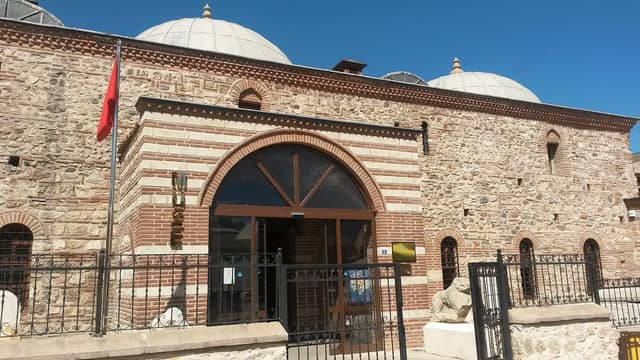
The route's first stop is placed here deliberately, because it gives you the key to the places you will see during the rest of the day. Tokat Museum is a single-storey museum, and its archaeological works are displayed in the main section of the building known as the bedesten, covered by nine domes. This morning, instead of walking through every hall, give your time only to this archaeology section. Leaving the ethnography section in the arastas for another day spent walking in the city makes it easier to reach Zile in time.
The display opens in chronological order, and the first cases are devoted to the finds from Turhal Ulutepe. Excavated by the Tokat Museum Directorate in 1976, this mound shows that the history of the province reaches back to the Late Chalcolithic period, that is, to the fourth millennium BC. Starting here makes you feel from the outset how far back the layers you will see during the day extend. You then move on to the largest part of the display, the Maşathöyük finds. These works were recovered from the palace where the administrative and military affairs of the Hittites were conducted, during the excavations led by Prof. Dr. Tahsin Özgüç between 1973 and 1984.
Do not hurry in front of these cases, because at the last stop of the day you will see only stone foundations on site. The cuneiform tablets from the excavations are regarded as the most important finds of the mound and allowed it to be recognised as a Hittite centre. Look at the terracotta vessels, the shaped vessels known as rhytons and the seals one by one. Official sources note that a terracotta brazier used to heat the palace is a find not encountered anywhere else in Türkiye. If you keep in mind that these objects belonged to the daily running of the palace, it becomes easier to picture the rooms when you look at the wall lines on the mound.
After the Maşat cases, turn to the case where Roman period figures are displayed. Here the bronze statue group found in the village of Ağılcık in Zile is presented as one of the museum's unique works. In the coin display in the same hall, look for the Hellenistic and Roman coins struck in the name of Zela, that is, Zile. Zela is the ancient identity of the castle you will climb in the afternoon, and the coins show that the town was important enough to strike its own money. The coins of Komana Pontika, Cabeira and Sebastopolis are in the same case and let you compare the province's ancient cities at a glance.
On your way out, take a short look at the Roman period stone works on the right side of the front garden. The museum is in the city centre, within walking distance of Cumhuriyet Square; you can leave your car in the centre and come on foot. Check the museum's opening days and entry conditions on the official pages before you go. From here you set off west towards Pazar and continue to Ballıca Cave.
Source: Kültür Portalı, Arastalı Bedesten Tokat Müzesi.
Ballıca Cave Nature Park
The cave lies about seven kilometres south of the Pazar district centre, southeast of Ballıca village, on the slope of a high, partly rocky hill. If you are coming by public transport, do as the official source suggests and take the bus from Tokat to Pazar, then continue from the district by taxi. As you approach the entrance, notice the slope of the hill and the partly smoothed bedrock block, because the cave is entered through exactly this block. This smoothed rock is the place that most clearly marks the boundary between the underground world and the outside.
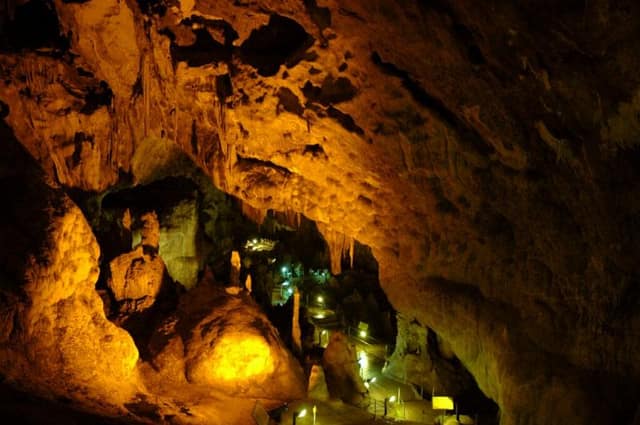
The cave was opened to visitors in 1996 after lighting, walkways and viewing terraces were installed, and the visit follows these paths. Once inside, remember that you are within a structure of five levels and eight large halls connected to one another partly horizontally and partly vertically. Knowing that each hall is named after its shapes helps you set the rhythm of the visit as you follow the paths. Official sources list these sections as the Pool Hall, the Great Dripstones Hall, the Fossil Hall, the Bats Hall, the Mushroom Hall, the Columns Hall and the New Hall.
The real goal of the visit is the onion stalactite formations, regarded as the cave's most important feature. Stop on the viewing terraces and look for the swollen, onion-like shapes at the tips of the stalactites. In the Columns Hall, look at the places where stalactites hanging from the ceiling meet stalagmites rising from the floor, and consider how long it took them to form. If you remember that the age of the cave has been determined as 3.4 million years, you realise that every dripstone you see is really a clock that runs very slowly. The visitable part reaches a height of ninety-four metres, so do not forget to look up towards the ceiling as well.
The name of the Bats Hall is no coincidence; dwarf bats live in colonies in the cave. Keep your voice low in this section and use no light other than the installed lighting. If you want to take photographs, ask about the rules at the entrance and follow them if photography is not allowed. Because of the damp floor and the stairs, do not leave the walkways, and wear non-slip shoes. There are also sections still forming that are not yet open to visitors, so do not try to enter closed areas.
In 2007 the cave and its surroundings were declared a nature park of four thousand eight hundred and thirty decares, and it is on the UNESCO World Heritage Tentative List. After you come out, take a short break looking from the slope towards the Pazar plain. Check the current visiting days, hours and entry conditions on the official pages. From here you return to Pazar and continue west towards Zile.
Source: Kültür Portalı, Ballıca Mağarası; Tokat İl Kültür ve Turizm Müdürlüğü.
Zile Castle and Zile City Museum
When you reach Zile you will not need to look for the castle, because it stands on the mound in the very middle of the district centre and can be seen from everywhere in town. Climb to the castle by following Sezar Yolu, as the official source describes, and consider leaving your car below. As you walk up, look at how high the mound rises above the plain; this position overlooking the Zile Plain is the easiest way to understand the castle's character as an acropolis. It is not known for certain when and by whom the castle was founded, but the Roman and Byzantine architectural pieces and inscriptions in the area suggest that it was a Roman castle built in the first century AD.
First enter the old barracks building at the entrance, that is, the Zile City Museum. Opened in 2022 and also known as the Veni Vidi Vici City Museum, it tells the story of life in Zile from the Roman to the Ottoman period in an area of about nine hundred square metres. Be sure to see the full-size statue of Caesar, the models of historic Zile houses and the miniature recreation of the Zile Fair. Ox carts, horse carriages, gun carriages and traditional costumes, chests, cradles and samovars bring the everyday life of the plain to life. In the courtyard, also look at the gravestones, a sarcophagus and an old fire engine.
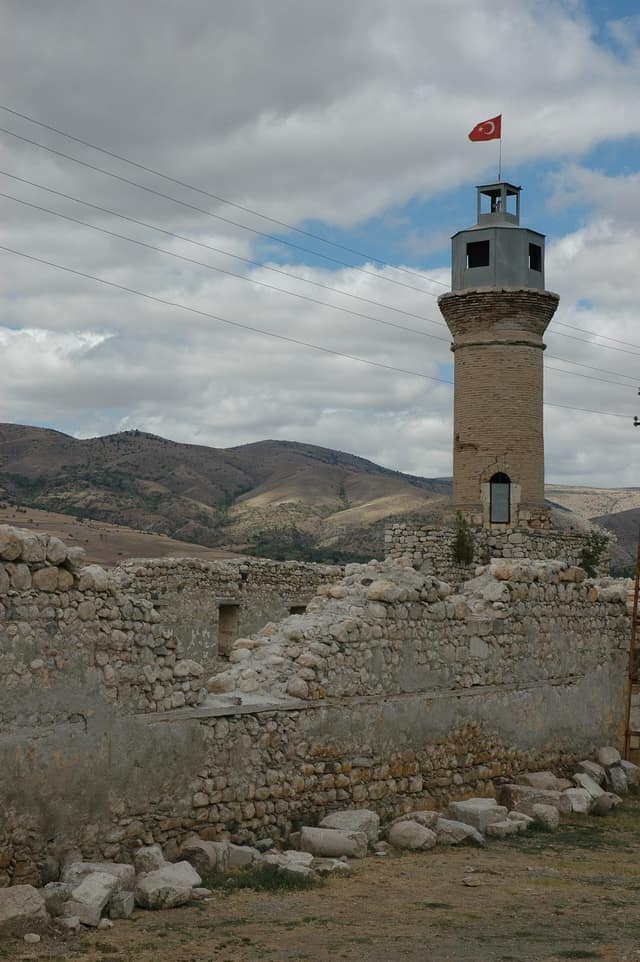
After the museum, walk along the walls and pay attention to the differences in the masonry. Dressed stone was used at the corners, rubble stone in the walls and towers, and brick in the tower above the entrance gate. Count the round bastions that strengthen the walls as you go; the differences in height and the variety of tower shapes show that the structure was repaired and added to in different periods and used for a long time. An inscription dated 1336 records that the castle was repaired in the time of the Eretnid ruler Alaeddin Bey. Look closely once more at the cylindrical tower above the monumental gate, knowing that it was converted into a clock tower during Ziya Paşa's visit in 1876.
Inside the castle, see the water cistern that the municipality has opened and returned to its original state. Then cross to the cliffs northeast of the castle and find the small Roman theatre cut into the rock. As you look out over the plain from the theatre steps, remember that in 47 BC Julius Caesar defeated Pharnaces II on this plain and announced his victory to Rome with the words "Veni Vidi Vici". According to the history page of the Zile District Governorate, Caesar had these words inscribed on a cylindrical marble stone, which was known to be at the castle until recently and was then stolen.
The best light for photographs comes later in the afternoon, when the horizontal lines of the plain stand out. Because there is little shade, rest at the foot of the walls or in the museum courtyard. Check the visiting conditions of the City Museum on the official pages before you go. From here you head south to Maşat Höyük in the village of Yalınyazı.
Source: Kültür Portalı, Zile Kalesi ve Zile Kent Müzesi; Zile Kaymakamlığı.
Maşat Mound
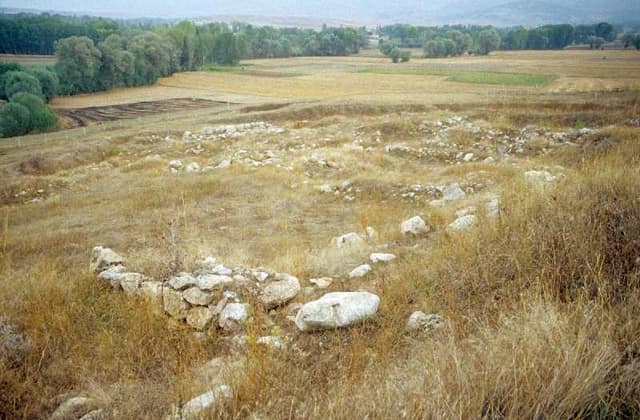
The last stop of the day is the Maşat Höyük archaeological site in the village of Yalınyazı in the district of Zile. Because official sources give no public transport information for it, come by car and follow the road from the village to the mound carefully. When you reach the mound, do not expect a museum or reconstructed buildings; here you see excavated stone foundation walls in the open. The tablets, seals and vessels you saw at Tokat Museum in the morning were recovered from exactly this hill, and the value of the stop lies in that connection.
As you climb the hill, look at the plain around you and consider that the mound rose through the accumulation of settlements built one on top of another over centuries. Official sources distinguish three periods at the mound: the Early Bronze Age in the third millennium BC, the Hittite Age in the second millennium and the Phrygian or Iron Age in the first millennium. So the earth beneath your feet holds the layers of roughly two thousand years of life. The excavations carried out between 1973 and 1984 opened these layers and brought to light works that shed light on the history of Tokat. According to official sources, the most important of these works are materials used in the palace. The history page of the Zile District Governorate also bases what is known about the district's Hittite past on the documents found at this mound.
As you walk among the foundation walls, remember that the palace of a frontier lord subject to the Hittite Empire centred on Hattusa at Boğazköy stood here. Try to read the outlines of the rooms by following the wall lines; the official introduction says that Hittite palace architecture can easily be understood from the remains here. The excavations also uncovered the town's wide stone-paved streets, so watch for straight, long traces of stone. When you consider that the terracotta brazier that heated the palace and the cuneiform tablets were used inside this building, the objects you saw in the museum case in the morning fall into place.
The site is open and unguarded; do not climb onto the walls, and do not collect stones or pottery fragments. The remains are under archaeological protection, and even the smallest piece loses its meaning once it is taken out of its scientific context. Because there is no shade, keep the visit short and have your water and hat with you. After rain the dirt tracks can become muddy, so take care not to leave the road with your car.
Before you leave the hill, look around once more and think back over the day: the story that began in the museum in the morning is completed here, in the earth the works came from. On the way back you return to Tokat by the same road through Zile. If you have time left at the end of the day, stopping by the Maşat cases in the museum once more is the best way to consolidate what you have seen. You can obtain current information on visiting conditions from the Tokat Provincial Directorate of Culture and Tourism.
Source: Kültür Portalı, Maşathöyük; Tokat İl Kültür ve Turizm Müdürlüğü, Antik Kentler.
Comments
Loading...
