

Historical & Cultural SitesCastles & Palaces
Zile Kalesi ve Zile Kent Müzesi
8
No ratings yet
Sign in to like and rate
Zile Castle and Zile City Museum
About Venue
Zile Castle stands on a mound that rises right in the middle of the district centre and dominates the Zile Plain. According to the Tokat Provincial Directorate of Culture and Tourism, the castle can be seen from every part of town because it stands in the centre. The acropolis-like structure reads as a hilltop citadel above the flat town on the plain and defines the skyline of Zile. The district is 68 kilometres from the centre of Tokat.
It is not known for certain in which period and by whom the castle was founded. According to the text on the Culture Portal, the differences in height of the walls, the shapes of the towers and the variety of the masonry show that the structure was used for a long time, being repaired and extended in different periods. Architectural pieces and inscriptions of the Roman and Byzantine periods found in the area suggest that the castle was a Roman fortress built in the 1st century AD. Some sources, however, write that a chateau was built here earlier and that it had underground passages and military buildings. An inscription dated 1336 shows that the castle was repaired and extended with some additions in the period of the Eretna Beylik.
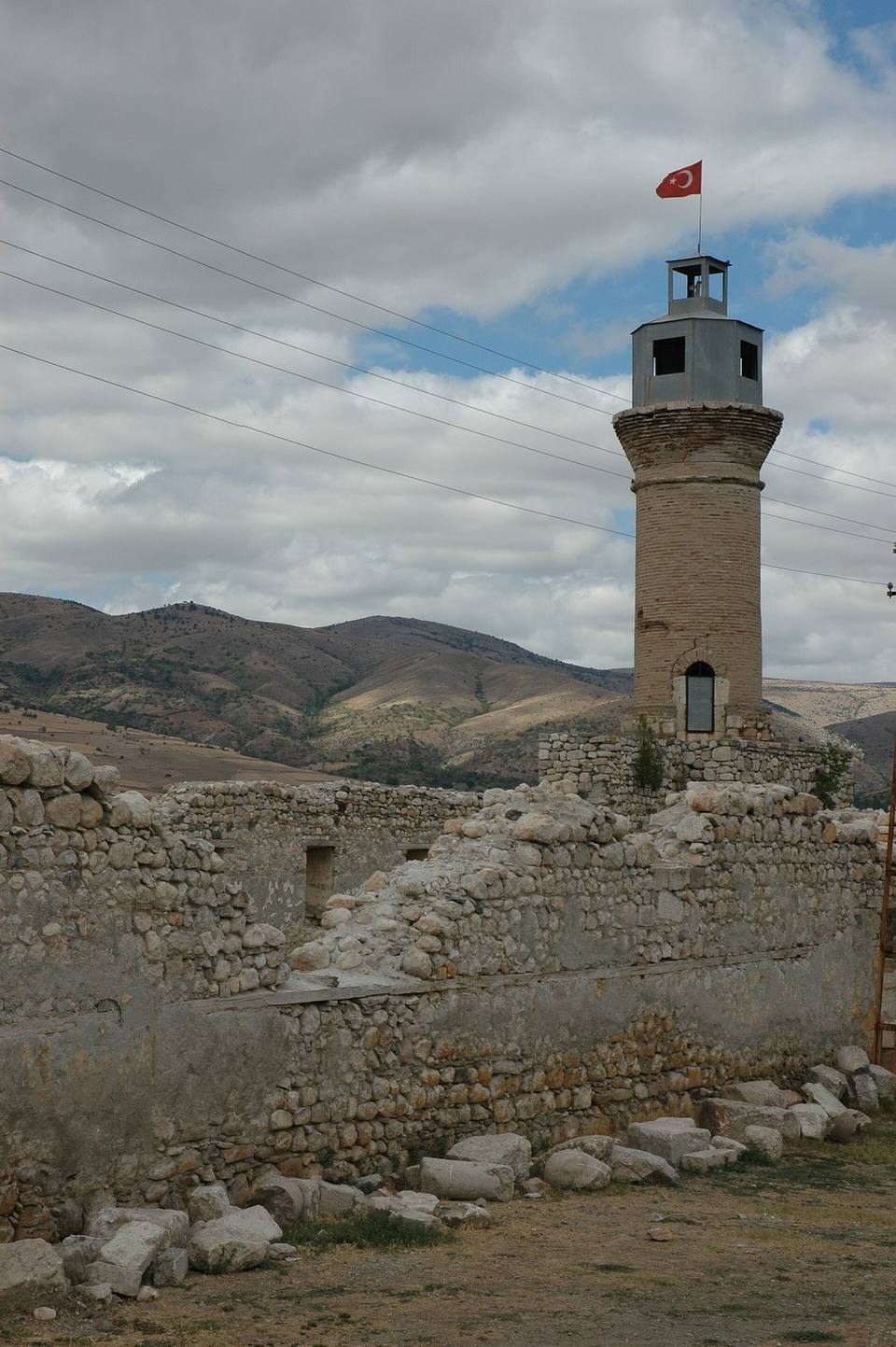
In the construction, smoothly cut stone was used at the corners, rubble stone in the walls and towers, and brick in the tower above the entrance gate. The walls are reinforced with round bastions. The cylindrical tower rising above the monumental gate was turned into a clock tower in 1876, during Ziya Pasha's visit to Zile. Today this clock tower, which has lost its function, is the most easily recognised part of the castle.
The water cistern of the castle has been opened by the municipality and restored to its original state. Carved into the rocks northeast of the castle there is also a small Roman-period theatre. The district history of the Zile District Governorship also records a rock tomb on the northeast side of the castle. Together with the ruins inside the walls, these three elements let you read the many-layered past of the castle in a single visit.
The name of Zile appears in ancient sources as Zela, and the castle is linked to one of the best-known sentences in Roman history. According to the Tokat Provincial Directorate of Culture and Tourism, Julius Caesar, who won the battle fought before Zile in 47 BC, announced his victory to Rome with the words "Veni, vidi, vici", that is, "I came, I saw, I conquered". The governorship's history relates that this battle was fought against the Pontic king Pharnaces II and was won in a short time. The same source states that Caesar had these words written on a cylindrical marble stone, that the stone was known to be in the castle until recently, and that its whereabouts are unknown today.
What links the castle and the history of the district is the position of Zile on the road. According to the governorship's history, Zile came under the influence of Hittite, Phrygian, Persian, Pontic, Roman and Byzantine cultures, passed in the 11th century to the Danishmendids, then to the Seljuks, the Ilkhanids and the Eretnids, and joined Ottoman lands in 1397. The district suffered two great fires, in 1855 and in 1922.
The old barracks building at the castle entrance, built in the 19th century, is used today as the Zile City Museum. According to the Culture Portal, the museum opened to visitors in 2022 and is also known as the Veni Vidi Vici City Museum, a reference to Caesar's words. The museum of about 900 square metres tells the geographical, cultural, social and economic story of Zile from the Roman period to the Ottoman period. The objects are displayed in showcases, on walls and stands, and in reconstructions built with costumes, photographs, models, mannequins and wax figures.
In the museum, objects of the region's handicrafts, cuisine and home life, models of historic Zile houses and a miniature reconstruction of the historic Zile Fair stand out. A life-size statue of Caesar is also among the highlights of the museum. Ox carts, horse carts and gun carriages, cannons, traditional costumes, chests, musical instruments, cradles, samovars, and copper and stone objects carry the traces of daily life. In the courtyard, gravestones, a sarcophagus and an old fire engine are on display.
It makes sense to begin your visit at the museum in front of the castle gate, because the exhibits set up the story of the castle and the town in advance. Then walk inside the walls to the clock tower, the bastions and the cistern. Seeing the theatre carved into the rock on the northeast slope and the view over the plain close to sunset gives the best light for photography. Zile is reached by buses leaving from Tokat bus station, and in the district you climb to the castle by following Sezar Yolu. For the opening hours and entry conditions of the museum, check the current information from Zile Municipality and official sources.
Comments
Loading...
Location - Zile Kalesi ve Zile Kent Müzesi
Venue Info
AddressSakiler, Sakarya Cd. No:76, Zile / Tokat
VenueZile, Tokat
TypeHistorical & Cultural Sites