


From the Observatory to the Aircraft Factory, Science and Aviation in Ankara
Sign in to like and rate
Ankara's scientific history begins in the 1920s and runs hand in hand with aviation. The Turkish Aeroplane Society, founded on 16 February 1925, became the Turkish Aeronautical Association (THK) in 1935; on 3 May 1935 Türkkuşu was founded and glider, parachute and powered flight training began at Etimesgut. In 1937 a 41-metre parachute tower rose opposite the railway station, and the Etimesgut Aircraft Factory, founded in 1939, started work in 1941 and built aircraft from the THK-1 to the THK-15, with the first flight on 7 June 1942. The science side of the story is completed by the university observatory founded at Ahlatlıbel in 1959, the MTA Natural History Museum of 1968 and the Feza Gürsey Science Centre opened in Altınpark in 1993.
The route is split over two days. The first is the aviation day, running west to east. Start at the Air Force Museum in Etimesgut, opened in 1998 with Sabiha Gökçen in attendance; its open-air section holds fighters from the F-100 Super Sabre to the MiG-21. Around midday return to Ulus for the Turkish Aeronautical Association Museum and the historic Parachute Tower. In the afternoon take the M4 metro to Kalaba: the Meteorology Museum in the 1908 Agricultural School building holds more than a hundred instruments and the Atatürk Room from the War of Independence; it requires a weekday appointment. End the day in the experiment halls of the Feza Gürsey Science Centre in Altınpark.
The second day begins with earth sciences and ends with the sky. From the MTA station on the M2 metro enter the Şehit Cuma Dağ Natural History Museum in Çukurambar, home of a 185-million-year-old ammonite, the Maraş elephant and the skeleton of a whale stranded at Yumurtalık. In the late afternoon take the bus from Güvenpark up to Ahlatlıbel, where Ankara University's observatory, opened in 1963, runs telescope observations on its Public Days; no appointment is needed, dates are on its website and the fee is paid at the door.
A few warnings. The Air Force Museum is a military institution's museum; school groups come by appointment, individuals enter at the gate, and it is closed on Mondays. Campus gates such as MTA may ask for ID, so carry one. On cloudy nights the observatory gives a presentation instead, so check the forecast and dress warmly; observing is outdoors at 1,256 metres. Hours and fees change; check each stop's official website first.
The route follows geography rather than chronology, and each day moves in one direction. Those less keen on aviation can trim day one to the Meteorology Museum and Feza Gürsey; families with children can make a weekend of Feza Gürsey, MTA and a Public Day at the observatory alone.
Sources
- Kültür Portalı, Hava Kuvvetleri Müzesi, https://www.kulturportali.gov.tr/turkiye/ankara/gezilecekyer/hava-kuvvetler-muzes
- Wikipedia, Ankara Hava Kuvvetleri Müzesi maddesi, https://tr.wikipedia.org/wiki/Ankara_Hava_Kuvvetleri_Müzesi
- Wikipedia, Ankara Aviation Museum, https://en.wikipedia.org/wiki/Ankara_Aviation_Museum
- THK, Ankara Paraşüt Kulesi ve THK Müzesi, https://www.thk.org.tr/ankara_parasut_kulesivemuze
- Kültür Portalı, Türk Hava Kurumu Müzesi, https://www.kulturportali.gov.tr/turkiye/ankara/gezilecekyer/turk-hava-kurumu-muzes
- Wikipedia, Türk Hava Kurumu Müzesi maddesi, https://tr.wikipedia.org/wiki/Türk_Hava_Kurumu_Müzesi
- Wikipedia, Ankara Paraşüt Kulesi maddesi, https://tr.wikipedia.org/wiki/Ankara_Paraşüt_Kulesi
- Wikipedia, Türk Hava Kurumu maddesi, https://tr.wikipedia.org/wiki/Türk_Hava_Kurumu
- Wikipedia, Türkkuşu maddesi, https://tr.wikipedia.org/wiki/Türkkuşu
- Wikipedia, Etimesgut Uçak Fabrikası maddesi, https://tr.wikipedia.org/wiki/Etimesgut_Uçak_Fabrikası
- Meteoroloji Genel Müdürlüğü, Meteoroloji Müzesi, https://www.mgm.gov.tr/kurumsal/muze.aspx
- Kültür Portalı, Meteoroloji Müzesi, https://www.kulturportali.gov.tr/turkiye/ankara/gezilecekyer/meteoroloj-muzes
- Wikipedia, Meteoroloji Müzesi maddesi, https://tr.wikipedia.org/wiki/Meteoroloji_Müzesi
- Wikipedia, Feza Gürsey Bilim Merkezi maddesi, https://tr.wikipedia.org/wiki/Feza_Gürsey_Bilim_Merkezi
- MTA, Şehit Cuma Dağ Tabiat Tarihi Müzesi, https://www.mta.gov.tr/v3.0/muze/anasayfa
- Wikipedia, MTA Şehit Cuma Dağ Tabiat Tarihi Müzesi maddesi, https://tr.wikipedia.org/wiki/MTA_Şehit_Cuma_Dağ_Tabiat_Tarihi_Müzesi
- Ankara Üniversitesi Kreiken Rasathanesi, https://rasathane.ankara.edu.tr/
- Kreiken Rasathanesi, randevu ve Halk Günleri koşulları, https://rasathane.ankara.edu.tr/okul-randevu/
- Kreiken Rasathanesi, Public Days, https://rasathane.ankara.edu.tr/en/public-events/
- Wikipedia, Ankara Üniversitesi Gözlemevi maddesi, https://tr.wikipedia.org/wiki/Ankara_Üniversitesi_Gözlemevi
- Wikipedia, Ankara University Observatory, https://en.wikipedia.org/wiki/Ankara_University_Observatory
- Wikipedia, Ahlatlıbel maddesi, https://tr.wikipedia.org/wiki/Ahlatlıbel
Route Stops
Air Force Museum.
~1 h 30 min hereThe route begins in Etimesgut, home of Türkkuşu's flight centre, at the Air Force Museum at Şaşmaz on the 12th kilometre of the Istanbul road. The museum opened on 18 September 1998 with Sabiha Gökçen, Turkey's first female combat pilot, in attendance; of its 64,321 square metres, 2,000 are indoors. The open-air display is the main draw: the Lim-6, a Polish-built variant of the MiG-17 donated by the Bulgarian Air Force; the Shenyang J-6, the Chinese version of the MiG-19, from Pakistan; a MiG-21MF presented by Hungary; a North American F-100C Super Sabre; a helicopter; and a Blériot replica named Fethi Bey, built in 2001 for a documentary. In the Mavi Dünya building added in 1999 you can sit in the cockpits of a Lockheed T-33 and a Northrop F-5.
Indoors are set-ups recounting the flight attempts of Lagari Hasan Çelebi and Hezarfen Ahmed Çelebi, models of Turkish Air Force aircraft and air defence systems from 1911 to the present, uniforms from Ottoman times onwards, a memorial section for fallen airmen and personal belongings of well-known pilots. A cinema hall shows aviation presentations and there is a playground for children.
Practical notes: closed on Mondays; free for under-18s and over-65s; school groups come by appointment with an official letter, individual visitors simply enter. Check current hours and the fee on the museum's official page. Since the aircraft stand outdoors, an early sunny hour is best for photographs; take time to study the wing profiles of the MiGs and the air intake of the Super Sabre up close. From here return to Ulus by EGO bus along the Istanbul road.
Source: Kültür Portalı; Wikipedia (Ankara Hava Kuvvetleri Müzesi); Wikipedia (Ankara Aviation Museum).
Turkish Aeronautical Association Museum: A Journey Through Turkey's Aviation History
Opposite Ankara Station, the complex at Hipodrom Street No:2 is the institutional memory of Turkish civil aviation. The Turkish Aeroplane Society was founded on 16 February 1925, took the name Turkish Aeronautical Association in 1935 and began flight training the same year through Türkkuşu. The oldest part of the site is the Parachute Tower: built between 1935 and 1937, the four-storey, 41-metre reinforced concrete tower was opened by Prime Minister Celal Bayar on 28 October 1937; the jump platforms on its three balconies, the double-weighted winch at the top and the lift are still in place. Listed in 1989, it is one of only two surviving parachute towers in Turkey, together with the one in İzmir, and is open for supervised jumps from 1 May to 31 October.
The museum building opened on 19 May 2002, with 287 square metres indoors and 5,294 outdoors. Inside are 747 documents and photographs, recreations of Lagari Hasan Çelebi's rocket flight and Hezarfen Ahmed Çelebi's winged flight from the Galata Tower, images of TOMTAŞ in Kayseri, Turkey's first aircraft factory, THK uniforms, medals and stamps, and a corner devoted to Sabiha Gökçen. In the garden stand aircraft such as the THK-15 built at the THK's Etimesgut factory, plus helicopter cockpits; the Etimesgut Aircraft Factory produced types from the THK-1 to the THK-15 between 1941 and 1950, and the THK-5 ambulance aircraft was sold to Denmark in 1950.
Closed on Mondays; hours change with the season, so check thk.org.tr. Cross to the opposite pavement to frame the tower together with the TCDD headquarters on the station square in a single shot.
Source: THK (Ankara Paraşüt Kulesi ve THK Müzesi); Kültür Portalı; Wikipedia (Türk Hava Kurumu Müzesi; Ankara Paraşüt Kulesi; Etimesgut Uçak Fabrikası).
Turkish Aeronautical Association (THK) Museum is one of the most important museums that sheds light on the history of aviation in Turkey. This museum, opened in 2002, showcases the development of the Turkish aviation industry and the significant roles undertaken by the Turkish Aeronautical Association throughout history.
In the museum's collection, old and modern airplanes, gliders, engines, parachutes, aviation equipment, and pilot uniforms are exhibited. One of the most striking sections of the museum is the training aircraft and fighter planes used in the early years of the Republic. Here, aircraft from World War II and the aircraft used by THK over time can also be seen.
Additionally, the museum provides detailed information about the Turkish Aeronautical Association's firefighting activities, aviation training, and work in the field of sports aviation. Parachuting, model airplane construction, and documents, photos, and objects related to civil aviation are part of the museum's archive.
The museum features interactive areas and educational workshops, hosting events that particularly attract the interest of young people and aviation enthusiasts. THK Museum offers a rich content for those who want to closely observe the development of aviation history and technology, making it a must-visit place for anyone interested in Turkish aviation history.
Meteorology Museum: A Journey Through the History of Weather Forecasting
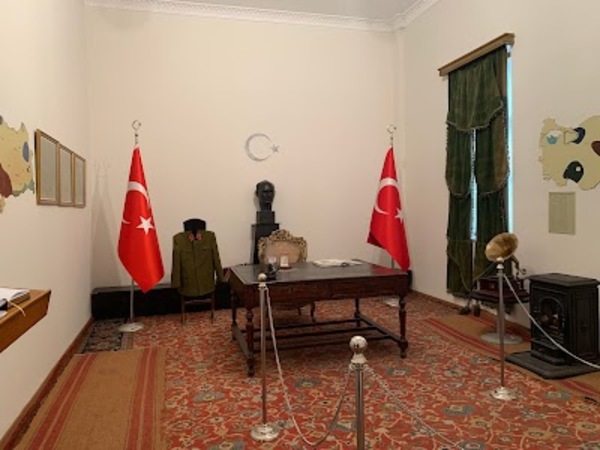
Take the M4 metro from Ulus up to Kalaba; from the Meteoroloji station it is a few minutes' walk to the campus of the General Directorate of Meteorology. The museum building is older than aviation itself: it was built in 1908 as an agricultural school and today forms part of a faculty campus of Ankara University. During the War of Independence the first work of the Anadolu Agency was carried out here, and for six months from 27 December 1919 Mustafa Kemal and his companions used the building as headquarters. The room where he stayed and prepared operational plans is preserved as the Atatürk Room, with his desk, stove, curtains and carpets; it may be the museum's most unexpected section.
Opened by the General Directorate in March 2003, the museum is one of the few meteorology museums in the world and the only one of its kind in Turkey. It has two halls: the first holds written and visual documents tracing the development of meteorology in Turkey in chronological order, the second displays more than a hundred instruments, among them anemometers, thermometers, psychrometer sets and heliographs that record hours of sunshine. At the opening the inventory listed 140 items. Most of the instruments show how the work now done by automatic stations was once done by hand.
Visits take place on weekdays during office hours, by appointment and with a guide; it is closed at weekends and admission is free. Call the number on the museum page at mgm.gov.tr for an appointment and confirm the day before. The campus is a public institution, so bring your ID. From here, Altınpark is a short EGO bus ride away.
Source: Meteoroloji Genel Müdürlüğü; Kültür Portalı; Wikipedia (Meteoroloji Müzesi).
The Meteorology Museum located in Keçiören district of Ankara is an important science museum that reflects Turkey's history and development in the field of meteorology. This building, constructed in 1908 as the Agricultural School, was also used as the headquarters of Mustafa Kemal Atatürk and his comrades during the War of Independence. Today, it serves as a museum that sheds light on both meteorology science and Turkey's recent history.
The museum consists of two main sections. The first section is the Atatürk Room, where the room where Atatürk stayed is preserved with original items reflecting the spirit of the era and presented to visitors. The second section displays old and modern devices related to meteorology, tools used for weather forecasting, various documents, and maps. Here, there are artifacts that illustrate the development of meteorology, such as old barometers, thermometers, wind measurement devices, and the first weather forecast reports.
Additionally, the museum presents the institutionalization process of meteorology in Turkey, the development of weather forecasting from the past to the present, and documents recording natural disasters to visitors. Educational activities and guided tours are also organized for students and visitors interested in weather events.
The Meteorology Museum preserves an important heritage in terms of both science and history, offering visitors a unique experience of Turkey's meteorological past. It is a place worth exploring for anyone who wants to see how weather forecasting is done and the evolution of scientific processes over time.

Feza Gürsey Science Center.
The last stop of the first day, the Feza Gürsey Science Centre inside Altınpark, is the right place to grasp by hand the physics behind the machines you have seen through the aviation day. Opened by the Ankara Metropolitan Municipality on 23 April 1993, it is one of Turkey's first science centres. The exhibits were brought in under a turnkey agreement with the Ontario Science Centre in Toronto and the selection was reviewed by METU faculty; inside are 48 experiment and exhibition units and a planetarium. Originally planned as the Ankara Science Centre, it was named after the physicist Feza Gürsey, who died on 13 April 1992. In January 1995 the Board of Education listed it among institutions recommended for primary and secondary students; it is run today by ANFA.
Many of the exhibits speak directly to aviation: experiments on lift, pressure, sound and light show why the wing profiles you saw in the morning are shaped the way they are. For families with children it is the most relaxed stop of the day; for adults, the planetarium show is a good preparation for the observatory visit the next evening. Check the Altınpark website for show times and entry conditions; on weekday mornings during school terms groups can be dense, and afternoons are calmer.
Altınpark itself is a place to pause: walk around the lake and gather the day's notes. From the Meteorology Museum come by the EGO lines between Kalaba and Altınpark; plenty of buses pass the park entrance back to Ulus and Kızılay.
Source: Wikipedia (Feza Gürsey Bilim Merkezi).
MTA Martyr Cuma Dağ Natural History Museum.
~1 h 30 min hereThe second day begins in Çukurambar at the natural history museum on the campus of the General Directorate of Mineral Research and Exploration; get off at the MTA station on the M2 metro and use the Centennial Gate at Dumlupınar Boulevard No:11, since museum visits go through that gate and vehicle access to the campus is restricted. The museum opened on 7 February 1968 inside the headquarters building to display fossil, rock and mineral specimens collected during MTA fieldwork; it moved to its new building in 2003 and reopened to visitors in 2011. The collection holds more than five thousand specimens from Turkey and around the world.
The things to see, in order: a 185-million-year-old ammonite; the roughly 3,500-year-old Maraş elephant; the skeleton of the whale stranded at Yumurtalık; human footprints 13,000 years old; Baluchitherium fossils; and the last Anatolian leopard specimen, found at Beypazarı in 1974. Moving between floors you find the aquarium section opened in 2019, dioramas of endangered species and the Science Tunnel opened on the third floor in 2017 on geological heritage and biodiversity. The mineralogy-petrography section, gemstones, meteorites, cave models of Turkey's underground resources and a planetarium are also part of the museum. Outside are the İhsan Ketin Geology Park and the Şehit Mehmet Alan Energy Park, whose renewable energy installations of 2017 help power the museum.
Group visits are booked through MTA's online system and limited to thirty groups a day; individual visitors enter at the gate. Closed on 30 August; check the museum page at mta.gov.tr for open days and hours, and bring your ID. From here, return to Kızılay by metro and take the bus from Güvenpark for the evening at the observatory.
Source: MTA (müze sayfası); Wikipedia (MTA Şehit Cuma Dağ Tabiat Tarihi Müzesi).

Ankara University Kreiken Observatory.
The route ends in the sky. On the Ahlatlıbel ridge southwest of Ankara, at 1,256 metres, the observatory was founded in 1959 by the Dutch astrophysicist Egbert Adriaan Kreiken and formally opened on 26 August 1963 during an international astronomy meeting. It belongs today to Ankara University's Department of Astronomy and Space Sciences. There are nine optical telescopes, four of them under fixed domes: the largest is the 800-millimetre T80 Ritchey-Chrétien named after Prof. Dr. Berahitdin Albayrak; the 406-millimetre T40 Kreiken, named after the founder, is used for photometry of binary and variable stars; the 356-millimetre T35, the 300-millimetre T30 Maksutov and the 150-millimetre Coudé telescope for tracking sunspots complete the list. The radio telescope no longer operates. The site also has an Observatory Museum of historical instruments, dormitories for observers and a weather station that publishes its data every five minutes.
The public programme takes two forms. For Public Days and special events there is no appointment; come at the date and time announced on the website and pay the fee at the door, with the observing run by the department's astronomers and students. Groups of twenty to fifty book by telephone for weekday slots, 10.00-12.00 or 13.30-15.30; appointments are not given by e-mail. If the sky is cloudy a presentation replaces the observation, so check the forecast before setting out and dress warmly for the night.
Getting there: on İncek Boulevard, about two kilometres from the Or-An Bridge; EGO lines 190-194 from Güvenpark pass by. See rasathane.ankara.edu.tr for the event calendar and fees, and find out the time of the last bus back in advance.
Source: Ankara Üniversitesi Kreiken Rasathanesi; Wikipedia (Ankara Üniversitesi Gözlemevi); Wikipedia (Ankara University Observatory).
