

From Edessa to the Neolithic, the Layers of Şanlıurfa
Sign in to like and rate
The history of Şanlıurfa reads like a series of stacked layers. In the centre of the city lie the mosaics and rock-cut tombs of Edessa, as the city was known in antiquity; northeast of the city, in the Germuş hills, the first monumental buildings of the Neolithic Age have been brought out of the ground. This route reads that long story in a single day and with four stops, moving from near to far and from recent to ancient.
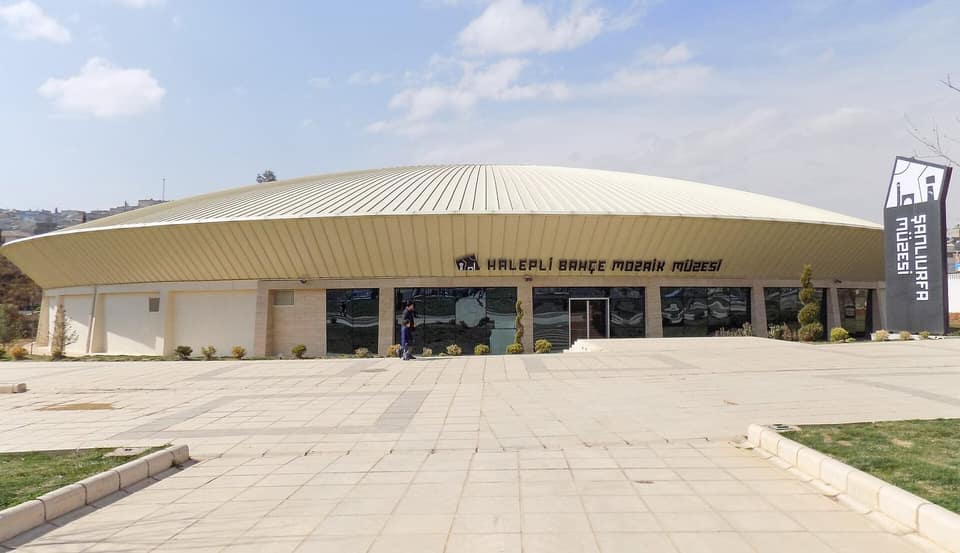
The day begins at Haleplibahçe in Eyyübiye. The archaeopark project, whose foundations were laid by the Ministry of Culture and Tourism in 2012, brings together two separate museums here, with an area for experimental archaeology between them. You enter the Haleplibahçe Mosaic Museum first; the mosaics are preserved where they were found, in situ, beneath a column-free structure 82 metres in diameter. The Şanlıurfa Archaeology Museum in the same garden, with its chronological halls running from the Palaeolithic to the Islamic period, is the backbone of the day. From there you walk to the Kızılkoyun Necropolis on the slope of Tılfındır Hill; its tomb chambers carved into the rock complete the world from which the mosaics seen in the morning came. In the afternoon you drive up to Göbeklitepe.
The order follows a logic. Starting with the Mosaic Museum lets you meet Edessa first through the floor of a villa; learning there that the Orpheus mosaic once decorated the floor of a rock-cut tomb, and then walking among those tombs a few hours later, ties the two stops together. The Archaeology Museum is visited before Göbeklitepe, because a large part of the statues and relief fragments from the excavations are kept in this museum, and an exact replica of Building D stands there too; seeing the pillars up close in front of a showcase first makes it easier to understand what you are looking at from the walkway at the excavation site.
The last stop of the route takes you to one of the earliest monumental architectures in human history. Excavations that began at Göbeklitepe in 1995 have, with their round and oval buildings and T-shaped pillars, made researchers rethink much of what was known about the Neolithic Age, and the site was inscribed on the UNESCO World Heritage List in 2018. According to the Ministry's page, Göbeklitepe was abandoned around 8000 BC and was not used for other purposes afterwards. The day thus stretches from a Roman villa to the stone workers of twelve thousand years ago.
You will stand for long periods in the museums, so wear comfortable shoes. Kızılkoyun is an open slope with little shade; in summer, leave it for a cooler hour rather than squeezing it into the late morning. At Göbeklitepe a shuttle takes you from the welcome building up to the excavation area, and the site is visited along a marked walking route; do not leave the route. Opening hours, fees and visiting conditions of the museums and the archaeological site can change; check them before you go on the Ministry's museum website.
Sources
- T.C. Kültür ve Turizm Bakanlığı, Haleplibahçe Mozaik Müzesi, https://muze.gov.tr/muze-detay?DistId=SUM&SectionId=SUM01
- T.C. Kültür ve Turizm Bakanlığı, Şanlıurfa Arkeoloji Müzesi, https://muze.gov.tr/muze-detay?DistId=SUM&SectionId=SUM02
- T.C. Kültür ve Turizm Bakanlığı, Göbeklitepe Örenyeri, https://muze.gov.tr/muze-detay?SectionId=SGT01&DistId=SGT
- Kültür Portalı, Haleplibahçe Mozaik Müzesi, https://www.kulturportali.gov.tr/turkiye/sanliurfa/gezilecekyer/haleplibahce-mozaik-muzesi-
- Kültür Portalı, Kızılkoyun Nekropolü, https://www.kulturportali.gov.tr/turkiye/sanliurfa/gezilecekyer/kizilkoyun-nekropolu
- Kültür Portalı, Göbeklitepe, https://kulturportali.gov.tr/turkiye/sanliurfa/gezilecekyer/gobeklitepe-
- Şanlıurfa Büyükşehir Belediyesi, Şanlıurfa Müzesi Neolitik Çağ Kataloğu, https://sanliurfa.bel.tr/uploads/2025/20250901142857-32824-28081.pdf
- Şanlıurfa Büyükşehir Belediyesi, Kızılkoyun Nekropolü broşürü, https://sanliurfa.bel.tr/uploads/2025/20250901142727-52562-55946.pdf
Route Stops
Haleplibahçe Mosaic Museum
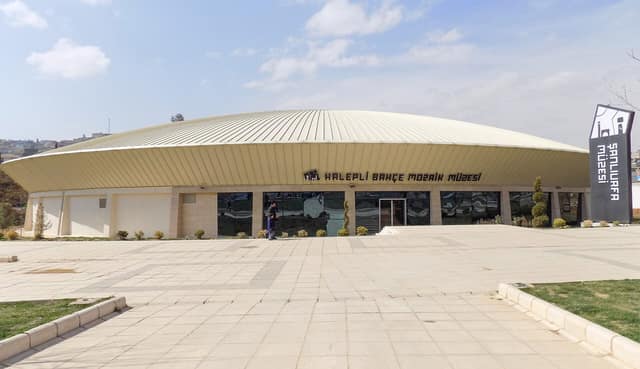
Start the day with the mosaic museum of the museum park, because the halls are quieter in the first hours of the morning and you can look down at the floors comfortably from the walkways. As you enter the building, notice its size first: according to the Ministry's museum website, the building covers an area of 6,000 square metres and, with its diameter of 82 metres, is the largest column-free structure in Türkiye. This wide roof was built to protect the mosaics without lifting them from their place. The works shown here were not brought from elsewhere; they were left where they came to light during the Haleplibahçe excavation. At the centre of the visit stands the large house named the Villa of the Amazons, because of the Amazon depictions found in the excavation. Try to read the plan of the villa from above, from the walkway. The entrance is on the east, and the plan draws an inverted T along an east-west axis. You can follow from the traces on the ground how one passed from the front courtyard into a corridor with apses on both sides, and from there into the main hall. On the floor of the rectangular room opposite the entrance lies the Hunting Amazons mosaic, and this is the first great moment of the route. Next to the warrior queens in the scene their names are written in Greek; searching letter by letter for the names Hippolyte, Melanippe, Thermodosa and Penthesileia is a good way to begin. The Culture Portal presents this mosaic as the first and only known example in which Amazon queens are depicted with their names in a hunting scene. In the rooms arranged symmetrically to the north and south of the main hall there are floors with lions and tigers; the light and air of these rooms came from the inner courtyards. When you see the bust of Ktisis, look at the grey measuring tool in her hands; the museum explains this tool as a Roman foot measure of about 29.7 centimetres. The rectangular main panel in the hall of the villa tells scenes from the life of Achilles in sequence. You can build the story yourself by following the infant Achilles, his mother Thetis dipping him into the river and the wise Chiron training him, from left to right. In the border around the panel there are figures playing the saz, a farmhouse, horses, sheep and bulls; stop at the corners of the walkway so as not to miss the details. Then move to the Orpheus mosaic. To the left of the poet playing the lyre a lion, a bear, a leopard and a boar listen to him, and to his right a wild goat and a horse. This mosaic carries a Syriac inscription and is important because it gives the name of the artist, Bar Saged. According to the museum, the Orpheus mosaic, dated to AD 194, is the oldest of the Edessa mosaics. Smuggled abroad, the work was brought from the Dallas Museum of Art first to the Istanbul Archaeology Museum and then to Şanlıurfa. Keep in mind that this mosaic once decorated the floor of a rock-cut tomb, because the third stop of the day is exactly the slope where those tombs lie. Do not use a flash when taking photographs and do not lean on the railings of the walkways. The official page states that the museum offers an audio guide service; listening to the names of the Amazon queens and the order of the scenes as you walk makes the halls easier to understand. On leaving, walk towards the Archaeology Museum in the same garden; the archaeopark area stretches between the two museums.
Source: T.C. Kültür ve Turizm Bakanlığı, Haleplibahçe Mozaik Müzesi; Kültür Portalı, Haleplibahçe Mozaik Müzesi.
Şanlıurfa Archaeology Museum
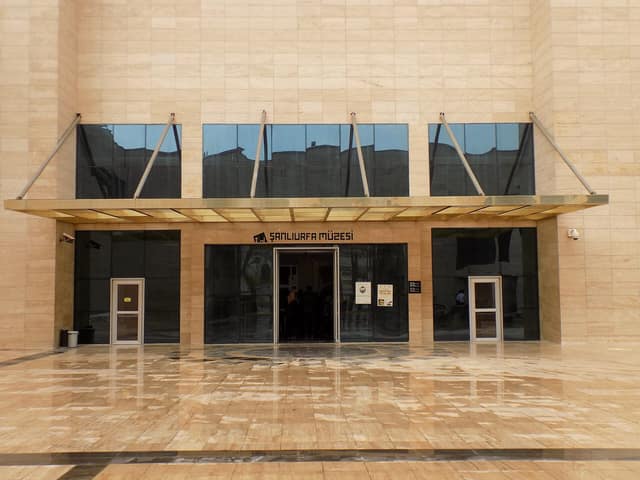
The Archaeology Museum is the longest stop of the day, so do not hurry at the entrance and first get to grips with the layout of the museum. According to the museum catalogue published by the Metropolitan Municipality, the first museum of Şanlıurfa opened to visitors in 1969, while today's large complex opened its doors on 24 May 2015. The Ministry's museum website states that the museum contains 14 main exhibition halls and 33 animation areas. Because the halls are arranged chronologically, the direction of the visit is clear: it begins with Palaeolithic surface finds, passes through the Neolithic, Chalcolithic, Bronze and Iron Ages, and after the Hellenistic, Roman and East Roman periods reaches the Islamic period. Divide your time according to this sequence and save the longest pause for the Neolithic halls. The first work you should stop at in the Neolithic section is the Yenimahalle statue, which the catalogue presents as one of the world's oldest statues made at human size. See the statue first from a distance as a whole, then step closer and look at how its face is worked. Then move on to the finds from the Göbeklitepe excavations. The Ministry's page highlights the leopard relief, the wild boars, the stork, the fox, the gazelle, the scorpion and the snake here; trying to find these animals one by one trains your eye for looking at the pillars in the excavation area in the afternoon. In another section of the museum stands an exact replica of Building D. Walk slowly around this replica and fix in your mind how the two large pillars in the centre and the smaller stones set into the surrounding wall are arranged. Because the buildings at the excavation site can only be viewed from the walkway, this close view is very valuable. The catalogue writes that in 2024 the museum gained a new exhibition hall called Taş Tepeler, or Stone Mounds. This hall shows the finds from sites excavated within the Şanlıurfa Neolithic Research Project; here you see that Göbeklitepe was not alone in the region. Also look at the finds from Nevali Çori, because that settlement now lies under dam water and you can only see it in the museum. In the halls of the later periods, the works found in and around Harran form the backbone of the museum. The finds from rescue excavations carried out at settlements that disappeared beneath the lakes of the Atatürk, Birecik and Kargamış dams are also in these halls. Give some time as well to everyday objects such as flint tools, seals, painted pottery and burial jars. When you get tired, you can sit and rest in the rest area of the entrance section mentioned in the catalogue. When you leave the museum, take a look at the archaeopark area; here there are building examples reflecting the architecture of their periods and an excavation training area suited to experimental archaeology. Ask the staff at the entrance about photography conditions and do not touch the showcases. From here walk on to Kızılkoyun; the way to the slope runs along Haleplibahçe Street, east of the museum park.
Source: T.C. Kültür ve Turizm Bakanlığı, Şanlıurfa Arkeoloji Müzesi; Şanlıurfa Büyükşehir Belediyesi, Şanlıurfa Müzesi Neolitik Çağ Kataloğu.
Kızılkoyun Necropolis
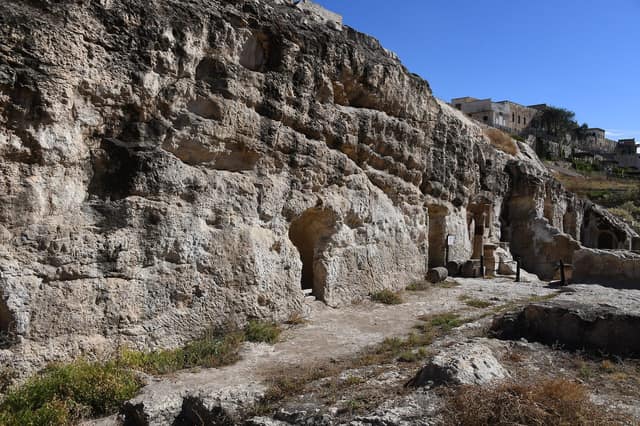
Kızılkoyun is a burial ground visited in the open air, on the slope of Tılfındır Hill east of the museum park. The Culture Portal gives the site's address as Haleplibahçe Street in Yeni Mahallesi; leaving the museums and following this street, you reach it with a short walk. When you arrive at the slope, first stand to one side and scan the whole hillside with your eyes. You will see doors cut into the rock lined up in rows. According to the Metropolitan Municipality's promotional brochure, excavation and cleaning work carried out jointly by the museum directorate and the municipality brought 103 rock-cut tomb chambers to light here. The brochure also writes that 389 makeshift houses on the slope were removed during the expropriation, so the orderly site you see today was won only recently. The tombs date to between the 2nd and 4th centuries AD and belong to the Roman period of Edessa. The brochure recalls that the word necropolis comes from the Ancient Greek words for the dead and the city, and that such areas were set up outside the centre of ancient cities. The Culture Portal also presents this burial ground as one of the most important remains of ancient Greek and Roman culture in the city centre of Edessa. Lighting has been installed and walking paths have been laid out on the site; continue your visit along these paths. All of the tomb chambers were carved into the bedrock and are generally square in plan. The brochure states that the sizes of the chambers vary from three by three metres to twelve by ten metres; see this difference for yourself by comparing the small and large chambers. Inside the chambers there are arched niches carved into the rock and klines, that is, death beds. The Culture Portal writes that, judging by the size, type and decoration of the tombs, it is understood that most of them were built for nobles. Follow the information panels in front of the numbered tombs. Tomb M14 has statue niches on both sides of its main entrance, columns of the Ionic order in its inner chamber and a sea centaur in high relief on the pediment of a niche. On the pediment of tomb M13 a partly damaged peacock figure can be made out. The relief of tomb M16 shows a man lying on a kline, with a child and two female figures beside him; on the wall of the same niche a soldier with a helmet and sword is carved. In the mosaic rock tomb mentioned in the brochure there is a copy of the floor mosaic, while the original is in the museum; look at it bearing in mind that it comes from the same tradition as the Orpheus mosaic you saw in the morning at the Mosaic Museum. In some chambers, displays with statues and replica works have been set up to explain the burial customs of the period. Do not touch the rock surfaces or the reliefs, and look into the chambers only through the entrances left open. There is little shade on the slope; carry a hat and water in summer. From here get into the car and head northeast of the city towards Göbeklitepe.
Source: Kültür Portalı, Kızılkoyun Nekropolü; Şanlıurfa Büyükşehir Belediyesi, Kızılkoyun Nekropolü broşürü.
Göbeklitepe
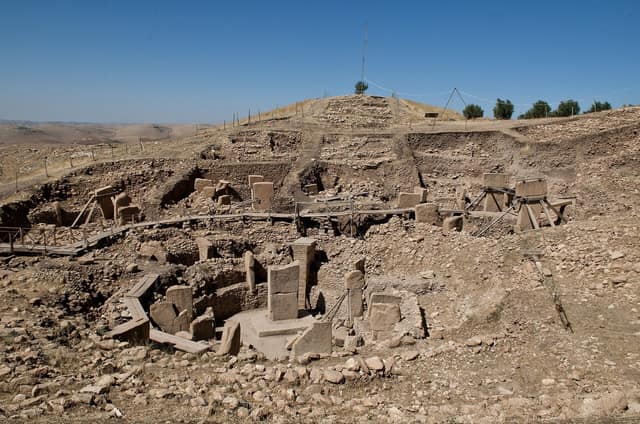
When you reach Göbeklitepe you get out of the car in front of the welcome building; the Ministry's museum website gives the site's address as Dağeteği Mahallesi. Do not walk straight to the excavation area; first enter the information area in the welcome section. The Ministry specifically notes that the animation and information at the entrance should not be missed. From here shuttles take you up to the excavation area in about a minute. When you reach the hilltop, first turn south and look at the view. According to the municipality's museum catalogue, the site stands on one of the highest hills of the Germuş range, at about 770 metres above sea level, and looks over the Harran Plain to the south. The excavation area is divided into sections A, B, C and D, it is roofed, and a walking route runs around it. Walk the route in one direction at a calm pace and stop for a few minutes in front of each building. You will see that the buildings are round or oval in plan, with T-shaped pillars set into their walls at regular intervals. In the centre of each building two pillars, taller than the others, face each other. The catalogue writes that the largest pillar reaches a height of 6 metres. Remembering the replica of Building D you saw in the museum in the morning, try to read the real building from above. Some of the pillars have arms, hands, belts and necklaces worked in low relief; for this reason researchers interpret the stones as a stylised representation of the human form. Look one by one for the reliefs of birds, snakes, scorpions and predatory animals; the reliefs are easier to make out at the hours when the light falls from the side. According to the Ministry's page, six such buildings have been uncovered by excavation, while geomagnetic surveys have shown that their number reaches 20. In other words, the area you see is only a small part of what lies beneath the hill. The catalogue states that the settlement covers a period of at least 1500 years and that its first building phases go back to the end of the 10th millennium BC. Studies in recent years have revealed that there were also houses on the site, which has led to earlier interpretations being reconsidered. The limestone quarries from which the building material was taken have also been identified on the plateau next to the site. The excavations were begun in 1995 by the German archaeologist Klaus Schmidt, who continued them for twenty years until his death in 2014; the site was inscribed on the UNESCO World Heritage List in 2018. The Ministry's page states that an audio guide service is available on the site; listening as you walk makes it easier to grasp the meaning of each section. Shade is limited on the hill, so bring a hat and water, and do not leave the marked route. Ending the day here, looking out over the Harran Plain, completes the route's journey from a Roman villa to the Neolithic Age.
Source: T.C. Kültür ve Turizm Bakanlığı, Göbeklitepe Örenyeri; Şanlıurfa Büyükşehir Belediyesi, Şanlıurfa Müzesi Neolitik Çağ Kataloğu; Kültür Portalı, Göbeklitepe.
Comments
Loading...
