

Historical & Cultural SitesArchaeological Sites
Kızılkoyun Nekropolü
40
No ratings yet
Sign in to like and rate
Kızılkoyun Necropolis
Yeni Mahallesi, Haleplibahçe Caddesi No:115, Eyyübiye, Şanlıurfa
Eyyübiye, Şanlıurfa
Get DirectionsApple MapsAbout Venue
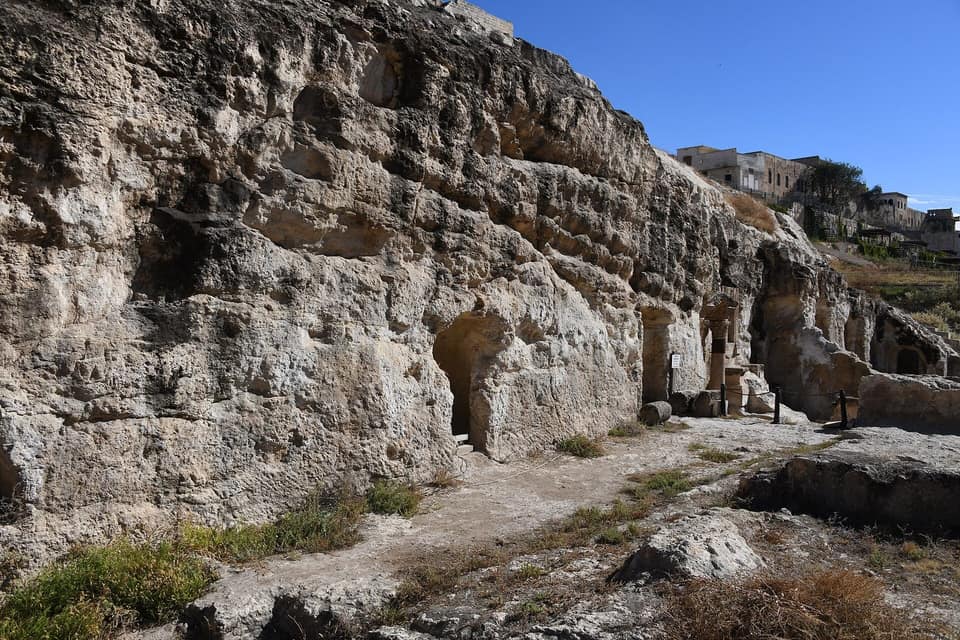
The Kızılkoyun Necropolis is an ancient burial ground carved into the slopes of Tılfındır Hill, which rises east of Haleplibahçe in the centre of Şanlıurfa. The word necropolis comes from the Ancient Greek nekros, meaning dead, and polis, meaning city, and refers to the cemeteries that lay outside ancient cities. The Ministry of Culture and Tourism describes the site as one of the most important traces of ancient Greek and Roman culture left in the centre of Edessa. Edessa is the ancient name of present-day Şanlıurfa.
The use of this name for the city goes back to the Hellenistic period. Academic studies state that Edessa was founded in today's provincial centre in 303 or 302 BC by the Seleucid king Seleucus I Nicator. After the Seleucids withdrew from the region, the local population founded the Kingdom of Osroene, also known as the Kingdom of Edessa, in 132 BC. The tombs at Kızılkoyun belong to a later period and are dated between the 2nd and 4th centuries AD.
The present appearance of the site is the result of a long process of excavation and expropriation. According to the promotional brochure of Şanlıurfa Metropolitan Municipality, 389 informal houses on the slope were expropriated and demolished. Excavation and clearance work carried out jointly by the Şanlıurfa Museum Directorate and the Metropolitan Municipality brought 103 rock-cut tomb chambers to light. Houses still line the upper part of the slope today, a reminder that the tombs lay beneath homes until recently.
All of the tomb chambers were cut into the bedrock. The rooms are generally square in plan and range in size from about three by three metres to twelve by ten metres. Inside them are stone benches called klinai on which the dead were laid, and their number varies according to the burial needs of the time. These beds, cut into the wall as an arched recess, are known as arcosolia. Researchers note that this architectural element appeared in the 3rd century BC and was widely used between the 1st century BC and the 3rd century AD. The size, type, reliefs and finds of the tombs show that most of them were built for the city's noble families.
Some of the reliefs can still be made out today. The municipality's description explains that a peacock figure was carved in the middle of the pediment facade on the east side of tomb M13. The figure is partly damaged, but its body, wings, neck and head can still be seen. The single-chambered tomb M14 has statue niches on both sides of its main entrance, and its burial chamber is decorated with columns. The columns on either side of the eastern arcosolium are in the Ionic order. On the pediment of the same arcosolium, a mythological creature known as a sea centaur, with a human upper body, the front half of a horse and the tail of a fish, is carved in high relief.
Tomb M16 carries a family scene. In the eastern arcosolium a male figure reclines on a kline, and beside him a child and two female figures appear in relief. One of the women wears a tall headdress, and the relief is thought to show the family of the tomb's owner. On the north wall of the same arcosolium is the relief of a soldier with a helmet and a sword. The site's mosaic rock tomb has a rectangular chamber with five arcosolia, and the original of its floor mosaic is now kept in the museum.
More than thirty mosaics have been found in Şanlıurfa so far, and most of them date from the period of the Kingdom of Edessa. These mosaics were chosen to decorate tombs rather than public buildings and mostly depict the deceased and their family. Some mosaics were smuggled abroad, while others are displayed at the Haleplibahçe Mosaic Museum. The inscriptions on the mosaics give personal names and dates, so the tombs offer first-hand information about the city's ancient families.
Today the site is arranged as an open-air archaeological area. The Ministry's page states that the necropolis, where lighting was installed and walkways were laid, is open to visitors. In some tomb chambers, statues, replica works and reconstructions of skeletons laid on klinai are displayed to evoke the burial customs of the period. Start from the lowest walkway and move along the slope, following the door openings in the rock face one by one. The entrances and front walls of some chambers are damaged, so watch out for pits in the floor and stone edges when you look inside.
Because the limestone slope takes the full sun around midday, coming early in the morning or in the late afternoon makes the walk more comfortable in summer. Low-angled light also brings out the detail of the reliefs and column capitals. Check the current opening hours and entry conditions with the Şanlıurfa Museum Directorate. The necropolis lies on Haleplibahçe Street, within walking distance of the park that holds the Haleplibahçe Mosaic Museum and the Şanlıurfa Archaeology Museum. This proximity makes it possible to see the mosaics in the museums and then the kind of tombs from which some of them came, all on the same day.
Comments
Loading...
Location - Kızılkoyun Nekropolü
Venue Info
AddressYeni Mahallesi, Haleplibahçe Caddesi No:115, Eyyübiye, Şanlıurfa
VenueEyyübiye, Şanlıurfa
TypeHistorical & Cultural Sites