

Historical & Cultural SitesMuseums
Haleplibahçe Mozaik Müzesi
32
No ratings yet
Sign in to like and rate
Haleplibahçe Mosaic Museum
About Venue
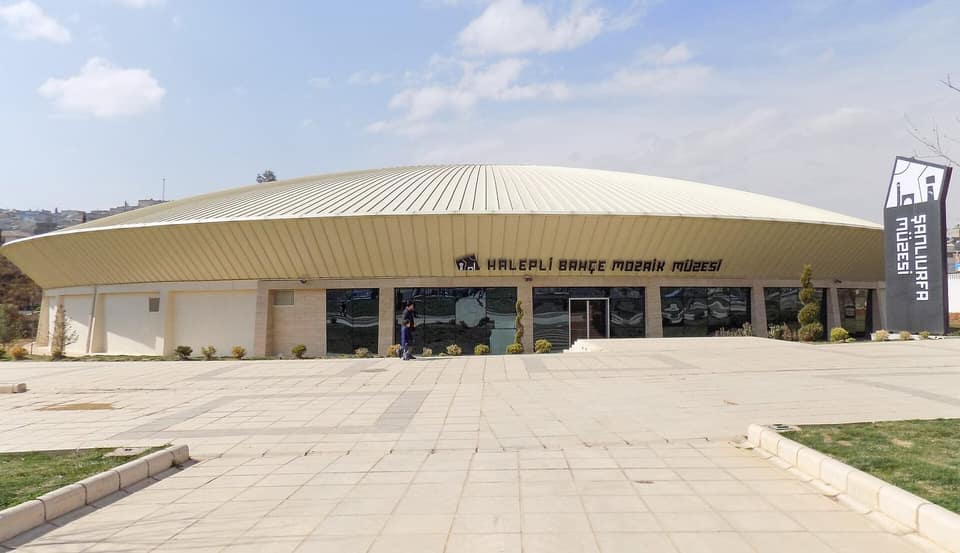
The Haleplibahçe Mosaic Museum is a museum built over the Haleplibahçe excavation site in Eyyübiye, where the mosaics are displayed in the place they were found. The ministry describes this way of display as "in situ", that is, conservation on the spot. The museum stands in the same garden as the Şanlıurfa Archaeology Museum, but in a separate building. The ancient name of the city is Edessa, and the mosaics here are among the most striking witnesses to domestic life in Roman Edessa.
The building itself is worth noticing. According to the ministry's page, the museum covers 6,000 square metres, and with a diameter of 82 metres it is one of the largest column-free structures in Türkiye. From outside the building looks like a low, broad dome, and it brings the whole excavation area under a single roof. In this way the floors are seen within the plan of the rooms in which they were laid centuries ago.
At the heart of the museum is a Roman villa, named the "Villa of the Amazons" because of the Amazon depictions uncovered during the excavation. The villa consists of a large rectangular hall set between two symmetrically placed inner courtyards, with rooms arranged around it. Its entrance is on the east, and its plan forms an inverted T along an east to west axis. From the front courtyard you pass into a corridor with apses at both ends, and from there into the main hall. To the south and north of the main hall, rooms that take their light and air from the inner courtyards are lined up symmetrically.
On the floor of the rectangular room opposite the entrance lies the museum's most famous work, the "Hunting Amazons" mosaic. The Culture Portal presents it as the first and only known mosaic in which warrior Amazon queens are shown in a hunting scene together with their names. Beside the figures, the names Hippolyte, Melanippe, Thermodosa and Penthesileia are written in Greek. Stand in front of the mosaic and look first for the names, then for the hunted animals and the shifts of colour in the figures' clothing.
The rectangular main panel that decorates the villa's hall tells scenes from the life of Achilles, the hero of Greek mythology. The panel begins with the baby Achilles in the arms of his nurse. Then come his mother Thetis dipping him into the River Styx while holding him by the heel, the young Achilles saying farewell to his mother, and the Moirai spinning the thread of his life. The scenes continue with Achilles being trained by the wise Chiron and with Thetis watching sadly as Achilles leaves for the Trojan War. The border around the panel shows figures playing the saz, a farmhouse, running and grazing horses, sheep and bulls.
In another room of the villa is a bust of Ktisis wearing a crown decorated with stones that look like pearls and gold. The ministry describes the figure as a mythological figure portrayed as the founder and protector of the villa. Ktisis holds a grey measuring tool against her chest with both hands. This tool shows the Roman foot, a measure of about 29.7 centimetres. Rooms with lion and tiger depictions and a mosaic showing a figure leading a zebra are also part of the same villa.
Another important work in the museum is the Orpheus Mosaic. According to the ministry's page, the mosaic was smuggled abroad from Şanlıurfa and was brought from the Dallas Museum of Art first to the Istanbul Archaeology Museums and then to Şanlıurfa. On the panel, the poet Orpheus in a Phrygian cap sits turned to the right, playing the lyre. On his left a lion, a bear, a leopard and a boar, on his right a wild goat and a horse, and in the upper left corner birds listen to him. The rectangular panel of the mosaic, which once decorated the floor of a rock-cut tomb, bears an inscription in Syriac. The ministry states that with its date of AD 194 the mosaic is the oldest of the Edessa mosaics and that it carries the name of the artist Bar Saged.
Start your visit at the entrance of the villa and follow its plan, first to the Amazons room, then to the Achilles panel in the main hall, and then to the side rooms. Since the Orpheus Mosaic belonged to a rock-cut tomb rather than to the villa, you can leave it for the end as a separate section. To see the shifts of colour in the stone floors, pause in front of each mosaic for a while and let your eyes adjust to the detail. When taking photographs, ask the staff about the rules on flash.
The MüzeKart museum pass is valid at the museum. Check opening hours and admission conditions on the ministry's museum page. Visiting together with the Şanlıurfa Archaeology Museum in the same garden is the usual way to see it. The Kızılkoyun Necropolis is also within walking distance of the park and helps you see rock-cut tombs of the Edessa period on the spot.
Comments
Loading...
Location - Haleplibahçe Mozaik Müzesi
Venue Info
AddressHaleplibahçe 2372 Sokak 63200 Merkez Eyyübiye/Şanlıurfa
VenueEyyübiye, Şanlıurfa
TypeHistorical & Cultural Sites