

From Kasımpaşa to Ayvansaray by Golden Horn Ferry, Shipyard Gardens and Palace Workshops
Sign in to like and rate
In Ottoman Istanbul the Golden Horn was not just a harbour; its shores were lined with shipyards, palace gardens and workshops. This route walks along the northern shore of the Golden Horn from Kasımpaşa to Hasköy, then crosses to Ayvansaray on the opposite shore on the Şehir Hatları Üsküdar-Haliç ferry and ends at the Tekfur Palace at the foot of the land walls. Its theme is how a shoreline turned from a palace garden into an industrial zone, and how the two shores were used as palace and workshop in the same centuries.
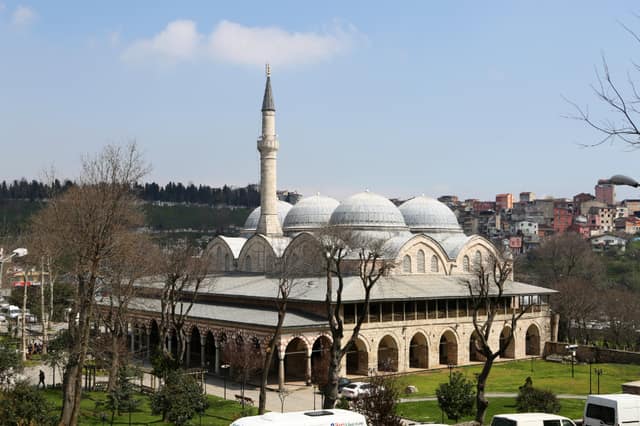
The first stop is the Piyale Paşa Mosque. The complex that Grand Admiral Piyale Pasha had built in 1573 was set in a valley that lay outside the built-up area at the time. With its minaret rising in the middle of the facade and its two-storey side galleries, it is one of the most unusual mosques in the city.
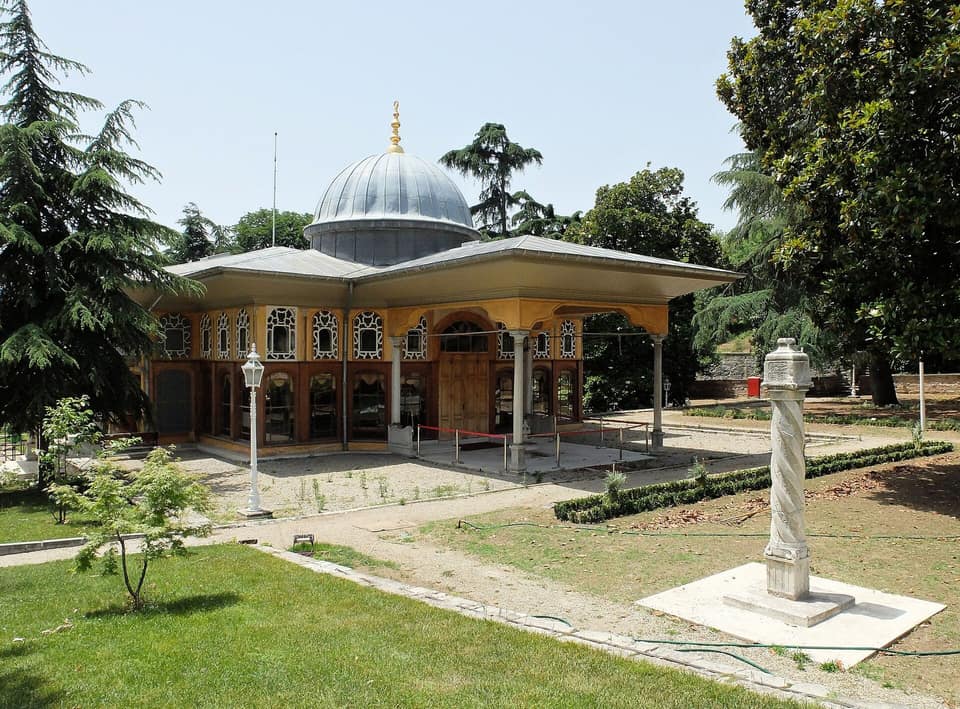
The second stop, Aynalıkavak Pavilion, is the only surviving building of the large ensemble known as the Tersane Palace or Aynalıkavak Palace, which grew in the Shipyard Garden from the 17th century onward. Under Selim III most of the palace was pulled down to enlarge the shipyard, while the pavilion was kept and its interior renewed. Today its lower floor displays historical Turkish musical instruments.
The third stop, the Rahmi M. Koç Museum, shows the next link in the same transformation. The Lengerhane, where ship chains and anchors were made, and the Hasköy Shipyard founded in 1861 are now parts of a museum devoted to the history of industry and transport.
After the museum you board the ferry at the Hasköy pier. After Hasköy the line calls at Ayvansaray; the short trip links the two shores and lets you see the Golden Horn from the water. From Ayvansaray you walk uphill towards the walls to the Tekfur Palace, the only standing building of the Byzantine Blachernae palace complex. In the 18th century, kilns run by master tile makers brought from İznik worked here. The route thus closes with a palace workshop on this shore after the shipyard workshops on the other.
The order of the stops also follows the history of the northern shore. First comes a complex founded outside the built-up area in the 16th century, then the palace garden of the 17th and 18th centuries, followed by the workshops and shipyard of the 18th and 19th centuries. The ferry ride then carries the route to the older Byzantine layer on the opposite shore, at the foot of the walls.
The distances between the stops are short. Only the stretch between the Piyale Paşa Mosque and Aynalıkavak Pavilion exceeds a kilometre, and the climb from Ayvansaray to the Tekfur Palace is uphill, so wear comfortable shoes. Check current ferry and museum hours with official sources before you set out. Visit the mosque outside prayer times and follow the etiquette for visitors.
Sources
- TDV İslam Ansiklopedisi, Piyale Paşa Külliyesi maddesi, https://islamansiklopedisi.org.tr/piyale-pasa-kulliyesi
- Milli Saraylar, Aynalıkavak Kasrı, https://www.millisaraylar.gov.tr/saraylar/aynalikavak-kasri
- Kültür Portalı (T.C. Kültür ve Turizm Bakanlığı), Aynalıkavak Kasrı, https://www.kulturportali.gov.tr/turkiye/istanbul/gezilecekyer/aynalikavak-kasri
- TDV İslam Ansiklopedisi, Aynalıkavak Sarayı maddesi, https://islamansiklopedisi.org.tr/aynalikavak-sarayi
- Türkiye Müzeleri (T.C. Kültür ve Turizm Bakanlığı), Rahmi M. Koç Müzesi, https://turkishmuseums.com/museum/detail/12315-istanbul-rahmi-m-koc-museum/12315/4
- TDV İslam Ansiklopedisi, Hasköy maddesi, https://islamansiklopedisi.org.tr/haskoy--istanbul
- Şehir Hatları, Üsküdar-Haliç Hattı, https://sehirhatlari.istanbul/tr/seferler/ic-hatlar/istanbul-ici-hatlar/uskudarhalic-hatti-37
- İBB Kütüphane ve Müzeler, Tekfur Sarayı, https://ataturkkitapligi.ibb.gov.tr/tr/Kitaplik/Muzelerimiz/Tekfur-Sarayi/10
- T.C. Fatih Kaymakamlığı, Tekfur Sarayı, https://fatih.gov.tr/tekfur-sarayi
- TDV İslam Ansiklopedisi, Ayvansaray maddesi, https://islamansiklopedisi.org.tr/ayvansaray
Route Stops
Piyale Pasha Mosque
Begin the route at the Piyale Paşa Mosque, at the foot of the Okmeydanı slope behind Kasımpaşa. According to the TDV Encyclopaedia of Islam, the complex was built in 1573 by Grand Admiral Piyale Pasha, one of the sons-in-law of Selim II. The site lies in the valley cut by the Piripaşa stream north of the Golden Horn and remained outside the built-up area until the middle of the 20th century. The complex once had a mosque, a madrasa, a primary school, a water dispensary, a market and a bathhouse. Today the main surviving building is the mosque; in the 19th century a gunpowder works was built around the ruins of the bathhouse, and the market and madrasa disappeared completely.
Enter the grounds through the western gate; the encyclopaedia notes that of the four known entrances only this one survives. Before going in, look at the northern facade of the mosque, because the minaret does not stand at a corner as usual but rises in the middle of the facade, directly opposite the mihrab. For this reason the prayer hall is entered not through the centre but through two side doors. Two-storey galleries wrap around both sides of the mosque; the lower ones rest on short, thick piers and the upper ones on slender columns. Some researchers have suggested that, under the influence of its seafaring founder, the building was meant to resemble a ship with its decks and mast. The encyclopaedia, however, points out that the arrangement can also be explained by the wish to give the exterior a sense of movement. From Evliya Çelebi's account it appears that the upper galleries were also used as terraces where visitors to the surrounding promenade sat and enjoyed the view.
The prayer hall is a rectangle of about 30.5 by 19.7 metres, roofed by six equal domes, each about 9 metres across. The weight of the domes comes down onto two monolithic granite columns in the centre and onto thick piers merged with the walls. Using slender columns instead of piers in the middle creates an interior far brighter and more spacious than one would expect in a multi-domed building. Count the windows arranged in three rows on the walls to see the source of this light for yourself.
The first thing to notice inside is the mihrab, made entirely of tiles. Its tiles are underglaze İznik tiles, mostly with a white ground, each carrying different floral designs. The encyclopaedia notes that some of these tiles were stolen in recent years and replaced with Kütahya tiles. At the level of the arches carrying the domes runs a tiled band of inscription in white monumental thuluth letters on a dark blue ground. The calligraphy of this band is by Hasan Çelebi, a student of Ahmed Şemseddin Karahisari. The plain design of the marble minbar acts as a counterweight to the richly decorated mihrab.
As the mosque is open for worship, come outside prayer times, dress modestly and keep quiet inside. On your way out look at the eastern side of the mosque; the row of taps set lower than the level of the mosque is its actual ablution fountain. From here the walk to Aynalıkavak Pavilion is about 1.2 kilometres; you can walk down towards the Golden Horn or take a short taxi ride.
Source: TDV İslam Ansiklopedisi, Piyale Paşa Külliyesi.
Aynalıkavak Palace
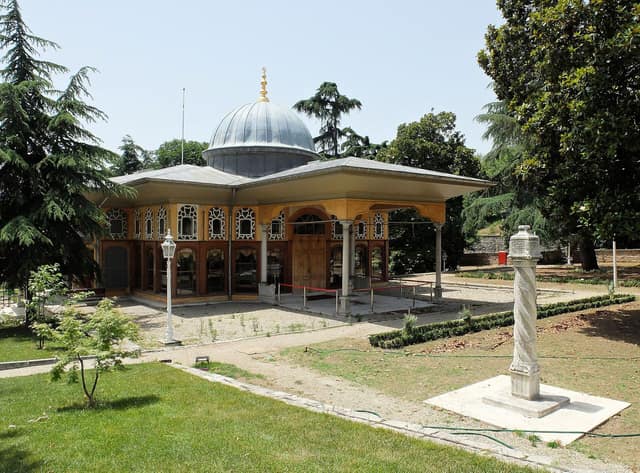
Aynalıkavak Pavilion stands in a garden next to the shipyard grounds in today's Hasköy. According to the National Palaces administration, the building is the only surviving structure of the Tersane Palace, one of the great Ottoman palaces of Istanbul. The Ministry's Culture Portal notes that this shore was already a resting place for emperors in the Byzantine period and that after the conquest it was known as the Tersane Hasbahçesi, the privy garden of the shipyard. According to the TDV Encyclopaedia of Islam, when the shipyard settled in Kasımpaşa in the early 16th century, the wide area between the shore and the slopes of Okmeydanı became a garden belonging to the sultans.
The first pavilion documented in the garden was built on the order of Ahmed I, and the sultan stayed in the newly finished building in early 1614. The National Palaces administration states that this first pavilion was built by Grand Admiral Halil Pasha. There are many explanations of the palace's name; some have said it came from mirrors sent from Venice, from poplar leaves glittering in the sun, or from the archery targets on Okmeydanı. The encyclopaedia shows that 17th-century travellers already called the place the Mirror Palace, so the name is older than the Venetian mirrors that arrived after 1718.
The palace was the setting for many important events. While the circumcision festival of Ahmed III's princes was held on Okmeydanı in 1720, the sultan and his household stayed here. In 1779, after negotiations with Russia, the agreement known as the Aynalıkavak Convention was signed in this palace. Under Selim III most of the palace was pulled down to enlarge the shipyard, and only the Privy Chamber Pavilion was left, with its interior renewed. The verses over the doors give the year 1206, that is 1791-1792.
The pavilion has one storey on the land side and two on the sea side; this difference shows that it sits on sloping ground. Inside, the plan is arranged around a double audience hall on a long axis. Look for the gilded monogram of Selim III at the base of the ceiling in the Audience Room. In the friezes running above the windows, poems by Şeyh Galib and Enderunlu Fazıl praising the pavilion and Selim III are written in the talik script of Yesarizade. The stained-glass upper windows, built-in sofas and braziers convey palace life at the end of the 18th century.
According to the Culture Portal, the lower floor of the pavilion has been turned into a museum displaying historical Turkish musical instruments, in keeping with Selim III, who was known as a composer. The pavilion reopened to visitors in 2010 after restoration and refurnishing. In the garden, do not miss the small masonry lodge with windows above the Shipyard Gate; it is said to have been built so that the sultan could watch the shipyard.
According to the National Palaces visitor information, the pavilion is closed on Mondays; check current hours and fees on its official website before your visit. Leaving the pavilion, walk west parallel to the Golden Horn for about 650 metres to reach the Rahmi M. Koç Museum.
Source: Milli Saraylar; TDV İslam Ansiklopedisi, Aynalıkavak Sarayı.
Rahmi M. Koç Museum: A Unique Experience for Industry and Technology Enthusiasts
The Rahmi M. Koç Museum occupies two connected historic buildings on the northern shore of the Golden Horn and the open area in front of them. The Turkish Museums portal of the Ministry of Culture and Tourism presents it as an industrial museum devoted to the history of industry, transport and communications. The museum has welcomed visitors since 1994, and most of the collection comes from the private collection of Rahmi M. Koç. On this route, visit the museum as a record of the Golden Horn industry that replaced the palace garden you saw at Aynalıkavak.
The first building is the Lengerhane, where ship chains and anchors were produced in the Ottoman period. The portal states that the building was founded in the reign of Ahmed III and stands on the foundations of a 12th-century Byzantine structure. The TDV Encyclopaedia of Islam also sees the construction of the Lengerhane as the first step in Hasköy's transformation into an industrial district. The museum foundation bought the building in 1991 and opened it in 1994 after a restoration of about two and a half years.
The second section is the Hasköy Shipyard, founded in 1861 by the Şirket-i Hayriye ferry company for the maintenance and repair of its ships. The shipyard was purchased in 1996 and joined the museum in 2001 after restoration. The portal records that an electric crane came into use here in 1910 and that the city ferries Kocataş and Sarıyer were built in this yard in 1938. If your time is limited, go to the shipyard section first, because its slipways and workshop buildings are the part most directly tied to the theme of the route.
The sections include road and rail vehicles, maritime and aviation collections, scientific instruments, communication devices and models. Among the oldest pieces in the collection is a celestial globe dated 1384. In the open area stretching to the Golden Horn, classic cars, the Fenerbahçe ferry and the submarine TCG Uluçalireis moored at the shore are on display. Then look at the stone walls and arches of the Lengerhane and picture the building's former production layout.
The museum's surroundings also tell of the Golden Horn's changing face. According to TDV, in 1852 Hasköy was linked to Balat on the opposite shore by a 380-metre bridge, but this bridge did not last long. The same source writes that in the mid-20th century the inner Golden Horn was planned as an industrial zone and that between 1940 and 1970 Hasköy filled with industrial buildings. With the redevelopment of the Golden Horn shores that began after 1988, some of the industrial buildings on the waterfront were removed and green spaces were opened. The museum buildings are examples that were preserved within this transformation and given a new use.
Opening hours vary by season, so check the museum's current information before your visit. When you leave the museum, walk to the Hasköy pier, take the Üsküdar-Haliç ferry and get off at the next pier, Ayvansaray.
Source: Türkiye Müzeleri (Kültür ve Turizm Bakanlığı); TDV İslam Ansiklopedisi, Hasköy.
One of the most impressive museums in Istanbul, Rahmi M. Koç Museum, stands out as Turkey's first and most comprehensive museum of industry, transportation, and communication. Located on the shores of the Golden Horn, within the historic Lengerhane Building and Hasköy Shipyard, this special museum is a unique place that takes its visitors through different periods of history with its invaluable artifacts in the fields of industry, transportation, and technology.
A Journey Through the History of Industry and Technology
The Rahmi M. Koç Museum has a wide collection ranging from cars to airplanes, steam engines to submarines. Historical cars, classic motorcycles, locomotives, marine vessels, and rare artifacts related to aviation history provide visitors with a detailed narrative showcasing the development of industry from the past to the present.
An Opportunity to Explore a Real Submarine and Steam Train
One of the most interesting points of the museum is the TGC Uluçalireis submarine, which visitors can enter and explore. It is possible to learn fascinating information about underwater life by touring the inside of this submarine. Additionally, the steam trains, vintage ships, and historical trams in the museum offer a unique exploration area for those interested in the history of transportation.
Events and Interactive Experiences
The Rahmi M. Koç Museum attracts attention not only with its exhibited objects but also with workshops and events that offer interactive experiences. Science and technology workshops organized for children and adults allow visitors to make scientific discoveries. Moreover, the museum offers different experiences such as taking rides in nostalgic vehicles and observing how old machines work.
Discovering History and Technology with a View of the Golden Horn
The location of the museum provides a perfect opportunity to enjoy a pleasant day while watching the unique view of the Golden Horn. Outdoor exhibition areas, buildings that preserve their historical texture, and resting areas located by the Bosphorus create a unique atmosphere for visitors.
A Must-Visit Address for Industry and Technology Enthusiasts
The Rahmi M. Koç Museum is a cultural point that must be visited for those who want to see the development of industry, transportation, and technology from the past to the present. This special museum offers a fun and educational experience for both children and adults, continuing to be one of the most enjoyable exploration routes in Istanbul.
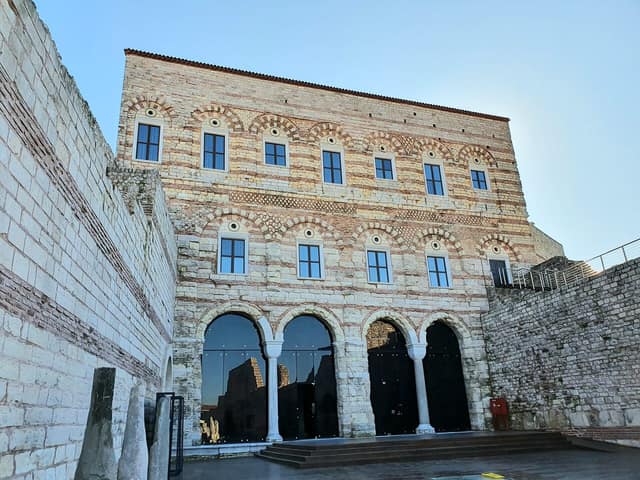
Tekfur Palace Museum
From the Ayvansaray pier, walk uphill towards the walls to reach the Tekfur Palace. According to the TDV Encyclopaedia of Islam, Ayvansaray is a quarter bounded on one side by the Golden Horn and on the other by the city's land walls. In the Byzantine period the area was known as Blachernae, and it was brought inside the city when the walls were extended under Emperor Manuel Komnenos. From the 11th century the emperors left the great palace near the Hippodrome and began to live in the Blachernae Palace in this northwestern corner of the city. The encyclopaedia states that the only standing building of this palace complex today is the three-storey Tekfur Palace rising at its southernmost tip.
The museum page of the Istanbul Metropolitan Municipality also presents it as the only palace building in Istanbul that has come down from the Byzantine period with its architecture intact. Its date of construction is uncertain; the Fatih District Governorship reports that some sources give the 10th century and others the 13th and 14th centuries. In some sources the building is called the House of the Porphyrogenitus; this title describes children born after their father had become emperor. When you enter the courtyard, look first at the facade, because the three-storey front facing the courtyard carries the showy decoration of late Byzantine art. From the courtyard, look at the wide window openings of the upper floors to read the palace's layered arrangement.
Left derelict for a long time after the conquest, the building lost its roof in fires during the Ottoman period. The Governorship writes that it was also used as a menagerie for a time. The most interesting layer of the route, however, belongs to the 18th century; under Ahmed III, master tile makers brought from İznik set up kilns here. According to the municipality, the clay used for the tiles was taken from the Alibeyköy stream. Works produced here include the tile panels of the Fountain of Ahmed III in Sultanahmet and the mihrab panels of the Hekimoğlu Ali Paşa Mosque in Kandilli and the Cezeri Kasım Paşa Mosque in Eyüp. In the same period, pottery production and glass workshops known as the Şişehane operated in an area stretching from the palace courtyard to Eyüp. The Governorship notes that in the 19th century the building became a bottle and glass works.
Excavations that began in 1995 uncovered architectural remains as well as many objects of tile and glass. The museum displays some of these finds and replicas of tile panels produced here. Seeing the traces of tile production from the time of Ahmed III here, after the decoration from the time of Selim III on the opposite shore, sets side by side how the two shores of the Golden Horn were used as palace and workshop in the 18th century.
According to the municipality's page, the museum is closed on Mondays; check current hours and fees on the official page before your visit. After finishing the route here, you can walk south along the walls for about 600 metres to Edirnekapı and return to the city on the T4 tram.
Source: İBB Kütüphane ve Müzeler, Tekfur Sarayı; Fatih Kaymakamlığı; TDV İslam Ansiklopedisi, Ayvansaray.
Comments
Loading...
