Radar Türkiye
Discover events in the app
Open
The Coastal Line from Rize to Pazar, from the Castle Hill to the Sea Tower · Rize Merkez
Cultural4 Stop

The Coastal Line from Rize to Pazar, from the Castle Hill to the Sea Tower

7
No ratings yet

Sign in to like and rate

Rize is a city leaning on slopes that face the Black Sea, one that has spread down towards the shore over time. This route begins on the castle hill that holds the city's oldest layer, enters the inner world of the Rize house in two mansions and ends the day at the stone tower standing in the sea off the coast of Pazar. The four stops line up the city's history along a timeline of roughly one and a half thousand years. They offer a reading that runs from an inner citadel rebuilt in the Byzantine period, to a tower that watched over the coast in the Middle Ages, to the civil architecture of the nineteenth century.

The order follows the geography and moves from west to east. In the morning you climb the hill of Rize Castle; from here the city, the harbour and the sea look like a map, and the coastline you will travel for the rest of the day stretches along the horizon. Then you come down from the hill to the Piriçelebi neighbourhood and walk through the floors of a traditional town house at the Rize Museum, known as the Yellow House. The third stop is the Atatürk House Museum in the Müftü neighbourhood, where you see the interior hall plan of another mansion. In the afternoon you drive east along the coast road; it passes in front of Çayeli and reaches Pazar, about 37 kilometres from the provincial centre. The last light of the day is met in Pazar, at the Kız Kalesi on the rock near the shore.

The theme of the route is guarding the coast. Rize Castle is a coastal fortress where, according to Ottoman records, guards served and to which cannons and ammunition were sent against pirate raids. Kız Kalesi, together with Zil Kale and Ciha Kale, is counted among the structures that secured the region and the medieval caravan route reaching Bayburt. The two museums in between tell of the homes, kitchens, belongings and everyday lives of the people who lived on this coast. Pazar itself is an old settlement on this coast; the Provincial Directorate of Culture and Tourism dates the founding of the district, whose old name was Athena, to 64 BC.

The three stops in the city are close to each other, but the road up to the castle hill is steep, so wear comfortable shoes that do not slip. Restoration work by the Ministry of Culture and Tourism continues at Rize Castle; check the visiting conditions on the page of the Rize Provincial Directorate of Culture and Tourism. Both museums are closed on Mondays; find the opening hours and entry conditions on the website of the General Directorate of Museums. Because Kız Kalesi has no connection with the land, the structure cannot be entered and is viewed from the shore.

The time spent driving during the day is not long, but each stop asks for a different pace. Walk quietly and slowly in the museums, and on the shore wait without hurrying for the light to fall on the tower. Rain can surprise you in Rize in any season, so take a raincoat with you.

Sources

Rize Merkez, Rize
Cultural
4 Stop
~3 h 30 min at places
Travel ~35.7 km · 1 h 31 min
Total ~5 h 1 min
November 4, 2026

Route Stops

1
Rize Kalesi · Rize Merkez

Rize Castle

~1 h here
Kale Mahallesi, Rize Merkez/Rize

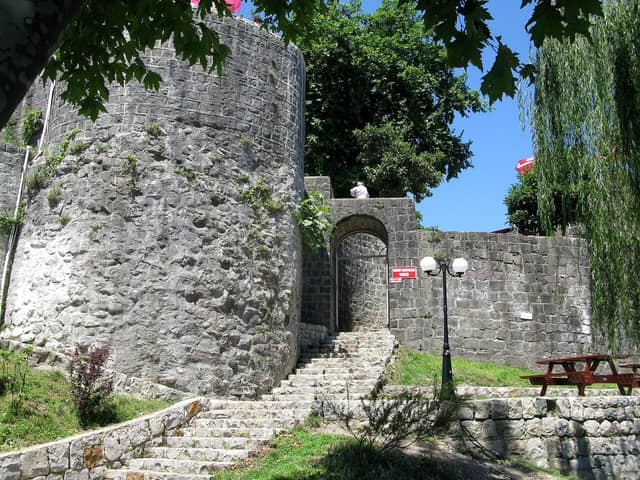
Start the day on the hill in the southwest of the city, in the Kale neighbourhood. The castle is built on a natural hill about 150 metres high, so the climb is short but steep. When you reach the top, first catch your breath and turn north towards the sea. The Rize Provincial Directorate of Culture and Tourism presents this place as one of the ideal spots in the centre for viewing the city. The harbour, the coast road and the neighbourhoods climbing the slopes are all before your eyes at once. This view also shows you from the start the coastline you will follow eastwards for the rest of the day.

The castle consists of two parts, and you should plan your visit around this division. The inner citadel is on top of the hill and its entrance faces east. Sources state that the inner citadel was rebuilt in the reign of Justinian I, that is, in the sixth century. The lower castle is dated in written sources to the thirteenth and fourteenth centuries. The walls of the lower castle once opened out from the inner citadel to the northeast and northwest and ran down to the sea. Today only part of the western walls and some tower remains of these walls are standing. As the city grew, houses were built over the collapsed sections of the walls, and a road was laid across part of them.

Go up to the walls of the inner citadel and look at the stone. Neatly cut stone and rubble stone were used together in the structure, with horasan mortar chosen as the binder. The walls are two to three metres thick in places. Five semicircular towers are the most distinctive feature of the inner citadel; because they project outward, they made it possible to answer an attacker from every direction. Research has shown that there were in fact nine towers and two gates on the walls, that the towers had two storeys and that brick was also used in places. The sections in the southern part of the castle built with neat dressed stone were repaired in 1989, which is why you may notice a difference in the texture of the stone.

Walk around thinking of the castle's role in the Ottoman period. The TDV Encyclopaedia of Islam reports that, according to Ottoman records, a military commander, a fortress warden and guards served in the castle. According to the same source, in 1705 it was ordered that cannons, cannonballs and gunpowder be sent to the castle against pirate attacks, and a payment was made for repairing the castle's ammunition store and dungeon walls. Looking at the sea over the walls, you easily understand why this castle was set on a point overlooking the coast.

Today the castle grounds are used as a tea garden thanks to landscaping; it is a good break for sitting before the view and drinking a glass of tea. Restoration work by the Ministry of Culture and Tourism is continuing at the castle, so some sections may be closed. Check the visiting conditions on the page of the Rize Provincial Directorate of Culture and Tourism before you go. Morning light is good for photographs; when the sun comes from the east, the city and the sea look clear. After coming down from the hill, walk towards the Piriçelebi neighbourhood or move on to the museum with a short drive.

Source: Rize İl Kültür ve Turizm Müdürlüğü, Kaleler; DOKAP Kültür Envanteri; TDV İslam Ansiklopedisi.
Rize Castle stands southwest of the city centre on a natural ridge that looks down over the town and the sea. The Culture Portal states that the castle was built on this hill, about 150 metres high, and that it covers an area of 480 square metres. The structure consists of two main parts, the inner castle on the summit and the lower castle that stretches from it towards the sea. The inner castle is believed to have been built or rebuilt in the reign of the Byzantine emperor Justinian I, that is between 527 and 565. Sources give different dates for the lower castle, the Culture Portal citing the 13th century and the Eastern Black Sea Cultural Inventory the 13th and 14th centuries. The Eastern Black Sea Cultural Inventory also notes that the inner castle was used in the Genoese period. The inner castle has no regular plan and is built of cut stone and rubble in the masonry technique. Its entrance gate faces east, and today the gate is reached by a stone stair that rises through landscaped gardens. Five semicircular towers survive in this section. Inventory work has shown that the walls once carried nine towers and two gates, that brick was used in places and that the towers had two storeys. The walls of the lower castle opened out from the inner castle towards the northeast and northwest and ran down to the sea. Dense building has erased most of these walls, and only part of the western walls and some tower remains have survived. The Rize Provincial Directorate of Culture and Tourism today studies the castle in four parts: the inner castle, the lower castle, the outer castle remains between the inner castle and Atatürk Avenue, and the walls east of the former SSK hospital. Two types of tower can be told apart along the walls. Defence towers are joined to the walls and are generally round. Square, rectangular and round support towers were placed between them at set intervals. These support towers project outwards so that an attacker could be answered from every side. The walls are between two and three metres thick, and dressed stone with khorasan mortar was used as the building material. The sections in the south of the castle that were repaired in 1989 stand out from the rest through their regular dressed stones. Houses were built over some ruined parts of the walls over time, and a road runs over one visible stretch. Ottoman documents show the castle's place in the life of the town clearly. According to the TDV Encyclopaedia of Islam, Rize looked like a small castle town when it came under Ottoman rule, and in the last quarter of the 15th century a garrison commander and thirty-four guards served in the castle. At the start of the 16th century thirty-one guards were registered there along with a warden, a steward, a gatekeeper and two gunners. The same source records that seven guards and twenty azeb soldiers were sent from Rize Castle to the ships prepared for the Astrakhan campaign of 1568. In 1705 it was ordered that the castle receive three cannons, a thousand cannonballs and gunpowder against raids on the coast, and separate funds were set aside to repair the armoury and the dungeon walls. Kale Mahallesi around the castle also appears under the name Kal'a in the neighbourhood lists of the mid-19th century. Today the castle is one of the best-loved viewpoints in the city. Its surroundings have been landscaped into a tea garden, and the Culture Portal describes it as one of the ideal spots in the centre for looking out over the city. From the hill the settlement of Rize running parallel to the sea, the harbour and the green slopes behind appear in a single frame. On your visit, first study the round tower up close from the stair that climbs to the inner gate, then walk along the wall and look at the different stonework in the masonry. With its 2011 investment programme the Ministry of Culture and Tourism completed survey, restoration, restitution, landscaping and lighting projects for the castle and moved on to implementation. As the Provincial Directorate states that restoration work is continuing, some parts may be closed because of the works. Check the visiting conditions on the page of the Rize Provincial Directorate of Culture and Tourism before you go. Because the castle is in Kale Mahallesi and close to the city centre, it can be combined on foot with the Rize Museum and the Atatürk House Museum on the same day.
2
Rize Müzesi · Rize Merkez

Rize Museum

~1 h here
Piriçelebi Mahallesi, Palmiye Sokak No: 4, Rize Merkez/Rize

Come down from the castle hill to the Piriçelebi neighbourhood; the museum is less than a kilometre from the castle as the crow flies. The building, also known as the Yellow House, is a town house built in the nineteenth century with two floors above a basement. It was arranged as a museum and opened to visitors on 27 June 1998. Your real task at this stop is to read the house not as an exhibition building but as a Rize house. That is because the building itself is also part of the collection.

Look at it from outside before you go in. The walls were built with the technique of masonry stone with infill between timbers and covered with a hipped roof of Turkish tiles. The General Directorate of Museums explains that Rize town houses were usually built with two or three floors and that the ground floor was used as a stable and cellar. Make your visit from the bottom up, following this arrangement of floors.

The basement floor is made of stone and was once used as a stable and storeroom. Today it is the museum's exhibition hall. In the hall there are pieces of furniture made in the Baroque and Rococo styles of the seventeenth and eighteenth centuries, along with a display in showcases. Give your time in the showcases to the museum's archaeological finds and coins. According to the Rize Provincial Directorate of Culture and Tourism, a total of 1799 items are on display in the museum, including 76 archaeological finds, 594 coins and 1129 ethnographic objects.

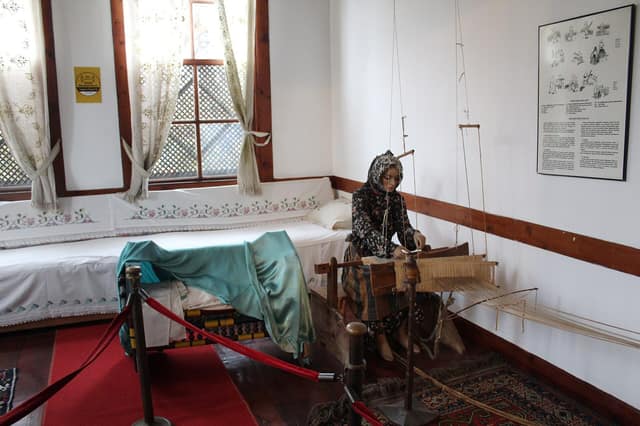
Climb the stone staircase to the first floor. This was once the floor of the kitchen and the guest rooms, and today it is used as the administrative section. The kitchen opposite the staircase, however, has been arranged once again as a kitchen, so be sure to look inside. The main feature of the kitchen is the great hearth, from the middle of which hangs a large chain called the klemuri. The floor is paved with stone, and copper kitchen vessels are displayed on the shelves. The mill where maize was ground is brought to life with mannequins; here you see in concrete form the place of maize in Black Sea cooking.

The second floor is the living floor of the household, and today it is furnished for the same purpose and open to visitors. Bedrooms and sitting rooms are found on this floor. Pay attention to the arrangement of the rooms, the wooden details and the placement of the furnishings. The General Directorate of Museums notes that in Rize houses the rooms were designed in the traditional way and that some of them had wooden ornamentation. Keep the layout of these rooms in mind to compare with the mansion you will see at the next stop.

The museum is closed on Mondays; check the opening hours and entry conditions on the website of the General Directorate of Museums. Because the interiors are small, at busy times you may need to take turns walking through them. Ask the attendant at the entrance about the rules on taking photographs. From here, go about one and a half kilometres east to reach the Atatürk House Museum in the Müftü neighbourhood.

Source: Müzeler Genel Müdürlüğü, Rize Müzesi; DOKAP Kültür Envanteri; Rize İl Kültür ve Turizm Müdürlüğü, Müzeler.
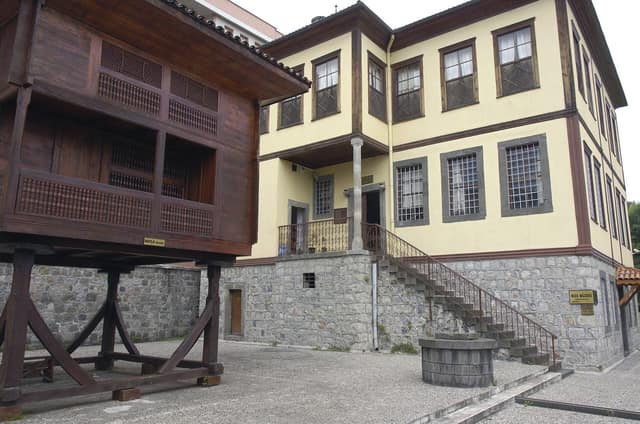
The Rize Museum occupies a historic mansion known locally as the Yellow House (Sarı Ev) in Piriçelebi Mahallesi in the city centre. The building was built in the 19th century as two floors over a basement. The Directorate General of Museums describes the Yellow House as one of the finest examples of the region's civil architecture. The mansion was arranged as a museum and opened to visitors on 27 June 1998. The Rize Provincial Directorate of Culture and Tourism refers to the building today as the city's museum and notes that all the museums of the province are gathered in the provincial centre. According to the same directorate, these museums house documents of social and historical events that affected not only Rize but the eastern Black Sea as a whole, along with ethnographic and archaeological finds. The promotional brochure of the Directorate General of Museums presents the building as a historic mansion that holds a mirror to the past. Before touring the building, looking at its construction from outside makes the layout inside easier to understand. Traditional materials and techniques were used in Rize houses, and the Yellow House is an example of this tradition. The walls were raised in a technique of rubble stone with infill between timber, and they were covered with a hipped roof of Turkish tiles. According to the Directorate General of Museums, the town houses of Rize usually had two or three floors and the ground floor was used as a stable and cellar. Rooms and halls lie on the upper floors, and some of the rooms were decorated with carved woodwork. The German botanist Karl Koch, who visited the town in the mid-19th century, also noted that the houses of Rize stood in gardens and that their lower parts were of stone and their upper parts of timber. According to Koch these houses were spacious buildings standing apart from the shops and workplaces, and the streets of the town were paved with stone. The original function of each floor can still be read in today's display. The stone basement was once a stable and storeroom, and today it is the exhibition hall where works are on show. This hall holds furniture in the Baroque and Rococo styles of the 17th and 18th centuries together with display cases. The first floor held the kitchen of the house and the rooms where guests were received. Most of this floor is now given over to the administrative offices of the Rize Museum Directorate. The kitchen opposite the stone stair at the museum entrance, however, has been arranged once more as a kitchen. Its centrepiece is a wide hearth with a large chain called klemuri hung in its middle. Copper kitchenware is displayed on the stone-paved floor, and the corner where maize was ground is brought to life with mannequins. The second floor is where the family of the house lived, and today it is displayed for the same purpose with its bedrooms and sitting rooms. The collection ranges from archaeological finds to coins and ethnographic material. According to figures given by the Rize Provincial Directorate of Culture and Tourism, the museum displays a total of 1,799 works, including 76 archaeological objects, 594 coins and 1,129 ethnographic items. As the numbers show, the weight of the collection lies in the objects of everyday life. For this reason the museum is best visited as a place that tells of life inside a house rather than of the ancient history of Rize. In the rooms look at the embroidered covers, the timber lattice windows and the layout of the rooms, and in the kitchen notice how the hearth was planned as the heart of the house. As you move between floors, seeing how the sequence of stable, cellar, kitchen and bedroom rises from a stone basement to the family's living floor is the easiest way to read the house. The neighbourhood around the museum has its own history too. The TDV Encyclopaedia of Islam writes that Piri Çelebi quarter appears in records of 1682 as a small settlement of sixteen households. The Directorate General of Museums states that the museum is closed on Mondays. As opening hours and entry conditions may change, check the current information on its page at muze.gov.tr. Because the museum is in the city centre, it is part of a route that can be walked together with Rize Castle and the Atatürk House Museum in Müftü Mahallesi.
3
Rize Atatürk Evi Müzesi · Rize Merkez

Rize Atatürk House Museum

~45 min here
Müftü Mahallesi, Kirazlık Sokak No: 16, Rize Merkez/Rize

The third stop is a mansion set in a garden in the Müftü neighbourhood. The General Directorate of Museums presents the building as an example of civil architecture of regional value that reflects the features of twentieth-century Turkish architecture. The mansion rises above a stone basement and has an interior hall plan. Since the year of construction is given differently in the sources, it is more accurate here to focus on the plan rather than the date. Between the Yellow House you saw at the previous stop and this mansion, you can follow an architectural change of roughly a century.

When you enter the garden, first look at the building as a whole. There is a large garden to the north of the mansion, and the building stands within this garden. The basement floor, made of stone, was once used as a storeroom, while the upper floors are living spaces. You will notice that this storeroom continued, on a different scale, the same function as the stable and cellar floor of the Yellow House. Examine the arrangement of the windows on the facade and the height of the floors.

Inside, to understand the interior hall plan, stand in the central hall and look at how the rooms open onto it. In this arrangement the rooms are lined up around a shared inner hall. Compared with the rooms of the Yellow House, you will see that the plan is laid out more regularly and more spaciously. As you climb the stairs, also pay attention to the transition between the floors.

The mansion's story as a museum is short. When Atatürk came to Rize on 17 September 1924, he stayed in this house, which belonged to Mataracı Mehmet Efendi. The house was later donated by the Mataracı family to the Rize Special Provincial Administration to be made into a museum. Restored by the Ministry of Culture and Tourism, the building opened to visitors as a museum on 27 December 1985.

The exhibition includes belongings and photographs of Atatürk along with ethnographic objects gathered from the region. Think of the ethnographic objects together with the kitchen and the living floor of the Yellow House; the two museums complete different sections of everyday life on the same coast. According to the DOKAP Cultural Inventory, the lower part of the building is used as an administrative section and cultural centre.

The museum is closed on Mondays; check the opening hours and entry conditions on the website of the General Directorate of Museums. After the visit, sit in the garden for a few minutes and get ready to leave the city centre. From here, go out to the coast road and head east towards Pazar. Along the way, the sea stretches out on your left and the tea slopes on your right.

Source: Müzeler Genel Müdürlüğü, Rize Atatürk Evi Müzesi; Rize İl Kültür ve Turizm Müdürlüğü, Müzeler; DOKAP Kültür Envanteri.
The Rize Atatürk House Museum is in a mansion on Kirazlık Street in Müftü Mahallesi in the city centre. Because it belonged to the Mataracı family, the building is also known as the Mehmet Mataracı Mansion. The Directorate General of Museums describes it as an example of civil architecture that reflects the features of 20th-century Turkish architecture and carries regional architectural and cultural value. As sources give different construction dates for the mansion, it is best thought of as a town mansion built at the start of the 20th century. The building rises in a garden over a stone basement. The Rize Provincial Directorate of Culture and Tourism states that it is a three-storey mansion with an inner hall plan and that a large garden lies to its north. Müftü Mahallesi, where the mansion stands, is part of the old fabric of the town, and the TDV Encyclopaedia of Islam records that the mosque of the quarter dates from 1785. As you study the mansion from outside, notice the different functions of its floors. The basement, built of stone, was formerly used for purposes such as storage. The upper floors were the living quarters of the family. The inner hall plan describes a layout in which the rooms are set around a central hall, and this arrangement is easy to follow as you move between floors inside. The rows of windows on the facade, the contrast between the stone base and the light-coloured upper floors, and the stair rising from the garden give a view often seen in the town mansions of Rize. The arrangement of living floors rising over a stone basement seen in the Yellow House in the same city continues here in a later building, which is why visiting the two museums one after the other is instructive. A single historical event lies behind the mansion becoming a museum. According to the Directorate General of Museums, Mustafa Kemal Atatürk came to Rize on 17 September 1924 during the national tour known as the Autumn Tour and stayed in this house, which belonged to Mataracı Mehmet Efendi. As the Governorship of Rize relates, the visit was made by sea, on the cruiser Hamidiye. The Rize Provincial Directorate of Culture and Tourism writes that Rize became a province in its own right on 20 April of the same year, so the visit came in the months when the town was gaining its new administrative identity. The brochure of the Directorate General of Museums therefore presents the museum under the title of Atatürk's footsteps in Rize. The house was later donated to the Rize Special Provincial Administration to become a museum on the occasion of the 100th anniversary of Atatürk's birth. The Eastern Black Sea Cultural Inventory writes that the mansion was handed over to the Ministry of Culture in 1984. The building was restored and opened to visitors as a museum on 27 December 1985. The city history published by the Governorship of Rize also notes that this house is open to the public today as the Atatürk Museum. Two kinds of collection meet the visitor in the museum. According to the Eastern Black Sea Cultural Inventory, the display includes objects used by Atatürk, photographs of Atatürk and photographs of the leading figures of Rize in the years of the National Struggle. The Rize Provincial Directorate of Culture and Tourism adds that ethnographic objects collected from the region are also on show. The inventory record also notes that the lower part of the museum is given over to administrative offices and a cultural centre. The visit therefore unfolds as a walk through the rooms of a period home, seeing local objects and the records of a visit together. Looking at how the furniture, the window layout and the hall shaped the daily life of the house lets you read the mansion not only as a memorial house but also as a Rize dwelling. The Turkish Museums website asks visitors not to touch the objects, not to take photographs with flash and not to enter the museum with food or drink. Keeping quiet and following the warnings of the staff are among the same rules. The Directorate General of Museums states that the museum is closed on Mondays. Check the current page at muze.gov.tr for opening hours and entry conditions. As the museum is in the city centre, it can be visited on foot on the same day as the Rize Museum and Rize Castle, and the three together tell the history of the town in a sequence that runs from the castle to the mansion.
4
Kız Kalesi · Pazar / Rize, Rize

Maiden's Castle

~45 min here
Soğuksu Mahallesi, Pazar/Rize

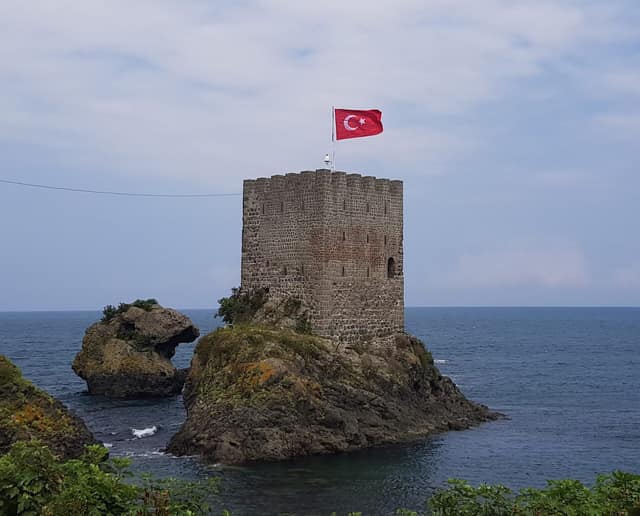
The last stop of the day is Pazar; the district is about 37 kilometres from the provincial centre of Rize. The Rize Provincial Directorate of Culture and Tourism attributes the founding of Pazar, whose old name was Athena, to Pompey in 64 BC. The name of the district was changed to Pazar in 1928. Pazar is bordered by Ardeşen to the east, Çayeli to the west, Çamlıhemşin and Hemşin to the south, and the Black Sea to the north. The Provincial Directorate of Culture and Tourism states that, besides Kız Kalesi and Ciha Kale, there are many stone arched bridges and mansions in the district. Kız Kalesi stands to the west of the district centre, on a rock very close to the shore. Park your car, go down to the shore and choose a spot where you will have the tower in front of you.

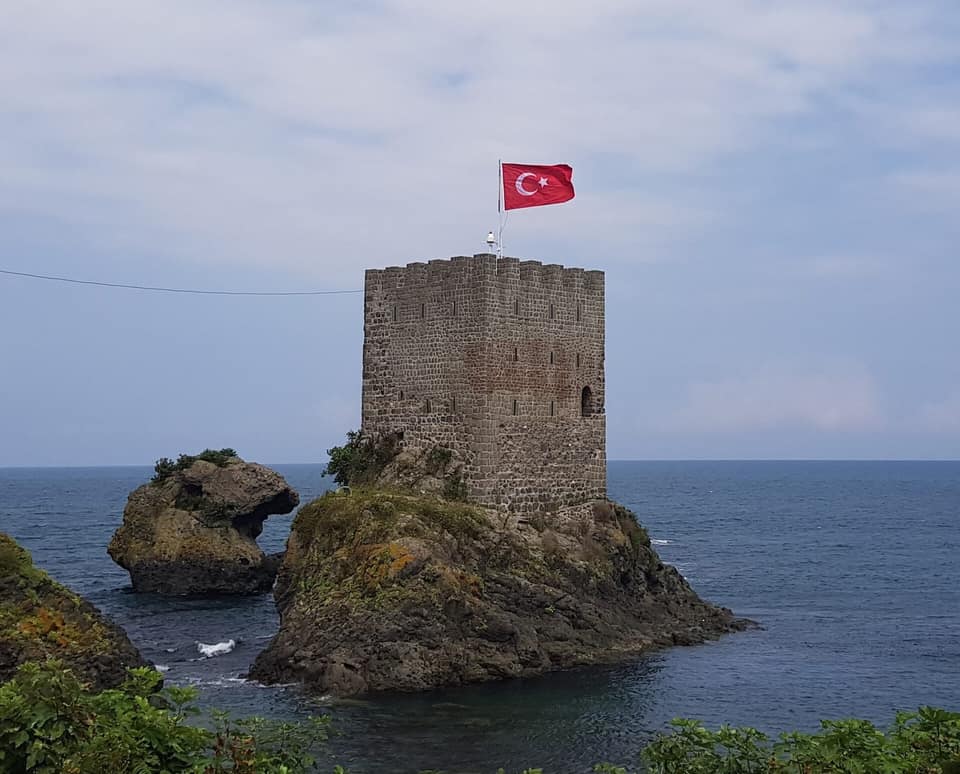
The rock has no connection with the land, so the tower cannot be entered; this stop is a viewing stop. First look at the form of the building. The DOKAP Cultural Inventory states that the castle has a square plan and was built of neatly cut stone. The regular stonework of its walls, as the Provincial Directorate of Culture and Tourism also emphasises, catches the eye even from a distance. The entrance of the castle is on its western facade, and there are round-arched loophole windows in the walls.

The date of construction is not known for certain. Official sources point to the thirteenth or fourteenth century. The castle was built as a watchtower and was also used in the Ottoman period. Look out to sea to think about the role on this coast of the structure that stands today with a single watchtower. The Provincial Directorate of Culture and Tourism counts Kız Kalesi, together with Zil Kale and Ciha Kale, among the castles that secured the region and the important medieval caravan route reaching Bayburt.

Here, set side by side the difference between the large walled structure you saw in the morning at Rize Castle and this small tower. One is a castle on a hill above the city protecting a settlement, the other is a single tower in the sea watching over the coast. The defence of the Rize coast is understood through these two scales working together.

Late afternoon is good for photographs; as the sun sinks to the west, the stones of the tower take on a warm colour. In rough weather the water strikes the rock, so watch out for slippery spots on the shore stones. Do not try to reach the rock by swimming or climbing. After sunset you can return to the centre of Rize along the coast road or stay in Pazar for the night.

Source: Rize İl Kültür ve Turizm Müdürlüğü, Kaleler ve Pazar; DOKAP Kültür Envanteri; Kültür Portalı.

Kız Kalesi, the Maiden's Castle, is a small stone fort that rises on a rock very close to the shore west of the centre of Pazar district. The Rize Provincial Directorate of Culture and Tourism describes the rock as a small peninsula and notes that the castle's link to the land has been cut. The Eastern Black Sea Cultural Inventory likewise records that the rock has no connection to the shore. This is therefore not a building visited from inside but a monument watched from the shore. Today the structure stands as a single watchtower. The date of the castle's construction is not known for certain. The Culture Portal and the Provincial Directorate estimate that it was built or used in the 13th or 14th centuries. This date coincides with the period when the eastern Black Sea coast lay within the borders of the Greek state centred on Trabzon. The Eastern Black Sea Cultural Inventory writes that the castle, built as a watchtower, was also used in the Ottoman period. The TDV Encyclopaedia of Islam writes that in this period Rize was an important harbour where Venetian and Genoese sailors called for trade. The same source records that in the 16th century, against pirate raids on the coast, the guards of the coastal castles began to protect the shore with their own boats. Small forts of this kind along the coast were important for spotting danger from the sea early and passing on warning. The Provincial Directorate states that the castles of the province are thought to have been built for protection, communication and housing soldiers, and that similar structures are also found in Trabzon and Giresun. The same source counts Kız Kalesi together with Zil Kale and Ciha Kale among the castles that guarded the region and the medieval caravan route to Bayburt. Despite its small size, the architecture of the building is careful. The castle has a square plan, and its walls are built of regular cut stone. The Culture Portal stresses that the neat stonework of the walls is striking. The entrance is on the west facade. Loopholes with round arches open in the facades. As you look from the shore, notice the evenness of the stone courses, the narrow loophole openings and the way the tower sits on top of the rock. The other rocks rising from the sea right beside the tower are also part of the view and explain why the castle was built at this point. The coastal history of Pazar district, where the castle stands, is also old. According to the Provincial Directorate, Pazar, whose old name was Athena, was founded by Pompey in 64 BC. The name of the district was changed to Pazar in 1928. Pazar lies about 37 kilometres from the centre of Rize and is bordered by Ardeşen to the east, Çayeli to the west and Çamlıhemşin and Hemşin to the south. The Provincial Directorate notes that besides Kız Kalesi the district offers Ciha Kale, many stone arch bridges and mansions to visit. Ciha Kale, east of the Hemşin stream, with its circular plan and central watchtower, is like an inland counterpart of Kız Kalesi. The Provincial Directorate states that Ciha Kale, whose entrance in the northeast is supported by two towers, is also thought to have been used for watch and communication. The best place to see Kız Kalesi is the stretch of shore that faces it. When the sea is calm the tower and the rock are reflected in the water, while on rough days the waves breaking around the rocks show why the castle remained cut off from the land. For photographs choose the morning and evening hours when the light softens, as the stone texture of the tower and the colour of the sea read better then. Do not try to cross to the rock by swimming or by boat, as the building offers no interior open to visitors. Pazar is reached by the coastal highway between Rize and Hopa. Rize-Artvin Airport also lies within Pazar district, as the Provincial Directorate notes, so the castle can make a short stop for a traveller arriving at or leaving the airport.

Comments

0/1000

Loading...

Route Map

Route Info
CityRize Merkez, Rize
TypeCultural
Stop4
DateNovember 4, 2026
Radar TürkiyeAuthorRadar TürkiyeStart Route