

From the Arboretum to Sudüşen, Trees, Waters and a Mansion in the Termal Valley
Sign in to like and rate
Most people know Yalova from its ferry pier and the mansion on the shore, yet the province's oldest story is hidden a few kilometres inland, in a valley tucked into the slopes of the Samanlı Mountains. This route reads that valley from the bottom up. It begins in the morning at Karaca Arboretum, which you reach about five kilometres out of the provincial centre at the start of the Yalova-Termal road; at midday it continues among the historic baths and the park of hot springs whose history is said to reach back four thousand years; it takes a look at the early years of the Republic in the wooden Atatürk Mansion inside the same park; and in the late afternoon it ends in the beech forest above Üvezpınar, in front of Sudüşen Waterfall, which pours down a mossy rock wall.
The common thread linking the four stops is water and trees. The arboretum is Türkiye's first private tree collection and holds around seven thousand plant species and forms. The public grounds at Termal are famous for their trees as much as for their springs; the provincial directorate of culture and tourism counts thirty-nine deciduous and twenty-six evergreen tree varieties there. The mansion is a summer house set among those trees in the middle of the greenery. The waterfall is the place in the upper valley where the Nacaklı stream leaps down along a fault.
The logic of the order is altitude. The arboretum lies on the low stretch of the road, the centre of Termal sits on average about one hundred and thirty metres above the sea, and Sudüşen is at a level of around two hundred and fifty metres, in the forest that stretches towards the provincial border of Bursa. Over the day you therefore move from a laid-out garden to park woodland, and from there to wild beech forest. The arboretum tour is made with a guide and, according to the sources, lasts about an hour and a half, so the first stop is the tightest appointment of the day; set off early with that in mind.
From the arboretum to Termal there is a short drive along the same highway. Once you have parked in Termal, you can explore the spa grounds and the mansion on foot; both are inside the same park. For the last stop you climb from Termal to Üvezpınar, and from there to the forest road that passes by Harmankaya Nature Park.
Take comfortable walking shoes, water and a light raincoat; in the valley the air is damper and cooler than on the coast. In the spa grounds we describe only the historic buildings and the park; check the current visiting conditions and fees of the baths, the museum and the nature park on their official websites before you set off. In summer the waterfall path gets crowded and weekdays are calmer; but then you may have to leave out the arboretum.
Sources
- KTB Yalova İl Kültür ve Turizm Müdürlüğü, Arboretum (Canlı Ağaç Müzesi), https://yalova.ktb.gov.tr/TR-75625/arboretum-canli-agac-muzesi.html
- Kültür Portalı, Karaca Arboretum (Canlı Ağaç Müzesi), https://www.kulturportali.gov.tr/turkiye/yalova/gezilecekyer/karaca-arboretum-canli-agac-muzes
- Yalova Belediyesi, Karaca Arboretum Ağaç Koleksiyonu, https://www.yalova.bel.tr/tarihi-merkez/karaca-arboretum-agac-koleksiyonu/4
- KTB Yalova İl Kültür ve Turizm Müdürlüğü, Termal, https://yalova.ktb.gov.tr/TR-75635/termal.html
- Yalova Belediyesi, Termal Kaplıcaları, https://www.yalova.bel.tr/tarihi-merkez/termal-kaplicalari/5
- Kültür Portalı, Termal Atatürk Köşkü, https://www.kulturportali.gov.tr/turkiye/yalova/gezilecekyer/termal-ataturk-kosku
- Yalova Belediyesi, Termal Atatürk Köşkü, https://www.yalova.bel.tr/tarihi-merkez/termal-ataturk-kosku/2
- Küre Ansiklopedi, Termal Atatürk Köşkü, https://kureansiklopedi.com/tr/detay/termal-ataturk-kosku-51948
- KTB Yalova İl Kültür ve Turizm Müdürlüğü, Sudüşen Şelalesi, https://yalova.ktb.gov.tr/TR-75634/sudusen-selalesi.html
- Kültür Portalı, Sudüşen Şelalesi, https://www.kulturportali.gov.tr/turkiye/yalova/gezilecekyer/sudusen-selalesi
- Atlas, Sudüşen Şelalesi ve Erikli Şelalesi, https://www.atlasdergisi.com/kesfet/doga-cografya-haberleri/sudusen-selalesi-ve-erikli-selalesi.html
- Go Türkiye, Yalova, https://goturkiye.com/yalova/see
- Wikipedia, Yalova Atatürk Köşkü, https://tr.wikipedia.org/wiki/Yalova_Atatürk_Köşkü
- Wikipedia, Sudüşen Şelalesi, https://tr.wikipedia.org/wiki/Sudüşen_Şelalesi
- Wikipedia, Gökçe Barajı, https://tr.wikipedia.org/wiki/Gökçe_Barajı
- Wikipedia, Harmankaya Nature Park, https://en.wikipedia.org/wiki/Harmankaya_Nature_Park
Route Stops
Karaca Arboretum
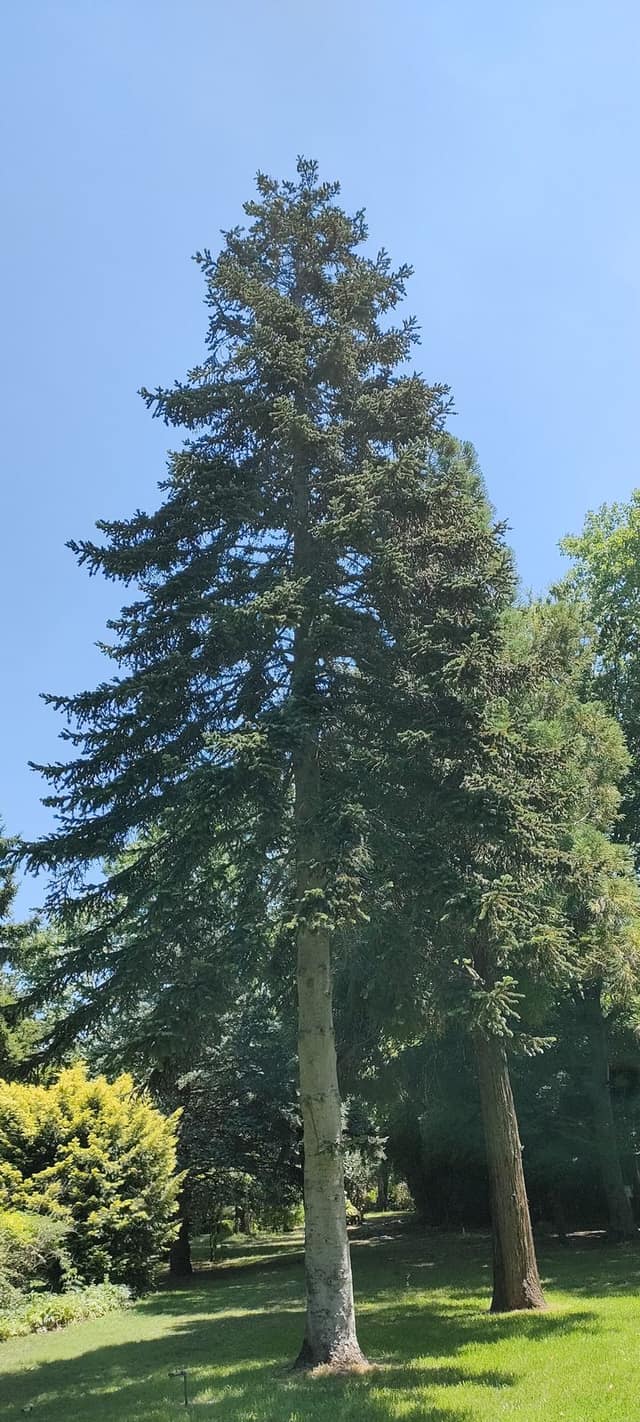
The first stop of the day is Karaca Arboretum, which lies inside the village of Samanlı on the Yalova-Termal highway. It was founded in 1980 by Hayrettin Karaca, the founder of the TEMA Foundation, and it is Türkiye's first private arboretum. The site covers thirteen and a half hectares and is laid out as a collection garden with an emphasis on landscape. According to the provincial directorate of culture and tourism, the garden holds about seven thousand species, subspecies, varieties and cultivated forms. The municipality's introduction splits this figure into roughly five thousand woody plants and nearly five thousand herbaceous, rhizomatous and bulbous plants. Individual visits are possible only on a particular day of the week, while groups and schools are received on other days by appointment. The tour is made with a guide and, according to the sources, lasts about an hour and a half, so when you arrive wait for the group to start rather than wandering off on your own. The visit takes place by making a donation to the foundation against a receipt; confirm the current conditions before you set off. As you walk with the guide, pay attention first to the genus collections: maples, the Prunus genus that includes plums and cherries, magnolias, oaks, birches, pines and spruces form the backbone of the garden. In spring the magnolias and ornamental cherries, and in autumn the maple leaves turning crimson, are the most photographed scenes. The rock gardens, iris gardens and rose gardens are laid out as separate sections; in each of them, bending down to the low plants and reading their labels is the most instructive part of the tour. Miniature plant areas and bonsai specimens grown in Türkiye are also part of the collection. In the garden, species brought from Asia, Europe, Africa, the Americas, Australia and New Zealand stand side by side with those of Türkiye. The collection of plants endemic to Türkiye is the section the municipality singles out. Among the tall conifers, do not forget to look for the giant sequoia that also appears on the cover of its Wikipedia article. In June 2004 the arboretum received an award from the International Dendrology Society, becoming the fifteenth garden in the world to receive it. The garden is not only a place to visit; internships for university students, gardener training and seed exchange with other botanical gardens are also among its regular tasks. These activities are funded by the nursery inside the garden, and the nursery is open every day of the week. The paths are earth and grass, so wear shoes that do not slip after rain. Not touching the plants, not breaking off branches and not leaving the marked paths are the basic rules of a collection garden. For photographs the softest light is the side light that filters through the trees in the afternoon. When the tour ends, return to the car and continue south along the same highway towards Termal; the road enters the valley and soon reaches the district centre.
Source: KTB Yalova İl Kültür ve Turizm Müdürlüğü; Kültür Portalı; Yalova Belediyesi.
Yalova Thermal Spas
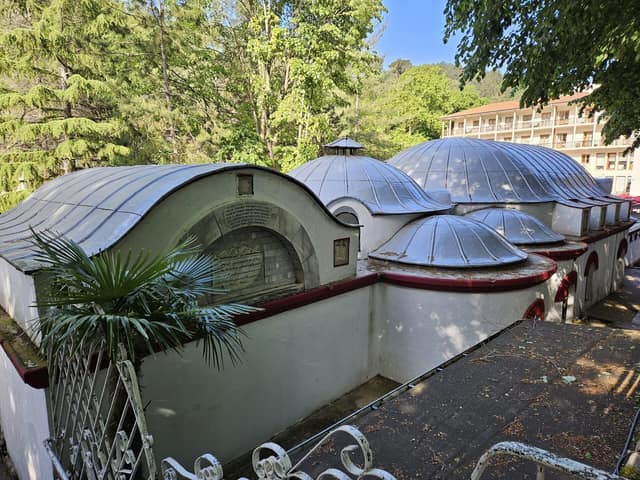
The centre of Termal district lies twelve kilometres from Yalova, inside a wooded valley on the slope of Mount Samanlı. The one hundred and four hectare area within the spa's operating boundaries is held in public ownership under a notice published in the Official Gazette in 1982. Here we will not visit the hotel and pool businesses but the historic baths and the park of the grounds. Stop at the entrance and look at the cascade known as Yedi Havuzlar, the Seven Pools; according to the sources, this stepped flow at the mouth of the valley is the first view of the grounds. The water of Termal carries a very old story; the provincial directorate writes that the springs appeared after a great earthquake and that the place was called Pythia Therma from the 6th century onwards. It is related that because of the steam and hot water rising from cracks in the ground, the place was believed to belong to an underground god. According to the municipality, the first baths were built about sixteen hundred years ago in the time of the Byzantine Emperor Constantine. Inside the park, first find the Kurşunlu Hamam, the Lead Bath; it took its name because its dome is covered in lead. The building is said to have been founded in the Byzantine period under Justinian, and to have been repaired by order of Sultan Abdülhamid II after disasters and wars had buried it in the earth. Searching for the inscription written in Ottoman Turkish on marble on its outer facade is a small piece of detective work at this stop. Then move on to the Valide Hamamı; according to the provincial directorate it was built with six domes, and today three of them are missing. Repaired in the time of Sultan Abdülmecid, the building takes its name from the fact that the sultan's mother was treated here. The Sultan Bath and the Row Baths listed by the municipality are also historic parts of the same grounds; entering the baths is subject to separate visiting conditions. In 1892 the Imperial Medical Society examined the waters, and after they were found equal to those of Aix-les-Bains in France, a hotel and a bath were built here. The municipality also notes that the spa won a gold medal at an international competition in Rome in 1911. The water is described as containing calcium, sulphate and fluoride; leave any health decision to your doctor. As you wander between the baths, give some time to the park itself as well, because Termal is famous for its hydrangeas. The provincial directorate counts thirty-nine deciduous and twenty-six evergreen tree varieties, twenty-five shrub varieties and eighteen climbing and ground-cover plants in the grounds. The section called Güney Park, the South Park, is covered with pines, magnolias and other species. The large oriental plane in front of one of the hotel buildings is registered as a monumental tree; pause for a moment in front of its trunk. It is recorded that excavations begun in 1932 uncovered votive stelae, gravestones and columns bearing the monogram of a Byzantine emperor dated to the years 565 to 578. The domes photograph best in the slanting light of morning and late afternoon, and the steam shows better on cool days. At the end of this walk, climb the slope on foot; the next stop, the mansion, is inside the same park.
Source: KTB Yalova İl Kültür ve Turizm Müdürlüğü; Yalova Belediyesi.
Thermal Atatürk Mansion
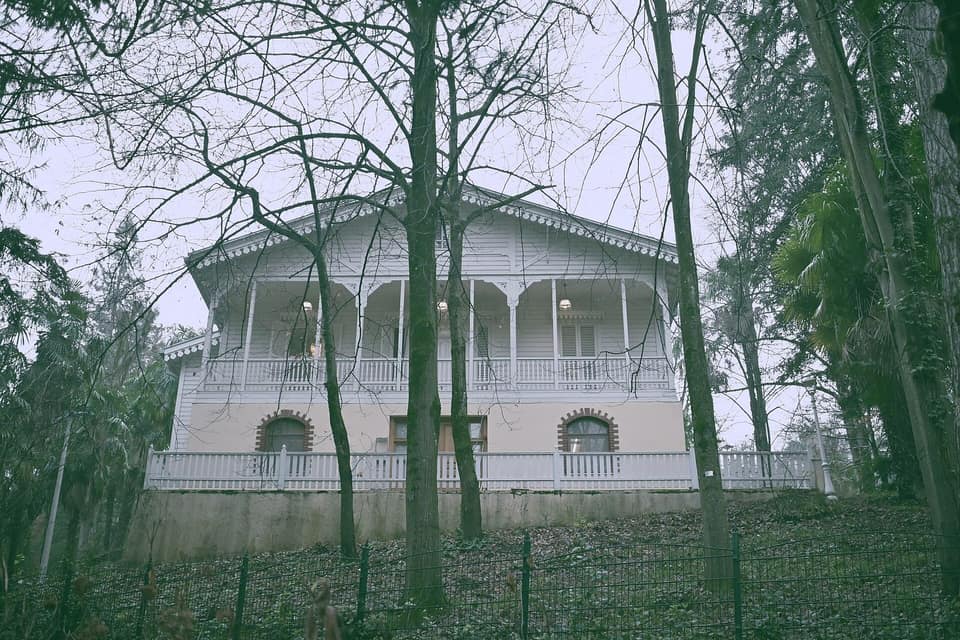
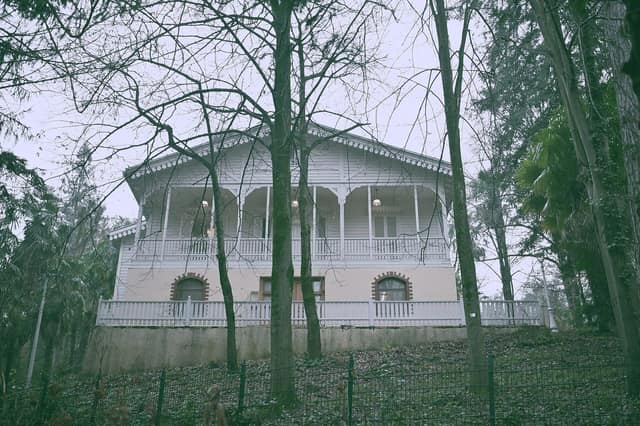
Inside the spa park, the two-storey wooden building sitting on a green hill among the trees is the Termal Atatürk Mansion. The mansion was built in thirty-eight days in 1929 at the request of Mustafa Kemal Atatürk, and its architect was Sedad Hakkı Eldem. According to the Wikipedia article, the site was chosen in order to host the Shah of Iran, Reza Pahlavi, that same year. Today the building serves as a museum attached to the Directorate of National Palaces of the Grand National Assembly of Türkiye; check the visiting days and conditions in the current announcements of the National Palaces. As you approach the mansion, look at it from the outside first: a projecting front facade, a veranda running along the storey and fine wooden ornament sum up the early architecture of the Republican period. The building stands on an area of about two hundred and forty-five square metres, so inside you should expect a modest summer house rather than vast halls. The sources give the number of reception rooms differently, as three or four, while they give the number of rooms as eleven. Because the mansion is made of wood it has no kitchen; meals were cooked in temporary kitchens set up outside, and the dishes were washed in the basement. Since it was used only in summer it has no heating system either, and this detail shows that the mansion was designed as a seasonal place of rest. In the reception room on the ground floor, look for the painting by Nurettin Niyazi depicting the Lead Bath and women; this picture is a direct reference to the bath you have just visited. In the same room stand a German-made piano, Japanese vases and an incense burner of brass and ebony decorated with hieroglyphs. The Culture Portal writes that the piano was made by Wilhelm Spaethe, and that the mansion also holds a painting by Aivazovsky. The room to the left of the entrance is the meeting room; here there is a meeting table, chairs covered in gazelle hide and a billiard table. The carpets were made at Hereke and the porcelain at Yıldız, and most of the furniture was brought from the Istanbul palaces, according to Wikipedia from Dolmabahçe. Because the items are preserved as the original furnishings of the period, move through the rooms without touching anything, in the direction the guide or attendant shows. The sources relate that decisions such as the founding of Domestic Goods Week and of the Turkish Historical Society and the Turkish Language Association were taken in this mansion. The mansion is also remembered as a place where Atatürk chatted with citizens who came from the surrounding villages. The building was registered as a cultural property in need of protection on 15 May 1983 and, according to the municipality, restored in 1984. Conditions for photography inside may change, so ask the attendant before taking pictures. Outside, do not miss the wooden Yaveran Mansion near the main building; it was built as a rest pavilion in the time of Abdülhamid II and was used under this name in the Republican period. The best photograph of the mansion is taken from the lower path, looking up the hill through the trees. After this, walk back down into the park, return to your car and set off towards Üvezpınar, up the valley.
Source: Kültür Portalı; Yalova Belediyesi; Küre Ansiklopedi; Wikipedia.
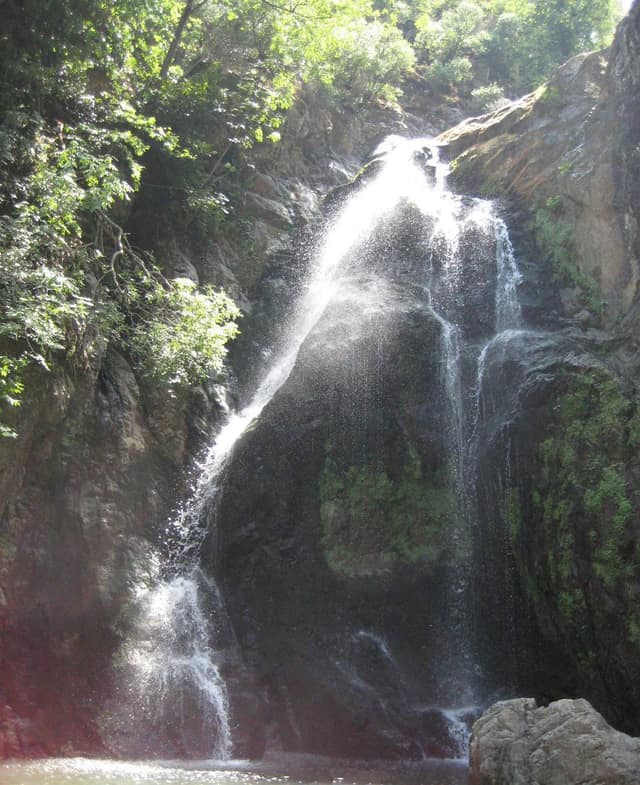
Sudüşen Waterfall and Harmankaya Nature Park
For the last stop of the day, climb from Termal to Üvezpınar; Üvezpınar is today a neighbourhood of the town of Termal and lies at the start of the road to the upper valley. According to the provincial directorate, Sudüşen Waterfall is eight kilometres from Üvezpınar. On the way, in a stretch close to the provincial border of Bursa, lies Harmankaya Nature Park; the area, previously registered as a recreation site, was declared a nature park on 11 July 2011. Take a short break here and look at the forest itself: the area is covered mainly with oriental beech. Silver linden, sweet chestnut, hornbeam and several kinds of oak mix in among the beeches. At the end of winter snowdrops come up from the ground, and at the start of summer bellflowers appear; photograph them without picking any flowers. The sources write that mammals such as wolf, jackal, fox and wild boar have been observed in the area, so leave no food scraps and do not feed the animals. As you continue along the road a view opens up through the forest and a reservoir appears below. This lake belongs to the Gökçe Dam, built on the Gökçedere stream in the 1980s to supply Yalova with drinking water. The Culture Portal writes that on the route to the waterfall you meet a reservoir, a view of the Sea of Marmara and a rich forest fauna. The Panorama hill stands one hundred and twenty metres above the sea and is covered with green vegetation; the widest view of the day is taken from here. The sources state that this route is used for photo safaris, nature walks and picnics. In the past people walked from Üvezpınar to the waterfall on an earth road through the forest; the writer of Atlas magazine relates that the road has now been asphalted and that you can drive up to an area where cars park. If you want to walk, follow the road through the forest at your own pace; if you came by car, follow the slope that leads down from the parking area. The waterfall is on the Nacaklı stream, at an altitude of about two hundred and fifty metres. According to Atlas, the waterfall was born when the straight-flowing stream turned into a steep drop of about twenty metres through vertical faulting. When you reach it, look at how the water spreads along the moss-covered rock wall and how it gathers in the pool below. The Wikipedia article says the pool is suitable for swimming, but the water is cold and the rocks are slippery; if you go in, look after your own safety. In the summer months the waterfall path gets crowded, so for a quiet moment choose a weekday or the early part of the day. For photographs, if you want the water to look silky, a long exposure steadied on a stone works well; light is scarce in the shaded valley. Check the visiting conditions of the nature park and any entrance arrangement in official sources before you set off. On the way back, descend by the same road to Üvezpınar and Termal; leave the waterfall early so that you finish the forest road before dark.
Source: KTB Yalova İl Kültür ve Turizm Müdürlüğü; Kültür Portalı; Atlas; Wikipedia.
Comments
Loading...
