

Historical & Cultural SitesCastles & Palaces
Termal Atatürk Köşkü
9
No ratings yet
Sign in to like and rate
Thermal Atatürk Mansion
About Venue
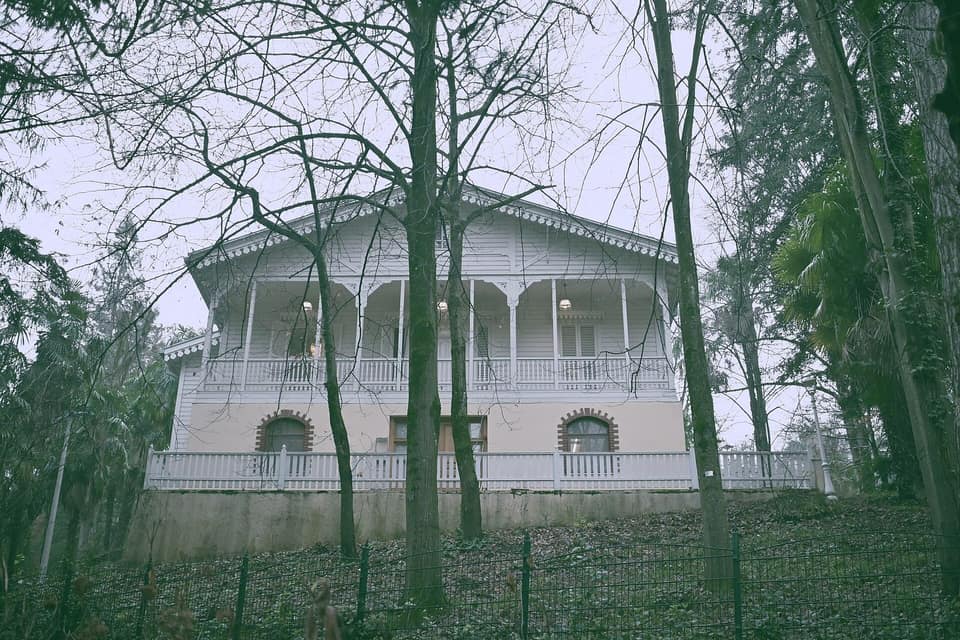
The Termal Atatürk Mansion is a two-storey wooden building rising in the wooded valley of the hot springs, about twelve kilometres south of Yalova city centre. Kültür Portalı records that it was built in thirty-eight days in 1929 and that its architect was Prof. Sedad Hakkı Eldem. The Turkish Museums website notes that construction was undertaken by the Seyr-i Sefain Administration and that the house was first called the Reis-i Cumhur Mansion before becoming known as the Atatürk Mansion. According to Wikipedia the site was chosen to host the Shah of Iran, Reza Pahlavi, who also became the mansion's first guest.
The mansion is counted among the early examples of civil architecture of the Republican period. The Tourism Encyclopedia of Turkey describes a nearly square rectangular plan and four floors including the basement and the attic. Sources give different counts of rooms and halls: Kültür Portalı lists three state halls and eleven rooms, while Turkish Museums mentions four halls, seventeen rooms and four bathrooms. Because the building is made of wood, no kitchen was placed inside as a precaution against fire. Wikipedia relates that meals were cooked in temporary kitchens set up outside and that the dishes were washed in the scullery in the basement. As the house was used only in summer, it has no heating system either.
Inside, the first stop is the state hall reached from the entrance lobby. According to Turkish Museums, the painting in the entrance hall is by Nurettin Niyazi Ergüven, a painter of the Republican period, and a symmetrical pair of Japanese Arita vases are the other eye-catching pieces of this room. The encyclopedia gives the painting's title as Kurşunlu Bath and Women and dates it to 1930. Two doors on the left lead into the large hall used for dining and meetings. This hall holds a table for twenty, chairs upholstered in gazelle leather and a billiard table brought from Dolmabahçe Palace. At the exit of the hall stands an American-made radio.
Most of the furnishings were selected from palaces in Istanbul. Kültür Portalı lists a painting by the Russian artist Aivazovsky showing a mountain slope and animals, Iranian and Hereke carpets and Yıldız Porcelain vases. The same list includes French, Japanese and Chinese vases, a brass bedroom set, French lacquered chairs and a Wilhelm Spaethe piano made in Gera. The encyclopedia dates the Aivazovsky painting to 1875. At the head of the stairs to the upper floor stands a brass vessel with hieroglyphic decoration on an ebony base, said to have come from Egypt.
The first floor holds Atatürk's study, rest room, sitting room and bathroom. Turkish Museums writes that the rooms of Atatürk's adopted daughters Afet İnan, Sabiha Gökçen, Rukiye Erkin and Zehra Aylin are on the same floor. The hall framed by the three corridors leading to these rooms served as a shared meeting place for the residents of the house. On the ground floor, the two-room section to the right of the entrance was reserved for Atatürk's sister Makbule Hanım.
The mansion is also remembered as a place where the government carried out its summer work in the early years of the Republic. Sources relate that decisions such as the National Products Week and the founding of the Turkish Historical Society and the Turkish Language Association were discussed here. Yalova Municipality recalls that it was one of the places where Atatürk spent his last summer days before his death. According to Turkish Museums, a decree dated 24 July 1930 placed the building under the National Palaces to be preserved as the property of the nation.
The mansion was registered as a cultural property to be protected by a decision dated 15 May 1983. It was repaired in the 1980s and opened as a museum with its furnishings, and according to Turkish Museums it was restored again between 2008 and 2012. Today it is visited as a house museum under the TBMM National Palaces Administration. Check opening days, hours and admission conditions on the official National Palaces website.
Do not rush the outdoor half of the visit. The garden runs into the woodland, and Turkish Museums lists long-lived trees here such as sequoia, tall arborvitae, linden, hornbeam, pedunculate oak, Scots pine, weeping pine and palm. The wide marble terrace is said to be where lunch was served in summer, and the facade is best seen from here and from the path below. The nearby wooden Aides-de-Camp Mansion was, according to Wikipedia, built as a resting pavilion under Abdülhamid II and assigned to the aides in the Republican period. For photographs, the leafless seasons show the facade more openly, while in summer the shade of the trees falls across the wooden balconies.
The mansion lies inside the Termal spa area, in the same valley as the historic baths, so the two are easily seen in one half day. Kültür Portalı notes that minibuses run from the provincial centre to the district; drivers follow the Termal road from Yalova. Visitors from Istanbul usually cross to Yalova by ferry and continue from there. Comfortable shoes are a good choice for the sloping paths of the spa grounds.
Comments
Loading...
Location - Termal Atatürk Köşkü
Venue Info
AddressTermal kaplıca alanı içi, Termal / Yalova
VenueTermal, Yalova
TypeHistorical & Cultural Sites