

From Amisos Hill to the City Museum, the Layers of Samsun
Sign in to like and rate
Someone visiting Samsun for the first time thinks first of the shore and the port, yet the city's story begins on a hill just behind the sea. The Turkish Culture Portal explains that the ancient city of Amisos spread over Toraman Tepe and its slopes north-west of the city centre, and that according to written sources it was founded by settlers from Miletus in the 6th century BC. This route follows the path from that first settlement to the city's present-day memory in five stops, roughly in chronological order, walking along the coast from north-west to south-east.
The first stop is Amisos Hill, home to the Hellenistic Baruthane Tumuli and the widest view over the city. The second stop is Samsun Museum, which moved into its new building in 2024 and displays the finds from the hill together with the Amisos Treasure. The third stop is Saathane Square, one of the oldest centres of the city, named after its clock tower; the inn, bathhouse and madrasa buildings of the Ottoman town cluster around this square. The fourth stop is the Gazi Museum, built as a hotel in 1902 and used as a museum since 1940. The day ends at Samsun City Museum, set up in railway staff houses dating from 1928, in halls that tell of the city's migrations, trade and everyday life.
The order follows both time and geography. You begin on the summit of the ancient city and go down to the museum where you see that city's objects, then move to the core of the Ottoman market quarter, from there to a hotel building of the early twentieth century, and finally to timber staff houses from the first years of the Republic. Because the stops lie close to the tram line, you can ride one or two stations whenever you get tired. It is possible to walk along the coast from Amisos Hill to the museum and from the museum to Saathane; Saathane, the Gazi Museum and the City Museum are only a few hundred metres apart.
Some practical notes. You can use the cable car at Batıpark to reach the hill; Samulaş states that it was the first cable car opened in the Black Sea Region. The Provincial Directorate of Culture and Tourism writes that the tomb chambers in the tumuli were closed to visitors because of the danger of collapse, so ask about their status before you go. Check the opening hours, closing days and entry conditions of the museums on their official websites. Samsun Museum is the longest stop, so placing your lunch break just before or after it makes the day easier. Wear comfortable shoes, take a cardigan against the wind on the shore, and pick a clear hour for photographs on the terrace at the top. If you would like to split the route in two, you can visit the hill and the museum on the first day, and the square and the two smaller museums on the second.
Sources
- Kültür Portalı, Amisos Tepesi, https://www.kulturportali.gov.tr/turkiye/samsun/gezilecekyer/amisos-tepesi
- Samsun İl Kültür ve Turizm Müdürlüğü, Amisos Tepesi, https://samsun.ktb.gov.tr/TR-216747/amisos-tepesi.html
- Samulaş, Teleferik, https://www.samulas.com.tr/teleferik
- Samulaş, Hafif Raylı Sistem, https://www.samulas.com.tr/tramvay
- Kültür Portalı, Samsun Müzesi, https://www.kulturportali.gov.tr/turkiye/samsun/gezilecekyer/samsun-muzesi
- Samsun İl Kültür ve Turizm Müdürlüğü, Samsun Müzesi, https://samsun.ktb.gov.tr/TR-362749/samsun-muzesi.html
- Samsun İl Kültür ve Turizm Müdürlüğü, Saathane Meydanı, https://samsun.ktb.gov.tr/TR-216759/saathane-meydani.html
- Samsun Büyükşehir Belediyesi, Saathane Meydanı, https://www.samsun.bel.tr/samsunda-yasam/samsunu-kesfedin/gezilecek-yerler/saathane-meydani
- Orta Karadeniz Kalkınma Ajansı, Samsun Travel Guide, https://oka.gov.tr/assets/upload/dosyalar/samsun-travel-guide.pdf
- Kültür Portalı, Gazi Müzesi, https://www.kulturportali.gov.tr/turkiye/samsun/gezilecekyer/gazi-muzesi
- Samsun İl Kültür ve Turizm Müdürlüğü, Gazi Müzesi, https://samsun.ktb.gov.tr/TR-362753/gazi-muzesi.html
- Samsun İl Kültür ve Turizm Müdürlüğü, Samsun Kent Müzesi, https://samsun.ktb.gov.tr/TR-362754/samsun-kent-muzesi.html
- Ercan Yalçın, Müzelerin Tarihi Misyonu ve Samsun Kent Müzesi, Tarih ve Günce (2017), https://dergipark.org.tr/en/download/article-file/330070
- Wikipedia, Samsun tramvayı, https://tr.wikipedia.org/wiki/Samsun_tramvayı
- Wikipedia, Samsun Saat Kulesi, https://tr.wikipedia.org/wiki/Samsun_Saat_Kulesi
Route Stops
Amisos Hill (Baruthane Tumuli)
Start the day at Batıpark on the western edge of the city and ride the cable car up the hill. Samulaş states that the line between Batıpark and the Baruthane Tumuli entered service in 2005 and is 323 metres long. During the short ride the port, the shore of Batıpark and the city centre pass beneath your feet. If you prefer not to use the cable car, you can get off the tram at Baruthane / Kalkancı station and walk up, or drive. The Turkish Culture Portal notes that the site is in the Baruthane neighbourhood, about six kilometres from the bus station.
When you reach the top, walk first to the viewing terrace and read the city from above. According to the Culture Portal, ancient Amisos was built on Toraman Tepe and its slopes north-west of the city centre. The same source explains that the harbour lay east of the hill and that the finds point to a Lower City behind the harbour. The Upper City on the ridge of the hill is thought to have covered an area of about 44 hectares. Looking east from the terrace towards today's port, it becomes easier to picture this layout that is more than two thousand years old.
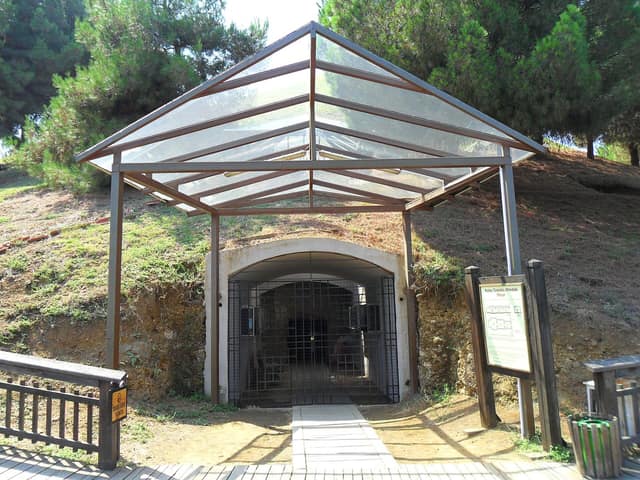
Then move on to the tumuli, the two large artificial mounds on top of the hill. The Provincial Directorate of Culture and Tourism writes that the tombs came to light in rescue excavations started in 2004 and date from the Hellenistic period, when the Mithridatic dynasty ruled. The excavations were carried out jointly by Samsun Museum and Istanbul University. According to the Samsun guide of the Central Black Sea Development Agency, the southern tumulus is about 15 metres high and 40 metres in diameter. The two-room tomb beneath it was carved into a conglomerate layer, and its walls were covered with a cream-coloured plaster. The same guide reports that lines giving the look of masonry were scratched into the plaster of the front room and painted navy blue. Beneath the northern tumulus there are three rooms one behind the other, decorated only with false half-columns.
Check the current visiting status of the tomb chambers before you go. The Provincial Directorate of Culture and Tourism states that the tumuli and the tombs were closed to visitors because of the danger of collapse. If they are closed, look at the covered entrance of the northern tumulus from outside and read the information panels beside it. Do not climb onto the heaped earth; these mounds are part of the monument itself and are protected.
Leave the last part of your time on the hill for photographs. In the soft morning light the city and the sea appear more clearly in the same frame. There are places to sit and rest around the terrace, but on clear days the wind can become strong. After coming down from the hill, take the tram one station east to Samsun Müzesi / Fener station; the objects of the ancient city you have just seen are waiting for you there.
Source: Kültür Portalı, Amisos Tepesi; Samsun İl Kültür ve Turizm Müdürlüğü, Amisos Tepesi; Samulaş, Teleferik; OKA, Samsun Travel Guide.
Samsun Museum
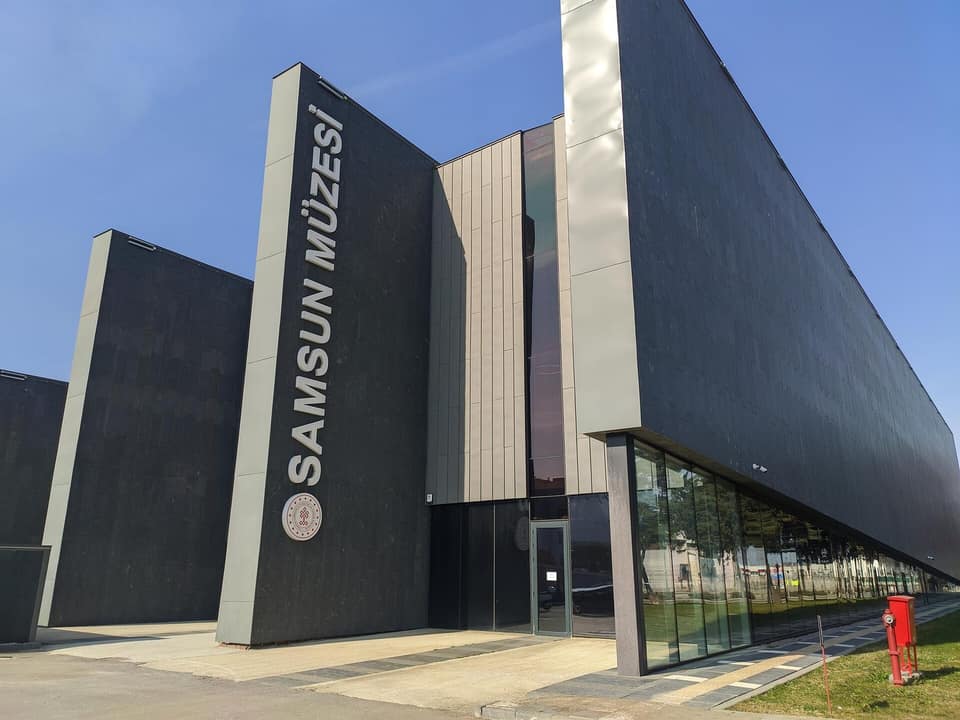
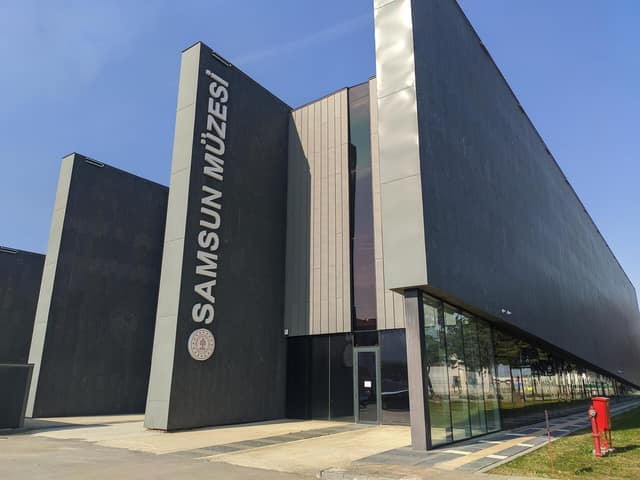
This is the longest stop on the route; put your lunch break just before or after this visit. The Turkish Culture Portal writes that Samsun Museum first opened in 1981 and has operated in its new building in İlkadım since 2024. The Provincial Directorate of Culture and Tourism states that the architecture of the new building was inspired by the waves of the Black Sea and won an award in the project category of the 16th National Architecture Exhibition and Awards. As you approach the building, stop once and look at the wave-like facade from outside. According to the same source, the building of about 15 thousand square metres is the largest museum in the Black Sea Region and also serves as a regional museum.
Inside, besides the exhibition halls, there are temporary exhibition halls, a conference hall, a library, a children's museum and a laboratory. The Provincial Directorate of Culture and Tourism reports that 7,165 objects are on display in the museum. So as not to lose your way in such a large collection, divide your visit into three parts: Amisos first, then the prehistoric finds of the province, and ethnography last.
In the first part, look at the finds from the city whose hill you came down from in the morning. The Culture Portal says that the museum's most striking collection is formed by the finds from ancient Amisos and the Amisos Treasure found in a tomb chamber. Among the tomb finds, the gold jewellery belonging to a man, a woman and a girl is especially important. The Culture Portal writes that the man's grave is thought to belong to one of the highest-ranking officials of the Kingdom of Pontus, and the others to his wife and daughter. The Culture Portal notes that this treasure came not from the tumuli on the hill but from a family tomb found in a rescue excavation in the Cedit neighbourhood in 1995. Do not hurry in front of the showcase if you want to look closely at the craftsmanship of the jewellery. The Amisos Mosaic is also in this section; the guide of the Central Black Sea Development Agency explains that the centre of the mosaic shows a scene with Achilles and Thetis, surrounded by depictions of the seasons.
In the second part, objects from the Chalcolithic, Early Bronze, Hittite, Hellenistic and Roman periods found in Samsun and its surroundings await you. The Culture Portal counts the trepanned skulls of the Early Bronze Age and the bronze spearhead decorated in relief on both faces among the museum's favourite pieces. The same source states that the bronze statue of a nude athlete is a copy of an original typical of the 5th century BC. Step back a little in front of the statue and take in its stance as a whole. Then move on to the coin collection, which spans the Classical period to the Republic.
The last part is the ethnography halls, which occupy a separate section of the museum. The objects from the city's recent past here make a good introduction to the everyday-life story of the City Museum you will see at the end of the day. If you come with children, set aside time for the children's museum. Check the opening hours, closing days and entry conditions with official sources before you go. When you leave the museum, you can walk south-east along the shore or take the tram to Büyük Cami / Opera station.
Source: Kültür Portalı, Samsun Müzesi; Samsun İl Kültür ve Turizm Müdürlüğü, Samsun Müzesi; OKA, Samsun Travel Guide.
Clock Square and Clock Tower
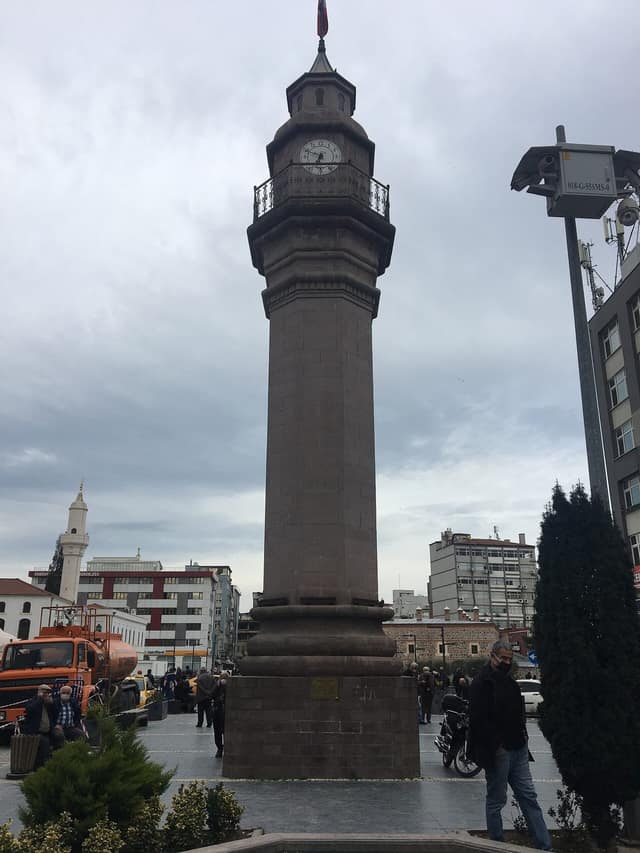
When you get off the tram at Büyük Cami / Opera station, you reach the square in a few steps. The Provincial Directorate of Culture and Tourism writes that Saathane Square takes its name from the clock tower in its middle and is one of the oldest centres of Samsun. The same source adds that the square still keeps its commercial and cultural importance today. This is the core of the city in the Ottoman period. According to the guide of the Central Black Sea Development Agency, Samsun Castle covered the area stretching from Saathane Square to the Bedesten and stood until the great fire of 1869. The same guide explains that the castle walls were demolished under the new city plan drawn up after the fire.
First stand opposite the tower and look at it as a whole. According to the guide of the Central Black Sea Development Agency, the first tower was built in the second half of the 1880s for the anniversary of the accession of Abdülhamid II. The guide writes that the tower was built by a French engineer of Belgian origin and that it had a polygonal base and body. Besides showing the time, the tower was also used as a fire and lookout tower. In 1933 a new electrically powered clock and a siren system used by the fire brigade were added. According to the guide, the first tower was badly damaged in an earthquake in the 1940s, was taken down because it could not be repaired, and its clock was sold to the Municipality of Ladik. In 1977 a new tower designed by the architect Kemal Taner was put up in the square; in 2001 the present tower, very similar to the old one, was built.
Then turn to the historic buildings around the tower. The Provincial Directorate of Culture and Tourism states that the restoration launched by the Regional Directorate of Foundations in 2016 covered Taşhan, Şifa Hamamı, and the Süleyman Paşa Madrasa and Mosque. The guide of the Central Black Sea Development Agency writes that Taşhan is a two-storey inn built around 1508 and belongs to the Ali Paşa Foundation. According to the same guide, the courtyard in the middle of the inn is surrounded on every side by vaulted cells. The guide also reports that the Süleyman Paşa Madrasa belongs to the Hazinedarzade Süleyman Paşa Foundation and was built by the master builder Lazeri. Study the facades of the buildings from outside; find out on the spot for what purpose and under what conditions their interiors are open.
For photographs, shoot the tower from the open side of the square together with the buildings behind it. The square is busy all day; morning or late afternoon is better for a calm shot. If you want to sit down and rest, choose one of the benches at the edge of the square. From here you reach the Gazi Museum by walking a few hundred metres south.
Source: Samsun İl Kültür ve Turizm Müdürlüğü, Saathane Meydanı; Samsun Büyükşehir Belediyesi, Saathane Meydanı; OKA, Samsun Travel Guide.
Gazi Museum (Logic Palace)
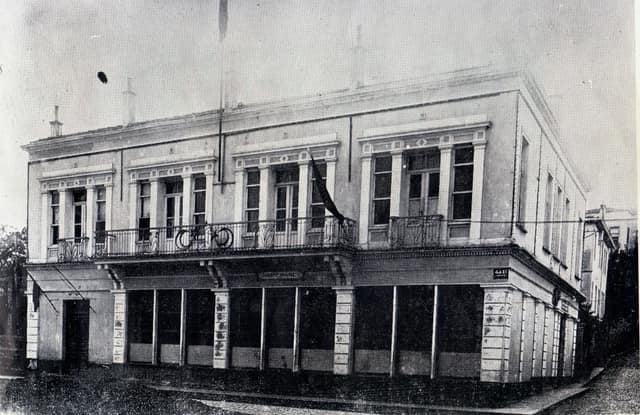
Walking south from the square, you come to a two-storey building at the entrance of the Mecidiye Bazaar. The Turkish Culture Portal gives the museum's address as Kale neighbourhood, Gazi Street, and states that the building stands at the entrance of the Mecidiye Bazaar. Before going in, look at the facade from the opposite pavement. According to the Culture Portal, the building was built as a hotel by Jean Ionnis Mantika in 1902. The same source writes that the outer walls of the two-storey building are of solid brick and its inner partitions are of lath and plaster. The guide of the Central Black Sea Development Agency reports that the hotel had four shops on its ground floor and that the building stands on an area of 509 square metres.
The story of how the building became a museum is told step by step in official sources. The Provincial Directorate of Culture and Tourism writes that Mustafa Kemal Pasha, who arrived in Samsun on 19 May 1919, stayed in this building, known as the Mıntıka (Mantıka) Palas. The Culture Portal states that the building was presented to him on behalf of the people of Samsun on 12 June 1926. According to the Provincial Directorate of Culture and Tourism, he also stayed here during his visits in 1928 and 1930. On the initiative of the Samsun Municipality, the building opened to visitors as the Gazi Museum in 1940. The Culture Portal adds that the ground floor was used as the Chamber Theatre between 1985 and 1995. The building was registered as an immovable cultural property to be protected in 1985.
The sources give different years for the handover; the Provincial Directorate of Culture and Tourism says 1995, the Culture Portal says 1997. Both sources write that the building was repaired after passing to the Ministry and reopened as a museum in 1998. According to the Provincial Directorate of Culture and Tourism, the renewed display opened to visitors on 22 May 2006 after a large-scale restoration. The same source states that the collection was enriched with belongings brought from the Atatürk Museum.
Inside, plan your visit floor by floor. The Provincial Directorate of Culture and Tourism writes that 191 objects are on display on the entrance and upper floors. The hall on the upper floor holds wax figures of 18 people; they are the members of the delegation that arrived in Samsun on 19 May 1919. The Culture Portal says that belongings used at the time and commemorative objects are shown on the entrance and upper floors. Bearing in mind that the rooms are small, try not to go in at the same time as a large group. The Provincial Directorate of Culture and Tourism states that the museum is open to visitors every day, but check the current hours before you go. The virtual tour on the Culture Portal lets you walk through the building again before or after your visit. When you leave the museum, walk along Cumhuriyet Street to the City Museum.
Source: Kültür Portalı, Gazi Müzesi; Samsun İl Kültür ve Turizm Müdürlüğü, Gazi Müzesi; OKA, Samsun Travel Guide.
Samsun City Museum
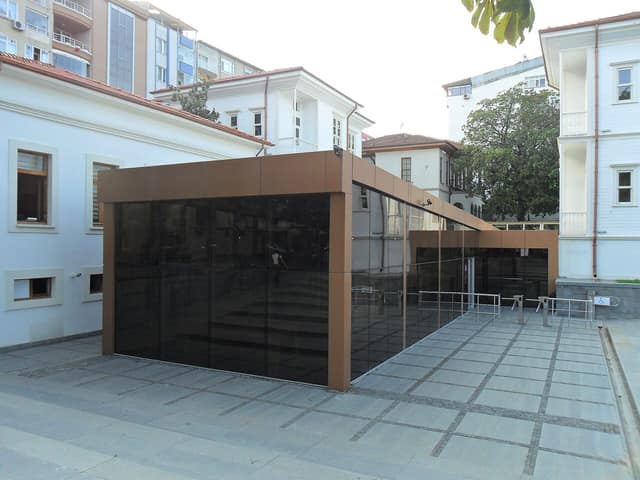
The last stop on the route is a group of timber buildings set in a tree-shaded garden on Cumhuriyet Street in the Zafer neighbourhood. The Provincial Directorate of Culture and Tourism writes that the museum consists of two main buildings, built in 1928 as staff houses for the Samsun-Sivas Railway Construction and Operation Administration and the State Railways. According to Ercan Yalçın's article in the journal Tarih ve Günce, the ground floors of these two-storey timber buildings, raised on a basement, were used as administrative offices and the upper floors as housing. The small building right next to them was built in 1936 and for many years served as the Demirspor club house. The article also explains that the club's garden was the setting for celebrations such as weddings and circumcision feasts. Before going in, stop in the garden and look at the timber facades of the buildings.
The founding of the museum is itself part of the city's story. The Provincial Directorate of Culture and Tourism states that the project was launched after the Union of Historic Towns meeting held in Samsun on 13-15 May 2011. According to the same source, the museum's location, content and design were decided with the contribution of Prof. Dr. Metin Sözen and ÇEKÜL. The buildings were expropriated in 2011 and opened as a museum after restoration. Yalçın's article writes that the museum began receiving visitors in February 2013.
Inside, the museum's own layout sets the order. At the entrance the History Strip, which briefly sums up the city's past, greets you, and the story begins with the emergence of Amisos. You will notice that the city you saw on the hill this morning stands here at the start of a timeline. According to the article, about thirty separate subjects are covered after the introductory section. Among them are migrations, disasters in the city's history, the city's architecture, transport, education, sport, health, food culture and wedding traditions. The sections on the traditional market, the Black Sea and fishing, and tobacco growing complete the commercial life you saw around Saathane. The article also reports that the museum holds a poster printed by lithography and said to date from 1921. The same source notes that a virtual museum has been set up in a separate room for visitors with disabilities.
After it opened, the museum was also recognised with awards. According to Yalçın's article, it won the Oktay Ekinci Jury Special Award in the 2013 competition of the Union of Historic Towns. The same article explains that in 2015 the museum was among the best six museums in a European competition in which 140 museums took part.
At the end of your visit, sit in the garden and gather your thoughts about the day. The page of the Provincial Directorate of Culture and Tourism states that the museum is closed until noon on Mondays; check the current hours before you go. When you leave the museum, the Gar tram station is a few minutes' walk away.
Source: Samsun İl Kültür ve Turizm Müdürlüğü, Samsun Kent Müzesi; Yalçın, Tarih ve Günce (2017).
Comments
Loading...
