

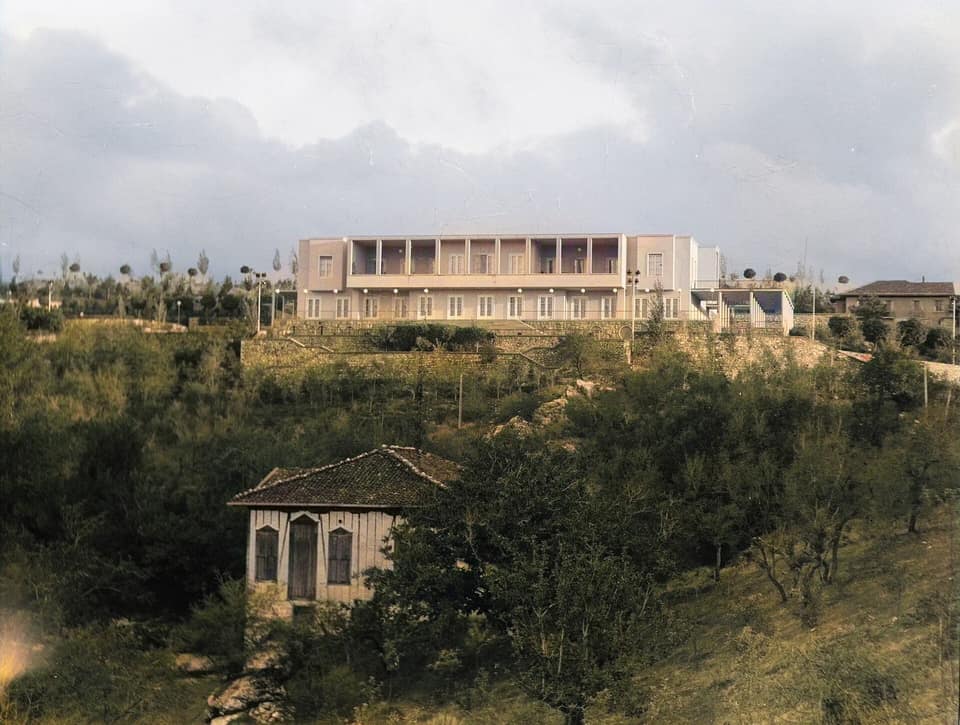
From a Replica of the Thessaloniki House to Çankaya, Atatürk's Homes in Ankara
Sign in to like and rate
This route reads Atatürk's life through his homes in Ankara. Each of the four stops matches a period: a replica of the house where he was born, built to the same plan and dimensions, the station building he used as home and headquarters during the War of Independence, the vineyard house in Çankaya where he lived for more than ten years, and finally the mausoleum that the whole country visits. In other words, the route links in a single day the traces that a life stretching from a childhood home to a monumental tomb left in Ankara.
The order is geographic, and the chronology falls into place on its own. The day begins in the west of the city, at the Atatürk House inside Atatürk Forest Farm. This house is a copy of his birthplace in Thessaloniki, built in Ankara for the centenary of his birth, and it opened to visitors on 10 November 1981. The farm itself is part of the route; this land, which Atatürk decided to establish in the spring of 1925 and donated to the Treasury in 1937, is the field expression of his ideas on agriculture and development.
The second stop is the old station building inside Ankara Station. When Atatürk arrived in Ankara on 27 December 1919, he first settled in the Agricultural School and then in this stone building. Today it is the Atatürk Residence and Railway Museum of the National Struggle, and its upper floor preserves his bedroom, study and reception room. From here you head southwest to Anıtkabir on Anıttepe. The Road of Lions, the Ceremonial Plaza, the mausoleum and the Atatürk and War of Independence Museum beneath the towers make up the longest stop of the day; the museum's Atatürk at His Desk section prepares you for the final stop of the route.
The day ends at the Atatürk Museum Mansion within the Çankaya Mansion grounds. The vineyard house that the municipality allocated on 30 May 1921 was enlarged in 1924, and Atatürk lived here until he moved to the Pink Mansion in 1932. The house has been a museum since 1950 and is visited by appointment, so build the timing of the route around your Museum Mansion appointment.
The distances between the stops are not suitable for walking. Since AOÇ and the station are on the same commuter line, using Başkentray in the morning makes sense; in the afternoon you will need a taxi or a bus. All four places have their own security and visiting rules: an appointment at Çankaya, an entrance check at Anıtkabir, and the visiting days set by the institution at the station museum. Check all of them on the official websites before you set out. A practical plan could look like this: give the morning to AOÇ and the station, the middle of the day to the Anıtkabir museum, and the rest of the day to Çankaya according to your appointment time. That way you complete the day along a line running from Atatürk's first residence in Ankara to the house in Çankaya where he lived for more than ten years.
Sources
- Cumhurbaşkanlığı, Atatürk Müze Köşkü, https://www.tccb.gov.tr/muzekosk/
- Cumhurbaşkanlığı, Atatürk Müze Köşkü Ziyaret, https://www.tccb.gov.tr/muzekosk/ziyaret/
- Atatürk Orman Çiftliği, Atatürk Evi, https://www.aoc.gov.tr/Portal/Geziyerlerimiz/ataturk-evi/36
- Atatürk Orman Çiftliği, Tarihçe, https://www.aoc.gov.tr/Portal/KategoriIcerik/tarihce/49
- Kültür Portalı, Milli Mücadelede Atatürk Konutu ve Demiryolları Müzesi, https://www.kulturportali.gov.tr/turkiye/ankara/gezilecekyer/mll-mucadelede-ataturk-konutu-ve-demryollari-muzes-ve-ataturk-vagonu
- Anıtkabir Komutanlığı, Anıt Bloku Hakkında, https://www.anitkabir.tsk.tr/02_insaasi/anit_blok_hakkinda.html
- Anıtkabir Komutanlığı, Müze Hakkında, https://www.anitkabir.tsk.tr/03_muzeler/muze_hakkinda.html
- Anıtkabir Komutanlığı, Çalışma Ofisi ve Atatürk Özel Kitaplığı, https://www.anitkabir.tsk.tr/03_muzeler/calisma_ofisi_ve_ataturk_ozel_kitapligi.html
- Anıtkabir Komutanlığı, İnşaat Aşamaları, https://www.anitkabir.tsk.tr/02_insaasi/insaat_asamalari.html
- Anıtkabir Komutanlığı, Mimari Özellikleri, https://www.anitkabir.tsk.tr/02_insaasi/mimari_ozellikleri.html
- Anıtkabir Komutanlığı, Barış Parkı, https://www.anitkabir.tsk.tr/02_insaasi/baris_parki.html
- Anıtkabir Komutanlığı, Ziyaret Saatleri, https://www.anitkabir.tsk.tr/06_hizmetlerimiz/ziyaret_saatleri.html
- Kültür Envanteri, Ankara Garı, https://kulturenvanteri.com/yer/ankara-gari/
- Wikipedia, Ankara Garı, https://tr.wikipedia.org/wiki/Ankara_Garı
- Wikipedia, Başkentray, https://tr.wikipedia.org/wiki/Başkentray
Route Stops
Atatürk House (Historical Site)
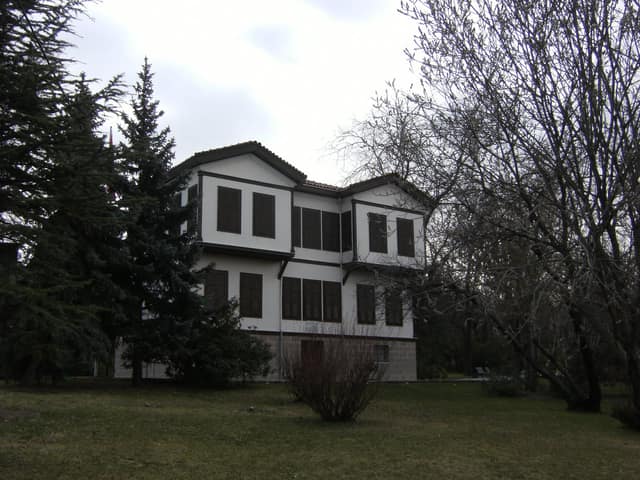
Begin the route at the Atatürk House inside Atatürk Forest Farm. The house is a copy of the house in Thessaloniki where Atatürk was born and spent his childhood, built to the same plan and dimensions. It was commissioned by the Çarmıklı brothers on the initiative of the Ankara Chamber of Commerce as part of the events marking the centenary of Atatürk's birth. The house opened to visitors with a ceremony on 10 November 1981 and is managed today by the Directorate of Atatürk Forest Farm. So although the building you see is a copy, it represents the first link in the chronology of the route, the house of his birth.
You enter the house through a door reached by stone steps. The ground floor holds the stone-paved hall, the cellar and the servant's room; this part shows how the transition between street and home was arranged in Thessaloniki houses. The second floor has a central hall, a kitchen, a sitting room and a guest room. When you reach the hall, notice how the rooms are arranged around this shared space, because that is the easiest way to read the plan. The third floor again has a hall, along with the Atatürk Room and the Museum Room.
The Atatürk Room is a small room measuring 3.86 by 2.82 metres. Its floor is covered with a kilim with white, green and black floral motifs on a red ground. On the wall to the right of the entrance stands a bronze bust of Atatürk on a wooden pedestal. To the left of the bust are a small writing desk covered with blue broadcloth and a visitors' book. The Thessaloniki brazier on a stand in the middle of the room, the old-style cane chairs lined along the wall and the oil lamp reflect the domestic arrangement of the period.
The Museum Room has four display cases, and it is best to look at them in order. The first case shows a grey suit, a cap and a sports shirt, and the second a tailcoat, waistcoat, gloves and top hat. The third case holds a black overcoat, a dressing gown and shoes, and the fourth personal items such as a field marshal's cap, a muffler, a tie, a card case, a coffee cup and a walking stick. Pay attention to the sizes of the clothes; they give the real scale of the familiar silhouette from the photographs.
After leaving the house, give a few minutes to the farm, because this land carries the second meaning of the route. In the spring of 1925 Atatürk told experts that he wanted to establish a large farm near Ankara, and he chose to have land that had been judged marshy and unproductive reclaimed. Over time the farm grew to 55,538 decares, and with a letter dated 11 June 1937 it was donated to the Treasury together with its animals and equipment. Check the visiting days and opening hours of the house on the Atatürk Forest Farm website before you go. For the next stop you can board a Başkentray train towards Ankara Station at Motor Durağı or Gazi, the two stations on either side of Atatürk Forest Farm on the line.
Source: Atatürk Orman Çiftliği, Atatürk Evi ve Tarihçe; Wikipedia, Başkentray.
Ankara Railway Station and Atatürk House Railway Museum
At Ankara Station, turn your eyes not to the large station building but to the two-storey stone structure beside it. This building was constructed in 1892 during the building of the Baghdad Railway and is known as the Directorate Building. During the War of Independence it was one of the few state buildings in Ankara. When Atatürk arrived in Ankara on 27 December 1919, he used first the Agricultural School and then this building as both residence and workplace. The Culture Portal record states that the building served at once as the Headquarters of the Commander-in-Chief and as a residence.
Look at the facade before going inside. The stone decoration at the corners, the wooden eaves and the arched windows with keystones show the plain language typical of railway architecture. The building was rearranged and opened as a museum on 24 December 1964. It holds the distinction of being the first institutional museum opened with the status of a private museum under the supervision of the Ministry of Culture and Tourism. Its current name is the Atatürk Residence and Railway Museum of the National Struggle.
The ground floor is arranged as the Railway Museum, and here you see a collection reaching from 1856 to the present day. Documents, commemorative medals, old switches, rail samples, silver service sets from dining and sleeping cars and old tickets are in this section. Ottoman-era seals, diplomas and identity cards also explain how the railway worked as an institution. Do not miss the gold-plated miniature carriage that the British government presented to Sultan Abdülaziz and the mother-of-pearl inlaid desk used in the sultan's private carriage. The pickaxe and shovel that Atatürk used at the groundbreaking ceremony of the Samsun-Çarşamba railway line in 1925 are also displayed on this floor.
The real subject of this stop, however, is upstairs. On the second floor, Atatürk's reception room, study and bedroom, along with the room of Fikriye Hanım, are arranged as a house museum. The furniture, a bedspread, an oud and photographs are preserved as they were on the first day. Notice how small the rooms are; this scale best conveys how modest the conditions were for a headquarters in wartime Ankara. According to the Culture Portal record, the operational plans of the War of Independence were prepared in this building. İbrahim Çallı's 1920 painting of women pulling ox carts during the War of Independence, roughly three metres by two, is also among the museum's highlights.
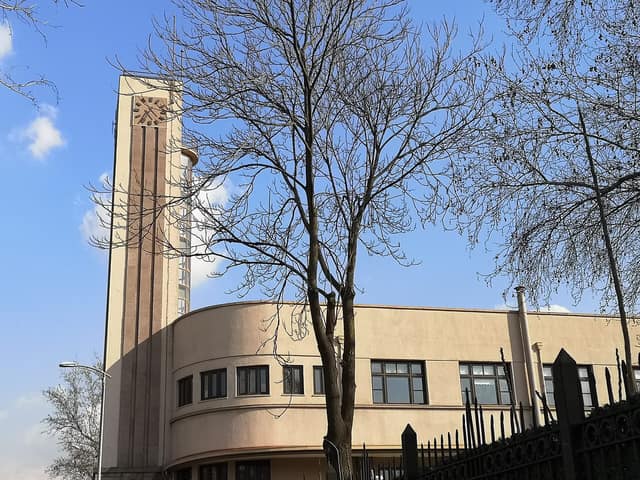
When you leave the museum, take a look at the large station building behind you as well. This building opened on 30 October 1937 and is regarded as a work in the art deco style. Today the station is one of the city's main transfer points, with Başkentray, the Gar station of the M4 metro line and a connection to the Maltepe station of Ankaray. Because the museum's visiting days are set by the institution, check the TCDD museum page before you go. To get to Anıtkabir you can take a taxi from the front of the station or use EGO buses.
Source: Kültür Portalı, Atatürk Konutu ve Demiryolları Müzesi; Kültür Envanteri, Ankara Garı; Wikipedia, Ankara Garı.
The Monument Cemetery of Independence
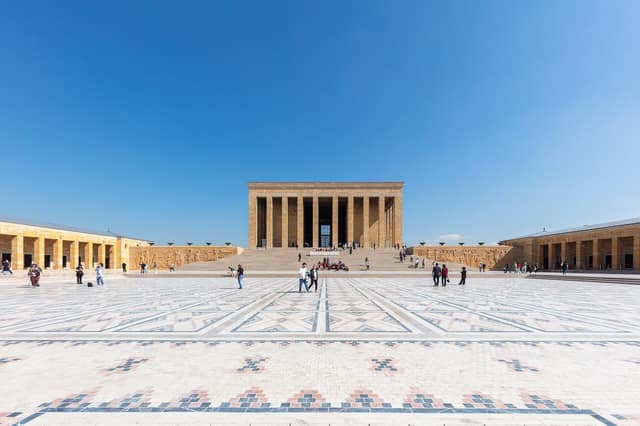
At Anıtkabir, begin your visit at the start of the Road of Lions. The road is reached by a staircase of 26 steps; it is 262.20 metres long and 12.80 metres wide. Along both sides stand 24 lion statues in pairs, twelve on the right and twelve on the left. The statues were made in the artistic style of the Hittites, who founded a great state in Anatolia. As you walk, notice the masses of trees on either side of the road; the aim of the landscape design was to isolate the visitor from the city and prepare them for the monument.
At the end of the road you reach the Ceremonial Plaza, which measures 129 metres by 84.25 metres. The plaza was designed to hold 15,000 people, and its floor has 373 carpet compositions formed from black, red, yellow and white travertine. The mausoleum is reached by a staircase of 42 steps. The Hall of Honour is surrounded on all four sides by square columns; there are eight at the front and back, excluding the corner columns, and fourteen on each side. The hall is 17 metres high, and twelve bronze torches line its two side walls. For the symbolic sarcophagus, monolithic stones were brought from the Gavur Mountains in Osmaniye; the Anıtkabir Command gives the weight of each as 40 tonnes.
After the mausoleum, give the most time to the Atatürk and War of Independence Museum. The museum occupies an area of about 3,000 square metres beneath the Hall of Honour and is entered through the door of the National Pact Tower, on the right as you look from the Ceremonial Plaza. It has four main sections: Atatürk's personal belongings, Gallipoli and the War of Independence told through panoramas and oil paintings, the National Struggle and the reforms in the vaulted galleries, and finally Atatürk's books. The first section opened on 21 June 1960 and displays items Atatürk used along with gifts presented to him by foreign statesmen.
For this route, the museum's most important corner is the Atatürk at His Desk section at the end of the vaulted galleries. Here Atatürk is portrayed at his desk in the Çankaya Mansion by a life-size wax figure. Apart from the clothing and the bookcase, every object on display belonged to Atatürk and is original. Foks, one of Atatürk's favourite dogs, is also displayed in this section. In the Private Library that follows, 3,123 books stand in display cases rearranged on 11 June 2005. From here you come out at the Defence of Rights Tower, and the mausoleum appears again directly in front of you.
Do not hurry on the way out, and look at the materials of the monument. White travertine brought from Haymana was used for the paving of the Road of Lions and the Ceremonial Plaza and for the stairs. Construction began with a groundbreaking ceremony on 9 October 1944, and the right to carry out and supervise the project was given to Emin Onat and Orhan Arda, who had won the competition. The Peace Park surrounding the Monument Block today holds about 50,000 ornamental trees and shrubs of 104 different species. Anıtkabir is open to visitors every day; the hours change with the season and are published on the official website. An audio guide is available in several languages, and groups can receive free guided tours by prior appointment. Before moving on to the final stop at the Çankaya Mansion, work out how much time is left until your appointment.
Source: Anıtkabir Komutanlığı, Anıt Bloku, Müze ve İnşaat Aşamaları.
The mausoleum of Mustafa Kemal Atatürk, Anıtkabir, has been built as a large complex with architectural elegance and a historical atmosphere.
Anıtkabir has been designed to reflect Atatürk's legacy and the struggle for independence in all its details. The Monument Block, the Lion Road, the Peace Park, and the museum together offer a multifaceted experience that narrates the history of the Republic to all visitors. The Lion Road at the entrance of Anıtkabir is adorned with large and symbolic statues representing the pride of a nation that does not kneel before colonial power.
Additionally, the Anıtkabir Atatürk and War of Independence Museum stands out with its exhibitions that thoroughly address the founding process of the Republic. The museum houses Atatürk's personal belongings, manuscripts, the original publication of the Nutuk, and photographs left from that era.
Anıtkabir is not only a mausoleum but also a center of history and respect. Every year, millions of visitors come here to pay their respects to the independence hero Atatürk.
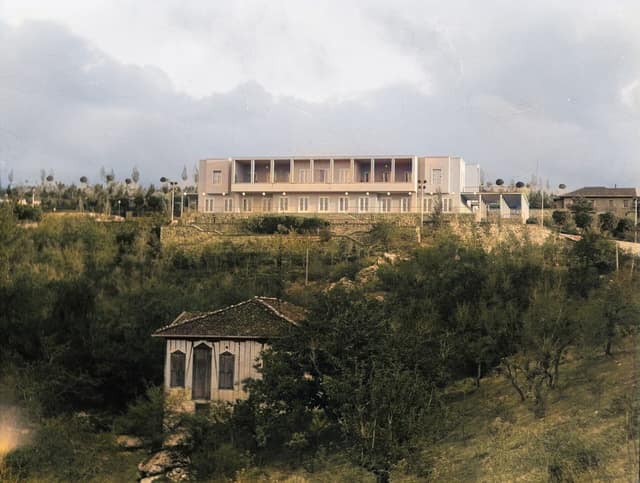
Çankaya Mansion (Atatürk Museum Mansion)
The final stop of the route is the Atatürk Museum Mansion inside the Presidential Çankaya Mansion grounds. Visits are by appointment; applications are made through the Presidency's visiting system. Visitors arriving by car enter through Gate 2, and those on foot through Gate 1. You are asked to be at the gate ten minutes before your appointment. The museum is closed on Mondays; groups are accepted with a maximum of twenty people, and groups are not admitted on national holidays.
Going in with the story of the house in mind makes the rooms easier to read. On 30 May 1921 the Ankara Municipality allocated this vineyard house in Çankaya to Mustafa Kemal. Among the trees, it was a small rectangular building with a wide terrace overlooking Ankara. In the middle of the ground floor was a hall with an octagonal pool and fountain, and upstairs there were a central hall and two rooms. After his marriage in 1923 it was enlarged to a design by the architect Vedat Tek, and the work was completed in 1924. A two-storey wing ending in a half-octagonal tower was added along the south facade.
Inside, you first pass from the windbreak into the entrance hall. This hall was once an open courtyard with an octagonal marble pool; it was covered over and turned into a space where guests waited. The Green Salon on the ground floor was Atatürk's study during the War of Independence and later became a reception room named for its dominant green colour. In the dining room known as the Çankaya Table, every piece of the dinner service bears a GMK or KA monogram. The notebooks beside the plates show that the table was also used as a kind of desk. The Ambassadors' Reception Room is where newly appointed ambassadors presented their letters of credence.
Upstairs, head from the large hall with the billiard table brought from Paris to the windows overlooking Ankara. The guest bedroom was for a time used as Zübeyde Hanım's room. The library holds 2,671 books in Turkish, French, German and English, and it is stated that much of Nutuk was written here. In 1930 the tower room was arranged as a second study; this art deco room is regarded as one of the early examples of modern architecture in Turkey. The original of the wax desk scene you saw at Anıtkabir is in this house, so compare the two in your mind. The bedroom is above the dining hall in the 1924 wing and has a private bathroom with white tiles.
During repairs in 1926, central heating was installed and a floor with six rooms was added above the kitchen and laundry for Atatürk's adopted children. Atatürk lived in this house until he moved to the Pink Mansion, built in 1932. The house opened to the public as a museum in 1950, and the comprehensive restoration between 2002 and 2007 arranged it to be presented not as a museum but as a home lived in during its period. In the exhibition hall of the house, which reopened on 19 April 2007, the building's architecture, its restoration and objects used by Atatürk are explained. Before going, you can explore the virtual tour and the audio guide in seven languages on the Presidency's website. Be sure to check the current appointment and visiting conditions when you apply.
Source: Cumhurbaşkanlığı, Atatürk Müze Köşkü ve Ziyaret.
Comments
Loading...
