

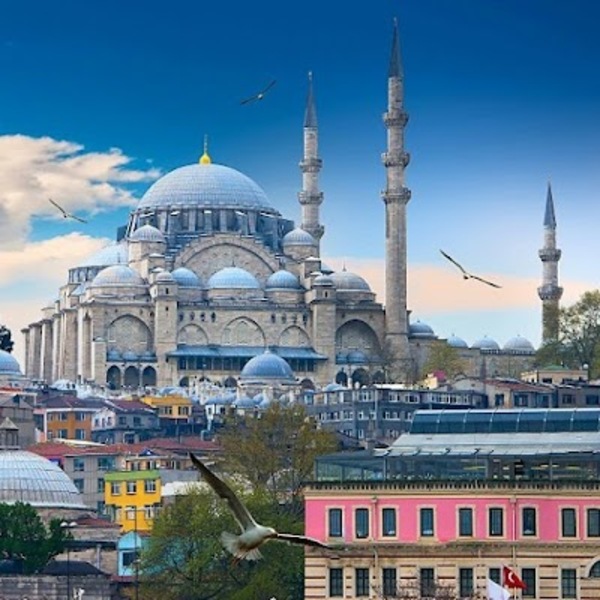
Süleymaniye Camii
Sign in to like and rate
The Suleymaniye Mosque, built by Mimar Sinan during the reign of Sultan Suleiman the Lawgiver, is one of the masterpieces of Ottoman architecture and holds great significance both religiously and culturally.
About Venue
The Suleymaniye Mosque is a monumental structure located on a hill overlooking the Golden Horn in the Fatih district of Istanbul, and is considered one of the most magnificent works of Ottoman architecture. The mosque was built by the order of the Ottoman Sultan Suleiman the Magnificent, designed by the chief architect Mimar Sinan. Construction began in 1550 and was completed in 1557. Mimar Sinan referred to this structure as his "masterpiece."
The mosque serves as the center of a large complex. This complex includes social service buildings such as a madrasa, library, darüşşifa (hospital), imaret (soup kitchen), hamam, and shops. The mosque has four minarets, two of which have three balconies, while the other two have two balconies each. This symbolizes that Suleiman the Magnificent was the fourth sultan on the Ottoman throne and the tenth sultan overall.
The central dome of the Suleymaniye Mosque has a height of 53 meters and a diameter of 26.5 meters. The dome rests on four large elephant feet and is supported by semi-domes on the sides. The decorations used in the interior are designed with a very simple and aesthetic understanding. The calligraphy, stained glass windows, and examples of calligraphic art are noteworthy.
At the back of the mosque, there are tombs belonging to Suleiman the Magnificent and his wife Hürrem Sultan. Additionally, Mimar Sinan's grave is located just outside the mosque's courtyard. Today, the mosque serves as an active place of worship and is heavily visited by both local and foreign tourists coming to Istanbul. The Suleymaniye Mosque is one of the indispensable stops on the worship route in Istanbul due to its architecture, functionality, and historical significance.