

20 Ekim | Binbirdirek Sarnıcı | Cistern of Philoxenos
-TR- "Merhaba, ben Ayşe. Ben bir yazılımcıyım ve şu anda bir teknoloji şirketinde çalışıyorum. Boş zamanlarımda Please provide the Turkish text you would like me to translate. I am ready to provide an accurate and professional English translation.)
PHILOXENOS CISTERN | BINBIRDEK CISTERN
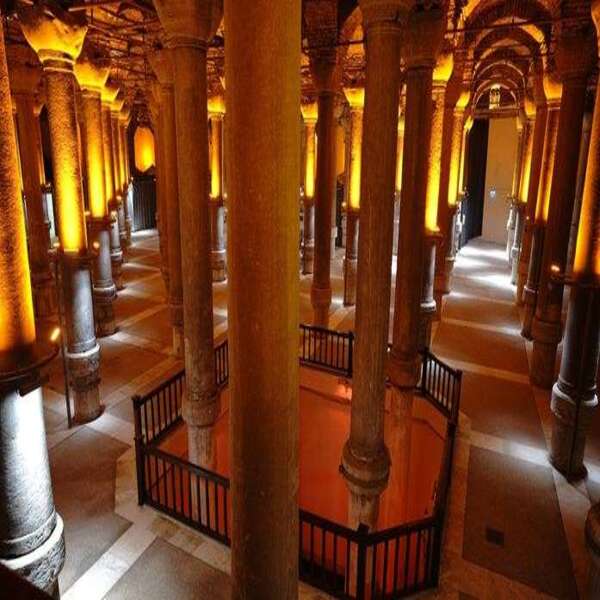
The Basilica Cistern, also known as the Binbirdirek Cistern, is the second largest water reservoir in Istanbul, after the Yerebatan Cistern. According to historical sources from the Byzantine era, it was built during the reign of Constantine the Great in the 4th century. Due to the gradual drying up of the Binbirdirek Cistern over time, it began to be used as a workshop from the 16th century onwards. The Binbirdirek Cistern, which covers an area of 3584 square meters, originally contained 224 columns, of which 212 have survived to the present day.
The columns in the cistern are composed of two stacked bodies, and they feature simple, truncated pyramid-shaped capitals with no ornamentation. It is known that the Greek letters carved into the column shafts are markings left by the stonemasons who worked on the cistern's construction and who crafted the columns. This cistern, which holds a significant place in Istanbul's cultural and artistic heritage, is open to visitors as a daily museum.
-EN-
PHILOXENOS CISTERN | BINBIRDEK CISTERN
Discover the fascinating Binbirdirek Cistern, the second-largest ancient water reservoir in Istanbul, after the world-renowned Basilica Cistern. According to Byzantine sources, this impressive structure was built in the 4th century, during the reign of Emperor Constantine the Great.
Over the centuries, as the cistern gradually dried up, it found a new purpose and was used as a workshop starting from the 16th century. Covering an area of 3,584 square meters, the Binbirdirek Cistern originally featured 224 marble columns, of which 212 still stand proudly today.
Each column features two stacked shafts and is topped with simple, unadorned pyramid-shaped capitals. If you look closely, you can see Greek letters carved into the columns—these are believed to be the personal markings of the ancient stonemasons who built this magnificent structure.
Today, the Basilica Cistern continues to play a significant role in Istanbul's cultural and artistic landscape, hosting exhibitions, events, and attracting daily visitors who come to experience its tranquil and mystical atmosphere.
Come and step into history beneath the streets of Istanbul!
Tickets available on Passo!