

Following the Filigree Trail in Midyat
Sign in to like and rate
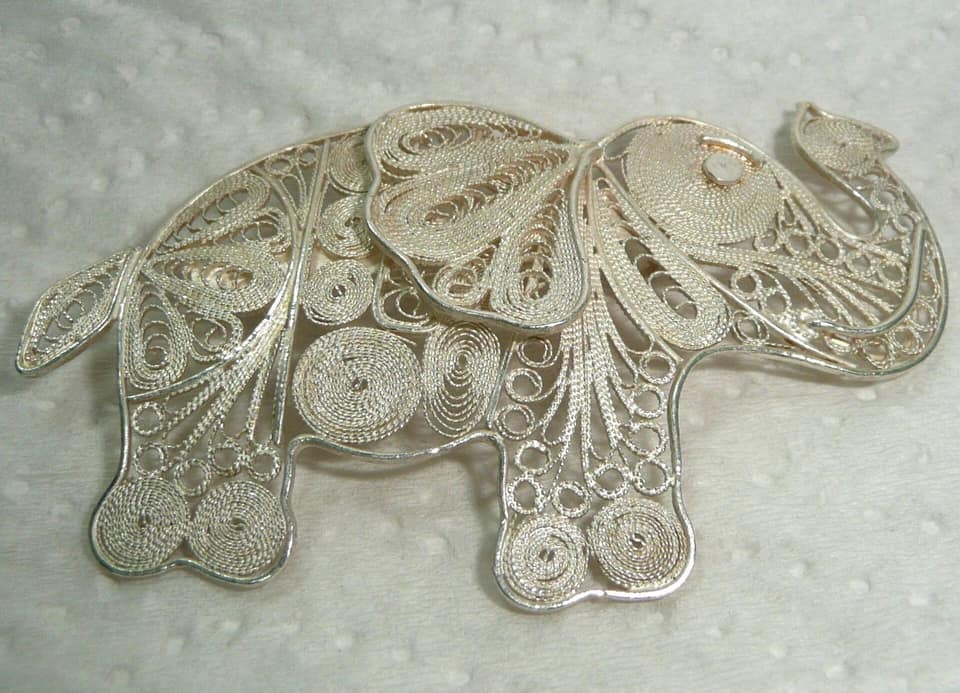
Midyat lies in the southeast of Mardin province and is known for its stone houses and narrow lanes. This article, however, is less about architecture than about a craft that has been practiced among those lanes for centuries: telkari, or silver filigree.
About Trip
Midyat lies in the southeast of Mardin province and is known for its stone houses and narrow lanes. This article, however, is less about architecture than about a craft that has been practiced among those lanes for centuries: telkari, or silver filigree. Telkari is a form of metalwork made with silver wire. In Midyat the craft is regarded as so deeply rooted that the product is protected by an official geographical indication. Below you will find what telkari is, what the registration means, and how you might plan a walk between the old streets and the bazaar.
What is telkari
Telkari is silver wire work. On the page of the Midyat Telkari Design, Application and Research Center at Mardin Artuklu University, Midyat's traditional craft is described as silver working. The same page says the craft is three thousand years old. That figure comes from a registration announcement, so we pass it on only as the announcement's wording, not as a separate historical claim of our own.
One point deserves to be made clear from the start. On the Midyat page of the Ministry of Culture and Tourism's General Directorate of Promotion, telkari is mentioned in a sentence that confuses it with stonework. Yet both the geographical indication record and the university page define telkari as decoration worked on silver and gold. Stonework is seen in Midyat's houses, while telkari is seen in shop windows and workshops. They are two separate crafts of the same town.
The promotion page also notes another thing: a few telkari masters still carry on their trade in the Midyat bazaar, and the page urges visitors to watch them. That suggestion became our starting point for this trip. Buying silver can stay in the background; what matters more is to look at how a craft is done in the place where it is done.
Details of the geographical indication
Midyat Telkarisi was registered as a geographically indicated product by the Turkish Patent and Trademark Office, which is attached to the Ministry of Industry and Technology. According to the record on the university page, the application was made on 10 December 2020, and protection under Article 41 of Industrial Property Law No. 6769 runs from that date. The registration itself carries the date 9 August 2021 and the registration number 837. The application number is recorded as C2020/430.
In the record the product group is handicraft products other than carpets, rugs and weavings, and the product is named as telkari work. The type of indication is an indication of origin. An indication of origin means a sign showing that a product comes from a particular place. Here the geographical boundary is drawn as the Midyat district of Mardin province. In other words, when a label says Midyat Telkarisi, it means the product was made within the boundaries of this district.
The body that had the registration made is the Midyat District Governorship. The application was made jointly by the Midyat District Governorship and the Midyat Vocational School of Mardin Artuklu University. The registrant's address is given as the Government Building on Cumhuriyet Boulevard in Bahcelievler Neighborhood. This detail is meaningful because it shows that the craft is protected under an institutional roof.
How to read the stamp and the label
The most useful part of the record is the section on how the mark is used, because a visitor can apply it directly. According to it, the phrase Midyat Telkarisi and the emblem of the indication of origin are used on the product itself or on its packaging. When this is not possible, the phrase and the emblem are displayed where they can easily be seen in the business.
Silver products made as Midyat telkari are stamped MT-950, formed from the initials of Midyat Telkarisi. Products made of gold carry a stamp formed of MT- followed by the carat number. On the packaging, the name of the producer, the type of material used and its fineness are stated.
This rule means that when you pick up a piece in the bazaar, you can ask three questions. Is there an MT stamp on it? Does the packaging state the material and its fineness? Is the producer's name given? The answers may not settle everything, but asking turns the visit into an informed observation.
Getting there
According to the Promotion General Directorate, Midyat is about an hour and a half from Mardin city center. That is the only travel information given in the source. It is best to check the exact distance and the service schedule from official announcements and the relevant transport operators. Please also check current timetables before you set out.
Midyat's historic settlement and today's town center are not in the same place. The promotion page says that as the population structure of the region changed over time, the town center shifted to Estel, about two kilometers away. For this reason the name Midyat often covers two separate parts: the old settlement and Estel. For the telkari bazaar your goal should be the old fabric; when asking for directions you can use the words Gumuscüler Bazaar and the area around the Guest House.
Historic streets and the bazaar
The page of the Mardin Provincial Directorate of Culture and Tourism on the historic streets of Estel and Midyat describes this area as two main zones. The first is Yukari Mahalle, known as Harid Fok. Here the streets of Midyat stone houses, built of katori stone unique to Midyat, extend as far as Estel Kosk Square. The houses and abbaras are decorated with various motifs. In 2020 these streets were restored faithfully to their original form by Midyat Municipality under its Street Improvement Project.
The second zone is the historic streets that start around the Guest House and extend to the Gumuscüler Bazaar. Your telkari visit will pass mainly along this second line. The name of the bazaar clearly shows the identity of the craft: it is the place where those who work with silver gather. For the general street fabric and the details of the houses, see the Midyat Historic Streets place page; here we focus only on the craft side.
When you look at shop windows in the bazaar, searching for detail is a good habit. You can look at how dense the wire patterns are, how even the edges are, and how clean the back of a piece is. These are not firm quality criteria; they are simply a way of knowing what to look at. If a master is working in a workshop, it is courteous to watch briefly without disturbing the work and to ask permission before taking photographs.
The university and the future of the craft
The Midyat Telkari Design, Application and Research Center within Mardin Artuklu University represents the academic side of the craft. Its page lists headings such as about, vision and mission, gallery, history and management. Among its project outputs are the Telkari Design and Application Center, the Midyat Telkari Geographical Indication, the Telkari Design and Innovation Workshop, Telkari Design Training and the International Jewelry Fair.
These headings show that telkari is not treated only as a craft of the past. Training, workshops and fairs appear on the page as activities meant to bring the old technique together with new designs. The center's menu also has a sales center heading; however, you should learn its working schedule and visiting conditions from the center's own page or from the university.
A walking suggestion
The most productive order for the day might be this. First, look at the facades and motifs of the stone houses along the restored streets of Yukari Mahalle. Then move to the area around the Guest House and continue toward the Gumuscüler Bazaar. In the bazaar, instead of shopping in a hurry, first wander, and observe the windows and the stamps. Afterwards, if you wish, take another break on the streets.
This route is not an itinerary given in the sources; it is a suggestion that combines the two historic zones named on the official pages in a sensible order. Comfortable shoes for stone streets and some water are enough. If you reach Estel Kosk Square, a short rest there completes the walk naturally.
Season and time of day
According to the promotion page, Midyat has climate characteristics similar to Mardin. It shows features of both the Mediterranean and continental climates, with very hot and dry summers and rainy, cold winters. The most comfortable periods for walking are therefore the seasons outside extreme heat and cold. In summer prefer the early hours of the morning; in the afternoon even the shaded streets can be oppressive.
Shop and workshop hours vary, so asking the tradespeople in the bazaar about their schedule on the spot is the safest course. On public holidays and rest days some businesses may be closed. If you want to watch telkari masters, a weekday during daytime is more likely to work, though this is no guarantee.
Practical notes
The Registered Products page of the provincial directorate lists several other Midyat products: Midyat Acuru, Midyat Kavunu, Midyat Tandir Ekmegi, Midyat Zeynebi Uzumu and Midyat Inciri. Telkari appears in the same list as the line Midyat Telkarisi. In other words, the same district has entered the geographical indication system with both a handicraft and agricultural products. This opens another side of the visit: you can get to know Midyat both in its bazaar and at its table.
If you are thinking of buying, keep these points in mind. Check the stamp and the packaging information; the record says they must be used. Ask the seller about the material and fineness of the piece. Learn the price directly from the seller rather than from a source. And if you are buying a gift, asking in which district the item was made also teaches you the meaning of the indication of origin.
At the end of the trip you will have neither a price list nor a firm quality guide. But you will have learned the name of a craft, how it is protected, and the streets along which you followed it. Looking for telkari in Midyat is really a way of seeing how stone and silver stand side by side in the same town.
Sources
- Mardin Artuklu University, Midyat Telkarisi Geographical Indication, https://www.artuklu.edu.tr/midyat-telkari/midyat-telkarisi-cografi-isareti
- Ministry of Culture and Tourism, General Directorate of Promotion, Midyat, https://tanitma.ktb.gov.tr/TR-22723/midyat.html
- Mardin Provincial Directorate of Culture and Tourism, Registered Products of Mardin, https://mardin.ktb.gov.tr/TR-286015/mardin39in-tescilli-urunleri.html
- Mardin Provincial Directorate of Culture and Tourism, Historic Estel and Midyat Streets, https://mardin.ktb.gov.tr/TR-312252/tarihi-estel-ve-midyat-sokaklari.html
Comments
Loading...
Location - Following the Filigree Trail in Midyat
 AuthorRadar TürkiyeVisit SourceGet Directions