

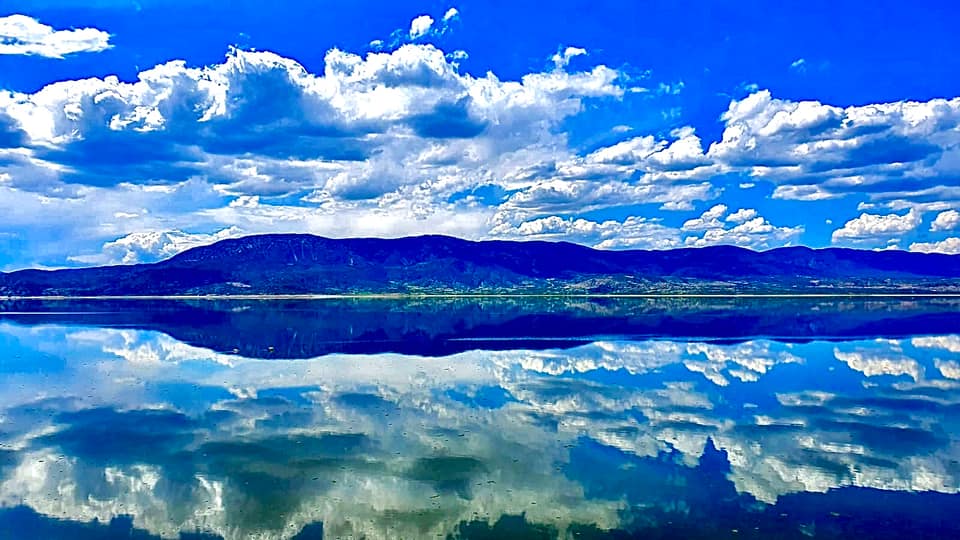
Bird Watching at Lake Burdur
Sign in to like and rate
Lake Burdur is a salty lake lying at the bottom of a wide basin at the southwestern edge of the Lakes District.
About Trip
Lake Burdur is a salty lake lying at the bottom of a wide basin at the southwestern edge of the Lakes District. The Ministry of Culture and Tourism's Culture Portal page says the lake stretches about 34 kilometres from southwest to northeast, that its deepest point is 110 metres and that its surface area is around 186 square kilometres. Other sources give different values for area and depth, because the water level of the lake has changed over the years, so it is wise to read these figures as "according to the sources". This article describes the best-known side of the lake, its birds, and how you can watch them without disturbing them.
Getting there
The lake is close to the centre of Burdur. The easiest way to reach the shore is by your own car or a taxi from the city; ask locally about public transport options. Choose a safe spot close to the road as your observation point. When you park, do not block traffic or farm tracks. According to the information published by the regional directorate of the Ministry of Agriculture and Forestry, the lands around the lake belong to the treasury, to private owners and to village legal entities, which means that not every point on the shore is a public visiting area. Do not cross fields or orchards, and do not use closed roads.
When choosing a shore, think about wind and the direction of the sun. As a general rule, position yourself with the sun behind you; looking east in the morning or west in the afternoon tires the eyes. Waiting at a fixed point with binoculars is often more productive than walking along the shore.
The character of the lake
According to the Culture Portal, because of the sandy beaches at its southwestern end, the lake served as a recreation area and beach for the people of Burdur until the 1980s. Today the real attraction of the lake is the wildlife in and above the water. The same page says that apart from the endemic Aphanius burduricus, which lives only in Lake Burdur, no fish live in this lake. This endemic fish makes the lake a scientifically special place as well as a stop for birds.
Lake Burdur is also counted among the lakes suitable for sailing, but bird watching should not be confused with water sports. The Culture Portal lists water sports and wildlife observation together among the tourism activities that can be done here, yet the activity that comes closest to the birds is quiet observation from the shore at a distance.
Status and protection
A news item of 17 October 2024 from the Faculty of Forestry at Isparta University of Applied Sciences introduces Lake Burdur as a Ramsar Site attached to the 6th Regional Directorate of the Ministry of Agriculture and Forestry, and notes that the Burdur Lake Wildlife Development Area lies in the same place. The item describes a field study carried out by the faculty's students together with officials of the General Directorate of Nature Conservation and National Parks. In other words, this lake is not only scenery but a managed wetland. The item also explains how the wetland ecosystem is managed, which parties sit on a wetland commission and that the lake area is under the disposal of the state.
This status has a practical meaning for visitors. In a protected area, behaviour such as hunting, collecting or flushing birds from their places is not appropriate. The rule to follow as an observer is simple. If the birds notice you and change their behaviour, you have come too close.
Which birds can be seen
According to the university news item, 300 kinds of birds have been identified in the area; this figure should be read as reported by the source. The Culture Portal writes that many bird species, above all white-headed ducks and flamingos, spend the winter on the lake. The white-headed duck is a threatened species, and the news item names it in Turkish as dikkuyruk. The source says the species spends the winter months on the lake and reports that four white-headed ducks had been seen in the ten to fifteen days before the visit. That figure is also a reminder that the species is not easy to see; finding a white-headed duck takes luck, patience and good binoculars.
The item also states that the coot is present in the area in summer and winter, and the little grebe in winter. During the field observations, yellow-legged gull, grey heron, little grebe, black-necked grebe and mallard were also seen. This list tells you what to look for before you go. The grey heron stands still at the shore, gulls move around in flocks, and grebes dive and resurface with their small bodies. Because the coot is present in the area in both summer and winter, it offers a good start for first-time observers.
Season and time of day
Winter is the most valuable observation season for this lake, because both the Culture Portal and the university news item report that species such as the white-headed duck and the flamingo spend the winter on the lake. In summer the number and kinds of birds change, while species present all year, such as the coot, can be watched in every season. Winter mornings are cold and the wind on the shore can be strong. Dress in layers and bring a windproof jacket and gloves.
The best hours of the day are early morning and late afternoon. Birds are more active then and the light is softer. At midday, heat shimmer begins on the water surface and it becomes harder to tell distant birds apart. Towards sunset, the reflections on the lake surface also make a lovely scene for photographs.
A suggested routine
A fixed plan helps. First reach the shore, switch off the engine and scan the water for two or three minutes without moving. Take in the general distribution with your eyes, then look at distant groups through binoculars. Eight or ten times magnification is enough for most observers; a stronger pair helps with distant flocks but brings shaking problems. A notebook and a bird guide let you confirm on the spot what you have seen.
Rather than walking along the shore, it is better to choose a few different observation points. Wait fifteen to twenty minutes at each. Flocks often gather on the far waters, while the places near the shore are used by birds feeding one by one. Bushes or the shadows of structures on the shore provide natural cover. Prefer earth tones to brightly coloured clothes.
Watching ethics
The first rule of the bird watcher is not to disturb the birds. Approaching birds and making them fly wastes the energy they need for feeding and resting, and in winter that energy is vital. Avoid loud talking, sudden arm movements, drones and throwing food to the birds. Do not use flash. Use a long lens for photographs and stay where you are instead of moving closer.
Do not bring your dog to the lake. Take your rubbish with you. Leave nests, vegetation and the creatures of the shore as they are. If you see an injured bird, do not try to treat it yourself; informing the local nature conservation officials is the best course.
Falling water and the future of the lake
The university news item reports that dams on the streams feeding the lake and wells dug to use groundwater have limited the water entering the lake, that salinity in the lake has risen, that the lake ecosystem has been negatively affected as a result and that decreases in bird numbers have been observed. The item also recalls that agriculture and livestock are the most important source of income for the people of the basin, so water use is a natural part of life in the region. This article contains no judgement or accusation; it only helps the observer understand the change that can be seen on the shore. In a year of low water, the shoreline and the bare ground look different.
The best contribution a visitor can make is to follow the observation rules and to keep up with current information published by the official institutions. Your observations can contribute to counts carried out by bird watching societies or official bodies, and reliable records are enough for that. Write down the species, number, date and time.
Serenler Tepesi
Serenler Tepesi Nature Park, visited during the same field study, is described in the item as an area of 380 decares. The item says that the area used to be a recreation ground, later received nature park status and has seen afforestation work. If you wish to complete your lake observation with a nature park visit, check the park's current situation and visiting conditions in advance from an official source.
Practical notes
Bring binoculars, water, a bird guide, a windbreaker and sun protection. Do not assume that there will be shade or visitor facilities on the shore.
If you combine the visit with the Burdur Museum in the city centre, you will have a balanced day. You watch birds on the lake in the morning and in the afternoon look at works from the ancient cities of the region in the museum. In this way you see both the natural and the cultural side of Burdur on the same day.
Sources
- Kültür Portalı, Su Sporları Burdur Gölü, https://www.kulturportali.gov.tr/turkiye/burdur/TurizmAktiviteleri/burdur-golu
- Isparta Uygulamalı Bilimler Üniversitesi Orman Fakültesi, Burdur Gölü arazi çalışmaları (17.10.2024), https://orman.isparta.edu.tr/tr/haber/doga-koruma-ve-milli-parklar-genel-mudurlugu-6-bolge-mudurlugunun-duzenledigi-ime-burdur-golu-arazi-calismalari-yapildi-57497h.html
- Lake Burdur, Wikipedia, https://en.wikipedia.org/wiki/Lake_Burdur
Comments
Loading...
Location - Bird Watching at Lake Burdur
 AuthorRadar TürkiyeVisit SourceGet Directions