

A Winter Walk in the Sarıkamış Scots Pine Forest
Sign in to like and rate
Winter in Sarıkamış begins outside the town. As you climb from the district, which lies about 51 kilometres from the centre of Kars, the roads narrow, the trees thicken and the sound fades.
About Trip
Winter in Sarıkamış begins outside the town. As you climb from the district, which lies about 51 kilometres from the centre of Kars, the roads narrow, the trees thicken and the sound fades. This article describes a winter walk on snow through the Scots pine forest of the Sarıkamış-Allahuekber Mountains National Park. The general introduction to the park is on the place page; here you will find only the forest, the snow, a walking plan and how to behave in nature.
Getting there
Sarıkamış can be reached by train, car and plane. According to the travel article in the Türk Tarım Orman magazine, Kars Harakani Airport is about 70 kilometres from the district. The same article describes the journey to Kars on the Eastern Express as passing through snow-covered villages and frozen streams. Because train and flight schedules change often, check days and times on the operator's official page.
The park lies between Erzurum and the Sarıkamış district of Kars and covers the Sarıkamış forests and the Allahuekber Mountains. The area measures 22,520 hectares; according to the page of the Ministry of Agriculture and Forestry 13th Regional Directorate, it was declared a national park in 2004. A park of this size makes it necessary to plan before you set out. Decide beforehand which zone you will visit, how far you will walk and where you will turn back if the weather worsens.
Why the Scots pine is special here
The park has two main resource values. One is its history; the other is that the Scots pine spreads here at the highest altitude in Turkey and forms pure Scots pine stands. A stand is a large piece of forest made up of trees of the same species and similar size. The magazine article presents the region as the one place in the country where Scots pine reaches such altitude and forms such well-formed pure stands. We pass on this superlative only as the source's own assessment.
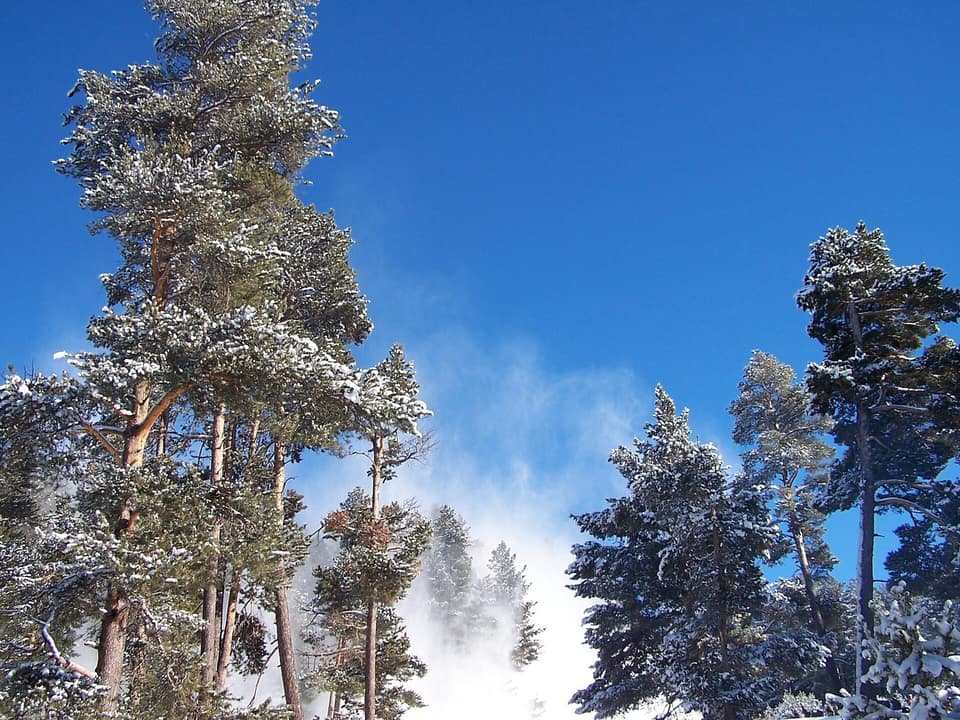
The difference between the Scots pine and broadleaf trees is that it does not stand bare in winter. The needles stay on the branch all winter, and the snow settles on this green base. When you enter the forest you see light filtering through the branches and falling on the snow in patches. Alongside Scots pine, the park's vegetation includes steppe oak and stinking juniper. On the Allahuekber Mountains, whose summit reaches 3,100 metres, high mountain meadows and mountain steppe cover the ground above the tree line. In other words, as you climb on a walk, the trees thin out, the view opens and the wind becomes more noticeable.
Crystal snow and when to go
One feature that sets Sarıkamış apart among winter destinations is the powder snow known as crystal snow. According to the magazine article, thanks to the low humidity this snow does not turn to ice and sits on the pine branches as if dusted with powder. The same source notes that the visual spectacle begins when the first serious snow falls at the end of November, and that the period before the New Year is especially rewarding for nature photographers. Because snow conditions change from year to year, check current weather and road information before you go.
If you plan to take photographs, prefer morning and late afternoon light. The low sun creates long shadows on the snow and warm tones on the pine trunks. At midday the light is harsh and flat; give those hours to the longest part of the walk. Batteries drain quickly in the cold, so carry a spare battery and your phone close to your body in an inner pocket.
Use zones and walking plan
The travel article in the magazine describes access to the park through its use zones. By private vehicle you can drive from the Sarıkamış district towards the Allahuekber Mountains for about 7-8 kilometres and reach the Controlled Use Zone. Along stabilised roads you continue for about 6 kilometres through pastures and forest and reach the Sustainable Use Zone. The article adds that the furthest point, the Absolute Use Zone, can be reached by vehicle from a distance of 2 kilometres. These zone names show that not every part of the area is used in the same way; the closer you get to the protected parts, the less freedom there is.
A practical plan can be set up like this. First drive to the controlled zone and spend the first half hour of the walk at an easy pace. Then choose a short out-and-back route along the edge of the stabilised road, leading into the forest. If you are thinking of leaving the road and entering the forest, follow existing tracks instead of opening a new one. Under snow the path disappears and your sense of direction can mislead you. For that reason download the map for offline use and fix your turning point well before sunset.
Walking suggestion
A plan of four to five hours is enough for a winter day. Leave the district in the morning, reach the Controlled Use Zone and spend the first half hour at a warm-up pace. Spend the next two hours at the forest edge around the stabilised road, stopping often. Look at the texture of snow on the branches, the colour of the pine trunks and the animal tracks in the snow. Keep your midday break short and warm, in a spot sheltered from the wind; if you have been sweating, put on an extra layer during the break. Before heading back, work out how much daylight remains. Two short loops are a wiser choice in winter than one long route. Aim to be back down in the district before sunset.
Winter equipment
The magazine article speaks of taking the first step into the forest on snowshoes. Snowshoes are the most practical way to walk in fresh, deep snow without sinking; on hard, compacted snow, a walking pole helps with grip. Dress in layers: a base layer that does not hold sweat, a warming middle layer and an outer layer that cuts the wind. Bring a spare pair of gloves, because wet gloves conduct the cold quickly. Reflection from the snow is intense; sunglasses and lip balm are ordinary parts of a winter walk. Carry a hot drink in a flask and food that is easy to eat.
For those who arrive by car, checking tyres and equipment is a separate matter. The magazine article says that, because of snowfall in winter, checking vehicle tyres and winter equipment is vital. It also adds that the warnings of the highway and national park authorities should always be followed. Ask about road conditions before setting out, follow the park management's directions and come down the valley before daylight ends.
Residents of the forest
The winter forest looks empty at first glance, but tracks tell a great deal to those who know how to read them. According to the magazine article, the park is also home to species that are endangered in Turkey. You may come across herds of roe deer; the article also lists the tracks that wolf, lynx, bear, hare and fox leave in the snow. In the sky you may see birds of prey such as the griffon vulture, the lanner falcon, the booted eagle and the bearded vulture. The Diana butterfly, endemic to our country, also lives in the pine forests, but the source notes that it cannot be seen in winter.
Following tracks is fun; following the animal is not. In winter every movement costs an animal energy. If you meet a herd, stop, watch quietly from a distance and withdraw. Do not leave food, and take your rubbish back with you. Binoculars and a long-lens camera let you observe while keeping your distance.
A quiet note on history
This forest is also a place of memory. The page of the 13th Regional Directorate reports that, in the Allahuekber Mountains, there are martyrs' cemeteries for the soldiers who died of cold during the Sarıkamış Operation of 1914-1915. According to the same page there are twenty such cemeteries in the area, only some of which have a memorial; the boundaries of the rest are undefined. The magazine article names the Allahuekber, Tekçam, Soğanlı and Dikenli Tabya cemeteries, which are reached by stabilised roads. If you visit these points, keep quiet, do not play music aloud and be considerate of others when taking photographs. Think of it not as a walking break but as a respectful visit.
A nearby side stop
For a short break outside the park, the Soğuksu Nature Park is suitable. According to the 13th Regional Directorate, the park is 4 kilometres from the Sarıkamış district and 51 kilometres from the centre of Kars. The area is 11 hectares and lies on the lower tier of the Scots pine forests. It can be considered for a small forest break before or after the long walk in the large national park; in winter conditions, however, ask the authorities about access and whether it is open.
Season and time of day
The best time for a winter walk can be thought of as the winter months when the snow cover has settled, though conditions differ every year. Because the days are short, do not start late. Setting out early in the morning and turning back in the early afternoon is the safest pattern. In windy and foggy weather visibility drops; on such a day stay only at the forest edge. The traditional Sarıçam Festivals around Soğuksu are held in July; since this article deals only with winter, research the other seasons separately.
Practical notes
Before you go, check the current announcements of the Kars Provincial Directorate of Culture and Tourism and of the national park officials. Entry, open areas and access conditions may change with snow conditions; learn details such as hours and fees from official sources. Do not walk alone, tell someone close to you when you will return and protect your phone from the cold. For groups with children or little walking experience, prefer short routes close to the road. When you return to the district, rest somewhere warm; the real reward of a winter walk is the calm that comes after the tiredness.
Sources
- Ministry of Agriculture and Forestry 13th Regional Directorate, National Parks, https://bolge13.tarimorman.gov.tr/Menu/39/Milli-Parklar
- Ministry of Agriculture and Forestry 13th Regional Directorate, Nature Parks, https://bolge13.tarimorman.gov.tr/Menu/40/Tabiat-Parklari
- Türk Tarım Orman Magazine, Allahuekber Dağları'nda tarihin izleri, https://www.turktarim.gov.tr/Haber/1369/allahuekber-daglarinda-tarihin-izleri
Comments
Loading...
Location - A Winter Walk in the Sarıkamış Scots Pine Forest
 AuthorRadar TürkiyeVisit SourceGet Directions