

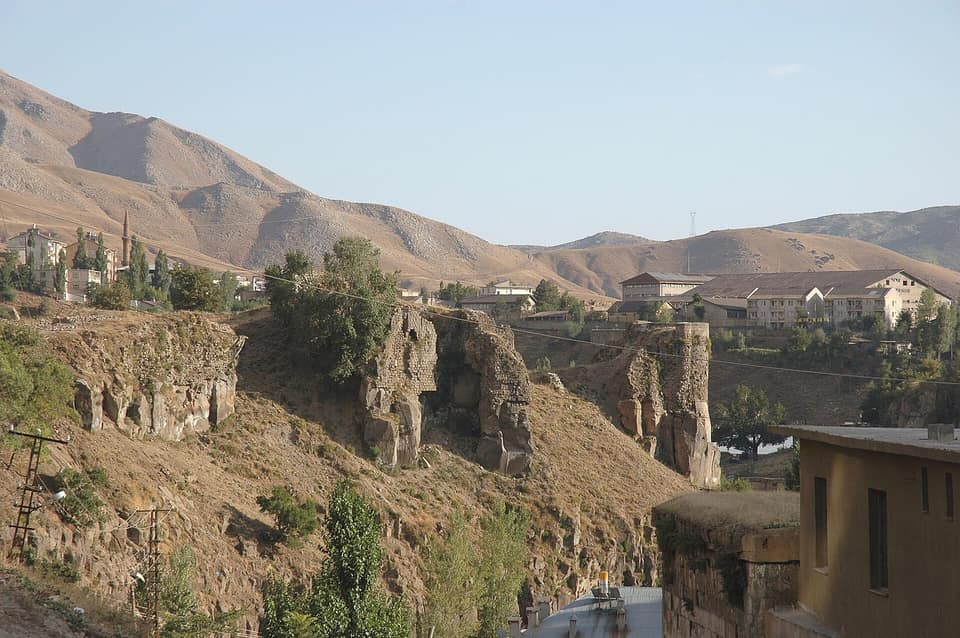
A Walk at the Foot of Bitlis Castle
Sign in to like and rate
The easiest way to understand Bitlis is to start at the foot of its castle. The city seems to have been squeezed into a narrow valley carved by two streams; houses, the market and old buildings lean against one another at the base of a rocky slope.
About Trip
The easiest way to understand Bitlis is to start at the foot of its castle. The city seems to have been squeezed into a narrow valley carved by two streams; houses, the market and old buildings lean against one another at the base of a rocky slope. This article describes a slow city walk around the market area beneath Bitlis Castle. The aim is not to compile a fact sheet for each building, but to link the bathhouse, the madrasa, the inn and the castle slope in a single day and read how the city worked.
Getting there
Bitlis Castle stands in the city center, in the Zeydan neighborhood; the Culture Portal gives its address on Nurullah Eren Street. The provincial culture and tourism directorate's page on castles says the fortress rises on the steep slope right above the market in the city center. In other words, finding the starting point of the walk only requires looking for the castle: the rock rising directly above the market is a landmark visible from all over the city. Visitors arriving by bus or private car should leave the vehicle outside the market and walk, because the slope neighborhoods are narrow and steep. For transport details, please check the directorate's How to Get There page and current timetables.
What you see at the foot of the castle
The castle stands on a sheer rock block where two streams, branches of the Bitlis river, meet. According to the Culture Portal, the walls are fortified all around with loopholes, and because it was built on a steep hill there is no defensive moat around it. That detail is a good reason to lift your eyes while you walk: looking from below at how the walls follow the natural line of the rock can teach more than looking from above. Sources tell that the castle was attributed to one of the commanders of Alexander the Great, and they give 312 BC as the founding date. This is passed on as a story, not as a firm construction record.
An important warning: the provincial directorate states that the interior of the castle is filled with rubble, so it is not possible to tour it. It adds, however, that there is a remarkable panorama from the top. So do not plan to enter the castle on this walk; read its outer line, the slope and the surroundings instead. The Culture Portal also writes that, separate from the castle, there is a tower on Dideban Hill, that only its ruins remain, and that it is thought to have been a lookout that signaled to the castle. Trying to pick out this point, which overlooks the hillside neighborhoods, adds a small game of discovery to the walk.
First steps around the market
Spend the first part of the walk in the market streets. The sources mention a market on the north side of the castle, facing the river, with a three-layered iron gate, and a covered bazaar; this describes the old order inside the castle and should not be confused with today's market. Today's market can be read as an urban fabric at the foot of the slope: narrow streets, stone walls and adjoining buildings. There is no need to hurry. Choose the quiet hours of the market to watch the differences in color and texture of the stone surfaces and the craftsmanship around door and window frames.
Bathhouses
Bitlis's bathhouse tradition offers a good clue to the city's history. According to the directorate's page on bathhouses, two bathhouses have survived to the present in the city center: the Han Bathhouse, which belonged to the Şerefhans, and the Paşa Bathhouse, built in the sixteenth century by Hüsrev Pasha. The same page notes that only the ruins of the Han Sarayı Bathhouse on the castle and the Saray Bathhouse in the Zeydan neighborhood can still be found. Since Zeydan is also the neighborhood in the castle's address, this helps you build the map of the walk in your head.
The page also mentions a bathhouse ruin at the El-Aman Caravanserai and bathhouse ruins inside the Ahlat and Adilcevaz castles. These places lie outside the walking route, but they show that in Bitlis the bathhouse was not only a feature of the city center; it was part of different settlement types such as caravanserais and castles. While strolling through bathhouse streets, it is a good habit to look for domed roofs and plain stone facades facing the street, because such buildings look modest from outside and keep their richness inside.
Madrasas
Madrasas form the second leg of the Bitlis walk. According to the directorate, the madrasas of the region were important institutions where education, teaching and cultural services were carried out in their period. They were built on open-courtyard and closed-courtyard plan systems, and the page specifically notes that the building material is Bitlis's famous cut stone. This sentence can be read like an assignment for the walk: look at how the stone is worked in each building and how the joint lines run.
At the head of the list is the İhlasiye Madrasa, in the Gökmeydan neighborhood. Based on information in Şerefhan's work Şerefname, the directorate writes that the building was commissioned by Şerefhan in 1589. The page adds that its architectural appearance carries the features of classical Seljuk aesthetics and that it was restored by the Ministry of Culture and Tourism. The same page also records that education in both positive and scholarly sciences was given here from its foundation. Focusing on the courtyard layout and the cut-stone craftsmanship gives you enough to observe here; we will not go into details of the garden and surroundings.
The Yusufiye Madrasa is also mentioned on the same page. The madrasa, located in the Girik düzü area, is thought to have been built in the eighteenth or nineteenth century; the page states that it was at one time used as a closed prison and that restoration work was continuing. This information is given as it appears on the page; ask the institution about the present condition of the building before visiting. The Nuhiye, Hatibiye, Şerefiye, Şükriye, Hatuniye, Ahlakiye, Hacı Begiye, Haliliye and Tağki İslam madrasas are listed as other madrasas within the province. It is not possible to see all of them in a day, but the list shows how dense the building activity was in Bitlis as a city of learning over the centuries.
Inns and trade routes
The city also has a commercial side. The directorate's page on inns and caravanserais lists the Hatuniye (Hazo) Inn, the Papşin (Hüsrev Pasha) Inn, the Başhan Inn and the El-Aman Inn. The Hatuniye Inn is said to stand beside the bridge of the same name and to have been built in the eleventh century. The Papşin and Başhan inns are on the Bitlis-Tatvan highway and are mentioned as buildings attributed to Hüsrev Pasha in the sixteenth century; the page states openly that this is hearsay. The El-Aman Inn is described as one of the largest caravanserais in Anatolia, forming a complex with its shops, mosque and bathhouse, and as built by Hüsrev Pasha in the sixteenth century. The Şerefiye, Arasa, Yusufiye, Duhan and Kokoz Zal Pasha inns are also named among the main other inns.
These inns are not part of the city walk; they are the subject of a separate trip by vehicle. But during the walk at the castle foot it is useful to think about why the city has so many inns, bathhouses and madrasas. The list in the sources shows that the city has a past full of both commercial and educational buildings. If you look at the castle from the market once more at the end of the walk, you will better understand that the same slope played both a protective and a connecting role.
Walking suggestion
To begin, come to the middle of the market and turn your face to the castle. Devote the first twenty minutes only to looking: the slope, the stone walls, the steep streets. Then, to ask about the Han Bathhouse and the Paşa Bathhouse named on the bathhouse page, apply to the provincial culture and tourism directorate or official information points. After the bathhouse, head to the Gökmeydan neighborhood and examine the İhlasiye Madrasa from outside and by its courtyard layout. In front of this building you will notice how cut stone repeats along the street. On the way back, approach the Zeydan neighborhood and see the castle slope from a different angle. Choose daylight hours to photograph the direction of Dideban Hill and the streets climbing the slope.
Take breaks deliberately so as not to tire your legs on the sloping streets. I suggest stopping once in the middle of the walk and looking back at the castle. Half a day is enough in total, but plan a full day if you want to spend more time on the madrasas and bathhouses.
Season and time
Bitlis lies in a mountainous region; the Culture Portal too speaks of the city's hillside neighborhoods when describing the castle. So check the current weather forecast before setting out, and wear shoes that do not slip on sloping, wet stone. Daylight hours are better both for photography and for safe walking. Visiting hours of bathhouses and madrasas may change; check current information with the provincial culture and tourism directorate.
Practical notes
Do not enter the castle; the provincial directorate states that its interior is filled with rubble. So the goal of the walk should not be to go inside, but to look from the surroundings and the slope. Because the official pages do not give the present usage of the buildings up to date, confirm it before visiting. When taking photographs, respect the privacy of homes and daily life. Do not climb the cut-stone walls and do not move the stones.
It is not possible to finish Bitlis in a single day, but a few hours at the castle foot are enough to understand the city's fabric. A steep slope, two streams, stone buildings and a layered past: if you walk with these four elements in mind, the city lets itself be read easily.
Sources
- Kültür Portalı, Bitlis Kalesi, https://www.kulturportali.gov.tr/turkiye/bitlis/gezilecekyer/bitlis-kalesi
- Bitlis İl Kültür ve Turizm Müdürlüğü, Kaleler, https://bitlis.ktb.gov.tr/TR-56225/kaleler.html
- Bitlis İl Kültür ve Turizm Müdürlüğü, Hamamlar, https://bitlis.ktb.gov.tr/TR-56228/hamamlar.html
- Bitlis İl Kültür ve Turizm Müdürlüğü, Medreseler, https://bitlis.ktb.gov.tr/TR-56227/medreseler.html
- Bitlis İl Kültür ve Turizm Müdürlüğü, Hanlar ve Kervansaraylar, https://bitlis.ktb.gov.tr/TR-56229/hanlar-ve-kervansaraylar.html
Comments
Loading...
Location - A Walk at the Foot of Bitlis Castle
 AuthorRadar TürkiyeVisit SourceGet Directions