

A Plant-Watching Walk in Hatila Valley
Sign in to like and rate
Most visitors come to Hatila Valley for the view. This piece is for readers who want to go there to look at plants.
About Trip
Most visitors come to Hatila Valley for the view. This piece is for readers who want to go there to look at plants. According to the Culture Portal, this narrow and deep valley close to the city of Artvin is a rare area in Turkey, thanks to both its interesting geological and geomorphological structure and its distinctive plant communities. You can find a general introduction to the valley on the place page. Here the focus is the vegetation, the protection of relict and endemic species, and the etiquette of walking in nature. For this kind of trip, a notebook, a plant identification guide and plenty of patience are enough.
Getting there
According to the Culture Portal, Hatila Valley is reached from the Artvin city centre by a ten-kilometre stabilised road. The same page notes that the park lies within the central district and covers the Hatila Stream and many of its tributaries. The most reliable way is therefore to go by car from the city centre, or to ask about local transport options in advance. Road conditions can change with the season. Before you set out, check the official park page of the national parks directorate and ask the relevant institution in the city centre. The DergiPark article says an entrance fee is charged according to vehicle class. Learn the current amount and visiting conditions from the official source.
An overview of the valley's vegetation
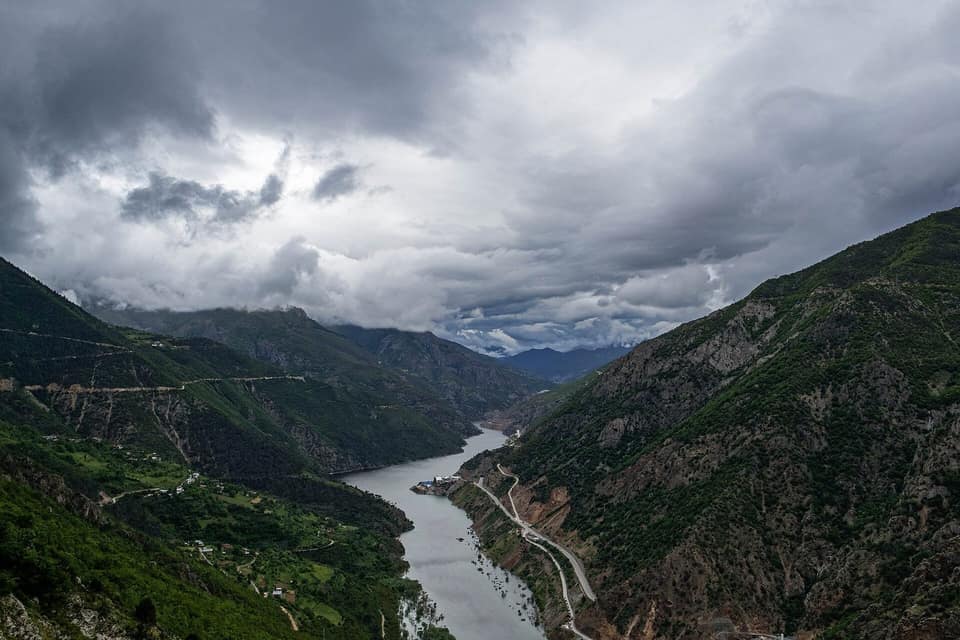
Hatila is a young valley with a V-shaped profile and a narrow floor. According to the Culture Portal, the slopes reach a gradient of 80 percent, and in some places 100 percent. This rugged topography directly shapes the vegetation. In the middle and upper parts of the valley the plant cover is very rich and dense. As the slopes steepen, trees give way to rocky surfaces. The damp sections along the stream hold a very different community of plants. According to the article by Mehmet Ali Keskin of Artvin Coruh University, the valley starts at an elevation of about 170 metres and rises to 3224 metres. Such a large range in elevation puts different plant belts side by side over a short distance. As you walk, you may notice that even a few hundred metres of climbing changes the setting.
Water, rock and viewpoints
According to Keskin's article, the Hatila Stream lies on one of the side branches of the Coruh River and is about twenty-five kilometres long. Fed by groundwater and by snow and glacier water that accumulates in the mountains, the stream also feeds nineteen other streams. Dozens of waterfalls form between the breaks in slope along the valley. The Culture Portal likewise writes that these breaks, which arise from differences in rock type, create waterfalls in the stream. Pay special attention to the cool and damp areas around the waterfalls while you watch plants. The article also mentions the glass viewing terrace built in 2015 by the Artvin 12th Regional Directorate of the Ministry of Agriculture and Forestry. The terrace has an average height of 220 metres and a glass-covered area of 50 square metres. Seeing the valley as a whole from here is a good start for understanding how the tree belts are arranged on the slopes. According to the article, the valley also has basalt rock formations that resemble prisms. Their date of formation is not precisely known, but they are said to have formed as lava thrown out by volcanoes cooled. On the bare rock surfaces, look for plants clinging to thin cracks. These are the most visible examples of species that have adapted to the valley's harsh topography.
From trees to herbs, what to look for
The Culture Portal page lists some of the plants found in the area by group. Among the trees it names spruce, fir, Scots pine, beech, hornbeam, alder, oak, hawthorn, elm, maple, poplar, chestnut, yew and linden. Among the small trees and shrubs it lists rhododendron, hazel, box, cherry laurel and rowan. Among the bushes it mentions wild rose, blackberry and bearberry. Among the herbaceous plants it gives shepherd's purse, strawberry, bracken, thyme, elder and nettle. This list can be used as a checklist. A good routine is to look at the tree layer on a morning walk and at the shrubs and herbs by the stream in the afternoon. Ferns and nettles are generally sought in shaded and damp places. Plants such as thyme are more likely on open, sunny slopes. This distinction is a field rule of thumb. It does not guarantee where any plant will be. Write every species you see in your notebook with the place, elevation and date. If you are not sure of a plant's name, do not guess. Photograph it and compare it with a guide later.
Relict and endemic species
The Culture Portal says that 530 plant species are present in the area, of which 85 are relict and endemic. It also notes that about fifty species are used in the pharmaceutical industry. These figures are reported as stated in that source. Different sources give different numbers for the same valley. Keskin's article, relying on the official park page, writes that 1349 species have been recorded, 125 of them endemic. A difference in counting method and date may explain this. So instead of relying on a single figure, it is more accurate to say that the area is very rich. The article also reports that the valley has four different rhododendron species that you can see together nowhere else in Turkey. Relict means a species that survives from earlier periods. Endemic means a species that grows only in a particular place. Both are sensitive to footprints because they live in small areas. A species growing on a single slope means that even one wrong step on that slope can matter.
The valley's produce, plants and honey
The human side of the plant diversity is beekeeping. According to Keskin's article, honey has been produced in Hatila (Taslica) village for about three hundred years, and because endemic plants are widespread in the valley, the products of the bees that feed on them are valuable. The article also writes that Hatila honey received a geographical indication as a designation of origin in 2021 and that the product is made entirely within the park. It notes that Caucasian and Caucasian hybrid bee races are used in production. The article describes how highland grazing continues and how villagers gather mountain thyme, wild beet and blackberry. In other words, in this valley plants are not only scenery to be looked at, they are part of the local livelihood. Buying a local product from the village is the easiest way to contribute to the area without harming nature. Picking plants from the slopes, on the other hand, upsets this balance.
A suggested walk
Start at the picnic and information area at the entrance. According to the article, there is an information board about the valley and direction signs here. Read the board and plan your walk accordingly. Then, along the way, look at the tree trunks, the shapes of the leaves, and the fern and moss cover on shaded slopes. When you get down to the stream bank, study the shrubs and herbs at the water's edge. According to the article, hiking and cycling are possible in the valley. Because the slopes are very steep, staying on the path is also important for safety. Do not climb slopes shaped by side streams and landslides. The article also stresses that the valley and village roads are narrow, winding and made of steep rock and slopes. When taking photographs, do not step on the plants. Do not crush the vegetation to get closer to a flower. If you are doing macro photography, stand at the edge of the path, not on the ground cover.
Walking in nature responsibly
Hatila is a national park. This means it is a protected area in which a balance between protection and use is sought. Not picking plants, not collecting seeds or roots, and taking back everything you brought are the basic habits of a responsible visitor. The Culture Portal says that mammals such as bear, wild boar, wolf, fox, marten and mountain goat live in the valley. Among birds it mentions black grouse, partridge, sparrowhawk and falcon. Among fish it lists trout. Do not approach these animals, do not feed them and do not make noise. Do not walk in the dark. Carry your food waste with you. Ask the relevant institution beforehand whether you may bring a dog into the park. The valley is also a place where villagers live and earn their living. According to the article, two villages lie within the valley; Fistikli is the village at the park entrance, while Hatila (Taslica) is the village inside the park area. Do not touch beehives or farmland.
Season and time of day
Keskin's article writes that the valley offers striking colours in autumn and different views in all four seasons. For plant watching, this means each season shows a different face. We therefore do not recommend a particular month. Instead, plan your season according to road conditions and the weather. For light, early morning or late afternoon is better for photography. On rainy days the slopes become slippery. In that case it is wise to keep the walk short and return before daylight ends.
Practical notes
Check changeable information such as opening hours, the entrance fee and road conditions from the official source. Bring sturdy shoes, a raincoat and enough water. Binoculars are useful for examining both birds and slope plants from a distance. A notebook, a plant guide and a camera make it easier to confirm species names at home. Do not go alone, and tell someone where you are going. Treat numbers with caution, because the sources give different figures. For the valley's geology and general introduction, see the place page for Hatila Valley National Park.
Sources
- Culture Portal, Hatila Vadisi Milli Parki, https://www.kulturportali.gov.tr/turkiye/artvin/gezilecekyer/hatila-vadisi-milli-parki
- Mehmet Ali Keskin, Bir Turizm ve Kulturel Miras Alani Olarak Hatila Vadisi, Hars Akademi, DergiPark, https://dergipark.org.tr/tr/download/article-file/3160969
- Wikipedia, Hatila Vadisi Milli Parki, https://tr.wikipedia.org/wiki/Hatila_Vadisi_Mill%C3%AE_Park%C4%B1
Comments
Loading...
Location - A Plant-Watching Walk in Hatila Valley
 AuthorRadar TürkiyeVisit SourceGet Directions