

A Day in Hasankeyf
Sign in to like and rate
The road that runs southeast from the centre of Batman passes along the foot of the Raman Mountains, reaches the Tigris valley and arrives at Hasankeyf on the eastern bank of the valley.
About Trip
The road that runs southeast from the centre of Batman passes along the foot of the Raman Mountains, reaches the Tigris valley and arrives at Hasankeyf on the eastern bank of the valley. The Hasankeyf District Governorship describes the district as a settlement with the Raman Mountains to the north and the Midyat mountains to the south, 37 kilometres from the provincial centre. According to the governorship, the old form of its name, Hısn Keyfa, can be translated as "rock castle" or "rock fortress", a name that points to the single mass of rock rising on the bank of the Tigris. When the Ilısu Dam began holding water, the old lower town was submerged beneath the reservoir; today's visit therefore begins not in the old riverside bazaar but in the new settlement area. This trip arranges a day as a sequence running from new Hasankeyf to the museum, from there by boat to the citadel, and on to the views over the Tigris valley. The citadel itself is described in detail on its own Keşfet page; here we mention it for its place in the flow of the day.
Getting there
For those coming from afar, the first gateway to Batman is usually the airport. According to the Batman Provincial Directorate of Culture and Tourism, the airport lies 7 kilometres from the city centre on the Silvan road, and the centre can be reached by taxi and municipal bus. The same directorate writes that the Haydarpaşa-Kurtalan railway reached Batman in 1944 and that the growth of the city began with the oil found in the Raman Mountains in the 1940s. Hasankeyf is reached from the provincial centre by road; as the road approaches the Tigris valley, the limestone hills around it become more pronounced. Starting the day early is the easiest way to see both the museum and the citadel comfortably on the same day. Find out about public transport options and the boat arrangements for crossing to the citadel from local sources before setting off.
New Hasankeyf and the museum
The Culture Portal notes that the Hasankeyf Museum stands in the district's new settlement area and was built in keeping with the historic structure and fabric of Hasankeyf. The museum houses cultural assets recovered in rescue excavations carried out in areas affected by the Ilısu Dam. According to the museum page of the General Directorate of Cultural Heritage and Museums, it displays finds from rescue excavations in Batman, Diyarbakır, Siirt and Mardin, together with works acquired through purchase and donation. The museum is on Müze Caddesi in Kültür Mahallesi, and the Museum Card is valid for citizens of the Republic of Türkiye. Check the visiting days and hours on the current page at muze.gov.tr.
The two-storey exhibition area, as the Culture Portal reports, is divided into 14 halls arranged according to the works. The order is chronological, running from the Palaeolithic through the Neolithic, Chalcolithic, Bronze and Iron Ages, then the Persian, Hellenistic and Roman periods, the Middle Ages, and the Ottoman and Republican eras. The oldest section holds obsidian and flint tools found in surface surveys carried out in the Tigris Valley and on Raman Mountain. In the Neolithic halls, stone and bone finds from Batman mounds such as Hasankeyf Höyük, Hallan Çemi and Sumaki stand alongside finds from sites such as Körtiktepe in Diyarbakır. The GoTürkiye website of the Türkiye Tourism Promotion and Development Agency writes that Hasankeyf Höyük on the bank of the Tigris carries traces from the second half of the 10th millennium BC. The Provincial Directorate of Culture and Tourism notes that excavations were carried out at Hallan Çemi, on the bank of the Batman Stream in Kozluk, between 1991 and 1994.
In the following halls you can see terracotta and metal works from Başur Höyük in Siirt, finds from the Gre Amer and Kuriki mounds in Batman, and works from the Assyrian period and the Iron Ages. GoTürkiye states that geomorphological stone types and prehistoric fossils are also displayed in the lower and upper floor halls, and that reconstructions describing each period draw particular attention. The Culture Portal notes that the inventions of al-Jazari are among the museum's most interesting exhibits. There is a benefit to visiting the museum before the citadel; the layers you see here make concrete how many thousands of years of settlement lie in the valley you will be looking at from the citadel a few hours later. Allow at least an hour and a half to walk through the halls without rushing.
The Archaeopark is closed for now
Right next to the museum lies the Archaeopark area, where the structures moved from the lower town before the dam were gathered. According to GoTürkiye, the area was designed on the peninsula formed by the reservoir, near the museum campus, in the likeness of the old lower town, and the structures were divided into blocks and moved whole using advanced engineering techniques. Among the relocated structures are the Artuqid Bath and the Middle Gate of the citadel. The Hasankeyf District Governorship writes that excavations and soundings were carried out at 47 separate sites between 2004 and 2017 and that 148 immovable cultural assets were brought to light. However, the Archaeopark area of the Hasankeyf archaeological site appears on the list of temporarily closed units of the General Directorate of Cultural Heritage and Museums. Before including the Archaeopark in your plans, therefore, check the current version of the list; the area is currently closed to visitors.
By boat to the citadel
The second half of the day is set aside for the citadel. A Batman Governorship announcement dated February 2026 reports that the citadel is reached by boat and that a series of improvements were made there with the support of the Special Provincial Administration, in cooperation with the district governorship and the Provincial Directorate of Culture and Tourism. According to the announcement, 12 historic caves around the Yamaç Complex were restored and opened to visitors, and walking paths, safety measures and visitor reception areas were prepared. The caves also have lighting and direction signs. The governorship states that the aim is to increase the variety of tourism in the district with boat tours, viewing terraces and cultural areas. Since the boat schedule and fare may change, obtain up-to-date information on site or from local official sources.
A short history of the citadel
The Culture Portal writes that the citadel stands on a single rock rising on the bank of the Tigris and is dated to the year 363 AD. According to the Provincial Directorate of Culture and Tourism, the citadel was rebuilt by the Artuqids, who ruled the region after Malazgirt, and served as the capital of the principality between 1101 and 1231. The district governorship explains that the inner citadel, known as the "Upper Town", presents a complete medieval settlement with cave dwellings, narrow streets, wells and cisterns, that the Great Palace stands at its northeastern tip, and that the inner citadel was abandoned in the 1970s when the residents moved down. The provincial directorate also writes that two stepped paths, one open and one hidden, were built down to the Tigris to carry water up to the citadel. According to the directorate's announcement, the citadel, closed since 2012, was reopened to visitors after its walking paths were cleared and information panels and direction signs were installed, and restoration began at the Great Palace.
As you walk through the citadel, follow the panels and do not leave the marked route. The stepped paths and rock surfaces are uneven in places; sturdy shoes and water make the day easier. The lit interiors of the caves form a fine contrast with the rock faces in daylight. For a detailed account of the citadel, see the Hasankeyf Kalesi page on Keşfet.
Looking over the Tigris valley
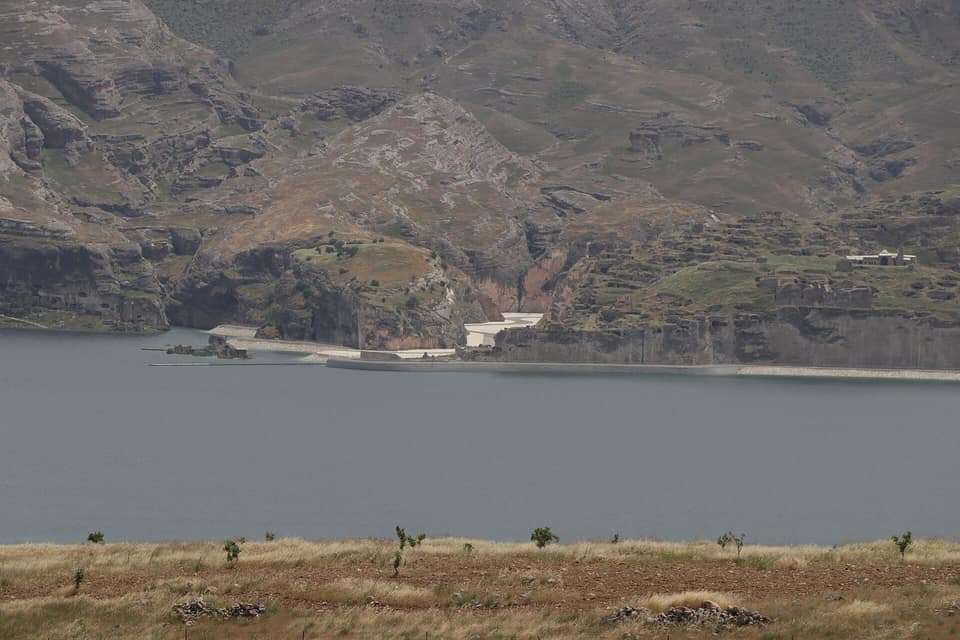
What sets Hasankeyf apart is the way spaces carved by human hands intertwine with a rock landscape shaped by nature. GoTürkiye writes that the limestone terrain surrounding Hasankeyf from the south and southeast forms a remarkable landscape of deep canyons and cave houses, and that there are thousands of caves in the area. The district governorship also notes that the settlement was founded on terrain where separate narrow and deep valleys extend towards a centre. Looking from the citadel today, a broad lake surface has taken the place of the Tigris. Because the remains of the old stone bridge and the lower town lie beneath this water, they are not places to visit; the view has to be enjoyed from the citadel and from the boat. During the boat crossing you get the chance to look closely at the cave mouths in the rock face.
Local flavours and handicrafts
Getting to know the cuisine of the region between visits can also be part of the day. The Batman Provincial Directorate of Culture and Tourism writes that stuffed meatballs, fresh and dried stuffed vegetables with sumac, tandır bread baked in clay ovens, perde pilav, and lentil and yayla soups stand out in the province's cuisine. GoTürkiye introduces yoğurtlu leben as one of the city's most popular soups. In handicrafts, the directorate relates an interesting Hasankeyf detail: people living in the caves of the citadel used to weave, on looms they set up, a fine and sheer fabric of the kind known today as şile bezi. According to the directorate, until about seventy years ago this work continued on more than three hundred looms, and the fabric was in great demand in the surrounding villages and towns. Today the number of masters keeping this craft alive has greatly declined.
Season and time of day
The citadel walk takes place on stone surfaces exposed to the sun; in the hot months it is more comfortable to leave the walk for the cool of the morning or the late afternoon. Spending the middle of the day in the museum halls is therefore a good arrangement. Morning light brings out the shadows of the caves in the rock face, while the late afternoon offers reflections on the lake surface that suit photography. GoTürkiye writes that the Batman Hasankeyf Culture and Arts Festival lasts three days at the beginning of October; since the dates may change each year, check the current announcements.
Practical notes
- Check the visiting hours and closing days of the Hasankeyf Museum on the museum page at muze.gov.tr.
- The Archaeopark area is on the list of temporarily closed units of the General Directorate of Cultural Heritage and Museums; it is currently closed to visitors.
- The citadel is reached by boat; ask about the schedule and fare on site.
- Stay on the marked route in the citadel, wear sturdy shoes and carry water.
- The submerged lower town and the remains of the old bridge are not places to visit.
Sources
- General Directorate of Cultural Heritage and Museums, Hasankeyf Museum, https://muze.gov.tr/muze-detay?SectionId=HKM02&DistId=MRK
- General Directorate of Cultural Heritage and Museums, Temporarily Closed Museums and Affiliated Units, https://kvmgm.ktb.gov.tr/TR-46782/gecici-sureyle-kapali-olan-muzeler-ve-bagli-birimler.html
- Culture Portal, Hasankeyf Museum, https://www.kulturportali.gov.tr/turkiye/batman/gezilecekyer/hasankeyf-muzesi-
- Culture Portal, Hasankeyf Citadel, https://www.kulturportali.gov.tr/turkiye/batman/gezilecekyer/hasankeyf-kalesi
- Batman Provincial Directorate of Culture and Tourism, Hasankeyf Citadel, https://batman.ktb.gov.tr/TR-56621/hasankeyf-kalesi.html
- Batman Provincial Directorate of Culture and Tourism, Hasankeyf Citadel Opened to Tourism, https://batman.ktb.gov.tr/TR-298296/hasankeyf-kalesi-turizme-acildi.html
- Batman Provincial Directorate of Culture and Tourism, General Information, https://batman.ktb.gov.tr/TR-56575/genel-bilgiler.html
- Batman Provincial Directorate of Culture and Tourism, Batman Airport, https://batman.ktb.gov.tr/TR-282198/batman-havalimani.html
- Batman Provincial Directorate of Culture and Tourism, Batman Cuisine, https://batman.ktb.gov.tr/TR-282161/batman-mutfagi.html
- Batman Provincial Directorate of Culture and Tourism, Handicrafts of Batman, https://batman.ktb.gov.tr/TR-282206/el-sanatlarinda-batman-farki.html
- Batman Governorship, announcement on the Hasankeyf visit, https://www.batman.gov.tr/kultur-ve-turizm-bakanimiz-tarihi-hasankeyf-ilcemizde-incelemelerde-bulundu
- Hasankeyf District Governorship, History of Hasankeyf, https://www.hasankeyf.gov.tr/hasankeyf-tarihi
- Hasankeyf District Governorship, Historic Monuments, https://www.hasankeyf.gov.tr/tarihi-eserler
- GoTürkiye, What to See in Batman, https://goturkiye.com/batman/see
- GoTürkiye, 48 Hours in Batman, https://goturkiye.com/batman/48-hours
Comments
Loading...
Location - A Day in Hasankeyf
 AuthorRadar TürkiyeVisit SourceGet Directions