

A Day in Central Uşak
Sign in to like and rate
Uşak lies southwest of Mount Murat, on the slopes of Elmadağı, and spreads along both banks of the Dokuzsele stream that runs through it.
About Trip
Uşak lies southwest of Mount Murat, on the slopes of Elmadağı, and spreads along both banks of the Dokuzsele stream that runs through it. The TDV Encyclopedia of Islam notes that the oldest known name of the place is Temenothyrai and that the name Uşak appeared in the Turkish period. Most visitors know the city for the Karun (Croesus) Treasures and the ancient cities around it; this article instead gives one day to the city centre. The morning goes to the stone hans and the bedesten of the bazaar, late morning to the streets of old Uşak houses with their bay windows, the afternoon to two small museums, and the end of the day to the traces carpet looms have left in the city. The Archaeology Museum and the Atatürk and Liberation Monument have their own pages; here they appear only as the two ends of the walk.
A short history of the city
The Uşak Provincial Directorate of Culture and Tourism explains that the area has been settled since around 4000 BC and that in the Lydian period the Royal Road, which linked the Aegean to the Near East, passed through Uşak. After the Seljuk and Germiyanid periods the region joined the Ottoman lands in 1429. In Ottoman times Uşak was a crossroads city where trade caravans stopped. According to the TDV Encyclopedia of Islam, Evliya Çelebi found the city small but prosperous and stressed the crowds in its bazaars. The history page of the Uşak Governorship also quotes a line from Katip Çelebi's Cihannüma: "Its prayer rugs and carpets are famous." The city became a province with Law No. 6129, passed in 1953.
The fabric you see in the centre today is much younger than the city's history. The TDV Encyclopedia of Islam writes that the fire of 1883 destroyed the middle of the city and the fire of 1894 almost all of it except the Aybey quarter. In the fire at the end of the National Struggle about three quarters of the city burned, and Uşak was practically rebuilt in the early years of the Republic. For this reason the encyclopedia says that, despite its long history, Uşak gives the impression of a new city. Keep this in mind as you walk; most of the old houses belong to those years of rebuilding.
Getting there and getting around
The liveliest axis of the city is İsmet Paşa Avenue, which links the railway station to the business centre. Since 2018 the Archaeology Museum has been in its new building by the station, and for those arriving by train or by the intercity road it is the natural starting point of the day. Walking along İsmet Paşa Avenue you reach the area around the municipal building, and from there the bazaar and the old quarters. Kültür Portalı writes that the City History Museum is reached on foot in the centre, while visitors from out of town can follow the signposts from the stadium junction. The stops in this article are close to one another; you can park once and spend the whole day on foot.
The bazaar, the bedesten and the hans
The bazaar tells Uşak's trading past best. The TDV Encyclopedia of Islam reports that at the end of the nineteenth century Şemseddin Sami counted 750 shops, 706 carpet looms, eight hans and forty-five fountains in the city. One of the hans that survives from that time is the Hacı Gedik Han. According to the Provincial Directorate of Culture and Tourism, it stands in the Halı Pazarı (Carpet Market) area and is a two-storey stone building with shops lined up on both floors. The encyclopedia gives 1891 as its date of construction. Even the name Halı Pazarı tells you how the city made its living; the encyclopedia also records that a carpet market used to be held in the city on Thursdays.
The other symbol of the bazaar is the Bedesten. The provincial directorate writes that the two-storey stone building was commissioned from an Italian architect in 1901 and was restored in the 1980s and turned into the Sarraflar Çarşısı (Money Changers' Bazaar). Look at the cut-stone facade from the pavement opposite; the building is like the trade of Uşak merchants, opening up to Europe at the turn of the century, set in stone. To see the stonework of the facade better in raking light and to take a quiet photograph, come early in the morning.
The old houses of Uşak
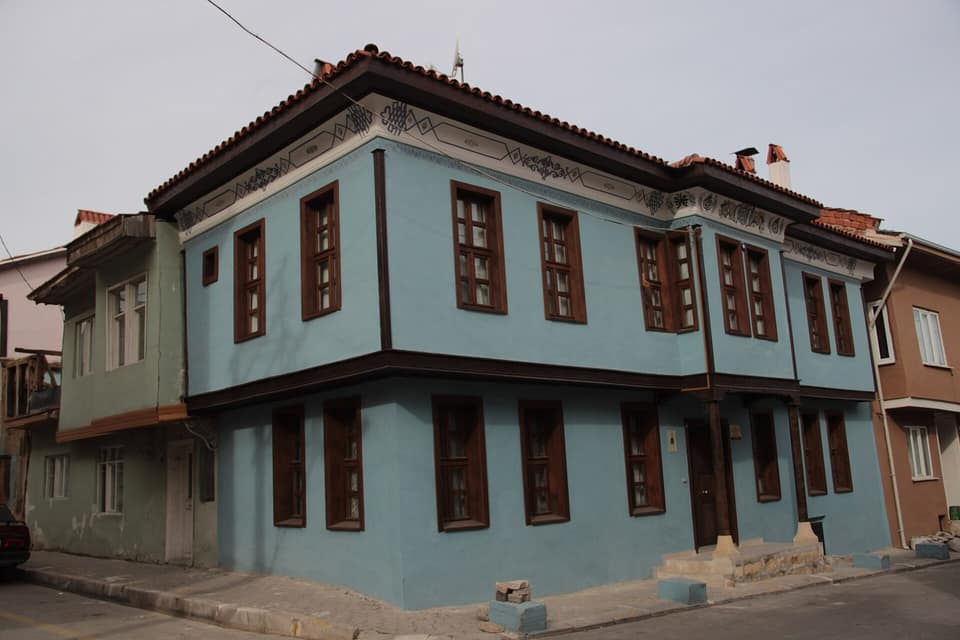
The Provincial Directorate of Culture and Tourism notes that very few Uşak houses bearing traces of Ottoman building remain. Those that survive are houses built in the early years of the Republic with Ottoman architectural features, and they are found in the Aybey, Işık, Karaağaç and Kurtuluş quarters. Their ground floor is usually stone and the upper floor timber; they have bay windows, gabled roofs, lath-and-plaster walls and tiled roofs. The directorate writes that there are 86 registered old Uşak houses in the province. As the Uşak Governorship relates, Vital Cuinet noted in the second half of the nineteenth century that most houses were built of unfired brick, while by 1890 timber houses, considered sturdier and more elegant, were preferred.
The directorate's list of protected areas makes a good guide for a walk. The historic houses on Gediz Uluyolu Street, Hisarkapı Uluyolu Street and Tirit Street are on this list. According to the TDV Encyclopedia of Islam, Aybey is the oldest quarter of the city; the old small town stretched from Aybey in the northeast to the Küçükpazar area in the west and to the Kocakıran Fountain in the east. As you walk the streets, look at the bay windows projecting over the street on the upper floors, at the eaves and at the arrangement of the windows. Some of these houses are private property; keep quiet in front of courtyard gates and do not photograph interiors without permission.
The Atatürk and Ethnography Museum
The large two-storey mansion on Hisarkapı Uluyolu is one of the best preserved examples of the old Uşak house. The provincial directorate explains that the building has projections on three sides and that the street facade was made more ornate than the others. Rubble stone was used up to the plinth, and timber-framed walls on the upper floors. On the ground floor you are met by the sofa called the "hayat", with the rooms arranged around it; a staircase leads to the upper floor, where the many windows make the interior bright. It is not known for certain who built the house or when, but the directorate writes that in 1879 the Governor of Bursa, Ahmet Vefik Paşa, stayed here as a guest and that the building dates from the second half of the nineteenth century. Atatürk was also hosted in this house on 2 September 1922. Kültür Portalı states that the museum, opened on 1 September 1978, displays local ethnographic material, old weapons, clothing and jewellery on the ground floor, and on the upper floor Atatürk's bedroom and clothes together with furniture of the period. The Uşak Governorship page, however, says restoration work has been carried out in the building; check the current visiting status on the official pages before you go.
The City History Museum
The second museum of the day is the City History Museum, opened in the building known as the Old TEK Building on Fabrikalar Avenue in the İslice quarter. According to Kültür Portalı, the museum stands on a site of 1,625 square metres, has 992 square metres of indoor space, and consists of the main building, a mezzanine, a courtyard and eleven rooms around the courtyard. Inside, the chronological history of Uşak, its geography, the struggle for liberation, its tourism assets, natural beauty and folklore are told through documents, reconstructions, visual presentations and models. Uşak tarhana, the local soup base, is also part of this story. Since it is about two hundred metres from the municipal building, it is easy to add to the bazaar walk. Go through the eleven courtyard rooms one by one; each carries a separate chapter of the city's story.
Mosques and a bridge
The historic mosques of the centre deserve a short look from an architectural point of view. The Ulu Mosque stands beside the municipal building on İsmet Paşa Avenue; the TDV Encyclopedia of Islam writes that it carries the architectural features of the Germiyanid Principality and is recorded in the foundation registers as the Mosque of Mehmed Bey son of Kavşid. The Burma Mosque behind the municipal building was built in 1572 according to its inscription and takes its name from its fluted minaret. The inscription of the Kara Ali (Kareler) Mosque beside the Mende Market bears the date 1567, while the Çakaloz Mosque in the Kurtuluş quarter was built in 1884 in a monumental style. The encyclopedia also records that the Çanlı Bridge over the Dokuzsele stream, southeast of the city, was built in 1255 in the Seljuk architectural manner. Visit the mosques outside prayer times and respect the visiting etiquette.
Traces of carpets and weaving
The name of Uşak was first heard in Europe through its carpets. The Provincial Directorate of Culture and Tourism explains that the second brilliant period of Turkish carpet art began in the sixteenth century with the carpets woven in and around Uşak. Two types stand out, the medallion and the star carpets; medallion carpets can reach ten metres in length. According to the directorate, by the end of the sixteenth century the fame of these carpets had spread across Europe, noble families began ordering Uşak carpets woven with their own coats of arms, and many examples of this type are kept in European museums today. The TDV Encyclopedia of Islam writes that in 1873 two thirds of the carpets sent abroad from Anatolia were Uşak carpets and that, because they were shipped through the port of İzmir, they were known in Europe as "Smyrna carpets". According to the encyclopedia, the arrival of the railway from İzmir in Uşak in 1898 made this trade easier.
Over time the yarn of the carpets turned into the city's industry. The provincial directorate notes that carpet wool, once produced by hand with spindles and spinning wheels, moved to machines with the wool yarn and textile factories founded in the 1890s, and that today Uşak stands out in wool yarn production. The Eşme kilims, naturally dyed and in pastel colours, woven in Eşme in the west of the province, are a branch of the same weaving tradition. As you walk around the centre, read the name of Halı Pazarı, the shops of the hans and the weavings in the shop windows together with this past.
The two ends of the day
Starting the day at the Archaeology Museum by the station is a good idea: according to the directorate, the second floor of the museum is devoted to the Karun Treasures, which were dug out of the Lydian tumuli near Güre, smuggled away in the 1960s and recovered in 1993. You can end the day in front of the Atatürk and Liberation Monument; the provincial directorate explains that the monument consists of three groups on a single base, made up of cavalry figures, a victory column, and women figures with an ammunition-laden ox cart. The details of both are on their own pages.
A suggested walk
Start in the morning at the Archaeology Museum and walk along İsmet Paşa Avenue to the area around the municipal building. After looking at the outer facades of the Ulu Mosque and the Burma Mosque, go on to the Bedesten and to the Hacı Gedik Han in the Halı Pazarı area. Spend the midday hours in the City History Museum. In the afternoon walk among the old houses on Hisarkapı Uluyolu, Gediz Uluyolu and Tirit streets, and enter the Atatürk and Ethnography Museum if it is open to visitors. Finish the day in the square of the monument.
Season and practical notes
Uşak has the continental climate of the inner Aegean; spring and autumn are the most comfortable seasons for walking. On winter days the streets of the old houses grow dark early, so choose the morning for photographs. Museum opening days and hours and visiting conditions may change; check the official pages before you go. The ground in the old quarters is uneven and stone-paved in places, so wear comfortable shoes.
Sources
- Uşak Provincial Directorate of Culture and Tourism, Museums, https://usak.ktb.gov.tr/TR-75309/muzeler.html
- Uşak Provincial Directorate of Culture and Tourism, Bazaar and Bedesten, https://usak.ktb.gov.tr/TR-75312/carsi-bedesten.html
- Uşak Provincial Directorate of Culture and Tourism, Architecture, https://usak.ktb.gov.tr/TR-75327/mimari.html
- Uşak Provincial Directorate of Culture and Tourism, Monuments, https://usak.ktb.gov.tr/TR-75314/anitlar.html
- Uşak Provincial Directorate of Culture and Tourism, Handicrafts, https://usak.ktb.gov.tr/TR-75325/el-sanatlari.html
- Uşak Provincial Directorate of Culture and Tourism, Mosques, https://usak.ktb.gov.tr/TR-75311/camiler.html
- Uşak Provincial Directorate of Culture and Tourism, General Information, https://usak.ktb.gov.tr/TR-75301/genel-bilgiler.html
- Kültür Portalı, Uşak Atatürk and Ethnography Museum, https://www.kulturportali.gov.tr/turkiye/usak/gezilecekyer/ataturk-ve-etnografya-muzesi
- Kültür Portalı, City History Museum, https://www.kulturportali.gov.tr/turkiye/usak/gezilecekyer/kent-tarihi-muzesi
- Uşak Governorship, History, https://www.usak.gov.tr/tarih
- Uşak Governorship, Museums, https://www.usak.gov.tr/muzeler
- TDV Encyclopedia of Islam, Uşak, https://islamansiklopedisi.org.tr/usak
Comments
Loading...
Location - A Day in Central Uşak
 AuthorRadar TürkiyeVisit SourceGet Directions