

Trabzon on a Rainy Day, Under Cover from Çal Cave to the Kanuni House
Sign in to like and rate
It rains often in Trabzon, and a cloudy day does not waste the time you spend in the city. This route was put together for those who want to spend a rainy day with a roof over their heads. All four stops are indoors: a cave carved out by a stream flowing underground, a white building put up as a banker's summer house and turned into a museum, another banker's mansion with its hand-painted walls, and an old Trabzon house inside the walls. In this way a story that runs from the natural history of the region to late Ottoman domestic culture and the first years of the Republic can be followed with the raincoat left in the bag.
The day begins at Çal Cave in Düzköy, south-west of the provincial centre. The Provincial Directorate of Culture and Tourism writes that the cave lies 51 kilometres from the provincial centre, that inside it there are pools and waterfalls formed by a river, and that lighting and walkways have been completed. After the cave you return to the city and climb to the Atatürk Pavilion on the Soğuksu ridge; the Eastern Black Sea Cultural Inventory records that the pavilion was built in 1890 and is now a museum displaying furniture, porcelain and carpets from the late 19th and the 20th century. The third stop is the Trabzon Museum in the city centre; the Culture Portal states that every floor of the Kostaki Mansion except the basement has walls entirely decorated with hand painting. The day ends at the Kanuni House, inside the walls west of the museum. The inventory records that this building is now used as a museum of the Governorate of Trabzon under the name Kanuni Sultan Süleyman Ottoman House.
The four stops complement one another. The cave tells of the limestone and underground waters that shaped the interior of Trabzon. The pavilion and the museum are two buildings commissioned by the city's wealthy bankers at the end of the 19th and the beginning of the 20th century, and both are remembered for Atatürk's visits to Trabzon. The Kanuni House, beside these grand buildings, shows a plainer domestic tradition inside the walls.
The order is designed to give the morning to the furthest stop and to spend the afternoon in the city. The cave and the pavilion are close to thirty kilometres apart as the crow flies, and because of the mountain road this leg is done by car; the pavilion and the museum are close to four kilometres apart, while the museum and the Kanuni House are within walking distance. The inside of the cave is damp and cool, so bring shoes with a good grip and a light extra layer. Visiting days and hours at the museums may change; pay particular attention to closing days and check current information with the official sources before setting out. Before entering the museum halls in wet clothes, fold your raincoat at the entrance and ask the attendants about the rules for leaving umbrellas outside.
Sources
- Trabzon İl Kültür ve Turizm Müdürlüğü, Çal Mağarası, https://trabzon.ktb.gov.tr/TR-57785/cal-magarasi.html
- Trabzon İl Kültür ve Turizm Müdürlüğü, Göller ve Mağaralar, https://trabzon.ktb.gov.tr/TR-57703/goller-ve-magaralar.html
- DOKAP Doğu Karadeniz Kültür Envanteri, Çal Mağarası, https://karadeniz.gov.tr/cal-magarasi/
- DOKAP Doğu Karadeniz Kültür Envanteri, Atatürk Köşkü, https://karadeniz.gov.tr/ataturk-kosku/
- Kültür Portalı, Atatürk Köşkü, https://www.kulturportali.gov.tr/turkiye/trabzon/gezilecekyer/ataturk-kosku
- Kültür Portalı, Trabzon Müzesi, https://www.kulturportali.gov.tr/turkiye/trabzon/gezilecekyer/trabzon-muzesi
- DOKAP Doğu Karadeniz Kültür Envanteri, Trabzon Müzesi, https://karadeniz.gov.tr/trabzon-muzesi/
- Trabzon İl Kültür ve Turizm Müdürlüğü, Tarihçesi, https://trabzon.ktb.gov.tr/TR-212974/tarihcesi.html
- Trabzon İl Kültür ve Turizm Müdürlüğü, Konaklar, https://trabzon.ktb.gov.tr/TR-365536/konaklar.html
- DOKAP Doğu Karadeniz Kültür Envanteri, Kanuni Evi, https://karadeniz.gov.tr/kanuni-evi/
- TDV İslam Ansiklopedisi, Süleyman I, https://islamansiklopedisi.org.tr/suleyman-i
Route Stops
Çal Cave
Begin the day at Çal Cave in Düzköy, south-west of the city; there is no better way to spend a rainy morning than underground. The Provincial Directorate of Culture and Tourism writes that the cave is in the town of Çal, part of Düzköy, 51 kilometres from the provincial centre. According to the same page, access is by a road that turns off to the right before entering the district of Düzköy and passes through the town of Çal, and the road is asphalt and in good condition. The altitude of the cave is given differently in the sources; the provincial directorate uses 1050 and 1100 metres, while the Eastern Black Sea Cultural Inventory uses 1116 metres. According to the directorate, the entrance of the cave lies at the first kilometre of the road from Çal village to the town of Çayırbağı, on the Kulaklık stream.
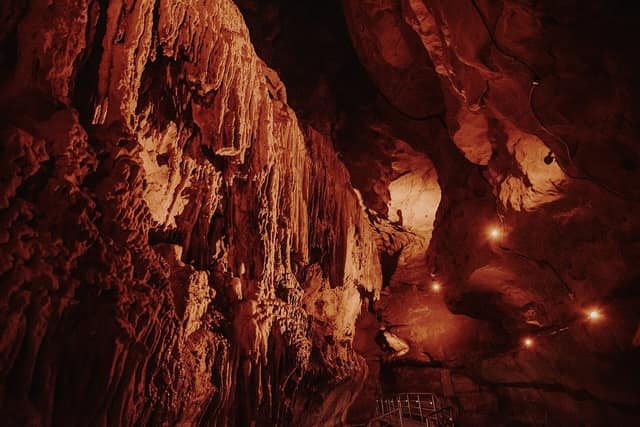
The inventory describes it as a cave formed in limestone, extending horizontally and vertically, with a single entrance, and records its local name as the Hidden Paradise Underground. According to the inventory the entrance is 1.85 metres high and 4 metres wide; the provincial directorate also writes that the entrance is about the height of a person. The first thing you will notice when you go in is the air. The inventory notes that the air inside the cave is colder and damper than outside, and the provincial directorate explains that the air, dry at the entrance, becomes more humid further in because of the stream flowing through. According to the directorate, there is a comfortable movement of air inside because the cave is connected to the outside atmosphere through sinkholes.
The provincial directorate describes Çal Cave as an underground water channel. About 200 metres from the entrance the path splits into two branches. The branch to the left is about 150 metres long, and in the chamber at its end there is a shaft down which water from a sinkhole flows. The accessible part of the right branch is about 400 metres long, and around the 60th metre of this branch there is a small lake and a cascade. According to the directorate, stalactites and stalagmites begin to appear after the first 150 metres, while the galleries and corridors narrow in some places and widen in others. The inventory records that there is lighting and a walkway inside the cave; do not leave the path and do not touch the stalactites and stalagmites. To guard against slipping on the wet floor, walk close to the handrails and keep children by the hand. The directorate also writes that above the cave there is a castle built on a hill overlooking the surroundings.
When you come out, you can take a short break in the picnic areas mentioned by the provincial directorate. In very rainy periods, ask in advance whether the cave is open to visitors. From here return to the city by way of Akçaabat; the second stop, the Atatürk Pavilion, lies close to thirty kilometres away as the crow flies.
Source: Trabzon İl Kültür ve Turizm Müdürlüğü; DOKAP Kültür Envanteri.
Trabzon Atatürk Mansion
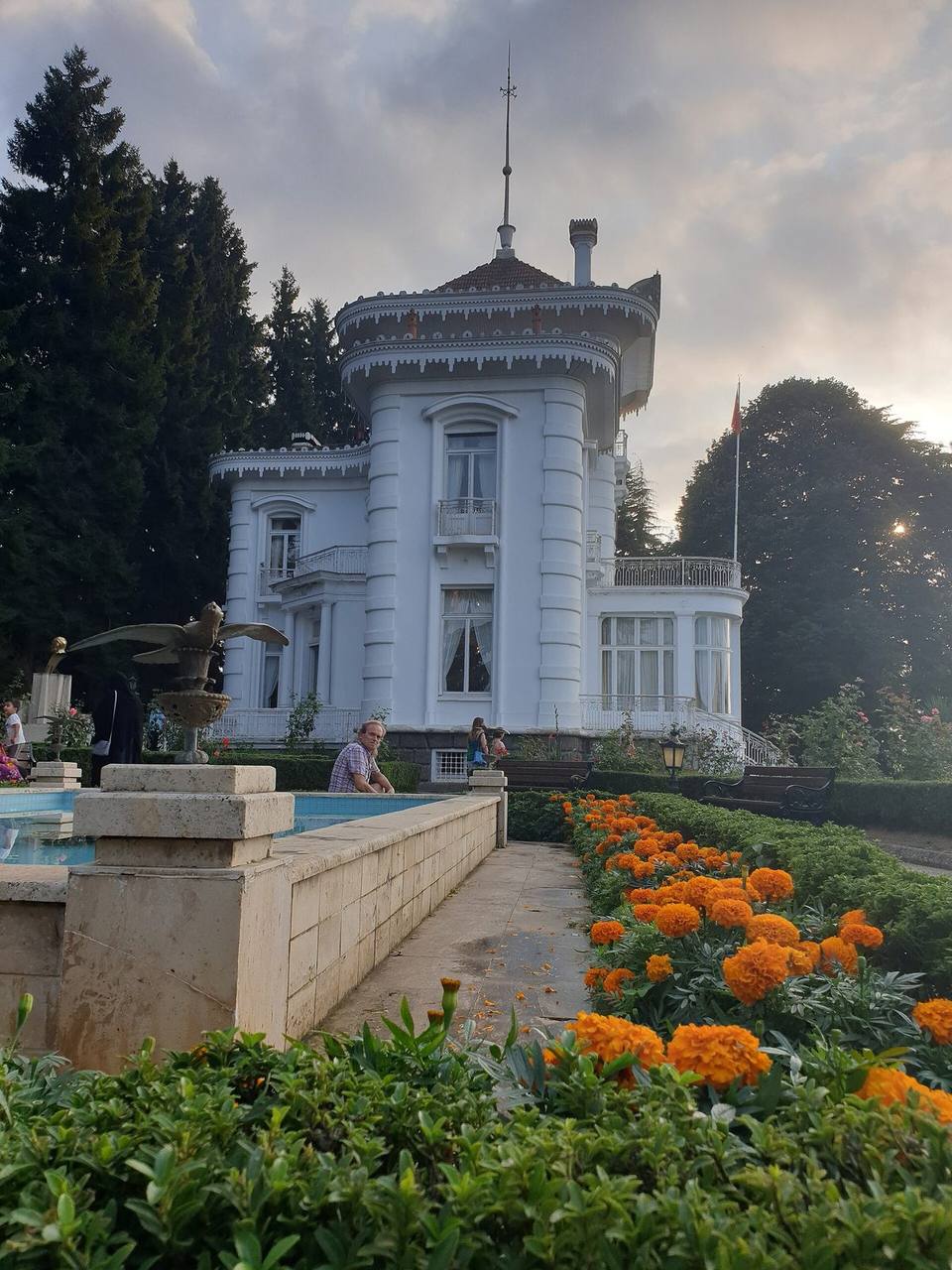
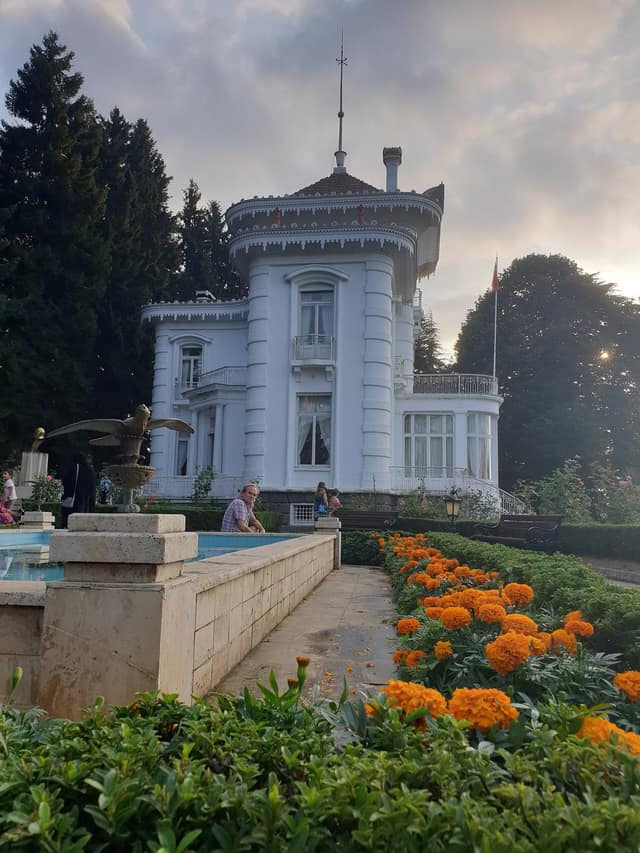
When you are back in the city, climb to the Atatürk Pavilion on the Soğuksu ridge; at this stop, give your time to the rooms of the pavilion rather than to the garden. The Eastern Black Sea Cultural Inventory writes that the pavilion was built in 1890 by Konstantin Kabayanidis, while the Culture Portal writes that it was built as a summer house. According to the inventory the pavilion has a basement, a ground floor and two upper floors, and the rooms are planned around a hall reached from the entrance. The Culture Portal states that on the entrance floor there are a sitting room, a rest room, a dining room and a guest room. On the first floor there are a study, a large bedroom, a waiting room and a meeting room, and on the second floor there are two small rooms. According to the inventory, the double wooden staircase leading to the upper floors stands against the south wall.
Inside, look first at the decoration. The inventory records that there is dense hand-painted decoration on the walls and ceilings, and that the mosaic floors and plaster ceiling ornaments stand out. The museum today displays ethnographic works made up of furniture, porcelain and carpets from the late 19th and the 20th century, together with paintings belonging to Atatürk. On a rainy day the soft light filtering through the windows shows the colours of the painted decoration without glare.
As you walk through the rooms, follow the story that gave the pavilion its present name. According to the inventory, when Atatürk first came to Trabzon on 15 September 1924 he saw the pavilion during an outing to the Soğuksu district and liked it very much. The Culture Portal writes that he was received at the pavilion on this visit but did not stay there. The inventory records that in 1930 ownership of the pavilion was transferred by the Trabzon Special Provincial Administration to President Gazi Mustafa Kemal Pasha, and that a delegation from Trabzon went to Ankara to hand him the title deed and the key. The Culture Portal states that when Atatürk visited the city again in November 1930 he was received at the pavilion. When Atatürk came to Trabzon for the third and last time on 10-12 June 1937 he spent two nights in the pavilion. According to the inventory, on the night of 11 June 1937 he took the decision in this pavilion to give all his property to the nation, and the same night he drew up a list of his property and sent it to the Prime Minister. The Culture Portal also quotes his words about this decision, which begin with the sentence "Property and possessions weigh on me".
The pavilion became a museum in the early 1940s; the inventory gives 1942 and the Culture Portal 1943. Ask the attendants at the entrance or the official sources about the photography rules and the visiting days and hours of the museum. After the pavilion, go down to the city centre; the Trabzon Museum is close to four kilometres away as the crow flies and can be reached by taxi, bus or minibus.
Source: DOKAP Kültür Envanteri; Kültür Portalı.
Trabzon Museum (Kostaki Mansion)
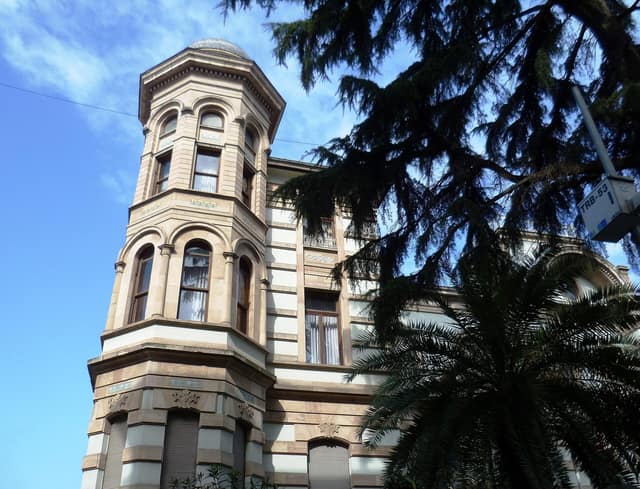
The third stop is the Trabzon Museum in the city centre, near Zeytinlik Street and Uzun Street. The Culture Portal writes that the Kostaki Mansion, which houses the museum, was built as a residence by the banker Kostaki Teophylaktos between 1898 and 1913. The Eastern Black Sea Cultural Inventory records that the names of the mansion's architects could not be established, but that much of the material used by the architects, who have been identified as Italian, was brought from Italy. When the owner of the mansion went bankrupt in 1917, all his property was seized and the building was bought by the Nemlioğlu family. According to the inventory, the mansion, which served as a headquarters during the War of Independence, was prepared for Atatürk to stay in during his first visit to Trabzon on 15-17 September 1924, and Atatürk stayed here with his wife Latife Hanım. So the story you heard at the previous stop begins here.
The building's next century was also full of layers. The Culture Portal states that the mansion was expropriated in the time of Governor Ali Galip Bey and used as the government house between 1927 and 1931 and as the inspectorate building between 1931 and 1937. According to the inventory, the building was given to the Ministry of National Education in 1937, served for fifty years as a vocational high school for girls, and was transferred in 1987 to the Ministry of Culture to become a museum. The restoration was completed between 1988 and 2001, and the mansion opened to visitors as the Trabzon Museum on 22 April 2001.
Inside, begin your visit with the Archaeological Works section in the basement. The inventory writes that this section displays marble, basalt, terracotta, metal and glass works from the Early Bronze Age, Classical, Hellenistic, Roman and Byzantine periods, together with coins. Set aside extra time for the coins. The Provincial Directorate of Culture and Tourism states that the Trabzon coins minted in the Roman period bear the busts of emperors on the obverse and, on the reverse, local mythological figures that had continued since the Kingdom of Pontus, with Greek inscriptions. According to the directorate, the city lost its right to mint coins in 244. The same source also writes that a Latin inscription in the museum shows that building work was carried out again in Trabzon at the beginning of the 4th century.
Then go up to the floors where the mansion display is arranged. The Culture Portal states that the walls of every floor except the basement are entirely decorated with hand painting, and the inventory notes that this decoration comes close to the Baroque style. In the Ethnographic Works section, works from the Ottoman period are displayed alongside local pieces. The museum's visiting days and hours and admission conditions may change, so check the official source before setting out. After leaving the museum, walk west and cross the Tabakhane Valley to reach the Kanuni House in Ortahisar; the two points are about seven hundred metres apart as the crow flies.
Source: Kültür Portalı; DOKAP Kültür Envanteri; Trabzon İl Kültür ve Turizm Müdürlüğü.
Kanuni House
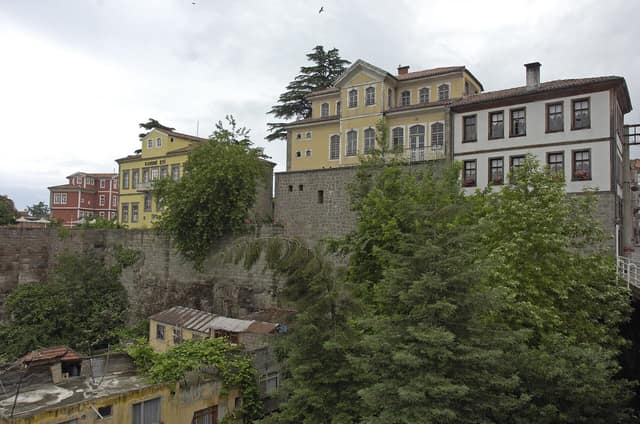
The last stop of the day is the Kanuni House, which stands in the Ortahisar quarter inside the walls. The Eastern Black Sea Cultural Inventory records that the building now serves as a museum of the Governorate of Trabzon under the name Kanuni Sultan Süleyman Ottoman House. It takes its name from Suleyman, who according to the TDV Encyclopedia of Islam was born in Trabzon in 1494 and spent his childhood in this city. After visiting bankers' pavilions and mansions all day, at this stop you will look at a plainer domestic tradition. The Provincial Directorate of Culture and Tourism writes of the Ortahisar houses that the most important element that makes old Turkish houses stand out is the functionality and aesthetics of traditional architecture. According to the directorate, these houses are worth attention both for their place in the city and for their architecture.
Before going in, look at the house from outside. According to the inventory, the building has load-bearing walls of cut stone and rubble stone and a rectangular plan running north to south. The house has a basement, a ground floor, an upper floor and an attic, and is covered by a hipped roof clad in traditional Turkish tiles. The windows are rectangular, double-leafed and wooden; their frames are of cut stone and project outwards. There are stone mouldings between the floors and at the corners, and today the facades are plastered and painted yellow. The section containing the entrance projects outwards through the ground and upper floors and ends in a triangular pediment at attic level. The inventory records that this projection was later enclosed with glass and serves as a draught lobby at the entrance; on a rainy day you will easily understand why this small compartment is needed.
The ground floor is reached from the east facade by a single flight of stone steps, and you enter through a double-leafed wooden door. According to the inventory, the entrance leads into a hall, a staircase stands against the west wall of the hall and there are two rooms each to the north and south of the hall. On the upper floor the rooms are arranged around a central hall, in line with the rooms below. Comparing this layout with the hand-painted salons at the previous stop is a good chance to think about how families of different means built their homes in the same city. The inventory also states that a municipal social facility operates in the basement and that the basement is entered from the east and west facades.
Visiting days and hours at the museum may change, so check current information with the official sources before setting out. If the rain has stopped, after leaving the house you can walk a few hundred metres west to the Zağnos Bridge and see the walls from the valley; if the weather is bad, you can return to the centre by city transport.
Source: DOKAP Kültür Envanteri; TDV İslam Ansiklopedisi; Trabzon İl Kültür ve Turizm Müdürlüğü.
Comments
Loading...
