

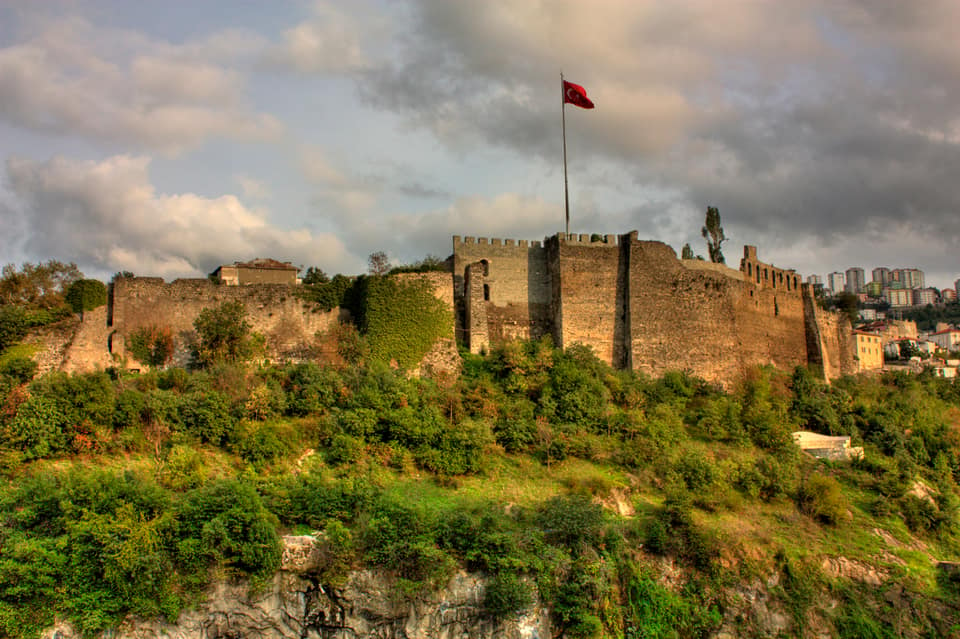
Trabzon, City of Princes, a Walk in the Footsteps of Selim I and Suleiman
Sign in to like and rate
What makes Trabzon stand out in Ottoman history is not only the conquest of 1461. The Provincial Directorate of Culture and Tourism writes that in the Ottoman period the city was first governed by princes and district governors, and that after Selim I was appointed governor of the province it earned the title "city of princes". According to the TDV Encyclopedia of Islam, Prince Selim governed Trabzon for about twenty-four years, and his son Suleyman, the sultan later known as the Lawgiver, was born in this city. This route follows the trail of that generation through four buildings and places in the city that still stand today. The TDV writes that Suleyman received his first education in the palace at Trabzon and left by ship in 1509 to take up the district of Kefe; in other words, close to fifteen years of the sultan's childhood were spent around these walls. The streets you walk along share the same geography as the city of those years.
The route runs from east to west, from the city's main square to the western edge of the walls. The first stop is the İskenderpaşa Mosque on Atatürk Square; according to its inscription it was built in 1529-1530, during Suleyman's reign, by İskender Pasha, the governor of Trabzon at the time. From here you cross the Tabakhane Valley and walk inside the walls to the Kanuni House in the Ortahisar quarter; the Eastern Black Sea Cultural Inventory records that this residential building now serves as a museum of the Governorate of Trabzon under the name Kanuni Sultan Süleyman Ottoman House. The third stop is Trabzon Castle, the heart of the city the princes governed; the inventory writes that the walls are divided into three sections, the Upper Castle, the Middle Castle and the Lower Castle. The last stop is the Gülbahar Hatun Mosque just west of the Zağnos Bridge; the provincial directorate states that it was built within a complex in memory of Gülbahar Hatun, the mother of Selim I.
Because the order follows the geography, history flows backwards: the day begins with a square building of Suleyman's reign and ends with the complex from Selim's years as governor. The total walk between the stops does not add up to more than a few kilometres, but the road is not flat because of the descents and climbs into the Tabakhane and Zağnos valleys. The mosques are places of worship; time your visit between prayers and carry clothing that covers shoulders and knees and a headscarf. The castle has the character of an archaeological site and there may be sections where excavation work is going on, so do not enter places closed off by fences. Visiting days and hours at the Kanuni House may change, so check the official source before setting out. It rains often in Trabzon; take care on wet stone steps and keep a light raincoat with you.
Sources
- Trabzon İl Kültür ve Turizm Müdürlüğü, Tarihçesi, https://trabzon.ktb.gov.tr/TR-212974/tarihcesi.html
- Trabzon İl Kültür ve Turizm Müdürlüğü, Camiler, https://trabzon.ktb.gov.tr/TR-57661/camiler.html
- Trabzon İl Kültür ve Turizm Müdürlüğü, Hanlar ve Hamamlar, https://trabzon.ktb.gov.tr/TR-57676/hanlar-ve-hamamlar.html
- DOKAP Doğu Karadeniz Kültür Envanteri, İskenderpaşa Camii, https://karadeniz.gov.tr/iskenderpasa-camii/
- DOKAP Doğu Karadeniz Kültür Envanteri, Kanuni Evi, https://karadeniz.gov.tr/kanuni-evi/
- DOKAP Doğu Karadeniz Kültür Envanteri, Trabzon Kalesi, https://karadeniz.gov.tr/trabzon-kalesi/
- DOKAP Doğu Karadeniz Kültür Envanteri, Gülbahar Hatun Camii, https://karadeniz.gov.tr/gulbahar-hatun-camii/
- Kültür Portalı, Trabzon Kalesi, https://www.kulturportali.gov.tr/turkiye/trabzon/gezilecekyer/trabzon-kalesi
- Trabzon Valiliği, Ortahisar'ın Tarihi Gün Yüzüne Çıkıyor, http://trabzon.gov.tr/ortahisarin-tarihi-gun-yuzune-cikiyor
- TDV İslam Ansiklopedisi, Süleyman I, https://islamansiklopedisi.org.tr/suleyman-i
- TDV İslam Ansiklopedisi, Selim I, https://islamansiklopedisi.org.tr/selim-i
- TDV İslam Ansiklopedisi, Trabzon, https://islamansiklopedisi.org.tr/trabzon
Route Stops
İskenderpaşa Mosque
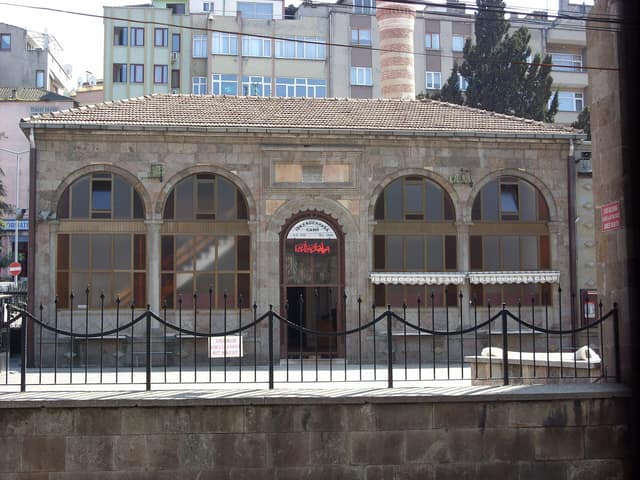
Start the route at the İskenderpaşa Mosque on Atatürk Square, the city's main square, right next to the municipal building. This is the latest building on the route, but there is a good reason to begin the story here. According to the Provincial Directorate of Culture and Tourism, the building inscription above the entrance shows that the mosque was built in 1529; the Eastern Black Sea Cultural Inventory gives this date as Hijri 936, that is 1529-1530, and records that the building was commissioned by İskender Pasha, the governor of Trabzon at the time. This date falls in the years when Suleyman, who was born in Trabzon, was on the throne. The provincial directorate writes that after Suleyman became sultan, Trabzon was joined with Batumi and turned into the centre of a province. This mosque on the square is one of the most visible traces of the period when the city passed from being a prince's district to the centre of a province.
The inventory records the first name of the mosque as Cami-i Merhum İskender Pasha. According to the inventory, the building was part of a complex made up of a fountain and of a madrasa and Quran school that have not survived. İskender Pasha's building work in the city did not stop there; the provincial directorate writes that, according to the sources, the Taşhan, a two-storey city inn with a courtyard, was built by him between 1531 and 1533. The directorate also states that the Pasha Bath, south of the Çarşı Mosque, is named among the endowments of İskender Pasha. In this way part of the commercial and built fabric between the square and the market was shaped by the investments of the same governor.
Stand in front of the mosque and look at the facade. The north face of the enclosed porch is divided into five bays by round arches and is covered by a hipped roof clad in traditional Turkish tiles. The single-balcony minaret on the west facade is built of alternating courses of cut stone and brick; step back a little from the minaret to see the change of colour. Above the north door there is a stone ornament with a flower motif in the tympanum, and an inscription above the door itself. Beside the building inscription, the facade also carries repair inscriptions from 1874-1875, 1882-1883 and 1897-1898. The provincial directorate states that the building reached its present form with the repair of 1882 and that additions made at different times changed its original appearance. According to the directorate the basic plan resembles the Green Mosque in İznik, while the inventory writes that the prayer hall and the porch are set at right angles to each other to form an inverted T plan.
The mosque is open for worship; if you go inside, choose the time between prayers, wear clothing that covers shoulders and knees and carry a headscarf. Inside, look at the plant motifs on the stone mihrab and the marble minbar and at the hand-painted decoration at the base of the dome. After the mosque, head west and walk across the Tabakhane Valley to Ortahisar inside the walls; the Kanuni House lies about one kilometre to the west as the crow flies.
Source: Trabzon İl Kültür ve Turizm Müdürlüğü; DOKAP Kültür Envanteri.
Kanuni House
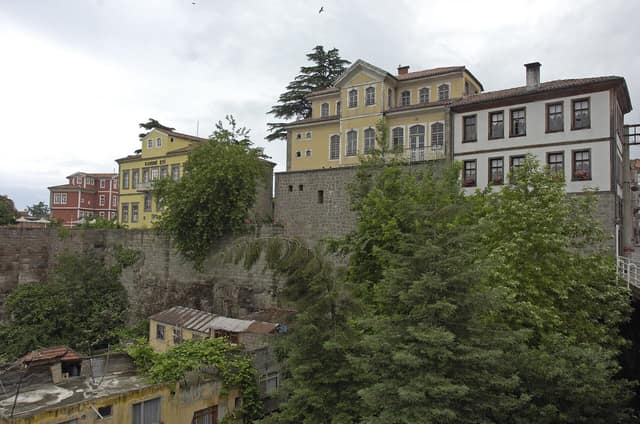
When you cross the Tabakhane Valley and enter the Ortahisar quarter inside the walls, you reach the second stop, the Kanuni House. The Eastern Black Sea Cultural Inventory records that the building now serves as a museum of the Governorate of Trabzon under the name Kanuni Sultan Süleyman Ottoman House. The inventory describes the building as an example of civil architecture whose original use was residential; the museum takes its name from the bond between the sultan and this city. At this stop, set aside time to think less about the house itself than about the childhood whose name it carries.
According to the TDV Encyclopedia of Islam, Suleyman was born in Trabzon on 6 November 1494; the encyclopedia also notes that other sources give a different date of birth, and the provincial directorate uses the year 1495. His father, Prince Selim, was governor of the district of Trabzon in those years. According to the TDV entry on Selim, some archival documents place Selim's appointment to Trabzon in 1487, and the prince, who came to the city together with his mother, served as its governor for about twenty-four years until 1510. The same entry also records that two of Selim's children born here, Prince Salih and Kamerşah Sultan, died young in Trabzon. According to the encyclopedia, his years of administration in Trabzon gave Selim the chance to follow developments along the frontier closely and so gave him valuable experience for his later reign.
Suleyman's childhood was spent in this city. The TDV writes that he received his first education from tutors assigned to him in the palace at Trabzon and that his first known teacher was Hayreddin Efendi. The encyclopedia also contains a piece of information based on Evliya Çelebi: while in Trabzon, Suleyman learned goldsmithing together with his foster brother Yahya. When he was given the district of Kefe in Rebiülahir 915, that is July-August 1509, he travelled by ship from Trabzon to Kefe with his mother, his tutor and his guardian. According to the encyclopedia, his father Selim also left Trabzon a year later, in 1510, and the city had thus been home to two generations of princes. The fact that Suleyman spent his childhood in Trabzon is one of the historical links the city turns to most often when it tells its own story; the provincial directorate also presents Trabzon as the city where Kanuni Sultan Süleyman was born.
As you walk around the house, look at the layout of the building too. According to the inventory, the ground floor is reached from the east facade by a single flight of stone steps, and the entrance leads into a hall; there are two rooms each to the north and south of the hall. On the upper floor the rooms are arranged around a central hall. Visiting days and hours at the museum may change, so check current information with the official sources before setting out. After the Kanuni House, walk south through the streets of Ortahisar towards the Upper Castle, the highest part of the walls; the two points are a few hundred metres apart.
Source: DOKAP Kültür Envanteri; TDV İslam Ansiklopedisi; Trabzon İl Kültür ve Turizm Müdürlüğü.
Trabzon Castle
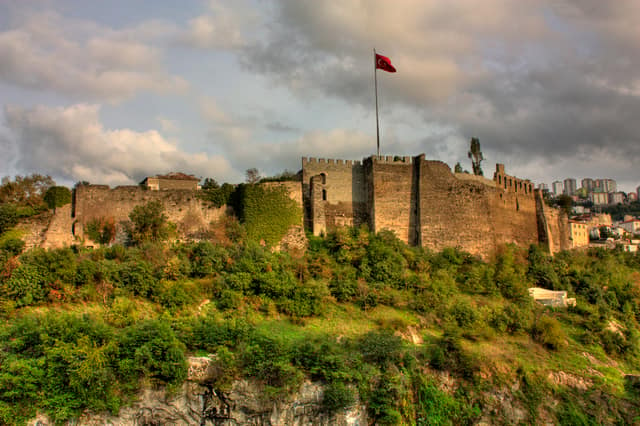
The third stop is Trabzon Castle, the heart of the city that Prince Selim governed for twenty-four years. The Culture Portal writes that the castle is located at Ortahisar, built on the high rock mass between the Tabakhane and Zağnos valleys. The Provincial Directorate of Culture and Tourism states that the oldest known traces of settlement in the city were found on this table-shaped area, and that the view that the name Trabzon comes from the ancient Greek word "trapezos", meaning trapezoid, has gained weight. The Eastern Black Sea Cultural Inventory records that written sources claim the earliest part of the walls was built in the 4th century BC. The Culture Portal also relates that Xenophon, who saw the city in that century, mentions the existence of the walls.
According to the inventory, the walls are divided into three sections, the Upper Castle, the Middle Castle and the Lower Castle. Begin your walk at the Upper Castle, the southernmost section. Drawing on written sources, the inventory writes that this section served as the acropolis of the city and that the walls were repaired under Justinian between 527 and 565. Also according to the inventory, there are said to be the remains of a palace in the area dating from before the 13th century. To the south of the Upper Castle there is a tower, and to the north two gates give access to the Middle Castle. Do not forget to look at the Byzantine reliefs and the repair inscription on the eastern side of the walls.
Then go down north into the Middle Castle. The inventory records that the Middle Castle has a rectangular plan stretching from south to north and that the first settlement in the city took place in this area. On its west are the Zindan, Imaret and Zağnos gates, on its east the Tabakhane gate and on its south-east the Cuma gate. The TDV Encyclopedia of Islam states that the Ortahisar part of the city took shape in the Roman period. According to the inventory, the Lower Castle stretches between the Zağnos Bridge in the south and the sea in the north, and its walls were begun under Alexios II between 1297 and 1330.
This layered past draws the frame of the city the Ottomans took over in 1461. The provincial directorate writes that Mehmed the Conqueror took Trabzon on 26 October 1461 and that the city was first governed as a district by princes and district governors. The inventory records that the walls are built of rubble stone and that only part of them stands today; this is why in some places the line of the walls disappears among the houses and streets. The Governorate of Trabzon has announced that archaeological excavations are being carried out in the Inner Castle area of the Zağnos Valley, so do not enter areas closed off by fences. In wet weather the stone steps along the walls become slippery, so wear shoes with a good grip. After the castle, go down west to the Zağnos Bridge and cross it to walk to the last stop.
Source: DOKAP Kültür Envanteri; Kültür Portalı; Trabzon İl Kültür ve Turizm Müdürlüğü; TDV İslam Ansiklopedisi.
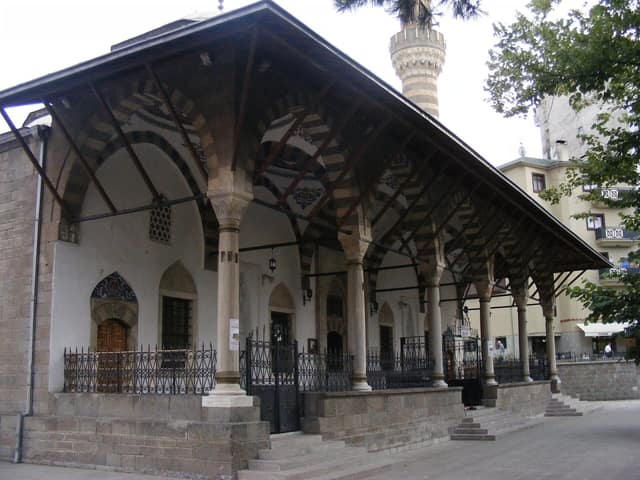
Gülbahar Hatun Mosque
When you cross the Zağnos Bridge, the last stop of the route, the Gülbahar Hatun Mosque, appears in front of you. The Provincial Directorate of Culture and Tourism writes that the mosque was built in memory of Gülbahar Hatun, the mother of Selim I, within a complex west of the Middle Castle and close to the Zağnos Bridge. The Eastern Black Sea Cultural Inventory records that the building stands in the Gülbaharhatun quarter, south of Atapark, and that its old name was Cami-i İmaret-i Amire-i Hatuniye. Because the mosque has no building inscription, its date is given differently in the sources. The inventory gives Hijri 920, that is 1514-1515; the provincial directorate writes that it was built in 1514 after the death of Gülbahar Hatun, while the TDV Encyclopedia of Islam gives 1505-1506. Whichever date is taken, the building belongs to the years between Selim's governorship in Trabzon and his rise to the throne. The provincial directorate also states that building activity in the city gathered pace after Selim was appointed governor in 1487.
The mosque was part of a complex. According to the provincial directorate, the public kitchen, madrasa, bath and primary school have been demolished, and in 1899 the present Gülbahar Hatun Primary School was built on the site of the old school. The TDV Encyclopedia of Islam writes that the Hatuniye Mosque, with its rich endowments, played an important role in the social and economic life of the city. According to the encyclopedia, Evliya Çelebi, who toured the city in 1640, was impressed by the charity handed out from the Hatuniye Madrasa and related that every visitor was given a bowl of soup and white bread twice a day. This information shows that the complex was not only a place of worship but an institution that fed the city's guests.
Stand in the courtyard and look at the building. The porch on the north is surrounded by six stone columns and a wide eave and is covered by five small domes. In the windows, the arches of the porch and the minaret you see dark grey and yellowish white stones used together. The cut-stone minaret at the north-west corner has a single balcony. There are three entrances on the north facade, and the plaque above the middle one records the repair of the mosque in 1883-1884. The building belongs to the group of mosques with side rooms that forms a distinct plan type in early Ottoman architecture. According to the provincial directorate, the fountain in the courtyard was once covered by a dome but was given a conical cap in the latest repairs.
The mosque is open for worship; visit between prayers, in clothing that covers shoulders and knees and with a headscarf. Inside, look at the muqarnas hood of the marble mihrab and the plant-patterned railings of the minbar. After finishing the route here, you can rest in the green area of the Zağnos Valley or cross the bridge again and return to the city centre by way of Ortahisar.
Source: Trabzon İl Kültür ve Turizm Müdürlüğü; DOKAP Kültür Envanteri; TDV İslam Ansiklopedisi.
Comments
Loading...
