

Station, Ship and Paper Museums on the İzmit Shore
Sign in to like and rate
The shoreline of İzmit fits three different ages of the city into a few hundred metres. On the hill stands an Ottoman clock tower, below it the historic station buildings set up at the end of the nineteenth century, on the shore a warship, and a little to the west the first paper factory of the Republic. This route links those four points from top to bottom and from east to west.
The route begins at the Clock Tower on Culture Hill. The tower was built in 1902 to commemorate the 25th anniversary of the accession of Abdülhamid II and is one of the first works of the architect Vedat Tek. After a short look you go down the slope to the station area. The second stop is the Kocaeli Archaeological Museum; since 2007 the repair workshop, water tank, staff lodging and monopoly warehouses of the historic İzmit station have served this museum. In halls stretching from the Palaeolithic to the Ottoman period you see the pottery of the Megarians who founded Astakos, the marble busts of Nicomedia and the large statue of Herakles at the entrance.
The third stop, just south of the station area, is the TCG Gayret Museum on the seafront. The ship entered service in the United States in 1946, joined the Turkish Navy in 1973 and, after leaving service in 1995, opened as a museum in 1997. The last stop, reached by walking west along the shore, is the SEKA Paper Museum. The buildings of the factory, whose foundation was laid in 1934, have been a museum since 2016 telling the history of paper and the process of its production.
There are also small links between the stops. The cases at the entrance of the Archaeological Museum display finds from the underwater surveys carried out off Kerpe in 2020, and this section opens the theme of seafaring before you move on to the ship museum on the shore. On the seafront, besides TCG Gayret, the submarine TCG Hızırreis, on display since 2004, can also be seen.
The logic of the order is simple. First you take a general view from the tower that is the symbol of the city, then you enter the archaeology halls covering the longest span of time. You then finish with two museums telling the recent history of the city, its seafaring and its industry. In this way the story of İzmit from ancient port city to industrial city is followed in a single walk.
The walks between the stops are short. Measured as the crow flies, it is about 330 metres from the Clock Tower to the Archaeological Museum, about 270 metres from the museum to the ship and about 600 metres from the ship to SEKA. The longest stop is SEKA, so it is a good idea to start the route in the morning. Because the opening days and hours of the museums can change, check the current announcement of each before setting out. If you are planning a workshop or a group visit, look at SEKA's application page in advance.
Sources
- Kocaeli Büyükşehir Belediyesi, Tarihi ve Kültürel Miras, https://www.kocaeli.bel.tr/tarihi-ve-kulturel-miras.html
- Kocaeli Büyükşehir Belediyesi, Yaşayan Müzeler, https://www.kocaeli.bel.tr/yasayan-muzeler.html
- Kültür Portalı, Kocaeli Arkeoloji Müzesi, https://www.kulturportali.gov.tr/turkiye/kocaeli/gezilecekyer/kocaeli-arkeoloji-ve-etnografya-muzesi-zmit
- Kültür Portalı, TCG Gayret Müzesi, https://www.kulturportali.gov.tr/turkiye/kocaeli/gezilecekyer/tcg-gayret-muzesi---zmit
- Kültür Portalı, SEKA Kağıt Müzesi, https://www.kulturportali.gov.tr/turkiye/kocaeli/gezilecekyer/seka-kgit-muzesi-
- Okul Dışı Öğrenme Ortamları, SEKA Kağıt Müzesi, https://okuldisiogrenme.eba.gov.tr/mekan-detay/seka-kagit-muzesi-3034
- SEKA Kağıt Müzesi resmi sitesi, https://www.sekakagitmuzesi.com/
Route Stops
Izmit Clock Tower
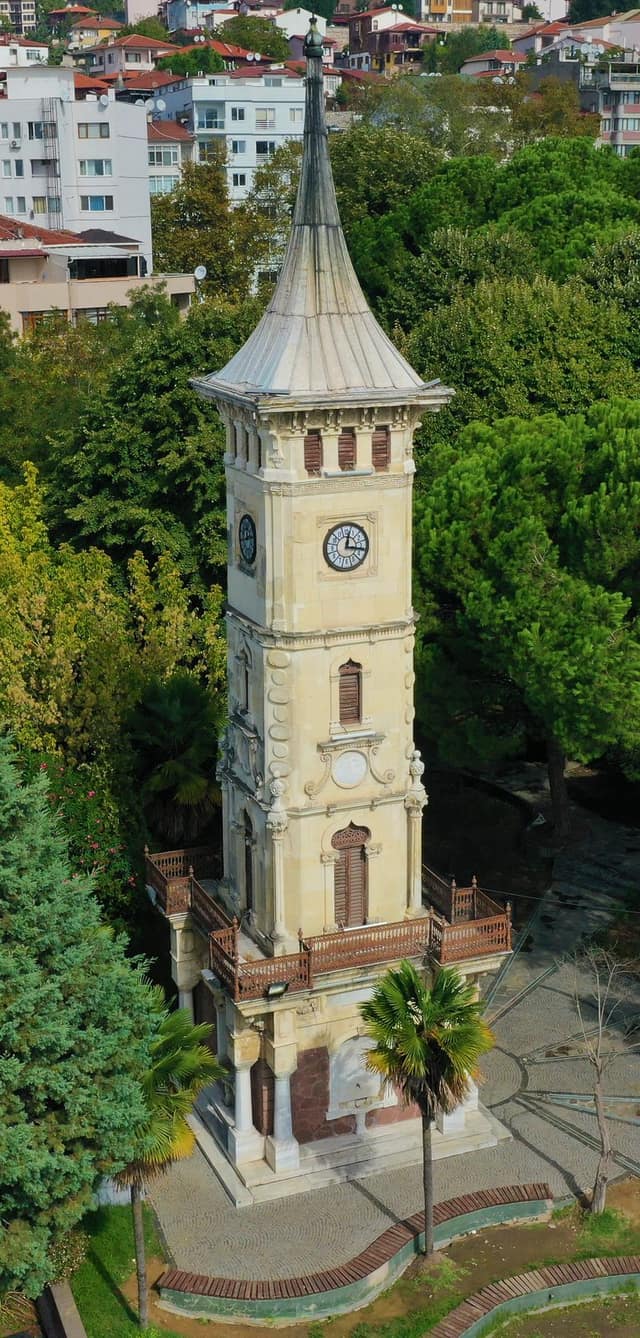
Start the route at the İzmit Clock Tower on Culture Hill. The tower stands right next to the Kasr-ı Hümayun and is regarded as one of the symbols of the city. When you reach the hill, first walk once round the tower, because a different detail waits in front of each facade.
According to the metropolitan municipality's record, the tower was built in 1902 by the governor of the time, Musa Kazım Bey, to commemorate the 25th anniversary of the accession of Abdülhamid II. The building is one of the first works of the architect Vedat Tek. For this reason the tower can also be read as a building showing the beginning of the architect's career.
The tower was built in the neoclassical style. Besides marble, travertine stones typical of the Hereke and Tavşancıl areas were used in its construction. Look closely at the facade to see the difference in colour and texture between the stones; the distinction between marble and travertine is particularly clear in the base section.
On the lowest level there are three fountains facing three directions. There are stone inscriptions on the pediments of the fountains and above the door. Even if you cannot read the inscriptions, pay attention to the frame of the lettering, the shape of the pediments and the workmanship of the fountain basins.
Step back a few paces to fit the tower into a single frame. There is enough open space around the hilltop park, and you can frame the tower between the trees or together with the facade of the Kasr-ı Hümayun.
Bringing the tower and the fountains together in the same structure shows that the building was conceived as a civic work that both told the time and gave water. Culture Hill is also the highest point of the route. Looking south from here you see the station area and the gulf beyond it. The rest of the route moves within this view, which means that the line you see now is the way you will walk.
The Kasr-ı Hümayun is not a stop on this route, but if you have time take a look at its facade. According to the Culture Portal the palace was used until 1967 for the provincial and agricultural chambers, which means that this hill was for a long time one of the administrative centres of the city. Then go down the slope towards the station buildings; the Archaeological Museum is about 330 metres away as the crow flies.
Source: Kocaeli Büyükşehir Belediyesi, Tarihi ve Kültürel Miras.
Kocaeli Archaeology Museum
The second stop is the Kocaeli Archaeological Museum in the area of the historic İzmit railway station. This is the busiest stop of the route, so set aside at least an hour and a half. Before entering the museum look at the buildings themselves, because the museum is not a newly built hall but the converted buildings of an old station complex.
According to the metropolitan municipality's record, the station was built between 1873 and 1910 on an area of 21 dönüm to a plan drawn by the German architect Otto Ritter. The station buildings were restored in 2006 and part of them is a museum today. According to the Culture Portal, the repair workshop, hangar building, water tank, staff lodging building and monopoly warehouses of the station were converted into the museum from 2007 onwards. With the change in 2020 the ethnography section was moved to the Atatürk, Redif and Ethnography Museum, and this building was devoted to archaeology.
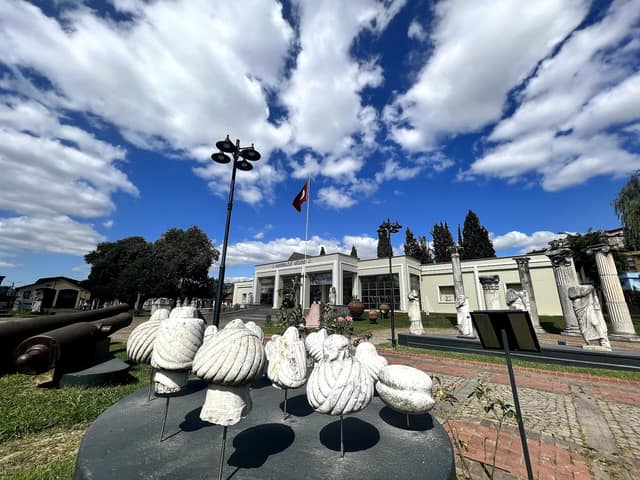
At the entrance you are greeted by the statue of Herakles. The Culture Portal presents this statue as the second largest statue of Herakles in the world. Pause for a while in front of the statue and walk slowly round it to grasp its scale.
Move to the left side of the entrance. Here there are amphorae showing the underwater cultural heritage of the region and information on seafaring in antiquity. Finds from the underwater surveys carried out off the coast of Kerpe in 2020 are also displayed in this section. Since you will return to the sea and to a ship at the later stops of the route, this display is a good beginning.
The halls are arranged in chronological order, so follow that order too. In the first section there are stone tools used by people of the Palaeolithic age. In the second and third sections you see the pottery of the Megarians, who set out from Megara 2700 years ago, settled at Başiskele and founded the city of Astakos, together with everyday objects of the Classical and Hellenistic periods.
The fourth section displays bronze objects and pottery vessels, and the fifth section marble busts of victorious commanders, successful athletes and honoured people of the Roman period. These busts are the works that best convey the place at that time of Nicomedia, today's İzmit, which served as a capital for Rome. Look closely at the facial expressions and the workmanship of the hair.
The sixth and seventh sections contain oil lamps, perfume bottles, figurines and glass works of the Roman period. Since these are small objects, do not hurry in front of the cases. The cases in the eighth and ninth sections are presented under the heading of one of the greatest archaeological discoveries in Türkiye.
The museum also displays fine marble works of the Ottoman period, and this section completes the chronology at the end of the halls. At the end of the visit leave the building and look once more at the station area; this station, which witnessed the welcoming ceremonies of Atatürk and many statesmen, has a special place in the memory of the city. For opening days and hours, look at the museum's current announcement. From here walk a short way to the seafront and the TCG Gayret Museum.
Source: Kültür Portalı, Kocaeli Arkeoloji Müzesi.
TCG Gayret Museum
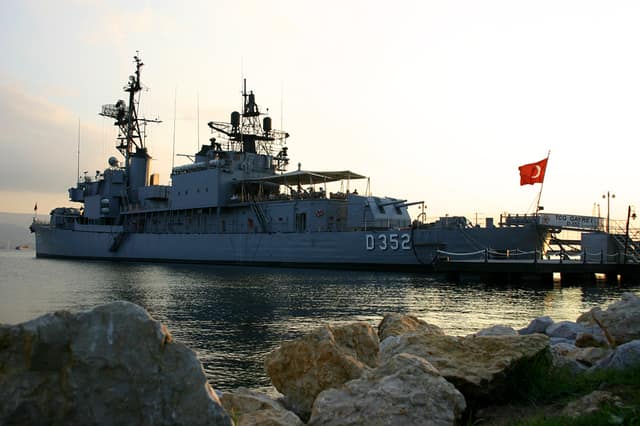
The third stop is the TCG Gayret Museum on the İzmit seafront. As you walk south from the Archaeological Museum towards the shore, the ship reveals itself at the water's edge; the distance between the two stops is about 270 metres as the crow flies. Before approaching the ship look at the whole hull from the shore, because once you come close it becomes harder to take in its size at once.
According to the Culture Portal, the ship is a warship built by the United States and entering service on 10 May 1946. In 1973 it was taken over by the Turkish Navy Command and received the name TCG Gayret. Over more than twenty years the ship carried out many important duties.
Withdrawn from service in 1995, the ship was prepared for a new duty within the Museum Ship Project. Through the joint initiative of the Governorship of Kocaeli, Kocaeli Metropolitan Municipality and the Fleet Command, it was arranged according to a modern museum approach and opened as a museum on the İzmit seafront in 1997. This means that the deck you walk today shows not the last arrangement of the ship in the navy but its form rearranged for a museum.
When you go on board, first walk round the deck and take in how the ship lies against the shore. If it is possible to go down into the interior, do not hurry. Ship stairs are usually narrow and steep, so keep your hands free and carry your backpack in front of you.
As you walk round, think about how limited a space the crew of a warship lived and worked in. The ship's more than twenty years of naval service tell of a life spent in these narrow spaces. While taking photographs, let other visitors pass in the narrow passages.
If you would like to see another ship museum nearby, keep an eye on the seafront. According to the metropolitan municipality's record, the submarine USS Gudgeon, which served for thirty years in the US Navy after the Second World War, was handed over to the Turkish Navy in 1983 under the name TCG Hızırreis. Having served for 21 years under the Turkish flag and retired in 2004, TCG Hızırreis has been on display on the İzmit seafront since 29 October 2004.
After leaving the ship take a short break on the shore and look at the gulf. From here you walk west along the shore to the next stop, the SEKA Paper Museum; the distance between the two points is about 600 metres as the crow flies. Check the museum's current announcement for visiting days and hours.
Source: Kültür Portalı, TCG Gayret Müzesi.
SEKA Paper Museum
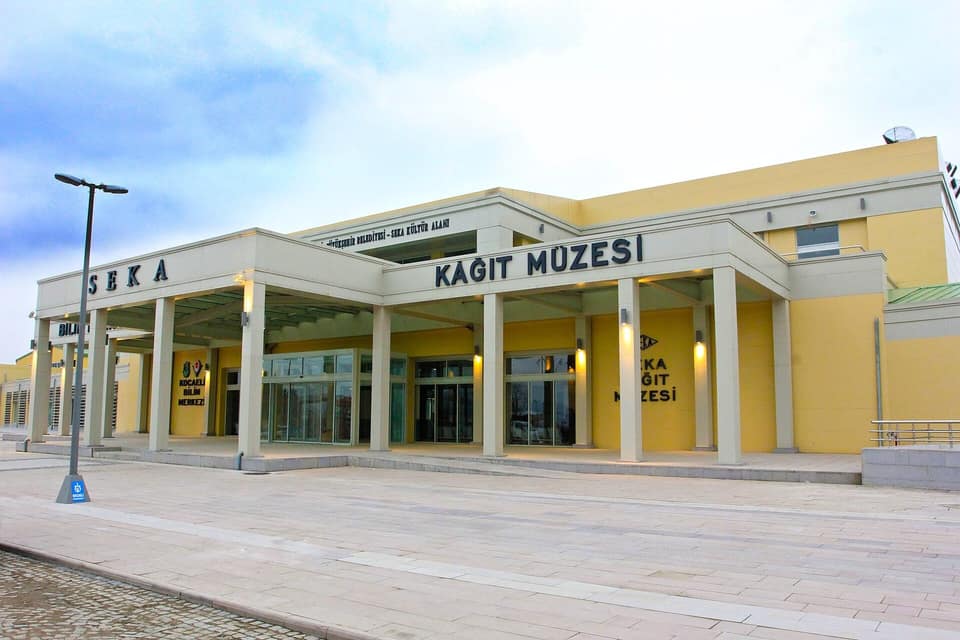
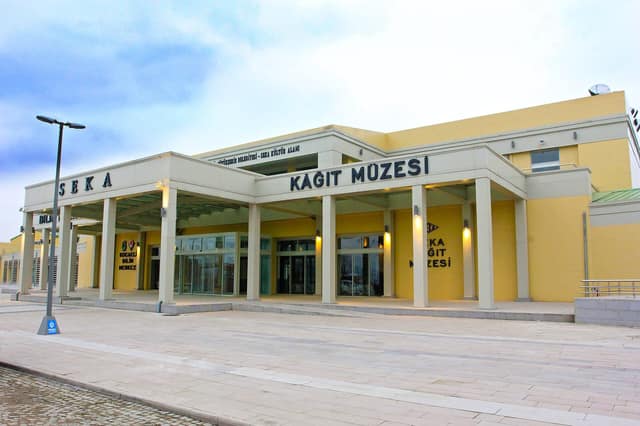
The last stop is the SEKA Paper Museum in the Kozluk neighbourhood. This is the longest stop of the route, so set aside at least two hours. Before entering the museum look at the outside of the factory buildings, because part of what is exhibited here is these buildings themselves.
According to the Ministry of National Education's out of school learning record, the foundation of the SEKA Paper Factory was laid in 1934 through the efforts of Mehmet Ali Kağıtçı. The museum's official website presents the factory as Türkiye's first modern paper factory, established in 1936. The conversion from factory to museum has made it possible since 2016 to convey to visitors the details of the paper production process. With this change, undergone eighty years after its foundation, the factory buildings host permanent and temporary exhibitions.
According to the Culture Portal, the museum is set up on an area of 12 thousand 345 square metres. Visitors follow, with the help of images, the story of paper spreading from İzmit to Türkiye, beginning with the founding of the factory, which held an important place in the industrialisation process of the Republican period. Because the area is large, it is a good idea to divide your visit into parts and take short breaks in between.
According to the metropolitan municipality's presentation, the museum is part of the largest industrial conversion project in Türkiye. The museum is dedicated to SEKA and to all the people of SEKA. The exhibitions tell the history of paper and its production processes in the spaces where the workers once laboured.
Build your visit around this thought. When you stand in front of the machines, think not only about the technical workings but also about the people who worked at those machines. The large spaces left from the factory period show how great an order lay behind a single sheet of paper.
The municipality's presentation writes that visitors are awaited by a journey stretching from the idealistic dreams of Mehmed Ali Kağıtçı to the story of the SEKA factory. Seeing the sections that tell the story of the factory's founder before or after the halls with the machines changes the meaning of the visit. Seeing the person first and the machine afterwards makes the ending of the route, tied to industrial history, easier to understand.
The museum also organises workshops and events. According to the out of school learning record, applications for workshops, events and group visits are taken through the museum's official web address, and the workshops are held at weekends. If you are coming with children, look at the workshop calendar in advance; since registration conditions can change, follow the current announcement.
It is also a good idea to find out before you go what is in the temporary exhibition hall, because the programme changes from time to time. At the end of the visit go outside and look once more at the factory buildings. The route ends here; you can return to the city centre by walking east along the shore or by city bus. For opening days and hours, look at the museum's official website.
Source: Kültür Portalı, SEKA Kağıt Müzesi.
Comments
Loading...
