

Kocaeli with Children, from Museum Ships to a Paper Workshop and Ormanya
Sign in to like and rate
For families with children, Kocaeli is a province of museums that can be touched, entered and experienced. This route builds a day around children's interests with four stops: a warship set on dry land, a factory museum that explains how paper is made, a second museum ship displayed on the shore and a wildlife park where animals live in conditions close to their natural surroundings.
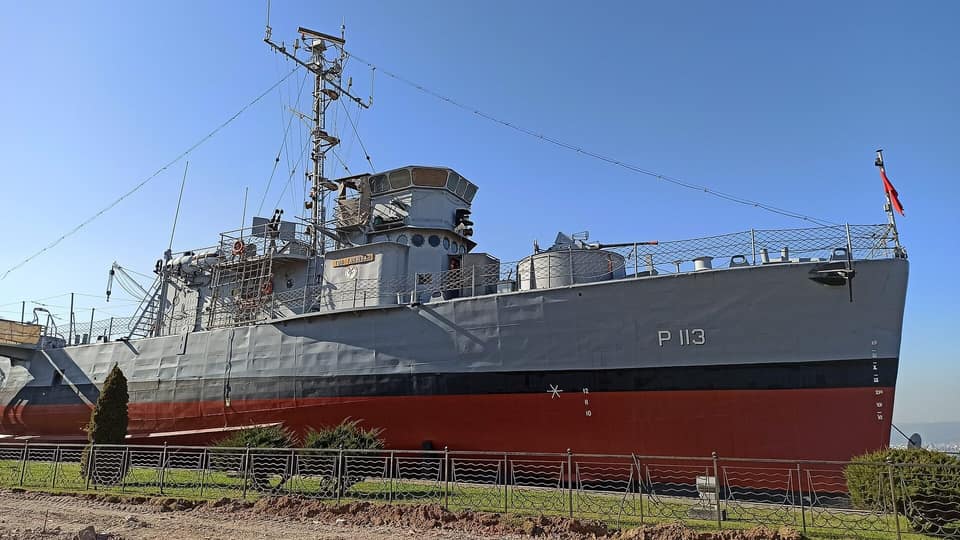
The day begins in Gölcük, at the Yarhisar Museum Ship on Kavaklı beach. Presented as Türkiye's first surface ship museum placed on land, the ship served in the Turkish navy for forty years as a reconnaissance and patrol vessel. On the ship, which has been kept in its original state, living quarters, ammunition stores and equipment can be seen. Because Gölcük is a town where the navy has lived since the 1920s, the ship also tells the story of this shore.
The second stop is the SEKA Paper Museum in İzmit, on the other side of the gulf. The buildings of the paper factory, whose foundations were laid in 1934, have welcomed visitors as a museum since 2016, and the process of paper production is explained here from start to finish. The museum's weekend workshops can be an extra reason for children; applications for the workshops are made through the museum's website. The children's play areas, the kite hill and the cycle path in Sekapark, which surrounds the museum, make a good lunch break.
The third stop is the TCG Gayret Museum, reached from Sekapark by a short walk along the shore. Built in the United States in 1946, it joined the Turkish navy in 1973 and has stood on the İzmit shore as a museum since 1997; this warship offers a comparison with the patrol vessel seen in the morning.
The last stop is the Ormanya Wildlife Park in Kartepe. In the children's zoo there are hundreds of animals of dozens of species, from fallow deer to zebras and from llamas to peacocks; Ormanköy, which looks like a village of hobbit houses, and the nature school are the side of the park turned towards children.
The order was built around attention spans and the course of the day. The ships are short and concrete visits, so they were placed at the beginning and in the middle; the workshop and the park take longer, so they were left to midday and the afternoon. Between Gölcük and İzmit there is a drive round the eastern end of the gulf, and between İzmit and Kartepe a second short drive. Ormanya is closed on Mondays and its closing time changes with the season. Check the current visiting conditions of the museums and workshops on the operators' pages before you go. The ladders on the ships can be steep, so hold small children by the hand and put them in comfortable shoes.
Sources
- Kültür Portalı, Gölcük Belediyesi Yarhisar Müze Gemisi, https://www.kulturportali.gov.tr/turkiye/kocaeli/gezilecekyer/golcuk-belediyesi-yarhisar-muze-gemisi-kavakli-golcuk
- Gölcük Kaymakamlığı, Tarihçe, https://www.golcuk.gov.tr/tarihcee
- NavSource Naval History, PC-1640, https://www.navsource.net/archives/12/011640.htm
- Kocaeli Büyükşehir Belediyesi, Yaşayan Müzeler, https://www.kocaeli.bel.tr/yasayan-muzeler.html
- Kültür Portalı, SEKA Kağıt Müzesi, https://www.kulturportali.gov.tr/turkiye/kocaeli/gezilecekyer/seka-kgit-muzesi-
- MEB Okul Dışı Öğrenme Ortamları, SEKA Kağıt Müzesi, https://okuldisiogrenme.eba.gov.tr/mekan-detay/seka-kagit-muzesi-3034
- Kocaeli Müze, SEKA Kağıt Müzesi, https://sekakagitmuzesi.com/
- Kültür Portalı, TCG Gayret Müzesi, https://www.kulturportali.gov.tr/turkiye/kocaeli/gezilecekyer/tcg-gayret-muzesi---zmit
- Kocaeli Büyükşehir Belediyesi, Büyüleyici Güzellikler, https://www.kocaeli.bel.tr/buyuleyici-guzellikler.html
- Kocaeli Büyükşehir Belediyesi, Ormanya, https://www.kocaeli.bel.tr/hizmet/ormanya-26.html
- Kocaeli Büyükşehir Belediyesi, Ormanya Mobil Uygulaması, https://www.kocaeli.bel.tr/ormanya.html
Route Stops
TCG Yarhisar Museum Ship
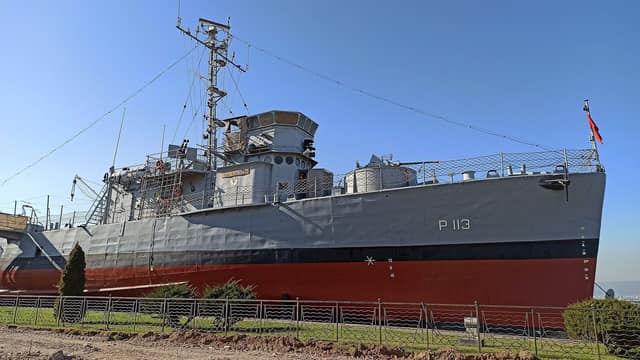
Begin the day in Gölcük, at the Yarhisar Museum Ship on Kavaklı beach. The Culture Portal presents the ship as Türkiye's first surface ship museum placed on land. The ship stands beached on the shore, and the pennant number P 113 on its hull can be made out even from a distance. You can start the visit by asking the children to find this number.
Yarhisar was built in the United States in 1964 for the Turkish Naval Forces and raised the Turkish flag in 1965. According to the record of the naval history archive NavSource, the ship was laid down in 1963 at a shipyard in Portland, Oregon, and launched on 14 May 1964. The same record gives the ship's length as 175 feet, about 53 metres. Yarhisar served in the Turkish navy for forty years as a reconnaissance and patrol vessel and took part in the Aegean phase of the 1974 Cyprus operation. Taken out of service in 2005, the ship was turned into a museum through the joint initiative of Gölcük Municipality, Kocaeli Metropolitan Municipality and the Fleet Command.
When you board, first walk round the deck and measure the length of the ship in your steps. According to the Metropolitan Municipality's description, the ship has been preserved in its original state and is toured together with its living quarters, ammunition stores, devices and equipment. The narrow sections where the crew lived show children in a concrete way how daily life went on inside a ship. On board, the development of the Ottoman and Turkish navy from the past to the present is displayed with paintings, photographs, mannequins and various objects. Talk together about naval history while looking at the uniforms of the mannequins and the ships in the photographs.
It is no coincidence that the ship stands in Gölcük. The Gölcük District Governorship writes that the history of the district began in 1924 when the area was chosen as a shipyard site, and that the battlecruiser Yavuz was the first ship repaired here. In 1933 it was decided to establish the Main Naval Base in Gölcük, and settlement along the shore became dense after that.
On the ship the ladders can be steep and the passages narrow, so hold small children by the hand. The Culture Portal states that Gölcük is 25 kilometres from the city centre and is reached from İzmit by the private Gölcük public buses. Check the current announcements of Gölcük Municipality for visiting days and hours. After the visit, drive round the eastern end of the gulf to the SEKA Paper Museum in İzmit.
Source: Kültür Portalı, Yarhisar Müze Gemisi.
SEKA Paper Museum
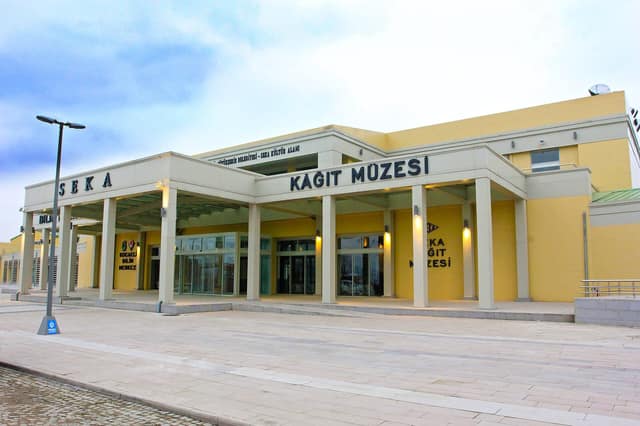
The second stop is the SEKA Paper Museum in the Kozluk neighbourhood, on the western side of İzmit. The museum is housed in the former factory buildings of SEKA, the first institution that comes to mind when paper production in Türkiye is mentioned. The Out of School Learning Environments page of the Ministry of National Education states that the foundations of the factory were laid in 1934 through the efforts of Mehmet Ali Kağıtçı. The factory, whose journey began with the first domestic paper sample, continues today as a museum that is an important part of the industrial heritage. Thanks to the conversion of the buildings from factory to museum, every detail of paper production has been passed on to visitors since 2016.
The Culture Portal states that the museum was set up on an area of 12,345 square metres. Visitors follow, with the help of visuals, the story of the factory, which held an important place in the industrialisation of the Republican period, from its founding to the paper that spread from İzmit across Türkiye. Kocaeli Metropolitan Municipality writes that the museum is dedicated to SEKA and to all the people of SEKA. In these spaces, where workers once laboured, paper, its history and its production processes are explained from every angle. As you walk round with children, draw their attention to the size of the machines and to the stages by which pulp becomes a sheet of paper. At the end of the visit, talk together about how the books they read and the notebooks they use at home are made.
One of the most popular sides of the museum is its workshops. The Out of School Learning Environments page states that the workshops take place at weekends and that applications for workshops, events and group visits are taken through the museum's website. The posts of Kocaeli Museum include examples such as wood painting, pottery and design workshops with parents taking part. Because the workshops require registration in advance, check the announcements on the site and book a place before you go. Besides its permanent displays, the museum also hosts temporary exhibitions.
The museum is inside Sekapark, run by Kocaeli Metropolitan Municipality. The Metropolitan Municipality states that the park has children's play areas, a carousel, a grass amphitheatre, a kite hill, a sandy beach and a cycle path. You can take lunch and a short play break in the park. The Kocaeli Science Centre is in the same area, so have a look at it if you have time. Check the current visiting conditions of the museum and workshops on the official site. From here it is about 600 metres as the crow flies to the TCG Gayret Museum, and you walk along the shore.
Source: Kültür Portalı ve MEB Okul Dışı Öğrenme Ortamları, SEKA Kağıt Müzesi.
TCG Gayret Museum
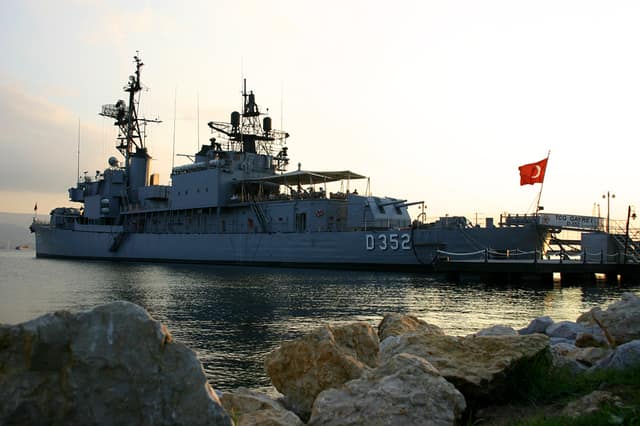
Walk along the shore from Sekapark to the TCG Gayret Museum on the İzmit waterfront. The Yarhisar you saw in the morning was a patrol vessel, and at Gayret children get the chance to compare a second warship with it. The Culture Portal states that the ship was built in the United States on 10 May 1946. The ship joined the Turkish Fleet Command in 1973 and was given the name TCG Gayret. Under the Turkish flag it carried out many important duties for more than twenty years.
The ship was taken out of service in 1995. Under the Museum Ship Project, through the joint initiative of the Kocaeli Governorship, Kocaeli Metropolitan Municipality and the Fleet Command, it was arranged according to a modern approach to museums and opened to visitors on the İzmit shore as a museum in 1997. The museum is about 270 metres as the crow flies from the Kocaeli Archaeology Museum on the same shore.
Before boarding, stop at a point on the shore where you can see the whole hull and compare the length of the ship with Yarhisar. On deck, look at the mast and the bridge. Try with the children to guess what each part of the ship was used for, and then compare your guesses with the explanations in the museum. Because the ladders for going on and off the ship can be steep, hold small children by the hand. Move in turn through the narrow spaces inside the ship and make way for other visitors. Read the information panels aloud to the little ones so that they stay part of the visit. For photographs, choose a distance on the shore at which the whole hull fits in the frame.
Kocaeli Metropolitan Municipality also describes another museum displayed on the İzmit shore. The submarine USS Gudgeon, which served for thirty years in the US Navy after the Second World War, was handed over to the Turkish Naval Forces in 1983 under the name TCG Hızırreis. After 21 years of service under the Turkish flag, the submarine was retired in 2004 and has been displayed on the İzmit shore since 29 October 2004. If you have the time and the children have the energy, look for this submarine on the shore as well.
Check the opening days and hours of the museums in the operator's announcements before you go. After the visit, return to your car and drive east to Ormanya in Kartepe; Ormanya is about 21 kilometres from here as the crow flies.
Source: Kültür Portalı, TCG Gayret Müzesi.
Ormanya Natural Life Park
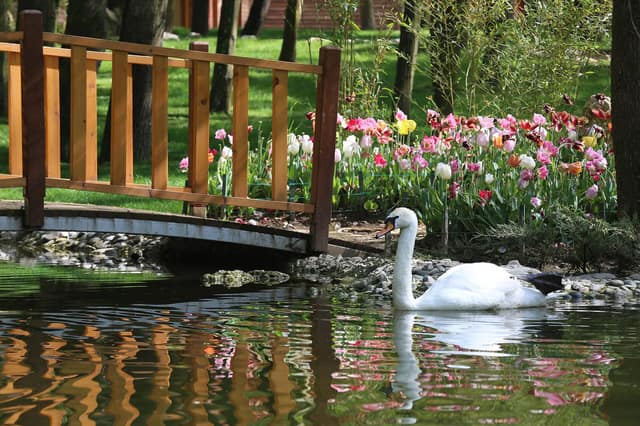
The last and longest stop of the day is the Ormanya Wildlife Park in Kartepe. The park was founded under the responsibility of the Culture and Social Affairs Department of Kocaeli Metropolitan Municipality. The Metropolitan Municipality likens Ormanya to a fairyland where dream and reality blend into each other and presents it as a place that will appeal to everyone from seven to seventy. For families who come with children, the most important part of the park is the Children's Zoo.
According to the Metropolitan Municipality, this section holds 768 animals of 67 species, from fallow deer to zebras and from llamas to peacocks, arranged so that they can easily come into contact with people. The zoo has units on the feeding of the animals, social enrichment, and their illnesses and treatment. These units show children how the animals are cared for. Follow the staff's instructions when approaching the animals and do not give them food from outside. With the children, pick an animal in each section and read together on the signs what it eats and where it lives.
The park also has an area called Ormanköy. The Metropolitan Municipality states that this area draws great interest with its hobbit houses, built with inspiration from novels of Middle-earth. A nature school for children is also part of the park. The Metropolitan Municipality's list also includes areas such as an insect hotel, a forest library, a bird watching area, horse riding and sport fishing. The park has 26 kilometres of walking trails, 15 kilometres of cycling trails and a large picnic area.
The Metropolitan Municipality's free mobile application shows the park's areas, animals and walking routes. The application also has sections called Discover the Living Things and Nature School, along with a mobile game called the Ormanya Adventure, so children can also explore the park through play. Installing the application on your phone before you come makes it easier to find your way in the park.
Ormanya is closed on Mondays, but it is open on public holidays that fall on a Monday. The closing hours are changed with the season, taking into account the length of the day, the weather and the natural behaviour of the animals. So check the current hours in official announcements before you go and try to arrive at the park early in the afternoon. Because walking distances are long, bring a pushchair or baby carrier for small children, and water and hats for everyone.
Source: Kocaeli Büyükşehir Belediyesi, Ormanya.
Comments
Loading...
