

From Rails to Wings, the Transport and Industrial Heritage of Eskişehir
Sign in to like and rate
Most visitors know Eskişehir through the colourful houses of Odunpazarı and the banks of the Porsuk. Yet the real force that gave the city its present form is the railway that arrived at the end of the nineteenth century and the industry that grew around it. The city history published by the Provincial Directorate of Culture and Tourism writes that Eskişehir's real growth began after the railway was opened to traffic. This route follows that story in four stops: aviation, the railway, the city's old fruit and vegetable market hall and the industrial records of the first years of the Republic.
The route starts in the northwest of Tepebaşı, at the Vecihi Hürkuş Aviation Park opposite the Yunusemre Campus of Anadolu University. The TDV Encyclopaedia of Islam records that aircraft repair workshops belonging to the defence industry were set up in the city in the first years of the Republic; the civil and military aircraft displayed in the open air are the visible face of that bond today. The second stop is Eskişehir Station. The line that reached Bilecik in 1891 arrived in Ankara via Eskişehir within two years, the Konya line was added in 1896, and the city became the meeting point of railways coming from the west and heading east and south. Today's station building entered service in 1955; right next to it is the TCDD Eskişehir Museum, and nearby is the Devrim Cars Museum, which tells the story of the city's locomotive and car production.
The third stop is the Haller Youth Centre, created by restoring the historic Fresh Fruit and Vegetable Market Hall building. The old hall now hosts the Tepebaşı Stage of the City Theatres, an exhibition hall and a bookshop; the building carries the trace of the years when the city turned from a farming centre into a city of trade and industry. The route ends at the northern edge of Odunpazarı, at the Anadolu University Museum of Republican History, housed in the building that opened in 1916 as the Turan Model School. The rooms on the museum's first floor document the city's development in education and industry; one of the first sugar samples produced at the Eskişehir Sugar Factory in December 1933 is also displayed here.
The order is set both for the subject and for walking. The distance between the Aviation Park and the station is about one kilometre as the crow flies, and between the station and Haller about half a kilometre. From Haller to the museum it is about two kilometres as the crow flies; you can cover this part on a walk through the city centre or by tram. The time at the stops adds up to about three and a half hours, and with walking and transfers the route takes four to five hours. The Aviation Park is closed on Mondays and Tuesdays and the Museum of Republican History on Mondays; keep this in mind when choosing your day and check the current visiting hours on the official pages. Because the TCDD Eskişehir Museum is closed for a period for restoration, find out its status before you go. Those who arrive in Eskişehir by train can also follow the route in reverse, starting from the station.
Sources
- Eskişehir İl Kültür ve Turizm Müdürlüğü, Vecihi Hürkuş Havacılık Parkı, https://eskisehir.ktb.gov.tr/TR-336967/vecihi-hurkus-havacilik-parki-tepebasi.html
- Eskişehir İl Kültür ve Turizm Müdürlüğü, TCDD Eskişehir Tren Garı, https://eskisehir.ktb.gov.tr/TR-336966/tcdd-eskisehir-tren-gari-tepebasi.html
- Eskişehir İl Kültür ve Turizm Müdürlüğü, Tarihçe, https://eskisehir.ktb.gov.tr/TR-70842/tarihce.html
- Eskişehir İl Kültür ve Turizm Müdürlüğü, TCDD Eskişehir Müzesi, https://eskisehir.ktb.gov.tr/TR-336973/tcdd-eskisehir-muzesi-tepebasi.html
- Eskişehir İl Kültür ve Turizm Müdürlüğü, TÜRASAŞ Devrim Arabaları Müzesi, https://eskisehir.ktb.gov.tr/TR-339755/turasas-devrim-arabalari-muzesi-tepebasi.html
- Eskişehir İl Kültür ve Turizm Müdürlüğü, Haller Gençlik Merkezi, https://eskisehir.ktb.gov.tr/TR-336970/haller-genclik-merkezi-tepebasi.html
- Eskişehir Büyükşehir Belediyesi Şehir Tiyatroları, Sahneler, https://tiyatro.eskisehir.bel.tr/sahneler.php
- TDV İslam Ansiklopedisi, Eskişehir, https://islamansiklopedisi.org.tr/eskisehir
- Anadolu Üniversitesi, Cumhuriyet Tarihi Müzesi, https://www.anadolu.edu.tr/kampuste-yasam/muze-ve-sanat-merkezleri/cumhuriyet-muzesi
- Anadolu Üniversitesi E-Gazete, Cumhuriyet Tarihi Müzesi ziyaretçilerini bekliyor, https://egazete.anadolu.edu.tr/kultur-sanat/40543/cumhuriyet-tarihi-muzesi-ziyaretcilerini-bekliyor
- EBA Okul Dışı Öğrenme, Cumhuriyet Tarihi Müzesi, https://okuldisiogrenme.eba.gov.tr/place-detail/cumhuriyet-tarihi-muzesi-1544
- OpenStreetMap, Hava Müzesi tramvay durağı, https://www.openstreetmap.org/node/4580004947
- EsTram, Hat Şeması, https://www.estram.com.tr/sayfalar.php?sayfalar_id=19
Route Stops
Vecihi Hürkuş Aviation Park (Eskişehir Aviation Museum)
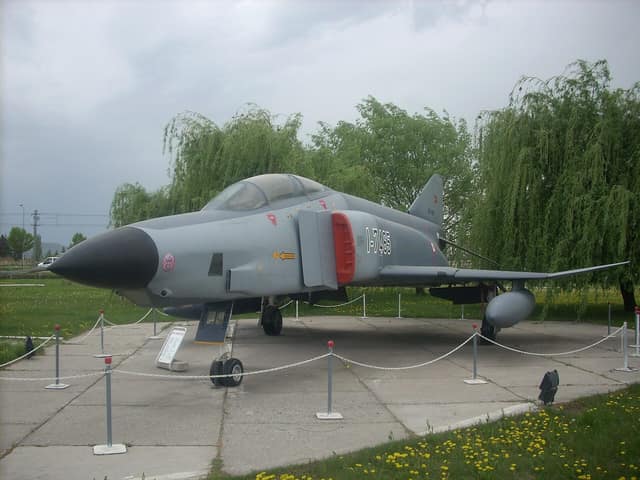
Start the route in the northwest of the city, at the Vecihi Hürkuş Aviation Park opposite the Yunusemre Campus of Anadolu University. If you come by tram, get off at the Hava Müzesi stop right in front of the park; this way you take the first step of the route without a car. According to the Provincial Directorate of Culture and Tourism, this is an aviation museum that opened to visitors in 1998 as an open-air display. Civil and military aircraft of various types and models are displayed in the open area. An indoor section holds pilot uniforms, badges, model aircraft and aircraft engines. Since the theme of the route is transport and industry, link these two sections to each other during your visit.
First walk around the open-air display and try to read the aircraft not one by one but as a collection. Seeing civil aircraft and warplanes side by side shows how differently aviation developed for both transport and defence. Look at the size of the fuselages, the shape of the wings and the position of the engines and try to guess what job each aircraft was designed for. Because you can walk freely around the aircraft, look at them separately from the front, the side and the back. Shade may be limited in the open area, so do not forget a hat and water in the summer months.
Then move on to the indoor section and give the engines particular attention. These engines explain best how the airframes you saw outside actually moved. The pilot uniforms and badges remind you of the human work behind the machines. The model aircraft let you get to know, on a small scale, models you did not see in the open area.
The park's bond with the city is more than a collection. The TDV Encyclopaedia of Islam writes that aircraft repair workshops belonging to the defence industry were set up in Eskişehir in the first years of the Republic and that the city took on the look of a city of trade and industry in this period. The aircraft standing in the open air today are the most easily seen witnesses of this long relationship between the city and aviation. For photographs choose the morning or late afternoon, because side light shows the lines of the fuselages more clearly. The page of the Provincial Directorate of Culture and Tourism states that photography is allowed in the park. The park is closed on Mondays and Tuesdays, so check the current hours on the same page before you go. From here head southeast towards the railway line, on foot or on a short tram ride, to Eskişehir Station.
Source: Eskişehir İl Kültür ve Turizm Müdürlüğü, Vecihi Hürkuş Havacılık Parkı.
Eskisehir Train Station
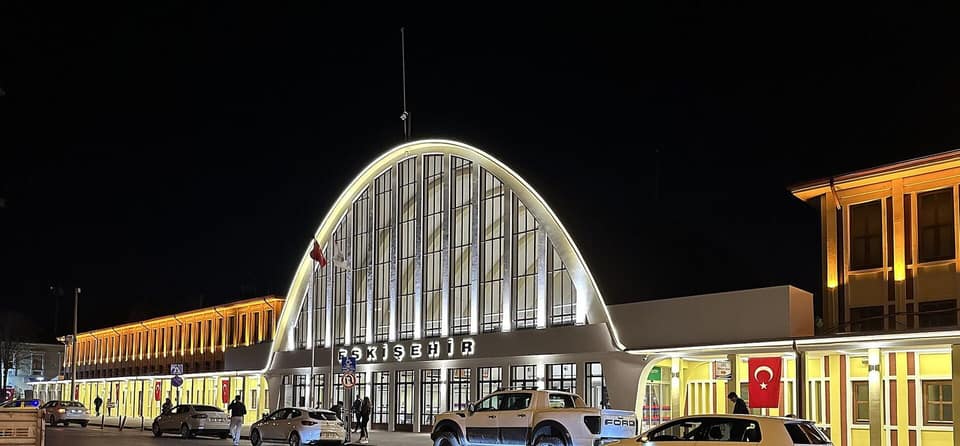
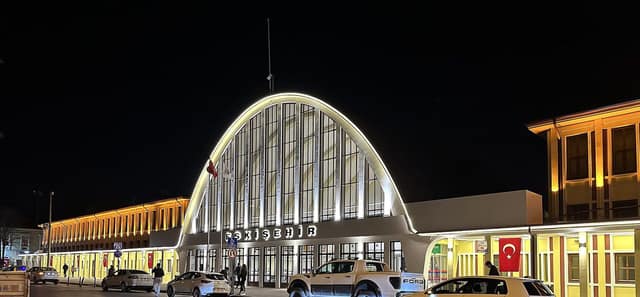
The second stop is Eskişehir Station, which stands right at the centre of the city's relationship with the railway. When you arrive, stop in the square in front before going in and look at the building as a whole. According to the Provincial Directorate of Culture and Tourism, the foundation of today's station building was laid in 1953 and the building entered service on 4 November 1955. The design was prepared by Professor Orhan Safa. Because the building is a transport structure used by passengers every day, visit it not as a museum but as a working station. Watch out for traffic in the square and do not block the flow of passengers in front of the entrance.
Although the station building is new, the line is much older. According to the TDV Encyclopaedia of Islam, the Baghdad railway line reached Bilecik in 1891 and arrived in Ankara via Eskişehir within two years. The construction of the Eskişehir to Konya line in 1896 was a turning point for the city. The provincial directorate's city history writes that Eskişehir thus became the meeting point of railways coming from the west and heading east and south. The same history gives 1892 as the founding year of the Cer Workshop, which carried out the maintenance and repair of railway vehicles; TDV records the founding year of this workshop, which it counts as the city's oldest industrial establishment, as 1894. The railway revived the city's trade and also made it a strategic point in military terms. The history also tells that in January 1919 a British unit set up its headquarters around Eskişehir station. The first task after liberation was the repair of the rails and bridges linking the city to İstanbul and Ankara, and the line was reopened to traffic within two months.
On a plot of about two thousand square metres right next to the station, in a historic building, is the TCDD Eskişehir Museum. Trolleys, level crossing barriers, a steam suction truck, a water tanker and locomotives are displayed in the museum garden. Inside are a large station model, old telegraph and telephone devices, lamps and tulip patterned stoves ordered from Germany in 1908. The provincial directorate has announced that the museum is kept closed for a period for restoration; if the doors are open, give half of these forty minutes to the museum. If it is closed, look at the pieces visible beyond the garden fence and extend the time you spend at the station building.
For those interested in the subject, the nearby TÜRASAŞ Devrim Cars Museum can be considered as a separate detour. According to the provincial directorate, this museum tells the story of the Devrim car produced in the city in 1961 and of Karakurt, the first Turkish steam locomotive, built at the factory in the same year. If you want to add this museum to the route, allow at least one more hour and check its visiting days in advance. From the station walk east to the Haller Youth Centre, a short walk of about half a kilometre as the crow flies.
Source: Eskişehir İl Kültür ve Turizm Müdürlüğü, TCDD Eskişehir Tren Garı ve TCDD Eskişehir Müzesi.
Haller Youth Center
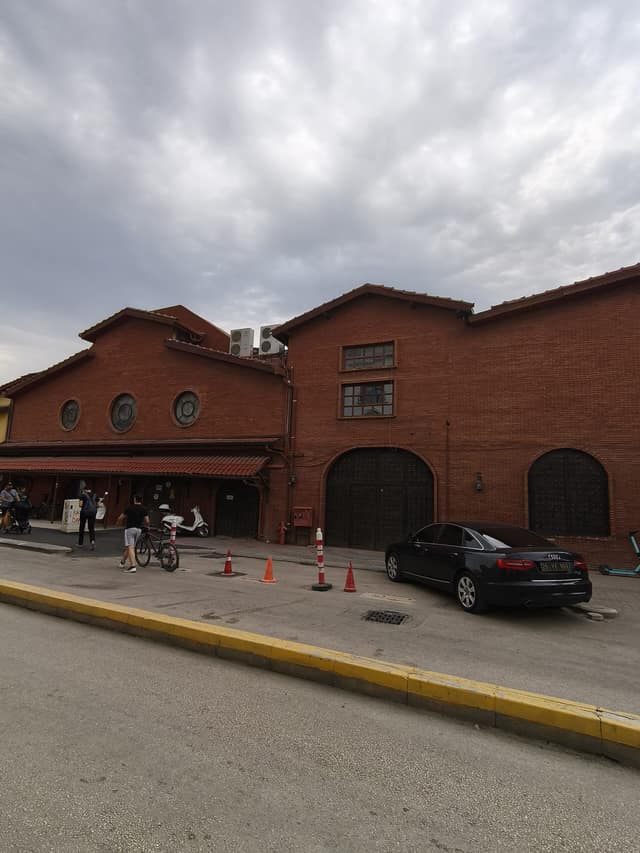
The third stop is the Haller Youth Centre, created by restoring the historic Fresh Fruit and Vegetable Market Hall building. When you arrive on foot from the station, first stand opposite the building and look at the facade from a distance. Built as a fruit and vegetable market hall, this structure is part of the trade belt that formed between the railway and the city centre. The Provincial Directorate of Culture and Tourism writes that the centre was created by the restoration of the historic market hall building. The ministry page states that today there are souvenir shops, kiosks and cafes inside. According to the same page, the centre also hosts the Tepebaşı Stage of the City Theatre, an exhibition hall and a bookshop.
To understand the building's place in the city's industrial history, the TDV Encyclopaedia of Islam's account of the Republican period is a good guide. According to the encyclopaedia, the railway workshop was doubled in size in these years, and in 1933 one of Turkey's first four sugar factories was founded in Eskişehir. Facilities such as aircraft repair workshops, tile and brick factories, oil mills and tanneries also came into operation in this period. The encyclopaedia writes that Eskişehir thus left behind its old look of a farming centre and took on the look of a city of trade and industry. According to the same source, the city's population, just over 32 thousand in 1927, passed 89 thousand in 1950. In the rapid growth between 1940 and 1950 the city's famous market gardens also turned into residential areas, and new neighbourhoods such as Eskibağlar and Kızıltoprak were founded in the northwest. A fruit and vegetable market hall standing in this belt of change is a concrete reminder of the shift the city lived through between farming and industry.
When you go inside, walk around the building like a covered bazaar and first check whether there is an exhibition open in the exhibition hall that day. Stopping at the bookshop is a good chance to see publications about the city. The Tepebaşı Stage comes first in the list of stages on the official website of the City Theatres, and the site gives the capacity of the hall as 202 plus four seats. If you want to see a play in the evening, check the current programme and ticket information on the City Theatres website. If you come during the day the hall may be closed, but the building itself and its shops can be visited all day.
This stop is also suitable for a short break, because the last part of the route is a longer walk. From here walk southeast through the city centre to the Museum of Republican History at the northern edge of Odunpazarı, or take the tram. The distance between the two points is about two kilometres as the crow flies.
Source: Eskişehir İl Kültür ve Turizm Müdürlüğü, Haller Gençlik Merkezi; TDV İslam Ansiklopedisi, Eskişehir.
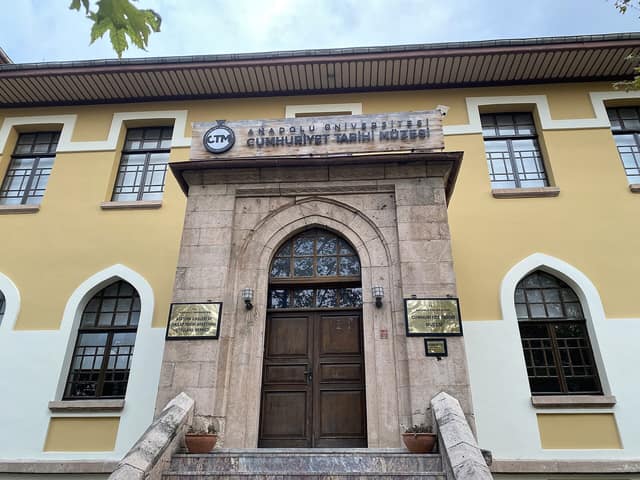
Anadolu University Museum of Turkish Republic History
The last stop of the route is the Anadolu University Museum of Republican History on Atatürk Boulevard, at the northern edge of Odunpazarı. Before entering the museum, look at the building itself, because the structure is also part of the transformation that this route is about. According to Anadolu University, the building was constructed in 1916 as the Turan Model School and is one of the works of the First National Architecture period. The building housed various public institutions for many years, stood idle for a time and was transferred to the university in 1989. After restoration it opened as a museum on 23 April 1994, closed for reorganisation in 2013 and reopened to visitors on 21 March 2019.
On this route, instead of touring the museum from start to finish at the same pace, give priority to the city rooms on the first floor. According to the university page, the rooms in the right corridor of the first floor tell the story of Eskişehir's development in education and industry with documents, images and objects. Anadolu University's e-newspaper writes that one of the first samples of granulated and cube sugar produced at the Eskişehir Sugar Factory in December 1933 is on display in the museum. The information on the sugar factory that you read from TDV at Haller turns here into a small showcase object. The same source states that the museum shows, with panels and objects, the stages the city went through from the last period of the Ottoman Empire to the 1950s.
Do not skip the two rooms set aside for the school that was the building's first owner. According to the university page, these rooms display teaching materials used at the Turan Model School and images from the period. The e-newspaper tells that after the school opened in 1916 it became a sister school of a school in Germany and that the teaching materials sent from there are in the museum today. On the ground floor are the section on Turkish history, panels on the Gallipoli Front and the War of Independence, and a memorial room with the names of the martyrs from Eskişehir. On the first floor you can visit Atatürk's personal belongings, the Room of Reforms and the Tenth Anniversary Speech Room. The ethnography room shows works from Central Anatolia.
The museum page on EBA states that admission is free and that food and drink are not consumed inside the museum. The museum is closed on Mondays, so check the current visiting hours on the university page. The e-newspaper also notes that museum staff provide guidance for visitors arriving in groups. When you finish the route here, the historic streets of Odunpazarı are a few minutes' walk away. You can spend the rest of the day in that direction or return to the city centre by tram.
Source: Anadolu Üniversitesi, Cumhuriyet Tarihi Müzesi; Anadolu Üniversitesi E-Gazete.
Comments
Loading...
