

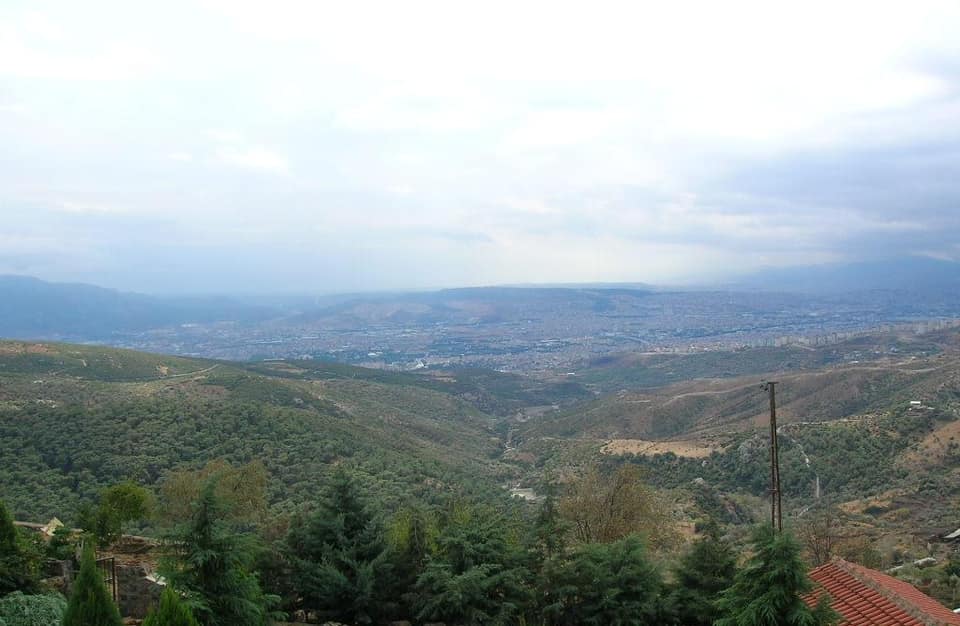
From Homer Valley to Buca Pond, a Day of Streams, Gardens and Ponds in Eastern İzmir
Sign in to like and rate
İzmir's coastline gets much of the attention, but the stream valleys and old gardens in the east of the city are rich enough for a day long nature route. This route starts at Homer Valley in the north of Bornova, comes down to the Aşık Veysel Recreation Area in central Bornova, moves on to the Hasanağa Garden in central Buca and ends at Buca Pond in the southeast of the city. All four stops are green spaces of the city; in one of them water flows along a natural stream bed, while in the others ponds and pools are at the centre of the scene.
The theme of the route is water and greenery. Homer Valley is a landscaping scheme opened by İzmir Metropolitan Municipality in 2008, stretching about 7 kilometres along the bed of the Bornova stream; ponds and natural stone weirs regulate the flow of the stream. According to the Ministry of National Education's record, 182 plant species and 103 bird species live in the valley. The Aşık Veysel Recreation Area is a city park inside Bornova, opened in 2010, with an artificial pond and bridges over a stream. The Hasanağa Garden is the old Aliotti garden left from Buca's Levantine past, once laid out like a small zoo. Buca Pond, founded in 1998 and opened to the public in 1999, is a recreation area laid out around a wide water surface. So the route runs from a natural valley to a city park, then to a century old garden and to the shore of a pond.
The order runs from north to south and follows the heat of the day. The cool morning hours suit walking in the valley, while in the city parks the seating and lawns make the midday hours easier. Waiting for sunset near the viewing terraces of Buca Pond is a good way to close the day. Because the stops are several kilometres apart, the route is easiest by private car. Those who want to go by public transport should check routes and timetables on the transport pages of ESHOT and İzmir Metropolitan Municipality.
The route also suits families with children, because every stop has a playground or level walking paths. Keep a close eye on small children at the edge of the ponds. In the valley and in the gardens, take your rubbish with you, do not feed wild animals and do not damage the trees. Learn the picnic and fire rules from the signs at the entrance of each area, because the rules differ from place to place. Spring and autumn are the most beautiful seasons for walking in the valley; in summer you need to choose the shady hours.
Sources
- İzmir Büyükşehir Belediyesi, Homeros Vadisi'ne muhteşem açılış, https://www.izmir.bel.tr/tr/Haberler/homeros-vadisine-muhtesem-acilis/3714/156
- Milli Eğitim Bakanlığı, Okul Dışı Öğrenme Ortamları, Homeros Vadisi, https://okuldisiogrenme.eba.gov.tr/mekan-detay/homeros-vadisi-3066
- Visit İzmir, Homeros Vadisi, https://www.visitizmir.org/tr/destinasyon/24692
- İzmir Dergisi, Homeros'un vadisinde doğayla içiçe, https://www.izmirdergisi.com/tr/dergi-arsivi/37-13uncu-sayi/1996-homeros-un-vadisinde-dogayla-icice
- İzmir Büyükşehir Belediyesi, Bornova Aşık Veysel Amfi Tiyatro, https://www.izmir.bel.tr/tr/MekanDetay/3/306
- Visit İzmir, Bornova Aşık Veysel Rekreasyon Alanı ve Amfi Tiyatro, https://www.visitizmir.org/tr/Destinasyon/8580
- İzmir Büyükşehir Belediyesi, Yürüyüş Parkurları ve Dinlenme Alanları, https://www.izmir.bel.tr/tr/DinlenmeAlanlariVeYuruyusParkurlari/61/120
- Buca Belediyesi, Hasan Ağa Parkı, https://www.buca.bel.tr/tr/hasan-aga-parki
- Kültür Envanteri, Hasanağa Bahçesi, https://kulturenvanteri.com/en/yer/hasanaga-bahcesi/
- İzmir Büyükşehir Belediyesi, Hasanağa Bahçesi baştan sona yenilendi, https://www.izmir.bel.tr/tr/Haberler/hasanaga-bahcesi-bastan-sona-yenilendi/53989/156
- İzmir Büyükşehir Belediyesi, İzmir'in ilk Spor İstasyonu Hasanağa Bahçesi'nde açıldı, https://www.izmir.bel.tr/tr/Haberler/izmir-in-ilk-spor-istasyonu-hasanaga-bahcesi-nde-acildi-/54042/156
- İzmir İl Kültür ve Turizm Müdürlüğü, Buca Pond, https://izmir.ktb.gov.tr/EN-239230/buca-pond.html
- Aslı Güneş, Bahriye Gülgün, Buca Gölet ve Buca Yedi Göller suni gölet çevresi rekreasyon alanları, Ege Üniversitesi Ziraat Fakültesi Dergisi 44/2, 2007, https://dergipark.org.tr/en/download/article-file/59261
Route Stops
Homer's Valley
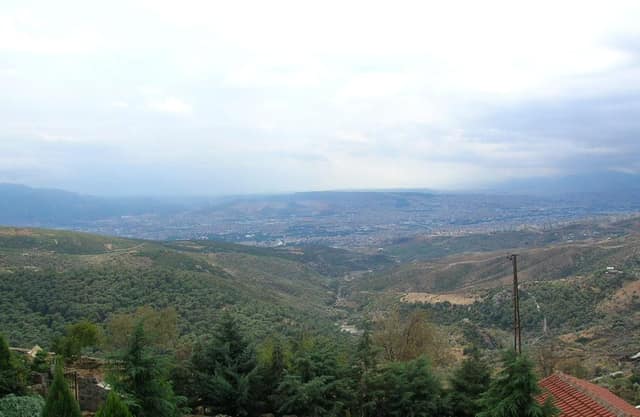
Homer Valley lies in the north of Bornova and appears in address records in the Çamiçi neighbourhood. According to the Ministry of National Education's record of out of school learning places, the valley lies in the bed of the Bornova stream, between the centre of Bornova and the Kayadibi area. It takes its name from Homer, the poet of the Iliad and the Odyssey. İzmir Metropolitan Municipality reports that Homer is accepted to have lived in İzmir in the 8th century BC and that a cave in the valley is said to be the place where he lived. This is a legend, but it is the story that gives the valley its identity.
The present landscaping was opened on 8 May 2008. According to the municipality's opening news, the project was planned over an area about 7 kilometres long and had two aims: to prevent flooding and to give the city a new excursion area. Two recreation areas, Kayadibi and Homer Valley, were created along the stream. On the Kayadibi side there are five ponds and a 700 metre picnic area, while on the Homer Valley side there are two large ponds and a 750 metre picnic area. More than 5,000 plane trees, acacias and oleanders were planted in the two areas. The ponds were enclosed with wooden fences, and natural stone weirs were built to regulate the stream's flow in rainy weather.
Start your walk at the edge of one of the ponds and follow the stream bed. According to the municipality, the picnic area is reached across a wooden bridge over one of the stream's side branches. Along the way, notice how the stone weirs step the water down; the ministry record states that small waterfalls and natural pools form on the stream. According to the same record, 182 plant species from 54 families and 103 bird species live in the valley. Turkish red pine, oak, olive and bay are familiar species in this plant cover. If you have binoculars, set aside time to watch birds around the ponds and in the treetops. There is also a statue erected in memory of Homer in the valley; look for it during your walk.
The area has walking paths, a bicycle path, running tracks, a small amphitheatre and picnic areas. According to Visit İzmir, entry to the valley is free. Because it gets crowded with picnickers at weekends, those who want a quiet walk should choose a weekday or the morning hours. The stones along the stream can be slippery after rain, so wear shoes with non slip soles. Check the rules on lighting fires and picnicking on the signs in the area. When you leave the valley, head south down towards the centre of Bornova and move on to the Aşık Veysel Recreation Area.
Source: İzmir Büyükşehir Belediyesi, Homeros Vadisi açılışı; Milli Eğitim Bakanlığı, Okul Dışı Öğrenme Ortamları.
Aşık Veysel Recreation Area
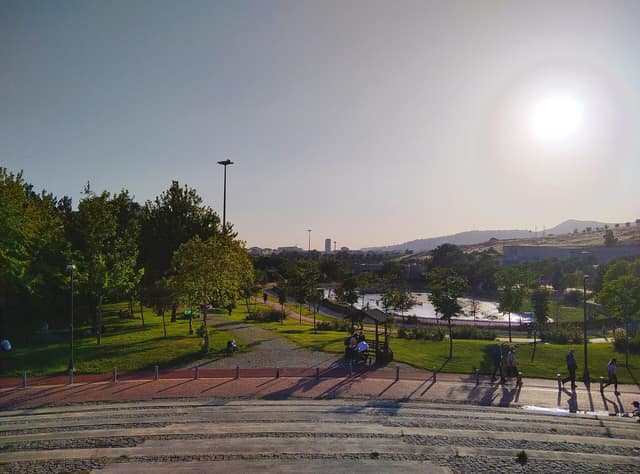
The Aşık Veysel Recreation Area is in the Kızılay neighbourhood of Bornova, near the Bornova market place. According to Visit İzmir, the area was opened in 2010 by İzmir Metropolitan Municipality, and it takes its name from the folk poet Aşık Veysel. According to the municipality's venue page, the park is a landscaped area of 231 decares. In the municipality's list of recreation areas, however, the area is given as 245 decares. Both figures describe a very large area for a city park in the centre of Bornova.
When you enter the park, head for the water first. According to the municipality's description, the area has an artificial pond of about 1,500 square metres and two bridges over the stream. Stand on one of the bridges and see how the stream divides the park in two. Having seen a natural stream bed in Homer Valley, here you watch how water has been brought into a city park. Then follow the 1.5 kilometre bicycle path or the walking paths and make a round of the park. Take a break at one of the viewing terraces and rest areas along the way.
The symbol of the park is the 5 metre high statue of Aşık Veysel. Stand in front of the statue and think about why the poet's name was given to a performance venue. The largest structure in the area is the open air amphitheatre for 5,000 people. According to the municipality, this theatre with its space frame roof was built to revive cultural and arts events in Bornova and across the city. Check the websites of the organisers to see whether there are concerts or performances on summer evenings. Inside the park there is also an Ice Sports Hall used for ice skating and ice hockey. According to Visit İzmir, the hall hosts national and international events and is also open to the public.
For those coming with children, there are three playgrounds, outdoor fitness equipment, and basketball and tennis courts. The area has a cafeteria for about 200 people and a car park for 593 vehicles. When the municipality opened the city's first Sports Station, it announced that a similar station would also open in the Aşık Veysel Recreation Area; check the current situation on the municipality's page. Carry a hat and water at midday in summer. From here move south to the Hasanağa Garden in the centre of Buca; the road runs through the city, so allow for traffic.
Source: İzmir Büyükşehir Belediyesi, Bornova Aşık Veysel Amfi Tiyatro; Visit İzmir.
Hasanağa Garden
The Hasanağa Garden is in the Dumlupınar neighbourhood in the centre of Buca, and İzmir Metropolitan Municipality refers to it as one of the city's landmark spots. According to Buca Municipality's description, the garden was created by Aliotti, a Levantine businessman of Italian origin, and its first name was the Aliotti Garden. Aliotti had turned the garden into a zoo with a natural appearance. Animals such as deer and peacocks roamed freely in the garden enclosed by high walls. Older residents of Buca remember this arrangement lasting until the 1930s. After Aliotti's death his heirs put the garden up for sale, and it passed to Sarıgöllü Hasan Ağa, a notable from Ödemiş. Buca Municipality writes that the sale took place in 1926 and the Kültür Envanteri in 1925; both sources point to the mid 1920s.
The original layout of the garden has to be read today from its traces. According to the municipality, the first plan reflects a Latin European approach to gardens; linear paths and artificial features with a natural look are part of this approach. Most of the trees are pines and were placed with care. In the 1930s the garden contained a wooden house with a veranda, single storey houses for the servants, a vineyard pavilion, a birdcage the size of a house, arbours, pools, grottoes with stalactites and cascades. These features, which look like stone and wood, were in fact made of cement and iron. The mulberry trees on both sides of the path crossing the garden from east to west had been trained to form a semi transparent tunnel, but these trees no longer exist.
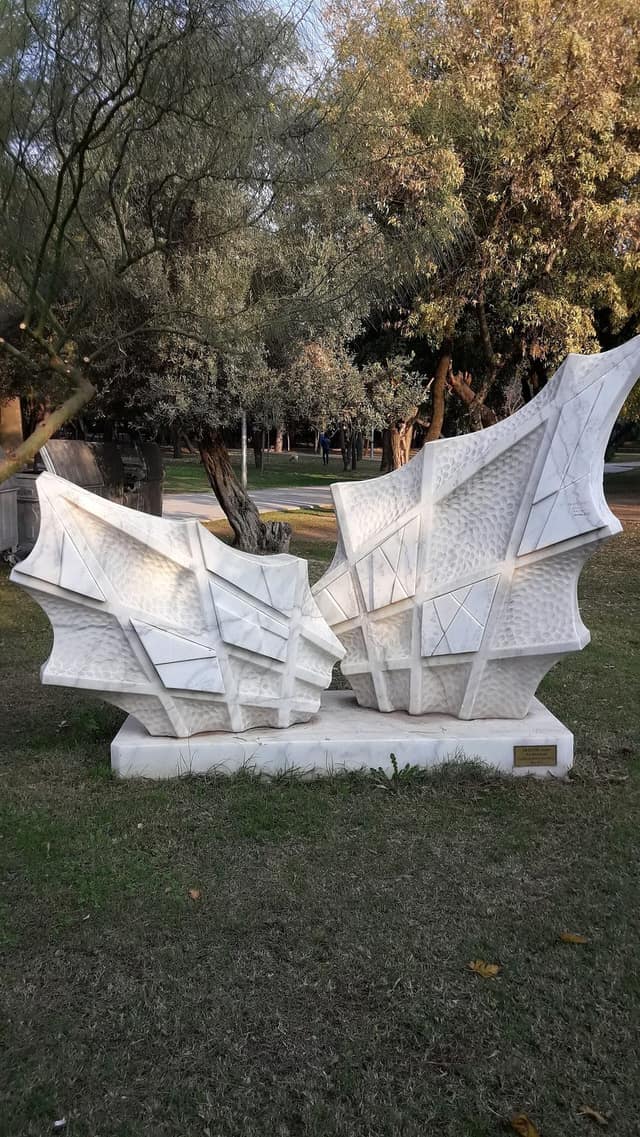
The most interesting part of the visit is the area around the old mansion. The Kültür Envanteri records that the elegant mansion in the garden burned down in the early 1930s, while the nearby rocky feature with pools and fountains still survives. Go to this rockwork and wander among the artificial grottoes and pools; you will see one of the traces of Levantine garden culture left in the city. According to Buca Municipality, during the period of Hasan Ağa's family the garden was kept open to the public, became an excursion spot for the people of Buca and came to be known as the Hasan Ağa Garden.
Today the area is run by İzmir Metropolitan Municipality. According to the municipality's renovation news, the park covers an area of 96 thousand square metres, and during the renovation 231 new trees were planted and about 390 metres of new walking path were built. The park has a picnic area, a playground, basketball and tennis courts and a running track. The municipality opened the city's first Sports Station here in 2025; at the station, sports equipment can be borrowed by leaving an identity card. Sit on the lawn for a break, then set off southeast for the last stop of the route, Buca Pond.
Source: Buca Belediyesi, Hasan Ağa Parkı; Kültür Envanteri; İzmir Büyükşehir Belediyesi.
Buca Reservoir
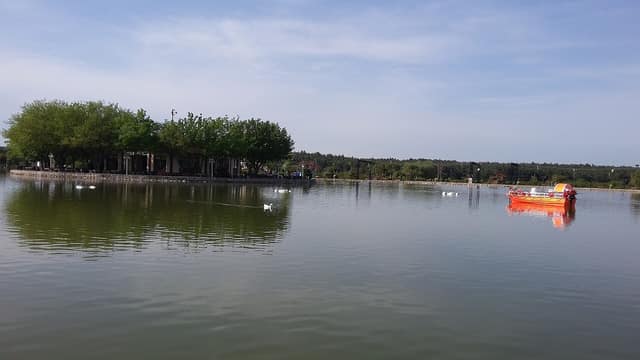
Buca Pond is in the Kaynaklar area in the southeast of Buca and is the stop with the widest water surface on the route. According to the Provincial Directorate of Culture and Tourism, the area was established by Buca Municipality in April 1998 and opened to the public in March 1999. A study by Aslı Güneş and Bahriye Gülgün, published in 2007 in the Journal of the Faculty of Agriculture of Ege University, writes that the area lies within the outer protection basin of the Tahtalı Dam. According to the same study, the water surface in the area is about 25 thousand square metres. The site is almost flat land that was previously used for farming, with only a hilly part to the southwest and a hollow to the south. After the natural stream bed of Homer Valley, this artificial pond adds a different kind of waterscape to the route.
Start your visit on the walking path around the pond and make a round of the water. The flat ground makes walking easy, so it also suits those coming with a pushchair or small children. The directorate notes that the area has picnic spots, hobby gardens, viewing terraces and a children's park. İzmir Metropolitan Municipality's list also includes an animal paddock; if you have come with children, set aside time to see it. Climb up to one of the viewing terraces and look down over the whole pond.
The area also has cultural events. According to the directorate, concerts, plays and other events are held in the amphitheatre here in spring and summer. Before you go, check the announcements of the organisers for the programme. The study by Güneş and Gülgün found that Buca Pond had a positive potential in terms of the activities it offered, but that the planting in the picnic areas fell short of meeting expectations for shade. So carry a hat and water with you in the summer months.
Safety at the water's edge matters. The same study notes that no extra safety measures had been taken for small children around the pond, but that the safety strips left along the shore were considered sufficient. Do not leave children alone near the shore. Learn the picnic and fire rules from the signs at the entrance. End the route here, watching the sunset from one of the viewing terraces. For the return, check public transport routes to the city centre on the ESHOT website.
Source: İzmir İl Kültür ve Turizm Müdürlüğü, Buca Pond; Güneş ve Gülgün, Ege Üniversitesi Ziraat Fakültesi Dergisi.
Comments
Loading...
