

From Gebze to Hereke, a Road of Castles, an Ottoman Complex, a Canyon and Silk Carpets
Sign in to like and rate
The northern shore of the Gulf of İzmit is a corridor through which the road from İstanbul to Anatolia has passed for thousands of years. This route follows that corridor from west to east, from Gebze to Hereke, in five stops. Each stop shows a different layer of the road: Byzantium's coastal defence, an Ottoman staging complex that housed travellers, a limestone canyon right beside the road, an East Roman castle brought back to life, and a silk weaving factory founded for the palace in the nineteenth century.
The day begins at Eskihisar, at the castle that watched over the passage opening to the south of the gulf. This castle without an inscription enters the record of a Byzantine historian in 1241, and holds a cistern with 15 domes and an open air theatre that today hosts concerts. The second stop is the Çoban Mustafa Paşa Complex on the hill overlooking Gebze. Completed in 1523, the complex is a group of buildings where caravans, pilgrims and the army stopped for the night, and with its coloured stone decoration in the Mamluk style it is an example without parallel in Kocaeli.
The third stop takes a short break from history. Ballıkayalar Nature Park, right beside the Gebze to İzmit road, is a canyon formed by the dissolving of limestone, and with its travertines, waterfalls and climbing walls it offers a good walk for the middle of the day. Then the road runs east to Hereke. Hereke Castle is thought to have been built in the 640s; its siege in 1326 completed the conquests around İzmit, and centuries after its collapse it was restored and reopened to visitors in 2023. The last stop is the shore of Hereke: the factory founded in 1843 is the birthplace of the world famous silk Hereke carpet, and the timber pavilion beside it was assembled in a single day for the German Emperor.
The order follows the geography. Because the stops are lined up along the shore from west to east there is no need to double back; the parts covered by car are short, and most of the time is spent inside the buildings and the valley. Measured as the crow flies, the distance between Eskihisar and Hereke is a little over 20 kilometres.
Since the day is long, an early start is needed. The opening days and hours of the castle and the pavilion can change, so check the current announcements of the operating institutions before setting out. The mosque in the complex is a working place of worship; wait in the courtyard during prayer times and choose your clothing accordingly. Shoes that do not slip on the wet rocks of the canyon floor, some water and a light snack are all you need. The route also suits those coming from İstanbul, since the Culture Portal states that the first stop, Eskihisar, is 50 kilometres from İstanbul. At the end of the day the coastal road is used again to return from Hereke to İzmit or to İstanbul.
Sources
- Kültür Portalı, Eskihisar Kalesi, https://www.kulturportali.gov.tr/turkiye/kocaeli/gezilecekyer/eskihisar-kalesi--gebze
- Gebze Kaymakamlığı, Eskihisar Kalesi, https://gebze.gov.tr/eskihisar-kalesi
- Kocaeli Büyükşehir Belediyesi, Tarihi ve Kültürel Miras, https://www.kocaeli.bel.tr/tarihi-ve-kulturel-miras.html
- Kocaeli Büyükşehir Belediyesi, Gebze, https://www.kocaeli.bel.tr/gebze.html
- TDV İslam Ansiklopedisi, Çoban Mustafa Paşa Külliyesi, https://islamansiklopedisi.org.tr/coban-mustafa-pasa-kulliyesi
- Kocaeli Büyükşehir Belediyesi, Camiler, Külliyeler, https://www.kocaeli.bel.tr/camiiler-kulliyeler-turbeler.html
- Kültür Portalı, Ballıkayalar Vadisi, https://www.kulturportali.gov.tr/turkiye/kocaeli/gezilecekyer/ballikayalar-vadisi---gebze
- Gebze Belediyesi, Ballıkayalar, https://www.gebze.bel.tr/gebze-tarihi-yerler_ballikayalar_8.html
- MEB Okul Dışı Öğrenme Ortamları, Ballıkayalar Tabiat Parkı, https://okuldisiogrenme.eba.gov.tr/mekan-detay/ballikayalar-tabiat-parki-230
- Kocaeli Büyükşehir Belediyesi, Büyüleyici Güzellikler, https://www.kocaeli.bel.tr/buyuleyici-guzellikler.html
- Kültür Portalı, Hereke Kalesi, https://www.kulturportali.gov.tr/turkiye/kocaeli/gezilecekyer/hereke-kalesi
- Kocaeli Valiliği, İlimizin Eski Yerleşim Yerlerinden Hereke, https://www.kocaeli.gov.tr/hereke
- Milli Saraylar, Hereke Halı ve İpekli Dokuma Fabrikası, https://www.millisaraylar.gov.tr/Lokasyon/19/hereke-hali-ve-ipekli-dokuma-fabrikasi
Route Stops
Eskihisar Castle
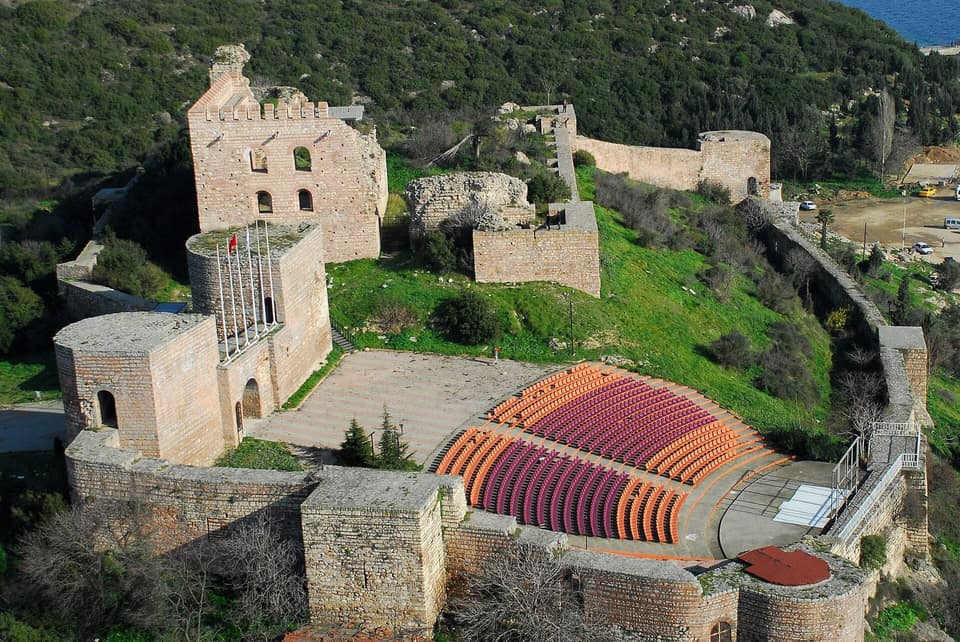
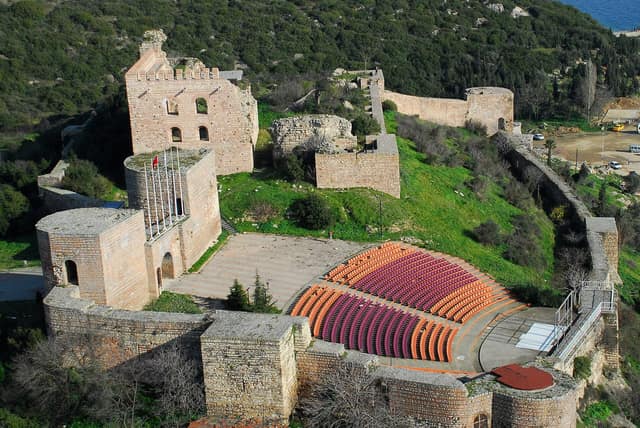
Begin the day at Eskihisar Castle, on the shore of the Gulf of İzmit south of Gebze. The castle stands on a steep sided hill to the northeast of Eskihisar. The Culture Portal and the Gebze District Governorship state that the building was raised to control the passage to the south of the gulf and to protect the harbour below. The castle has no inscription, but the Byzantine historian George Akropolites mentions it in 1241. Kocaeli Metropolitan Municipality reports that its architectural features point to the period of the Komnenos dynasty, that is, between 1081 and 1185.
The castle consists of two parts, an inner and an outer one. Start by walking along the outer walls and then climb to the inner castle; in this way you understand better how the two lines of defence were built one inside the other. The Ministry of Culture repaired the building between 1995 and 2000, and the Kocaeli Museum Directorate carried out excavations around it. These excavations uncovered Byzantine ceramics, broken architectural pieces, jugs, pieces with relief motifs and inscriptions. Inside the castle there is a Byzantine cistern with 8 columns and 15 domes, and it is the most tangible piece showing how water was stored under siege. The open air theatre for 1025 people inside the walls is the castle's present day face. The courtyard of the castle is used for concerts, so check the event calendar in the operator's announcements before you go.
Look out over the gulf from the high points of the walls. Why the castle was built on this hill is easy to read from this angle, where the cove below and the opposite shore are seen together. On the road down to the shore is the Eskihisar ferry pier, and the Culture Portal's directions also use the pier as a landmark. The Eskihisar Fountain, part of the historic fabric below, was built in 1772 and thoroughly repaired in 1850. The fountain has a square plan and is covered by a pyramid shaped roof. On the same shore stands the waterside house that the painter Osman Hamdi Bey, regarded as the founder of Turkish museology, had built in 1884 to a plan he drew himself. Find out from official announcements before you go whether the house is open to visitors.
The Culture Portal also states that Eskihisar is 45 kilometres from İzmit. The castle slope is steep, so wear shoes with soles that do not slip. The second stop of the route, the Çoban Mustafa Paşa Complex, lies about 3 kilometres north of here as the crow flies and is reached by a short drive to the centre of Gebze.
Source: Kültür Portalı ve Gebze Kaymakamlığı, Eskihisar Kalesi.
Çoban Mustafa Pasha Complex
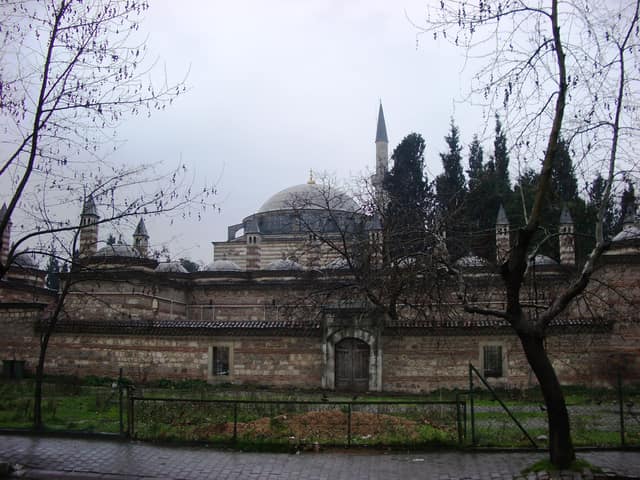
The Çoban Mustafa Paşa Complex, on a hill overlooking the centre of Gebze, is the Ottoman stop of the route. The complex was commissioned by Çoban Mustafa Paşa, who was married to Hanım Hatun, one of the daughters of Sultan Selim I, and who died in 1529. The marble inscription of the mosque gives the date 1523-24, and the wooden door leaves give 1522-23. Sixteenth century sources attribute the work to Mimar Sinan, but because the date is early for him, researchers think that Sinan completed a building that had already been started or worked here as an assistant architect.
The complex is a staging complex, that is, a group of buildings where travellers on the road stayed overnight. Because caravans heading for Anatolia and Iran, pilgrims and the army marching east all passed this way, the buildings spread over a large area of 117 by 106 metres. The mosque is in the middle, and the madrasa, the soup kitchen, the hospital, the pasha's rooms, the caravanserai, the library and the other units surround it on three sides.
The courtyard is entered through three gates. Once inside, first look at the twelve sided marble ablution fountain in the middle of the courtyard; it is covered by a roof resting on six wooden posts. Then turn to the porch of the mosque. The coloured stone decoration on both sides of the entrance is in the Mamluk style and is the clearest feature that sets the complex apart from the other buildings of Kocaeli. The pasha brought the materials used in this decoration from Egypt himself while he was governor there. Above the monumental portal with five rows of muqarnas sits a marble inscription of two lines. The door leaves were made with the kündekari interlocking technique, bear the signature of Ahmed Usta and are inlaid with ivory, tortoiseshell and mother of pearl. Take a few minutes to look closely at the woodwork.
The mosque has a square plan with sides of 14.5 metres, a single dome and a single minaret. The walls are built of three courses of brick and one course of cut stone, and this alternating texture is easy to make out on the exterior. In the caravanserai that closes the north side of the courtyard, the middle section was for travellers and the side sections for their animals. The soup kitchen to the west of the mosque was planned as a separate, ventilated building so that cooking smells would not spread through the whole complex. Kocaeli Metropolitan Municipality presents the complex as one of the most important works in Kocaeli from the reign of Süleyman the Magnificent.
The mosque is a working place of worship, so do not go in during prayer times. Keep shoulders and knees covered, take your shoes off at the entrance and stay quiet inside. The next stop, Ballıkayalar Nature Park, is near the village of Tavşanlı on the Gebze to İzmit road, about 9 kilometres east of here as the crow flies.
Source: TDV İslam Ansiklopedisi, Çoban Mustafa Paşa Külliyesi.
Ballıkayalar Nature Park
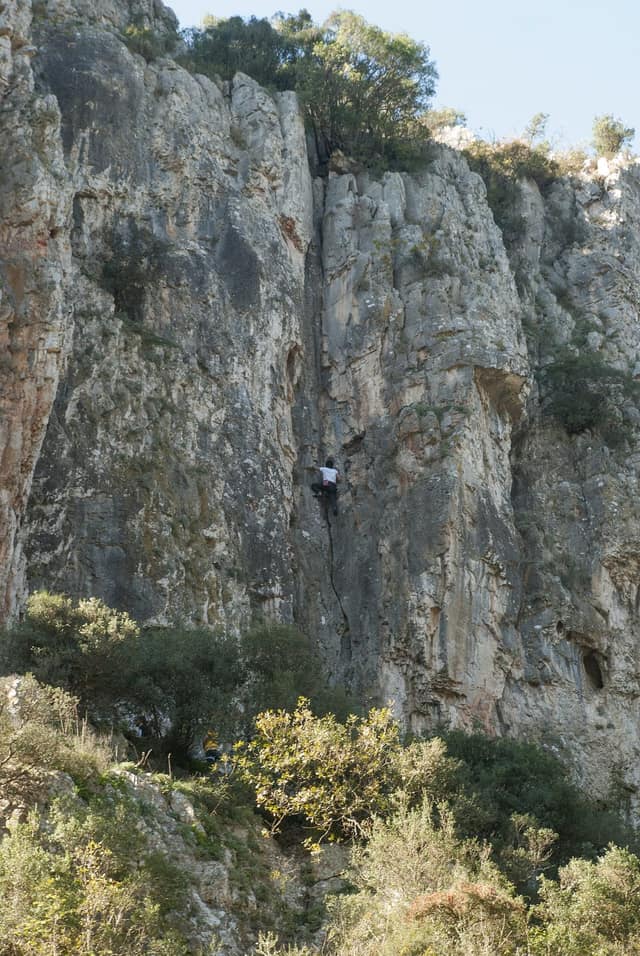
The nature break of the route is Ballıkayalar Nature Park, within the boundaries of the village of Tavşanlı on the Gebze to İzmit road. The Culture Portal states that the valley is 8 kilometres from Gebze and 39 kilometres from İzmit and can be reached by road. The area is protected as a nature park and a natural protected site. Ballıkayalar is a karst gorge formed by the dissolving of limestone. The canyon is about 1.5 kilometres long and between 40 and 80 metres wide. Inside the valley there are a small lake, waterfalls and viewing terraces on the travertines that run down to the Ballıkaya stream. Gebze Municipality also notes that many caves have formed in the valley as groundwater dissolved the limestone.
Begin the walk along the stream and watch the water flowing over the travertines. The deposit left by the limy water builds up on the rocks step by step, and when you look closely at the travertines these layers can be made out. The floor of the valley is covered with large boulders and holds dozens of pools of different sizes, so watch your step. There are walking areas on the eastern and western ridges of the canyon, and if you climb to the ridges you see the canyon from above. Kocaeli Metropolitan Municipality presents Ballıkayalar, thanks to its solid limestone walls, as the most important rock climbing area in the Marmara region. If you see people climbing on the walls, watch them from a distance and do not stand below the climbing lines.
With an area of 1603 hectares the park is home to rich wildlife. According to the Metropolitan Municipality, 416 plant species, more than 100 bird species and more than 50 butterfly species live here. Endangered species such as the otter and the wild cat are also part of this fauna. Morning hours are better for birdsong, so bring binoculars if you have them. There are flat areas in the valley suitable for pitching tents, but since this route is a day trip, give your time to the walk.
The Out of School Learning Environments page of the Ministry of National Education recommends clothing and shoes suited to nature walking. Because wet rocks can be slippery, this advice is especially important here. Take your rubbish back with you and do not damage the plants, because the area is protected. After the walk, return to the car and go east to Hereke; Hereke Castle is about 10 kilometres from Ballıkayalar as the crow flies.
Source: Kültür Portalı ve Gebze Belediyesi, Ballıkayalar.
Hereke Castle
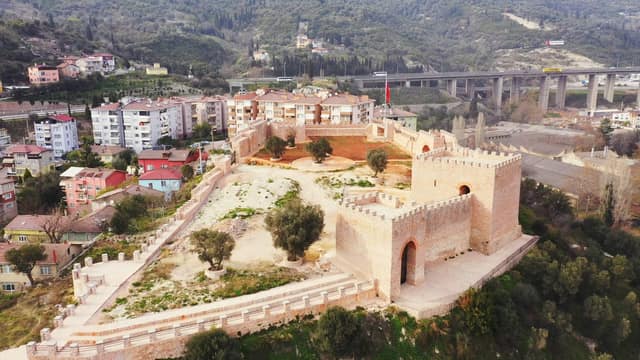
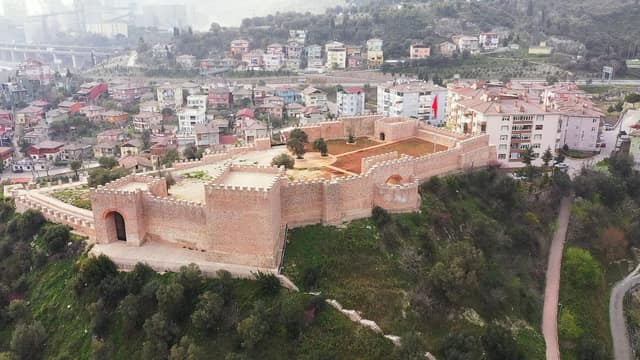
Hereke Castle stands on Kale Street in the Hacı Akif neighbourhood of Hereke, in the Körfez district. The Culture Portal and the Kocaeli Governorship state that the castle is thought to have been built in the 640s, in the East Roman period. According to the Governorship's account, after the Roman Empire split in two, Hereke remained within the borders of the Eastern Roman Empire and took on the identity of a frontier post. The old name of the settlement is Ancryon, and it is said to have taken its present name from the Emperor Heraclius. The Governorship also reports that the Emperor Constantine died in Hereke in 337 and that the place was a favoured summer retreat in the Roman period.
The best known story of the castle concerns the Ottoman capture of İzmit. Those who fled İzmit took refuge in Hereke Castle, fortified it and resisted so as not to surrender. On hearing of this, Orhan Gazi sent Ali Bey against Hereke as commander. Although Ali Bey lost an eye to an arrow during the siege, he took the castle. The sources date this conquest to 1326 and regard it as the completion of the conquests in the İzmit region. The Culture Portal states that with this conquest the area was attached to the Ottoman principality. Later, in the reign of Sultan Bayezid II, the castle was completely destroyed in a great earthquake that lasted 45 days. The Governorship writes that after this earthquake the people of Hereke could not recover for a long time and weaving stagnated for a while.
After a comprehensive restoration was completed, the castle reopened to visitors in 2023. The Governorship states that the restoration received a best project award. When you enter the castle, first look out over the gulf from the walls and view the shore you saw at Eskihisar in the morning, this time from the northern side. Try to tell the new stonework from the old on the restored walls, as these differences show how the repair completed the original fabric. The castle is also mentioned in the Book of Travels of Evliya Çelebi and stood as a ruin on this shore for centuries. The Governorship also notes that Hereke is today a centre of education and culture where campuses of Kocaeli University are located.
Before you go, check the visiting conditions and opening hours in the announcements of Körfez Municipality and the Kocaeli Provincial Directorate of Culture and Tourism. Because the castle is on a slope the streets can be steep, so leave the car in a suitable place and walk the last part. From the castle to the shore of Hereke it is about 1.7 kilometres as the crow flies, so go down to the last stop.
Source: Kültür Portalı ve Kocaeli Valiliği, Hereke Kalesi.
Hereke
The last stop of the route is the shore of Hereke, and here the subject turns from castles to silk. The first thing that comes to mind with Hereke is the world famous silk Hereke carpet. The factory was founded here in 1843, and according to the records of the National Palaces it went into production in 1845 under the name Hereke Fabrika-i Hümayunu to meet the upholstery and curtain needs of the palaces then under construction. It was the most comprehensive factory the Ottoman State had founded in silk weaving up to that time. Jacquard looms and designers were brought from France for the factory. In 1891 a carpet weaving unit with a hundred new looms was added, and the foundations of Hereke carpet making were laid.
According to the Governorship's account, in the reign of Abdülhamid II master weavers brought from Sivas, Ladik and Manisa first wove the designs supplied by the palace, and then these designs were developed into the distinctive Hereke style. The single piece carpet of 124 square metres that adorns the ceremonial hall of Dolmabahçe Palace was also woven in Hereke. Hereke products won awards at many international exhibitions, above all the Paris exhibition of 1851 and the London exhibition of 1862. In the Republican period the factory worked under Sümerbank, and in 1995 it was attached to the National Palaces. Today it continues production as a museum factory, and the lost fabric designs of the palaces are woven here again. The Governorship reports that at the end of the nineteenth century buildings such as a hospital, a secondary school, a pavilion and a telegraph office were also built around the factory. The National Palaces state that the factory is closed to visitors, so be content with looking at the buildings from outside.
The building that can be visited is the timber pavilion beside the factory. The pavilion was prepared at Yıldız Palace for the visit of the German Emperor Wilhelm II, brought by sea in pieces and assembled on site in a single day. The Governorship reports that it was built in 1898 with boat building techniques and without a single metal nail. The pavilion has many doors opening both to the sea and to the land side, and a dome on each side. Inside, Hereke woven carpets and silk upholstery and curtains were used. The National Palaces list the pavilion as a museum pavilion open to visitors; check its opening days and entry conditions on the institution's page before you go.
Hereke Wool and Silk Hand Carpet is among the products registered with a geographical indication by the Turkish Patent Institute. After leaving the pavilion, take a short walk along the shore and look at the factory facades facing the gulf. Here you close the day at the eastern end of the coastal journey that began at Eskihisar in the morning.
Source: Milli Saraylar ve Kocaeli Valiliği, Hereke.
Comments
Loading...
