

From Conquest to Migration, Four Museums That Hold Bursa's Memory
Sign in to like and rate
Bursa's past does not live only in its mosques, inns and walls; the city has also built its own museums to tell that past. This route links four museums that tell the city as a story, from east to west. Each one holds a different layer of Bursa's memory: the moment of its founding, urban life, the people who came to the city, and the forests of the mountain behind it.
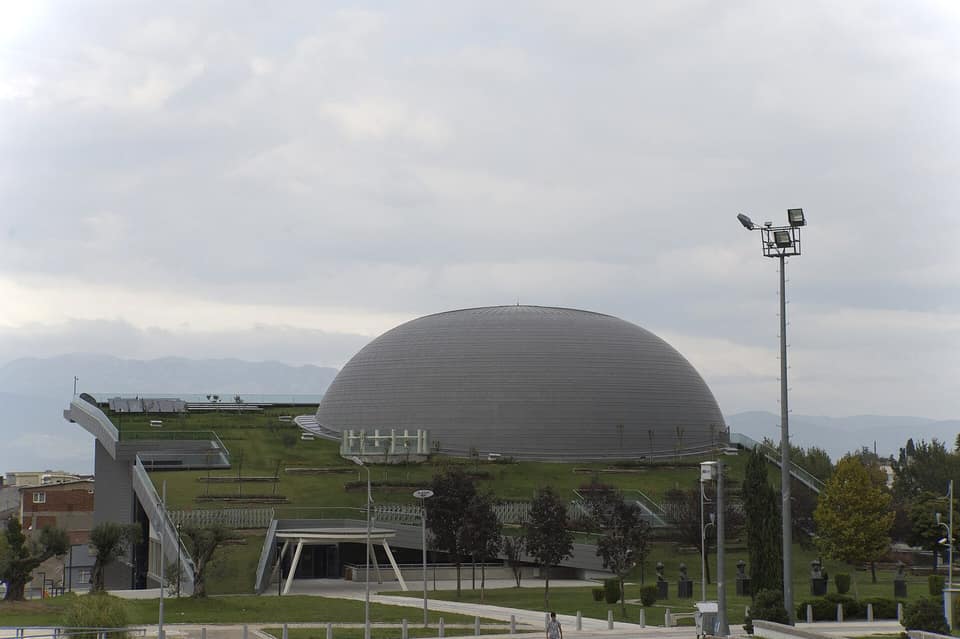
Begin the day at the Panorama 1326 Bursa Conquest Museum in the Ebu İshak neighbourhood. Beneath a dome 42 metres in diameter, the museum brings to life the day Bursa passed to the Ottomans, 6 April 1326, in a panoramic painting with more than ten thousand figures. Then walk west to the Bursa City Museum at Heykel. Presented as Türkiye's first city museum, it tells the city's story from prehistory to the Republic, along with a street of craftsmen and the culture of daily life, in the former courthouse building of 1926.
The third stop is the Bursa Migration History Museum, opened in 2014 inside the Atatürk Congress and Culture Centre in Merinos Park. Here the migrations that shaped the city's present population, from the first settlements to the migrations from the Balkans, Crimea and the Caucasus, are told through re-enactments and belongings left by families. End the route at the Bursa Forestry Museum, which has welcomed visitors since 1989 in the Saatçi Ali Bey Mansion on Çekirge Caddesi. Described in official introductions as Türkiye's first and only forestry museum, this small museum recalls the relationship with the forest of a city founded on the slopes of Uludağ.
The order is deliberately set from east to west. The Panorama and the City Museum are close to a kilometre apart as the crow flies and can be walked. The City Museum and the Migration History Museum are nearly two and a half kilometres apart as the crow flies; the museum page of Bursa Metropolitan Municipality points to the Merinos station of the BursaRay and to the Etibank–Soğanlı minibuses that leave from in front of the Ulu Cami. From Merinos to the Forestry Museum in Çekirge it is about one kilometre seven hundred metres as the crow flies, and according to the Culture Portal Çekirge is reached by bus and minibus.
You will spend about four and a half hours at the stops; allow a full day including travel and a meal break. The museums have different closing days and opening hours, so check the current information for all four on their official pages before setting out. Silence is expected in the panorama hall so that the audio narration can be heard, and no food or drink is consumed in any of the museums. Guided visits for groups are made by reservation; individual visitors can pick up an audio guide at the information desk of the Migration History Museum.
Sources
- Panorama 1326 Bursa Fetih Müzesi, Mimari Özellikler, https://panorama1326.osmangazi.bel.tr/tr/mimari-ozellikler
- MEB Okul Dışı Öğrenme, Panorama 1326 Bursa Fetih Müzesi, https://okuldisiogrenme.eba.gov.tr/mekan-detay/panorama-1326-bursa-fetih-muzesi-3420
- Bursa Büyükşehir Belediyesi Müzeleri, Bursa Kent Müzesi, https://www.bursamuze.com/bursa-kent-muzesi
- Kültür Portalı, Bursa Kent Müzesi, https://www.kulturportali.gov.tr/turkiye/bursa/gezilecekyer/bursa-kent-muzesi
- Bursa Büyükşehir Belediyesi Alan Başkanlığı, Adliye Binası, https://alanbaskanligi.bursa.bel.tr/adliye-binasi/
- Bursa Büyükşehir Belediyesi Müzeleri, Bursa Göç Tarihi Müzesi, https://www.bursamuze.com/bursa-goc-tarihi-muzesi
- Kültür Portalı, Bursa Ormancılık Müzesi, https://www.kulturportali.gov.tr/turkiye/bursa/gezilecekyer/bursa-ormancilik-muzesi
- MEB Okul Dışı Öğrenme, Ormancılık Müzesi, https://okuldisiogrenme.eba.gov.tr/mekan-detay/ormancilik-muzesi-3416
Route Stops
Panorama 1326 Bursa Conquest Museum
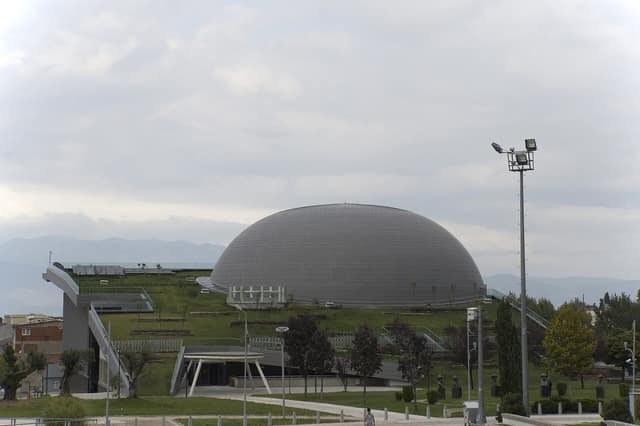
Begin the route at the Panorama 1326 Bursa Conquest Museum on İnceler Sokak in the Ebu İshak neighbourhood of Osmangazi. The museum is run by Osmangazi Municipality, and the building itself is part of the visit. Before going in, look at the shape of the dome from outside; it is 42 metres in diameter and was built with a reinforced concrete and steel frame system. The roof is clad in titanium zinc, and the entire roof was designed as a green roof. According to the museum's official page, 50 photovoltaic solar panels generate electricity in the building, and rainwater collected from the green roof is used to water the garden. After the entrance, step closer to the tile panels on the inner walls. These panels were made by Turgut Tuna and Şebnem Tuna. The designs reinterpret, in the traditional technique, the tiles seen in Bursa's buildings of the 15th and 16th centuries. The heart of the stop is the panorama hall; when you enter it, take your place on the viewing platform at the centre of the painting. The painting tells, as a three-dimensional scene, the day Bursa was conquered, 6 April 1326, in the spring. The painted area covers 2,450 square metres, the three-dimensional object platform in front of it covers 700 square metres, and the total viewing area reaches 3,150 square metres. More than ten thousand human and animal figures appear in the scene. Read the composition not as a battle painting but as a festival ground; the official introduction explains that the Byzantine and Ottoman people are painted side by side and that food is offered to the Byzantine people. Sounds are played from four different points to suit the composition, so turn around in the hall and follow where each sound comes from. Try to find the great plane tree, shown as the symbol of the Ottomans, and the Judas tree, regarded as the symbol of Bursa, inside the painting. The out-of-school learning page of the Ministry of National Education reminds visitors that complete silence is needed in the panorama hall so that the audio narration can be heard. After the panorama, move on to the chronological exhibition area. Here the six Ottoman sultans buried in Bursa and the important events of the founding years are told through sixteen paintings and replicas linked to them. Following the paintings in order shows how the single day you saw in the panorama turned into the story of a state. If you have time, also watch the documentary called The First Ottomans; it summarises the path from a principality to a great state. The building is accessible to disabled visitors and guidance services are offered in the museum. No food or drink is consumed inside the museum; for opening hours and closing days, see the museum's official page. On leaving, walk west towards Heykel to reach the City Museum; the two museums are close to a kilometre apart as the crow flies.
Source: Panorama 1326, Mimari Özellikler; MEB Okul Dışı Öğrenme.
Bursa City Museum
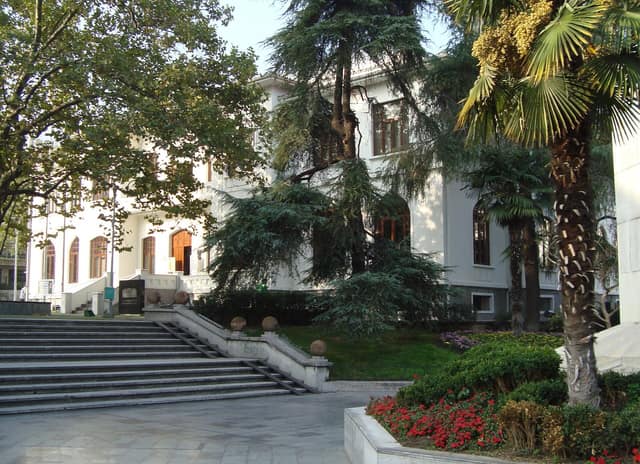
When you reach Heykel, find the light-coloured former courthouse building on Atatürk Caddesi; the Bursa City Museum occupies this building. The main entrance is reached through the courtyard behind the Atatürk statue, and the small amphitheatre in the courtyard hosts events such as concerts and recitals. Before going in, look at the facade; the building was erected in 1926 by Ekrem Hakkı Ayverdi in the style of the First National Architecture Movement. The Site Management of Bursa Metropolitan Municipality also notes that the design is thought to belong to the architect Kemalettin Bey. Notice how the entrance is emphasised on the central axis of the symmetrical plan, and how arched and rectangular windows are used together beneath the wide eaves. The building served as the Bursa Courthouse for more than 70 years; it was vacated when the new courthouse, chosen through a competition launched in 1986, was completed in 1999. The building passed to the Metropolitan Municipality in 2001, was restored, and the museum opened to visitors on 14 February 2004. The Culture Portal presents it as Türkiye's first city museum. Start your visit in the first gallery on the entrance floor. Here the city's story is told from prehistory through the Bithynian, Roman, Byzantine and Ottoman periods to the years of the War of Independence. In the same gallery, also look at the section devoted to the disasters that struck Bursa in the 18th and 19th centuries. The second gallery covers the Republican period, the changing face of the city, migration movements, architecture and urbanisation, and Uludağ; this section is a good preparation for the Migration History Museum, the next stop on the route. According to the Culture Portal, the museum also has a topographic model showing Bursa's walls, külliyes, inns and baths; try to find on it the places you have walked through in the city. The same source writes that wax figures of six Ottoman sultans who lived in Bursa are also on display. Then go down to the basement and walk along the historic street of craftsmen. Here the shops of the carter, farrier, saddler, packsaddle maker, headscarf printer, cutler, coppersmith, tinsmith, carpenter, felt maker, basket maker, confectioner, kebab maker and towel weaver are re-created with authentic décor. The museum's page also notes a separately designed silk section on this floor. The first floor tells the culture of traditional life; thermal baths, food culture, the gezek gatherings and Karagöz and Hacivat are the subjects of this floor. Ethnographic objects donated to the museum are also displayed on the same floor. The corridors are used for temporary exhibitions with changing themes, so you may meet a different exhibition on each visit. All floors can be reached by lift and ramps, and reservations are compulsory for groups. Check closing days and hours on the museum's official page. To move on to Merinos, walk a few hundred metres west to the front of the Ulu Cami and take the Etibank–Soğanlı minibus, or ride the BursaRay to Merinos station.
Source: Bursa Müzeleri, Bursa Kent Müzesi; Kültür Portalı; Bursa Alan Başkanlığı.
Bursa Göç Tarihi Müzesi
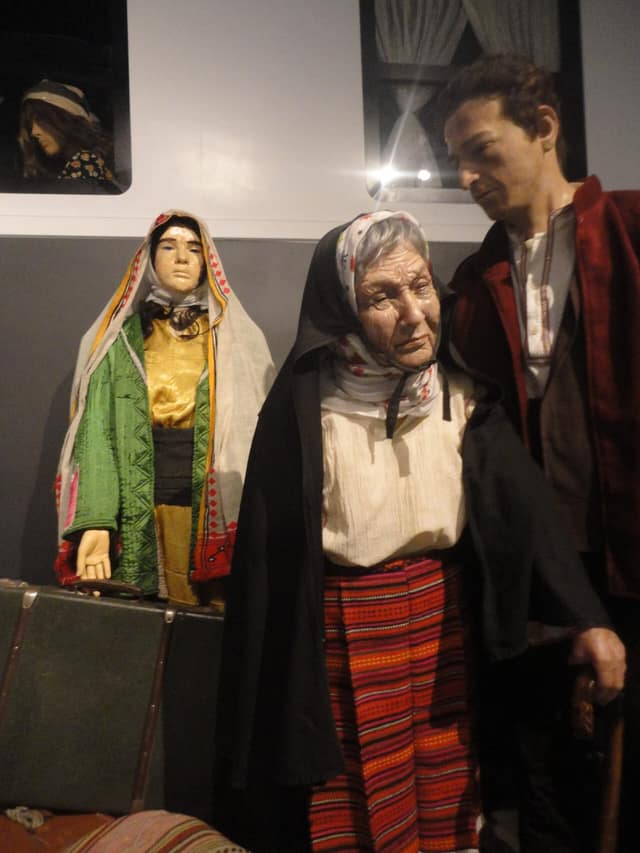
When you reach Merinos Park, find the east entrance of the Atatürk Congress and Culture Centre building. The Bursa Migration History Museum is on the second floor of this entrance, on the floor above the Textile and Industry Museum. The museum is part of the museum complex that keeps alive the memory of the historic Merinos Factory, and it belongs to the Museums Branch Directorate of Bursa Metropolitan Municipality. It opened to visitors on 7 November 2014. If you come on your own, stop at the information desk first; according to the museum's page, audio guides for adults and for children are given here free of charge. Guided narration is offered only to groups and by reservation, so the audio guide is the best companion for an individual visit. The visit proceeds in chronological order, so walk through the sections in sequence without skipping any. The first section tells of the first traces and first settlements in Bursa, and the next one covers the early steps towards civilisation in these lands. Then the Bithynians, the Thracians and the Aegean colonies are introduced as the city's first migrants. The following sections deal with migrations from the Ottoman lands to Rumelia, the war of 1877-1878 and the Balkan migrations, the migration of 1913 and the migrations of the Republican period. The sections devoted to the Balkan migration of 1989 and to the migrations from Crimea and the Caucasus are particularly important for understanding the city's recent history. In each section information is presented on screens, and a digital narration of lived stories is also part of the visit. The hard journeys from the Balkans, Crimea and the Caucasus to Bursa are shown through interactive re-enactments; pause for a while in front of them. In the gallery area, look closely at the suitcases, sewing machines, clothes and personal belongings left by families. These ordinary objects show how little people carried on the journey better than the exhibition texts do. The gallery area also hosts periodic photography exhibitions. Here you complete, with a far more detailed narrative, the migration theme you saw in the second gallery of the City Museum at the previous stop. If you come with children, note that the museum organises drama workshops for ages six and over; the current events calendar is published on the museum's page. The entrance and all floors of the museum can be reached by lift and ramps, and wheelchairs are available for disabled visitors. According to the official page, the museum is closed on Mondays, on 1 January and on the first days of religious holidays; check the hours before setting out. On leaving, you can take a short walk in Merinos Park, then continue to the last stop of the route by a bus or minibus heading to Çekirge.
Source: Bursa Müzeleri, Bursa Göç Tarihi Müzesi.
Bursa Forestry Museum
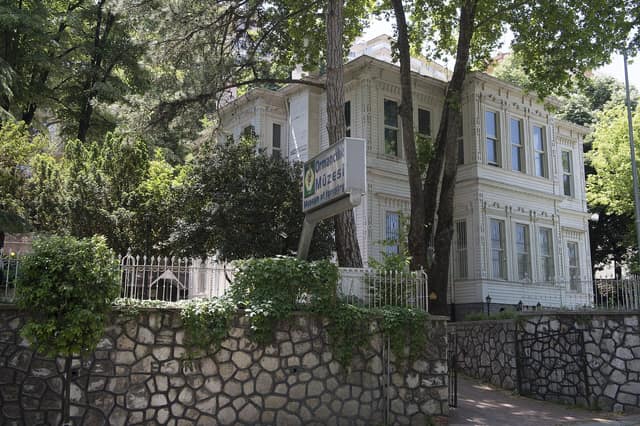
The last stop of the route is the Bursa Forestry Museum, housed in the Saatçi Ali Bey Mansion on Çekirge Caddesi. The Culture Portal and the out-of-school learning page of the Ministry of National Education present it as Türkiye's first and only forestry museum. First look at the facade of the mansion from the street; the Culture Portal describes the building as one of the finest examples of 19th century civil architecture. When you enter the garden, notice the ablution fountain, the arbour and the various trees; the garden is also a part of the museum worth seeing. The mansion's past also explains the museum's subject. After many years as a residence, the building served as a forestry school from 1939; the sources give different years for the school's closure. It then became the building of the Bursa Regional Directorate of Forestry, and the directorate moved to its new building in 1983. The vacated mansion was converted into a museum, which opened with a ceremony held on 29 March 1989. It is a specialised museum; its aim is to present the historical development of forestry in Türkiye and to inform visitors about forests and forestry. According to the Culture Portal, more than three thousand works related to forests and forestry, from the Ottoman period to the present, are on display. The works are classified and divided into sections, so walk through the rooms one by one. Look at the photographs telling the life of forests and foresters, the tools used by foresters, the means of communication used in the forest, and the maps. Stop in front of the tree cross-sections and follow the pattern of the annual rings; the growth of the forest over time becomes tangible in these sections. The mummified animal specimens prepared to introduce the animals living in the forest and the insect collection also attract children's interest. The fossil collection includes fossils from the Carboniferous period as well as fossils of Scots pine, black pine and walnut, and a sequoia fossil. The Culture Portal notes that the photographs and caricatures are also worth seeing. The Ministry of National Education page reminds visitors that organic materials such as wood and paper are very sensitive to humidity and touch; do not lean on the display cases and do not touch the exhibits. No food or drink is consumed inside the museum, and group visits require an appointment with the museum management in advance. As visiting days and hours may change, check the current information from official sources. After a day spent following the city's founding, urban life and migrations, ending the route in this mansion that tells of Uludağ's forests is a reminder of the bond the city has formed with the mountain. To return to the centre, use the buses and minibuses that run along Çekirge Caddesi.
Source: Kültür Portalı, Bursa Ormancılık Müzesi; MEB Okul Dışı Öğrenme.
Comments
Loading...
