

From Castle Hill Down to the Çarşı in Safranbolu
Sign in to like and rate
Most people seeing Safranbolu for the first time plunge straight into the stone lanes of the Çarşı and get to know the town from below, between the eaves of its houses. This route reverses the order. It first climbs Castle Hill, the town's earliest area of settlement, hears the story of Safranbolu from above and from beginning to end in the halls of a museum, and then walks down the slope to the part of that story that is still alive, the guild streets and the courtyard of Cinci Han.
According to the Ministry of Culture and Tourism, the town's historic monuments are concentrated in the Çarşı quarter, which lies between the Castle to the north and Hıdırlık Hill to the south. On Castle Hill the old government house, the clock tower, the armoury building and the old prison stand together. The route's first two stops are on this hill: the government house built in 1904-1906, left unused for many years after a fire in 1976 and turned into the City History Museum through restoration, and the stone clock tower that İzzet Mehmet Paşa had built in the late 1790s. Because the museum tells Safranbolu's past from Roman times to the Republic and presents the crafts of the old bazaar, it works like a glossary for the rest of the route; you first meet the blacksmith, saddler and yemeni shoemaker shops you will see below as reconstructions here.
The third stop is the Çarşı itself. The winter houses of the townscape that entered the UNESCO World Heritage List in 1994, the streets named after the guild system and the Yemeniciler Arastası are all here. The last stop is Cinci Han, because according to the sources the Çarşı grew up around this great caravanserai, with crafts serving travellers. Ending the route at the han means meeting, turned into stone, the caravan road story you read about in the museum in the morning. As the English Wikipedia summarises, the old town sits in a deep ravine in the rain shadow of the mountains, while the new town lies on the plateau about two kilometres to the west. That is why the Çarşı is reached by going down from every direction, and the route follows that descent.
The walk is short but hilly. The climb to Castle Hill and the descent from the hill to the Çarşı are steep, and the streets are cobbled and slippery in places; wear flat shoes with a good grip. There is also a practical reason for starting at the top: you climb the hardest slope at the start of the day while you are fresh, and the rest is mostly downhill. The museum and the clock tower are visited under the same entry arrangement; check opening hours and entry conditions with official sources before you go. At weekends and on public holidays the Çarşı gets very crowded; for photographs the first hours of the morning or the late afternoon are quieter. It is easy to take a lunch break in the Çarşı, but we do not recommend any particular place to eat or rest; make your own choice as you walk the streets.
Sources
- Safranbolu Kaymakamlığı, Kent Tarihi Müzesi, https://www.safranbolu.gov.tr/kent-tarihi-muzesi
- Kültür ve Turizm Bakanlığı Karabük, Saat Kulesi, https://karabuk.ktb.gov.tr/TR-63761/saat-kulesi.html
- Safranbolu Belediyesi, Tarihi Saat Kulesi, https://www.safranbolu.bel.tr/safranbolu-turizm/tarihi-saat-kulesi
- Kültür ve Turizm Bakanlığı Karabük, Safranbolu'da Turizm, https://karabuk.ktb.gov.tr/TR-63747/safranbolu39da-turizm.html
- Kültür ve Turizm Bakanlığı Karabük, Safranbolu Evleri, https://karabuk.ktb.gov.tr/TR-63752/safranbolu-evleri.html
- Kültür ve Turizm Bakanlığı Karabük, Mimari, Isınma, Aydınlanma, https://karabuk.ktb.gov.tr/TR-63743/mimari-isinma-aydinlanma.html
- Kültür ve Turizm Bakanlığı Karabük, Geleneksel Sanatlar ve Zanaatlar, https://karabuk.ktb.gov.tr/TR-63742/geleneksel-sanatlar---zanaatlar.html
- Kültür ve Turizm Bakanlığı Karabük, Han ve Hamamlar, https://karabuk.ktb.gov.tr/TR-63754/han-ve-hamamlar.html
- Kültür ve Turizm Bakanlığı Karabük, Nasıl Gidilir, https://karabuk.ktb.gov.tr/TR-63764/nasil-gidilir.html
- Kültür Portalı, Yemeniciler Arastası, https://www.kulturportali.gov.tr/turkiye/karabuk/gezilecekyer/yemeniciler-arastasi
- Kültür Portalı, Cinci Hanı, https://www.kulturportali.gov.tr/turkiye/karabuk/gezilecekyer/cinci-hani
- Safranbolu Belediyesi, Tarihi Çarşı, https://www.safranbolu.bel.tr/safranbolu-turizm/tarihi-carsi
- Safranbolu Belediyesi, Tarihi Cinci Hanı ve Hamamı, https://www.safranbolu.bel.tr/safranbolu-turizm/tarihi-cinci-hani-ve-hamami
- Wikipedia, Safranbolu Saat Kulesi, https://tr.wikipedia.org/wiki/Safranbolu_Saat_Kulesi
- Wikipedia, Cinci Han, Safranbolu, https://tr.wikipedia.org/wiki/Cinci_Han,_Safranbolu
- Wikipedia, Safranbolu, https://en.wikipedia.org/wiki/Safranbolu
Route Stops
Safranbolu City History Museum
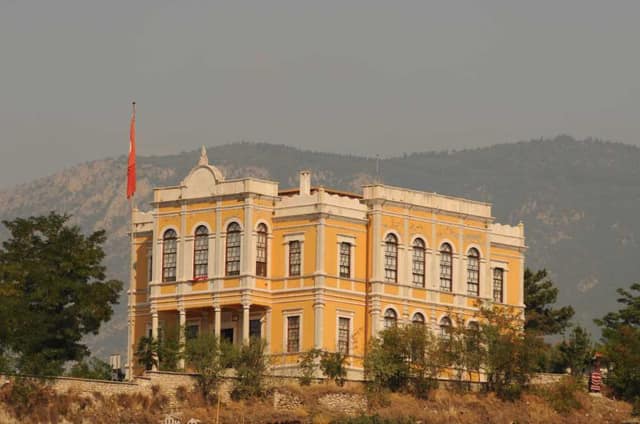
Begin the day on Castle Hill, at the old government house on Prof. Metin Sözen Caddesi. When you reach the front of the building, do not go straight in; first take a look at the facade and at the hilltop around you. According to the Safranbolu District Governorship, the house was built between 1904 and 1906 on this hill that locals call the castle, and it served as the government house until 19 January 1976. A fire that broke out on that date made the building unusable; a restoration launched by the Ministry of Culture in 2000 was completed in 2006, and the building opened as the City History Museum. In other words, the halls you will walk through are a public building recovered after standing empty for nearly thirty years.
The museum has three floors, and the best way to visit is to follow them like a chronological reading. The first floor holds the history of the town and of the building, maps, cultural publications and a satellite image of Safranbolu. Pause for a while in front of the satellite image and fix in your mind the position of the Castle and the Çarşı in the valley and where the Bağlar quarter lies. This map makes it easier to find your bearings in the streets you are about to walk down. The same floor also has an exhibition hall for temporary shows and a conference hall; ask at the entrance whether an exhibition is open on the day of your visit.
On the second floor, the hall at the entrance greets you with clothing from the Republican period. The Safranbolu in Photographs hall tells the town's history from the Ottoman period to the Republic through images; trying to recognise in old photographs the streets you will walk later is the most enjoyable part of this hall. Coins from the Roman and Byzantine, Ottoman and Republican periods are also displayed here. In the ethnography hall you see objects used in the traditional Safranbolu house; these objects help you imagine the interiors of the houses you will look at from outside in the afternoon.
Leave the ground floor for last, because the real preparation for the route is there. On this floor, panels with photographs explain commercial life and traditional crafts in Safranbolu. In the Tradesmen and Craftsmen Bazaar section, an old pharmacy, a lokum maker, a yemeni shoemaker, a cobbler, an upper maker, a packsaddle maker, a saddler, a woodworker, a blacksmith, a coppersmith, a tinsmith and a tradesmen's coffeehouse have been set up as reconstructions. Stop in front of each shop and look at which tools were used, because in the Çarşı below a few of these crafts still continue, even if in small numbers. Seeing the saddler's bench from the museum again in a real shop below is one of the most satisfying moments of the way this route is built.
To photograph the museum building, step back a few paces after you come out; the facade fits into a single frame best from the open ground of the hilltop. Adjust the length of your visit to the crowds, as the halls can be full at weekends. According to the Ministry's page, the museum and the clock tower are closed on Mondays; check current visiting hours and entry conditions with official sources. When you leave the museum, the clock tower is a few steps away on the same hilltop.
Source: Safranbolu Kaymakamlığı, Kent Tarihi Müzesi; KTB Karabük, Safranbolu'da Turizm.
Safranbolu Clock Tower
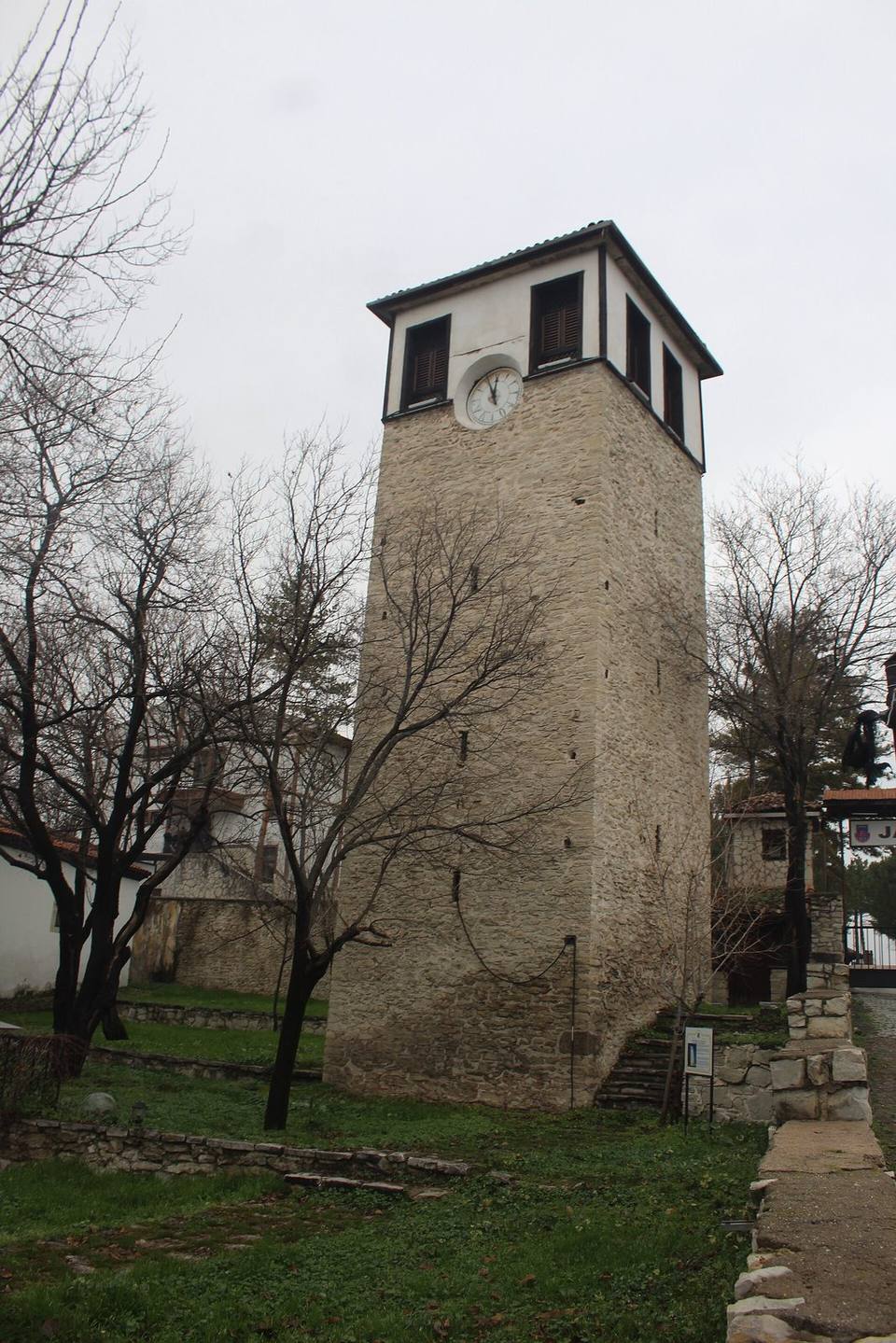
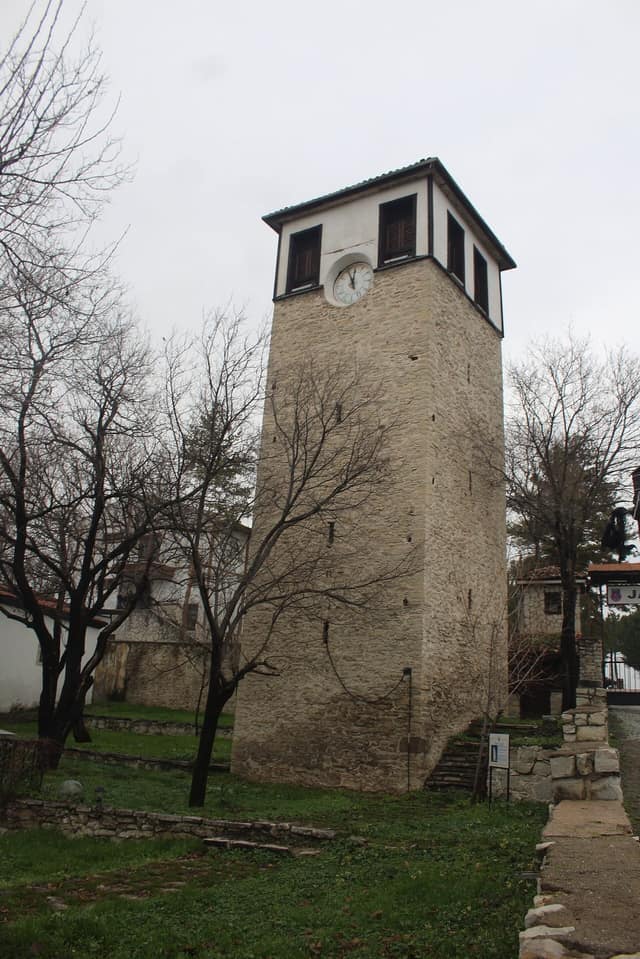
When you leave the museum and walk a few steps, you reach the clock tower, the oldest structure on Castle Hill. According to the Ministry of Culture and Tourism's Karabük page, the tower was commissioned in 1794-1797 by İzzet Mehmet Paşa, the Grand Vizier of Sultan Selim III and a native of Safranbolu. Safranbolu Municipality gives the construction date as 1797; the two sources therefore complement each other. As you approach the tower, first walk around it once and weigh its size with your eye. According to the measurements given by the Ministry, it is a plain tower on a square plan of 4.65 by 4.65 metres, 12 metres high, with stone walls and a ridged roof.
The single entrance door is on the side facing the old prison; look for that face to find the door. Inside, a ladder-like staircase rises straight up to the clock room. The clock room has two rectangular windows on each of its four sides, and the interior is lit through arrow-slit openings. The stairs are narrow and steep, so keep your hands free as you climb and put your bag on your back. The Ministry presents the tower as the oldest clock tower in the country that is still working and that can be climbed.
The real thing to see in the clock room is the mechanism. The municipality notes that the clock has no mainspring; according to the Ministry it runs on two weights of 109 and 60 kilograms and is wound once a week. Look at the path the weights follow and where the chains descend; there you understand why winding takes weekly effort. The Ministry's page writes that the clock has been running without interruption for more than two hundred years. The outer dial is 1.20 metres across, and looking up from below it is interesting to think about how this small dial was seen from the Çarşı.
The story of the tower's upkeep is also a story of craft. According to the Ministry, the clock was for a long time maintained and repaired by Rıfat Conkoğlu, a master of the trade, and after him, from 1965 onwards, the job was taken over by İsmail Ulukaya, a shoemaker by profession. The building was restored in 1998-1999 by the Safranbolu Vocational School of Karabük University, with funding from the Special Provincial Administration of the Karabük Governorship.
When you come down from the tower, move straight to the open-air area next to it. According to the municipality, here, on an area of about one dönüm next to the tower, 15 miniature towers are displayed: 14 clock towers from Balıkesir to Erzurum and one from Bosnia and Herzegovina. The miniatures tell the story of the clock towers built all over Anatolia in 1901 for the twenty-fifth anniversary of Abdülhamid II's accession to the throne. Looking for the tower of your own city, or of a city you have seen, as you walk among them makes this park a short but enjoyable break. Also take a look from the edge of the hill down to the Çarşı; from here you see together for the first time the roofs, domes and minarets you will soon walk among. Then head for the slope that runs down from the hill to the Çarşı; the descent can be steep and slippery, so walk slowly.
Source: KTB Karabük, Saat Kulesi; Safranbolu Belediyesi, Tarihi Saat Kulesi.
Safranbolu Historic Bazaar
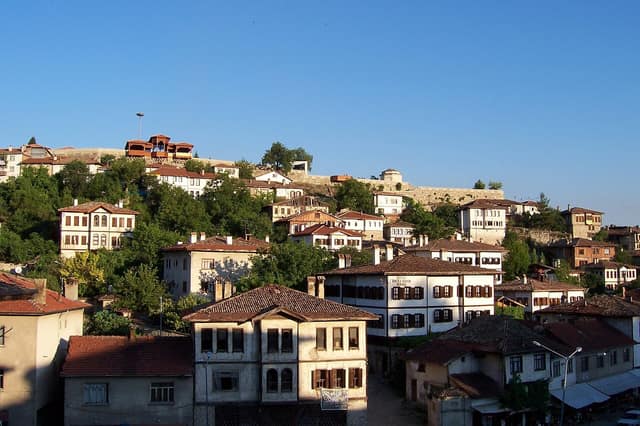
At the end of the slope down from Castle Hill you find yourself inside the Çarşı quarter. Safranbolu Municipality recommends starting a tour of the historic centre at Kazdağlı Square; make the square the starting point of this stop and divide the two hours into three parts. Give the first part to the buildings and the street fabric around the square, the second to the guild streets and the third to the Yemeniciler Arastası.
First, try to read the townscape. According to the Ministry of Culture and Tourism, the district centre has about 2000 traditional houses built in the 18th and early 19th centuries, and they are grouped in two quarters. The Çarşı quarter you are in was the town part lived in during winter; in summer people moved to the Bağlar quarter. As you walk along the street, notice that the houses are placed so as not to block one another's view; the Ministry describes this arrangement as an expression of respect for the surroundings and for neighbours. At street corners, look at the chamfered edges of the walls and at the brackets called ayıbacağı that carry the upper floors projecting over the street. The Ministry also mentions the custom of hanging deer antlers at the corners of the eaves for good luck; do not forget to lift your head and look at the eaves.
In the second part, enter the guild streets. According to the Culture Portal, Safranbolu was a stopping place on the Gerede-Sinop caravan road, and the bazaar was born around the han with shops where goods were produced. Trades such as blacksmithing, coppersmithing, packsaddle making, saddlery and shoemaking were located in separate streets but side by side, in keeping with the guild system. That is why the streets are known by names such as "semerciler içi", "kunduracılar içi" and "kasaplar içi". Today you still come across a few tradesmen doing this work in the Blacksmiths', Coppersmiths', Tinsmiths' and Packsaddle Makers' bazaars. If you see a shop in the Blacksmiths' bazaar where you hear the anvil, look in from the door, but do not interrupt the master's work and do not take photographs without asking. Compare the reconstructions you saw in the museum in the morning with the real workbenches here; the difference shows which part of each craft survives.
In the third part, move on to the Yemeniciler Arastası. According to the Culture Portal, the arasta is an old guild bazaar of 48 wooden shops in a continuous row, adjoining the Köprülü Mehmet Paşa Mosque, and it takes its name from the shoe called yemeni. Yemeni making was one of Safranbolu's important crafts until the end of the 1950s; during the War of Independence the arasta met the army's need for shoes as far as it could. The restored bazaar is used for tourism today. Walk slowly from one end of the arasta to the other to see the rhythm of the wooden shop fronts. The Ministry lists yemeni making, leatherwork, wood carving and copperwork among the crafts still practised in Safranbolu, and white work and needle lace among its embroideries; look for examples of these in the shop windows.
The best times for photography are the early morning and the late afternoon; at midday the narrow streets are both crowded and harshly lit. If you want to take a break in the Çarşı, it is easy to find somewhere to sit around the square. When you leave the arasta, the high stone walls of Cinci Han are a few minutes' walk away; head for this large building in the centre of the bazaar.
Source: Kültür Portalı, Yemeniciler Arastası; KTB Karabük, Safranbolu Evleri ve Mimari; Safranbolu Belediyesi, Tarihi Çarşı.
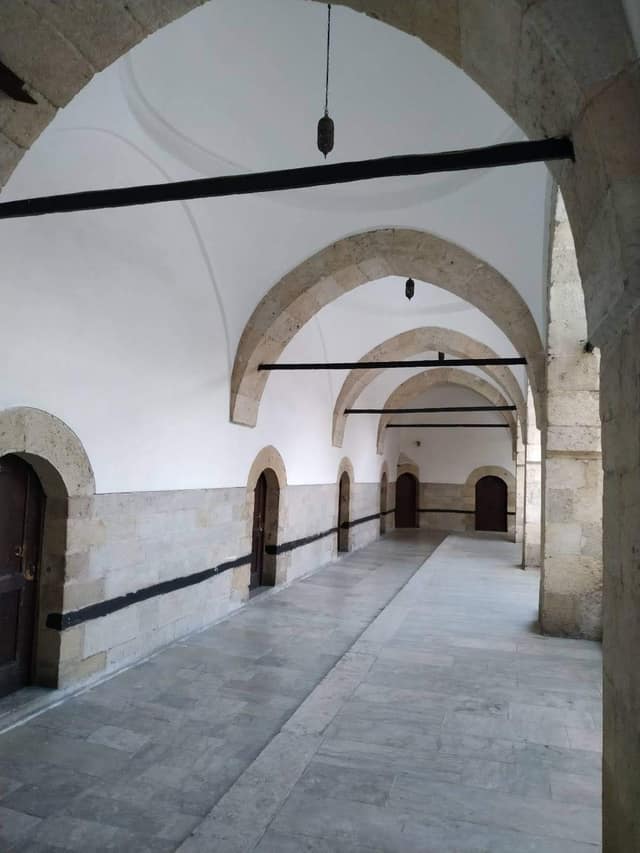
Cinci Khan
The last stop on the route is Cinci Han, standing in Çeşme Mahallesi at the very centre of the bazaar. When you arrive, first stay outside and walk slowly around the high walls built of cut stone and rubble. According to the Culture Portal, the han was commissioned in 1645 by Karabaşzade Hüseyin Efendi of Safranbolu, known as Cinci Hoca. The sources describe him as one of the kazaskers, or chief military judges, of the reign of Sultan İbrahim; the Ministry says kazasker of Rumelia while the municipality says kazasker of Anatolia, so keep the title in mind without the detail. The architect is not known for certain; the Culture Portal writes that the building is thought to have been built by Koca Mimar Kazım Ağa.
To understand why the han is so large, recall what you read in the museum in the morning. The Culture Portal notes that in its first years the han consisted of 63 rooms and camel stables, and that this size proves the town's role as a stopping place on the caravan road. The guild streets you have just walked, according to the same source, were also born around this han. So stopping here after walking the Çarşı means seeing why all those streets flow towards this point.
When you come to the entrance door, stop and look at the details. According to the municipality, the han's entrance door, its lock and its key are an interesting example of Turkish ironwork; the iron fittings and nail heads are worth a close look. The municipality describes the building in two parts: rooms are set behind two-storey arcades opening onto the central courtyard, and a stable section reached through the courtyard is placed to the southwest. The pool in the middle of the courtyard still keeps its overall appearance today. As far as you can see into the courtyard from the door, follow the rhythm of the arcades and the way the arches repeat on the upper floor.
As the building is in use today, find out on site the conditions for entering its inner parts and move around in a way that does not disturb that use. According to the Ministry, from the early 20th century the han was used as a storehouse by Safranbolu's tradesmen and was then restored; so today's orderly courtyard is the result of a long period of neglect and repair. The same source writes that Safranbolu has two more hans, called Pamukçu and Tuzcu, but Cinci Han is the most striking of them because of its size. According to the Wikipedia article, Kösem Sultan gave financial support during construction to Cinci Hoca, who had strong ties to the palace. The English Wikipedia also counts three caravanserais among the registered monuments of the old town.
Right next to the han is Cinci Hamamı, also commissioned by Cinci Hoca; the Ministry and the municipality place it inside the Çarşı, in Çeşme Mahallesi. Seeing the two buildings in a single glance shows how the works a statesman left to his hometown came together in the middle of the bazaar. For photographs, shoot the han's stone facade in the soft afternoon light from the street opposite. The route ends here; to return you can switch to city public transport from the Çarşı, or if you like you can climb Hıdırlık Hill and see the whole town from above once more.
Source: Kültür Portalı, Cinci Hanı; Safranbolu Belediyesi, Tarihi Cinci Hanı ve Hamamı; KTB Karabük, Han ve Hamamlar.
Comments
Loading...
