

From Alaaddin to the Republic, the Historical Layers of Eskişehir
Sign in to like and rate
The history of Eskişehir is often told through the colourful timber houses of Odunpazarı, meerschaum and glass. This route offers another reading on the northern slope of the same district and follows about six and a half centuries of the city in four stops, in chronological order. It starts in a park with a mosque dating from the Seljuk period, passes through a sixteenth century Ottoman complex, calls at a mansion museum devoted to the years of the National Struggle, and ends in an old school building that documents the first years of the Republic.
The first stop is the Alaaddin Mosque, built in 1267 in the Anatolian Seljuk period according to official records. The building lost its Seljuk features in later repairs, but it has a special importance for the city's history: in 1945, works collected from Eskişehir and its districts were brought together in a storeroom museum set up here. The second stop is the Kurşunlu Complex. Commissioned by the vizier Çoban Mustafa Pasha and dated to the first quarter of the sixteenth century, the complex, with its buildings arranged in a U shape, is an early example of classical Ottoman architecture, and the Eskişehir Museum Directorate was officially founded here in 1966. So, besides their architectural differences, the first two stops also link the first two addresses of the city's museum history.
The third stop is the Eskişehir Museum of Independence, which opened on 29 October 2016. Set up in a registered mansion, the museum tells the story of the years 1919-1922 with its chronology area, its cartoon and newspaper rooms and its strategy room on the First Battle of İnönü. The last stop is the Anadolu University Museum of Republican History, in the building constructed in 1915-1916 as the Turan Model School and regarded as one of the important works of the First National Architecture Movement. Here you see a wide selection of documents and objects, from Gallipoli to the first years of the Republic and the city's development in education and industry.
The order is set for both history and walking. The Alaaddin Mosque is in the north of the district; after going down south to visit the complex in the Paşa neighbourhood, you turn back north to the museum on Arif Bey Street and from there to the last stop on Atatürk Boulevard. The stops are close to each other and the whole route is completed on a walk of less than a kilometre; the time spent at the stops adds up to about three and a half hours. The Museum of Independence charges admission; check the visiting days and hours of the museums on their official pages before you go. Visit the two mosque stops outside prayer times, quietly and without disturbing those who are praying. Because the Museum of Independence is a registered building, it cannot be toured in a wheelchair, and there is a virtual tour option at the ticket desk for these visitors. The route can be combined on the same day with the well known Odunpazarı route of houses and museums, but on its own it also tells, in one piece, the city's story from the Seljuks to the Republic.
Sources
- Kültür Portalı, Alaeddin Camii, https://www.kulturportali.gov.tr/turkiye/eskisehir/gezilecekyer/alaeddin-camii
- Eskişehir İl Kültür ve Turizm Müdürlüğü, Alaaddin Camii, https://eskisehir.ktb.gov.tr/TR-336961/alaaddin-camii-odunpazari.html
- EBA Okul Dışı Öğrenme, Alaeddin Camii, https://okuldisiogrenme.eba.gov.tr/mekan-detay/alaeddin-camii-1581
- Eskişehir İl Kültür ve Turizm Müdürlüğü, ETİ Arkeoloji Müzesi, https://eskisehir.ktb.gov.tr/TR-339469/eti-arkeoloji-muzesi-odunpazari.html
- Eskişehir İl Kültür ve Turizm Müdürlüğü, Kurşunlu Camii ve Külliyesi, https://eskisehir.ktb.gov.tr/TR-336893/kursunlu-camii-ve-kulliyesi-odunpazari.html
- Kültür Portalı, Kurşunlu Camii ve Külliyesi, https://www.kulturportali.gov.tr/turkiye/eskisehir/gezilecekyer/kursunlu-camii-ve-kulliyesi
- TDV İslam Ansiklopedisi, Kurşunlu Külliyesi, https://islamansiklopedisi.org.tr/kursunlu-kulliyesi
- TDV İslam Ansiklopedisi, Eskişehir, https://islamansiklopedisi.org.tr/eskisehir
- Eskişehir İl Kültür ve Turizm Müdürlüğü, Eskişehir Kurtuluş Müzesi, https://eskisehir.ktb.gov.tr/TR-449018/eskisehir-kurtulus-muzesi-odunpazari.html
- Eskişehir Büyükşehir Belediyesi, Müzeler, https://www.eskisehir.bel.tr/muzeler
- Anadolu Üniversitesi, Cumhuriyet Tarihi Müzesi, https://www.anadolu.edu.tr/kampuste-yasam/muze-ve-sanat-merkezleri/cumhuriyet-muzesi
- Anadolu Üniversitesi E-Gazete, Cumhuriyet Tarihi Müzesi ziyaretçilerini bekliyor, https://egazete.anadolu.edu.tr/kultur-sanat/40543/cumhuriyet-tarihi-muzesi-ziyaretcilerini-bekliyor
- EBA Okul Dışı Öğrenme, Cumhuriyet Tarihi Müzesi, https://okuldisiogrenme.eba.gov.tr/place-detail/cumhuriyet-tarihi-muzesi-1544
- EsTram, Hat Şeması, https://www.estram.com.tr/sayfalar.php?sayfalar_id=19
Route Stops
Alaaddin Mosque
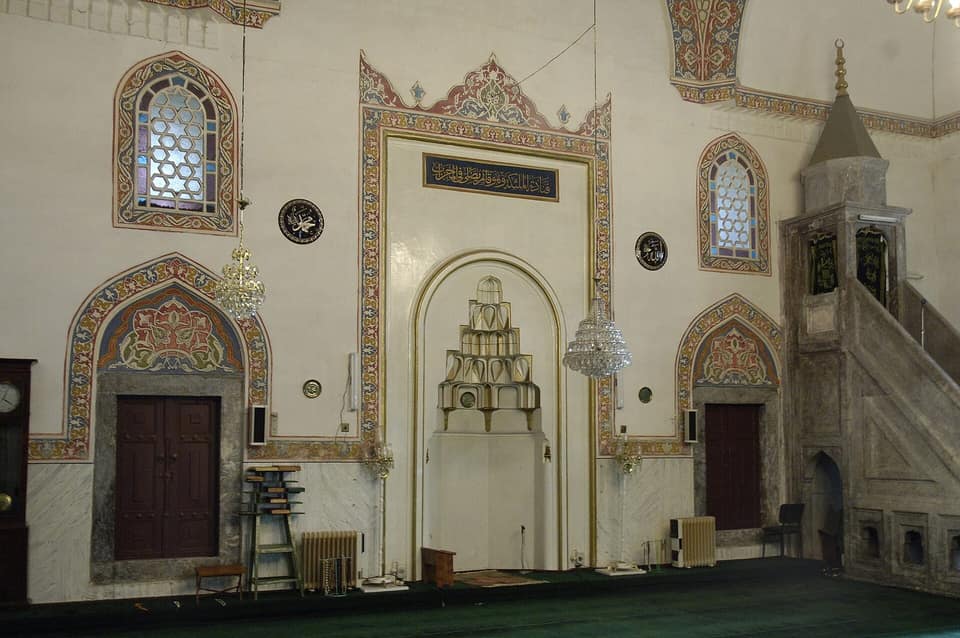
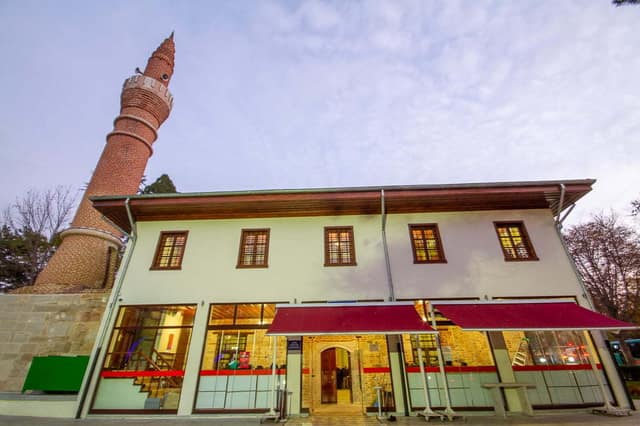
Begin the route in Alaaddin Park, on the northern edge of Odunpazarı, in front of the Alaaddin Mosque, which is counted among the oldest mosques in the city. According to official records, the mosque was built in 1267, in the Anatolian Seljuk period, during the reign of Gıyaseddin Keyhüsrev III. The whole story of the route opens with this date, because at the following stops you will see the Ottoman, National Struggle and Republican layers of the same hillside one after another. Instead of walking straight up to the building, first take a short walk through the park and look at the mosque from different angles. Because the mosque stands inside the green area that bears its name, you can walk around it freely and see its facades between the trees. Your eye may look for a Seljuk portal or carved stone decoration, but you should not expect that here. Sources state that changes were made to the building after 1267 and that the mosque lost its Seljuk architectural features as a result of restorations. So read the building you see today not as the work of a single period, but as a city building kept alive through repairs over the centuries.
The second important page of the building in the city's history is its time as a museum. According to the Culture Portal, the mosque was used as a museum between 1944 and 1951 and was then repaired again and reopened for worship. According to the history of the archaeology museum published by the Provincial Directorate of Culture and Tourism, in 1945 cultural assets collected from Eskişehir and its districts were brought together in a storeroom museum set up in this mosque. In other words, the first step of the collection now displayed in the city's archaeology museum was taken inside this building. The same history also says that the museum directorate was officially founded in 1966 in the Kurşunlu Complex in Odunpazarı, which is exactly the second stop of the route. So between the first two stops there is both an architectural gap of about two and a half centuries and the first two addresses of the city's museum history.
When you visit the mosque, pay attention to prayer times; individual or group visits should not be made during prayers. If you go inside, do not speak loudly or run, and follow the directions of the staff. When taking photographs, do not disturb those who are praying, and do not touch the building's fabric. If you want to take notes or sketch, do so outside the mosque, in the park. The address used is Alaeddin Street in the Deliklitaş neighbourhood, and the park is entered from this street. If you come to the park early in the morning, you have a chance to see the building in a quieter setting. This short thirty minute stop works as a chronological starting point for the rest of the day. From here, walk south towards the historic streets of Odunpazarı and continue to the Kurşunlu Complex.
Source: Kültür Portalı ve Eskişehir İl Kültür ve Turizm Müdürlüğü, Alaaddin Camii.
Kurşunlu Mosque and Complex
When you walk south from Alaaddin Park and reach the Paşa neighbourhood of Odunpazarı, you meet the stone walls of the Kurşunlu Complex right next to the historic timber houses. At this stop, focus not on the Meerschaum Museum but on the complex itself, that is, on the courtyard layout of a sixteenth century group of buildings. The complex was commissioned by the vizier Çoban Mustafa Pasha; the Provincial Directorate of Culture and Tourism dates its construction to 1517-1525, while the TDV Encyclopedia of Islam, relying on the dates of the inscription and the endowment deed, places it between 1515 and 1526. The architect is thought to be Acem Ali, who was chief architect before Mimar Sinan, but the sources give this as a probability rather than a certainty. According to the TDV Encyclopedia of Islam, the Tuhfetü'l-mimarin, which lists the works of Mimar Sinan, names only the caravanserai of the complex.
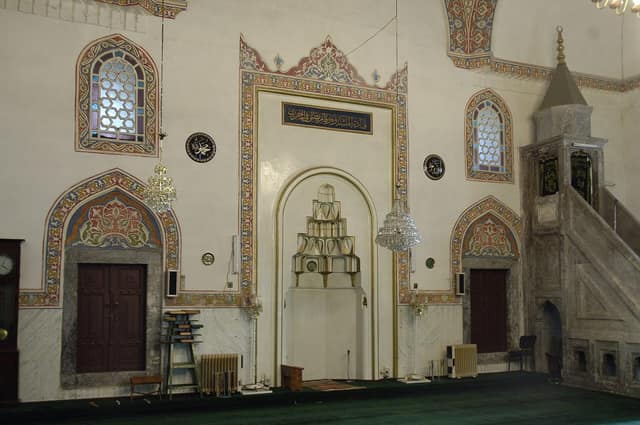
First understand the layout of the courtyard: the buildings are lined up in a U shape on the east, south and west sides of the mosque and, joined to each other by walls, form an outer courtyard. Because there is a gate on each side of the courtyard, you can enter and leave the complex from different directions. The mosque in the centre is built of cut stone, has a square plan and a single dome, and is known as Kurşunlu, meaning leaden, because its outer covering is clad in lead. In the five bay portico on the north side, look at the pointed arches carried by six marble columns and muqarnas capitals. These capitals and pointed arches are a good chance to see an early example of classical Ottoman architecture up close. The mosque is the only building in the complex with an inscription, so pause for a while in the portico and look for it. The prayer hall measures about 14.90 metres by 14.90 metres and is covered by a single dome on an octagonal drum. If you go inside outside prayer times, look up at the painted decoration of the dome and at the marble pulpit. The single balcony minaret rises at the northwest corner of the mosque.
At the primary school east of the mosque, notice the columns with reused Byzantine capitals that carry the portico, and the reused marble pieces in the window lintels. According to the Culture Portal, the school section has been used as a library since 2010. On the south side of the courtyard you will see the deep, rectangular dining hall and, next to it, the kitchen with its dome on a high drum. According to the Provincial Directorate of Culture and Tourism, the chimney of the kitchen is said to have been used as a clock tower from the late nineteenth century until the 1960s. Today the caravanserai section of the complex houses a hot glassblowing workshop and a glass arts centre, and it hosts events such as the International Odunpazarı Glass Festival. Look for yourself at the walls to see how cut stone, rubble stone, brick and, in places, reused material were used across the buildings. The ablution fountain north of the mosque is not one of the original buildings; the TDV Encyclopedia of Islam states that it was built in the 1960s. Do not forget the link with the previous stop either, because the Eskişehir Museum Directorate was officially founded in this complex in 1966 and opened to visitors. In the mosque section, keep your distance from those who are praying, stay quiet and take photographs without disturbing them. When you leave the complex, take a short walk north through the streets of the Paşa neighbourhood towards Arif Bey Street and continue to the Museum of Independence.
Source: TDV İslam Ansiklopedisi ve Eskişehir İl Kültür ve Turizm Müdürlüğü, Kurşunlu Külliyesi.
Eskişehir Liberation Museum
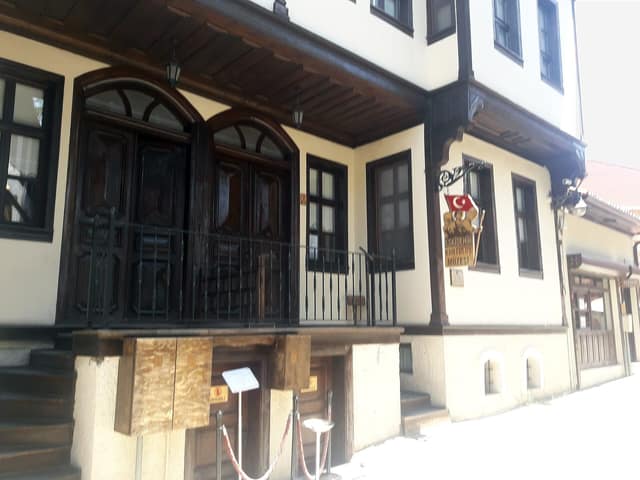
Housed in a registered mansion on Arif Bey Street, the Eskişehir Museum of Independence carries the route from the sixteenth century to the beginning of the twentieth, to the years of the National Struggle. The museum opened on 29 October 2016, the 93rd anniversary of the proclamation of the Republic, and is one of the museums of Eskişehir Metropolitan Municipality. According to the TDV Encyclopedia of Islam, the city was occupied by the British in 1919 and by the Greeks in 1921, and was liberated on 2 September 1922. Keep these dates in mind before you go in, because the story told inside is built exactly around these years.
On the ground floor there is a section set aside for children, where animations and cartoons about Atatürk, Lausanne and the National Struggle are shown on touch screens. If you come with children, starting the visit with this section makes the story in the following rooms easier for them to follow. Then go upstairs and first walk through the Chronology Area, where the National Struggle period is told under 24 headings. Reading this area without hurrying lets you place the cartoons, newspapers and battle narrative you will see in the next rooms on a timeline. The Cartoon Room displays cartoons published in the magazines of the period; compare how the drawings looked at events with the chronology. The Newspaper Room brings together the newspapers published in the same years and shows how events were reflected in the press of the day. The Strategy Room is devoted to the First Battle of İnönü. In the room there are wax figures depicting the commanders at the front and the ordinary Turkish soldier, known as Mehmetçik. After following the display in this room, going back to the chronology to find the place of the battle within the National Struggle again is a good exercise. A documentary about the National Struggle period is shown in the Screening Room, so set aside a few minutes to watch it.
In the Selfie Room in the exit section, you can take photographs with images of Atatürk and the National Struggle. But the real value of this section lies in the last room, because the original decorated walls of the mansion can be seen here. On the walls there are paintings dated to the twentieth century through their subjects, their light and shade and their colour values; while looking at them, remember that the building itself is also an exhibit. The touch screen photo pool in the same room gives you access to images of the War of Independence. A screen also presents the history of the building and old photographs of the mansion, so if you are curious about the mansion's past, do not skip it. Taking photographs in the museum is allowed. Because the building is registered, it cannot be toured in a wheelchair; these visitors can see the museum through a 360 degree virtual tour on the touch screen at the ticket desk. Admission is charged, and for visiting days, hours and fees you need to check the page of the Provincial Directorate of Culture and Tourism and the museums page of the Metropolitan Municipality. When you leave the museum, walk for a few minutes towards Atatürk Boulevard to reach the last stop of the route, the Museum of Republican History.
Source: Eskişehir İl Kültür ve Turizm Müdürlüğü, Eskişehir Kurtuluş Müzesi.
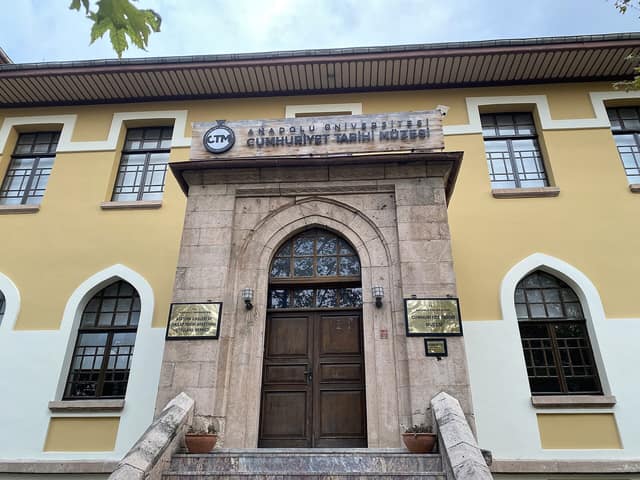
Anadolu University Museum of Turkish Republic History
The last stop of the route is the Anadolu University Museum of Republican History on Atatürk Boulevard. Look at the building from outside before you go in, because the structure itself is one of the museum's most important exhibits. The building was constructed in 1915-1916 as the Turan Model School and opened as a school in 1916. It is regarded as one of the important works of the First National Architecture Movement, so look for the formal approach of this period in its facades and in the arrangement of its masses. According to the EBA introduction, the building is the first example in Eskişehir of the model schools built across the country in the late Ottoman education system. Its architect is named as Mimar Kemal Bey in the Anadolu University publication and as Mimar Kemalettin in the EBA introduction. For many years the building housed various public institutions; it was registered as a historic monument in 1981 and transferred to Anadolu University in 1989. After restoration it opened as a museum on 23 April 1994, closed in 2013 for reorganisation and reopened to visitors on 21 March 2019.
Inside, begin with the Turkish history section in the right wing of the ground floor; its panels are enriched with images and its display cases with objects from the period. In the corridor leading from the right wing to the left wing you will see the Ottoman coat of arms and the text of the speech Atatürk gave to the people of Eskişehir on 15 January 1923. In the same corridor, take a close look at the models of ships such as the Nusrat minelayer, the Bandırma and the Savarona. In the left wing, the Gallipoli front, the occupations after the Armistice of Mudros and the War of Independence are told through photographs, panels and objects left from Gallipoli. This section completes the National Struggle story you saw at the previous stop with a wider range of fronts and documents. In the Memorial Room for the Martyrs of Eskişehir on the ground floor are the names of 1603 people from Eskişehir who died in the Balkan Wars, the First World War and the War of Independence, and it is fitting to spend a few quiet minutes here.
Take the stairs to the first floor and, in the left corridor, look at the section displaying Atatürk's personal belongings, from his shirt to his shoes and from his walking stick to his sword. In the same corridor, the Room of Reforms, the newspapers from special days of the Republican period and the Tenth Anniversary Speech Room tell the story of the first years of the Republic. The rooms in the right corridor follow the city's development in education and industry through documents, images and objects. According to the university's publication, one of the first samples of granulated and cube sugar produced at the Eskişehir Sugar Factory in December 1933 is also displayed here. As the TDV Encyclopedia of Islam notes, in the 1920s and 1930s railway workshops and the sugar factory steered the city towards trade and industry, and these rooms are records of that transformation. Works from Central Anatolia are shown in the ethnography room, and two rooms display the teaching equipment of the Turan Model School, the first owner of the building. According to the university's publication, after it opened the school became a sister school of a school in Germany, and the teaching aids sent from there can be seen in these rooms today. If you are coming with a large group, making an appointment avoids crowding, and guidance can be requested from the museum staff. The EBA introduction notes that the second floor is reached by stairs, so take care on the stairs. Check the museum page of Anadolu University for visiting days, hours and admission conditions. When you finish the route here, you will have crossed about six and a half centuries, from the Seljuk period to the Republic, in a walk of less than a kilometre.
Source: Anadolu Üniversitesi, Cumhuriyet Tarihi Müzesi.
Comments
Loading...
