

Eskişehir with Children, from the Lakeside to the Space House and the Museums
Sign in to like and rate
This route offers families visiting Eskişehir with children a plan that divides a single day into four stops. The day starts in the open air on a lakeside outside the city, spends the middle of the day in the world of science and fairy tales in the city's largest park, and ends in Odunpazarı in two museums standing side by side, among wax figures and glass works. The stops are chosen to attract younger and older children in different ways: one is nature, one is learning by experiment, two are museums.
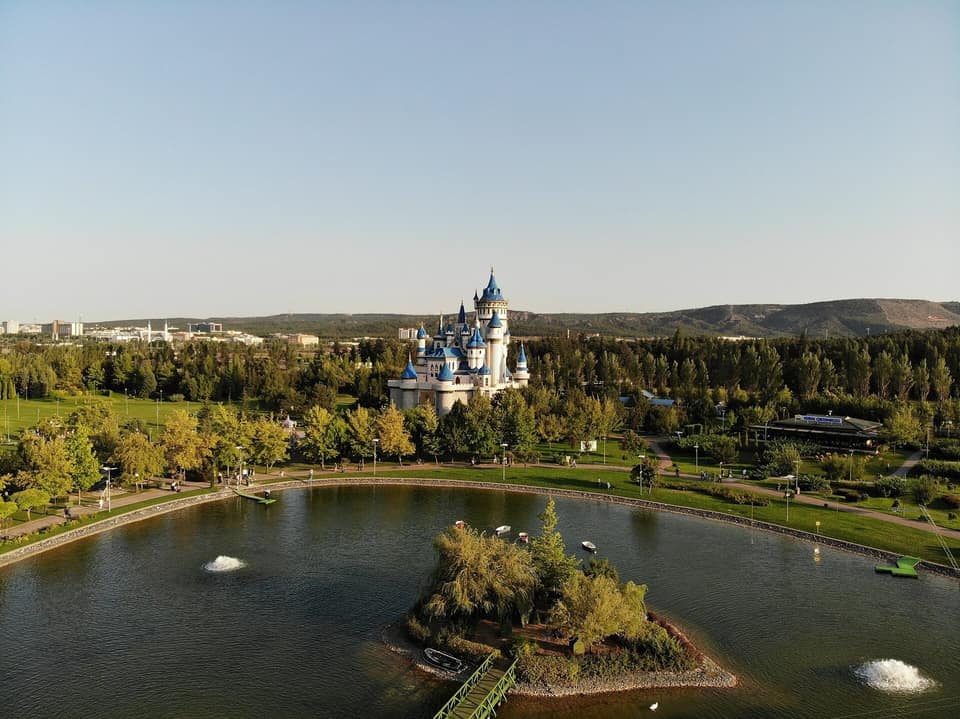
The first stop is Musaözü Nature Park, 21 kilometres from the city centre. According to the Provincial Directorate of Culture and Tourism, it is a day-use recreation area created around a DSİ irrigation pond and covered with black pine, oak, willow and juniper trees. A short walk along the pond in the cool morning hours lets you start the rest of the day with energy. The second stop is Sazova Science, Culture and Art Park, the largest park in Eskişehir with an area of about 400 thousand square metres. Inside the park are a pond, a full-scale museum ship, play areas decorated with fairy tale characters, the Fairy Tale World, the Japanese Garden, the Science Experiment Centre and the Sabancı Space House, presented as the largest space house in Turkey. The longest time on the route is spent at this stop.
In the afternoon you return to the city centre. The third stop is the Yılmaz Büyükerşen Wax Museum, which the Provincial Directorate of Culture and Tourism presents as the first museum of its kind in Turkey. Right next to it, the Museum of Contemporary Glass Art opened on 1 December 2007 and is presented as Turkey's first museum of contemporary glass art. Both museums belong to the City Museums Complex of the Metropolitan Municipality, and you pass from one to the other in a few steps.
The order is set according to the pace of the day. The distance between Musaözü and Sazova is about 15 kilometres as the crow flies, and between Sazova and the museums in Odunpazarı about 4.5 kilometres. The time at the stops adds up to about five hours; with travel, meals and rest breaks the route fills a whole day. The Space House shows are held in sessions and no one is admitted to the hall after a session has started; the centre recommends the shows for children aged 6 and over. The Science Experiment Centre, the Space House and the two museums are closed on Mondays. Check session times and museum fees on the official websites before you go. Those travelling with small children who want a shorter route can skip Musaözü and start the day directly at Sazova.
Sources
- Eskişehir İl Kültür ve Turizm Müdürlüğü, Musaözü, https://eskisehir.ktb.gov.tr/TR-336995/musaozu-tepebasi.html
- Kültür Portalı, Musaözü Barajı, https://www.kulturportali.gov.tr/turkiye/eskisehir/TurizmAktiviteleri/musaozu-baraji
- Tarım ve Orman Bakanlığı 5. Bölge Müdürlüğü, Tabiat Parkları, https://bolge5.tarimorman.gov.tr/Menu/49/Tabiat-Parklari
- Eskişehir İl Kültür ve Turizm Müdürlüğü, Sazova Bilim Kültür ve Sanat Parkı, https://eskisehir.ktb.gov.tr/TR-336981/sazova-bilim-kultur-ve-sanat-parki-tepebasi.html
- Eskişehir İl Kültür ve Turizm Müdürlüğü, Bilim Deney Merkezi, https://eskisehir.ktb.gov.tr/TR-336982/bilim-deney-merkezi-tepebasi.html
- Eskişehir İl Kültür ve Turizm Müdürlüğü, Sabancı Uzay Evi, https://eskisehir.ktb.gov.tr/TR-336983/sabanci-uzay-evi-tepebasi.html
- Eskişehir İl Kültür ve Turizm Müdürlüğü, Japon Bahçesi, https://eskisehir.ktb.gov.tr/TR-336984/japon-bahcesi-tepebasi.html
- Eskişehir İl Kültür ve Turizm Müdürlüğü, Esminiatürk, https://eskisehir.ktb.gov.tr/TR-347289/esminyaturk-tepebasi.html
- Eskişehir Bilim Deney Merkezi ve Sabancı Uzay Evi, http://www.eskisehirbilimdeneymerkezi.com/
- Eskişehir Bilim Deney Merkezi, Sabancı Uzay Evi sık sorulan sorular, http://www.eskisehirbilimdeneymerkezi.com/sayfa-detay.php?id=23
- Yılmaz Büyükerşen Balmumu Heykeller Müzesi, Hakkında, http://www.balmumuheykeller.com/hakkinda.php
- Eskişehir İl Kültür ve Turizm Müdürlüğü, Yılmaz Büyükerşen Balmumu Heykeller Müzesi, https://eskisehir.ktb.gov.tr/TR-340164/yilmaz-buyukersen-balmumu-heykeller-muzesi-odunpazari.html
- Eskişehir İl Kültür ve Turizm Müdürlüğü, Çağdaş Cam Sanatları Müzesi, https://eskisehir.ktb.gov.tr/TR-339434/cagdas-cam-sanatlari-muzesi-odunpazari.html
- Kültür Portalı, Çağdaş Cam Sanatları Müzesi, https://www.kulturportali.gov.tr/turkiye/eskisehir/gezilecekyer/cagdas-cam-sanatlari-muzesi
Route Stops
Musaözü Nature Park
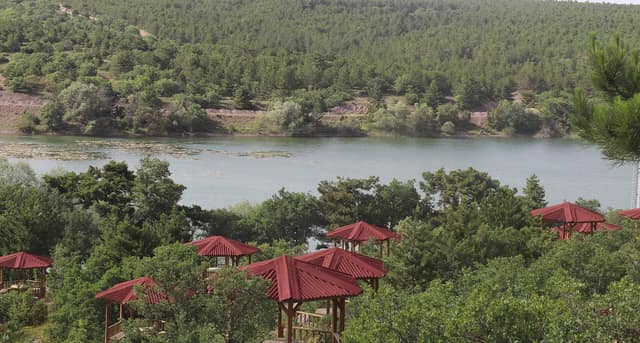
Start the day in the west of the city, at Musaözü Nature Park on the Eskişehir to Kütahya road. According to the Provincial Directorate of Culture and Tourism, the area is 21 kilometres from the city centre. The Culture Portal writes that the park covers 50 hectares and was established in 1967. The area was created around a DSİ irrigation pond and is laid out for day use. The regional directorate of the Ministry of Agriculture and Forestry also lists Musaözü among the nature parks in Eskişehir. Arriving early in the morning lets you enjoy the cool air and also find the area quieter.
After parking, first walk with the children to the edge of the pond and take a short tour around the water. Trying to identify together the trees you see along the way can turn into a small nature game. The sources state that the area's green cover is made up of black pine, oak, willow and juniper species. Looking for willows usually in the parts close to the water and for the needle-leaved black pines on drier ground is an easy way to explain the trees' relationship with water. Comparing pine cones and leaf shapes also draws the children's attention to nature. Meanwhile remind the children to leave branches and cones where they are instead of collecting them.
The pond is the park's most important natural asset. The Culture Portal records that carp, catfish and crayfish live in the pond and that it allows rod fishing. If you are thinking of fishing, find out the rules in force from the responsible authorities in advance. The provincial directorate's page writes that the pond is also a good place for a boat ride. Watch the children closely at the water's edge and do not let them run along the shore. Sitting on the shore for a while and watching the movement on the water makes a good rest before the busy part of the day begins.
Remember that you are in a natural area and take back everything you bring. In hot and dry periods no fire should be lit, because of the risk of forest fires; the regional directorate's page lists the number 112 for reporting forest fires. Check the official announcements on entry conditions and facilities before you go. At the end of an hour return to the car and drive towards the city, to the Sazova Science, Culture and Art Park, about 15 kilometres to the east as the crow flies.
Source: Eskişehir İl Kültür ve Turizm Müdürlüğü ve Kültür Portalı, Musaözü.
Sazova Science, Culture, and Arts Park
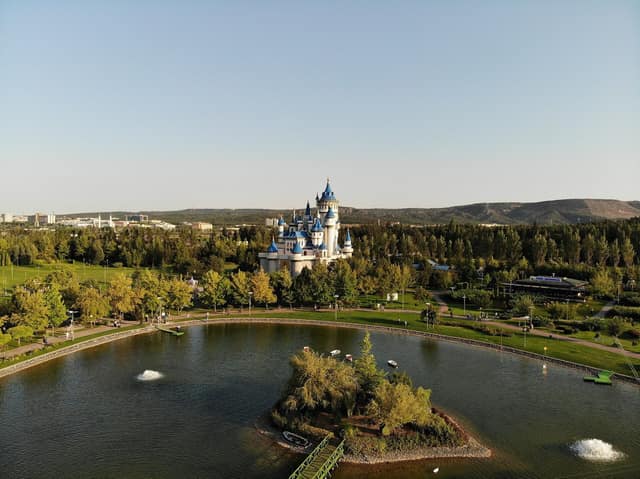
The longest stop of the route is the Sazova Science, Culture and Art Park in the west of the city. According to the Provincial Directorate of Culture and Tourism, the park is the largest in Eskişehir with an area of about 400 thousand square metres. Trying to see everything in an area of this size tires children; so divide the two and a half hours into three parts. Leave the first part to the indoor Science Experiment Centre and the Sabancı Space House, the second to the play areas by the pond and the third to a quiet garden walk.
Visit the Science Experiment Centre before the morning crowd arrives. The provincial directorate writes that the centre was set up so that primary school children can meet science and that it offers the chance to carry out various experiments in their real settings. According to the centre's own website, here you can listen to your heartbeat, lift a car weighing hundreds of kilos with the force of a lever and watch your skeleton while pedalling a bicycle. Ask your child first to make a guess at each experiment and then to see the result; this small habit turns the visit into a game. The centre also organises tour programmes for adults, so do the experiments together with your child.
Then take your seat according to the session time of the Sabancı Space House. According to the provincial directorate, shows on the universe, galaxies, stars and planets are presented in the 360 degree dome of the Space House. The centre's website states that the Space House is not an observatory and that the dome does not open because there is no telescope. The site recommends the shows for visitors aged 6 and over and writes that younger children may be affected by the images and sounds. Be ready at the entrance 10 minutes before the session, because no one is admitted to the hall after a session has started. Food and drink are not consumed in the Space House, and each ticket has a numbered seat.
At midday go out into the open area and walk around the pond. The provincial directorate writes that the park has a full-scale museum ship, play groups made up of fairy tale characters and play areas that children with disabilities can also use. According to the same source, special installations have also been set up where children can try out the buoyancy and circular motion of water. Trying again with water what they learned at the science centre makes it easier for children to link the day together. The Fairy Tale World, presented as a first in Turkey, is also in this part of the park.
Give the last half hour to the Japanese Garden. According to the provincial directorate, the garden was designed by Japanese landscape architects as part of the 2010 Japan Year in Turkey events and is the largest Japanese garden in Turkey. In this section, a quiet break for tired children, walk slowly and take care not to talk loudly. If you have time left, you can also stop at the Esminiatürk area, where small models of buildings bearing Turkish traces are displayed. Excursion trains also run inside the park; this is a good option for little ones who struggle on a long walk. According to the centre's website, the Science Experiment Centre and the Space House are closed on Mondays, and session times change with the school, summer and winter periods. From here head east to the City Museums Complex in Odunpazarı by car or by city public transport.
Source: Eskişehir İl Kültür ve Turizm Müdürlüğü, Sazova Bilim Kültür ve Sanat Parkı; Eskişehir Bilim Deney Merkezi.
Yılmaz Büyükerşen Wax Sculpture Museum
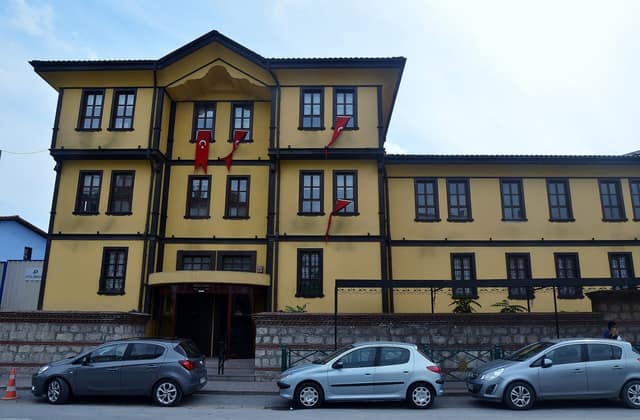
In the afternoon come to the Yılmaz Büyükerşen Wax Museum on Atatürk Boulevard in Odunpazarı. According to the Provincial Directorate of Culture and Tourism, the museum opened on 19 May 2013. The museum is located within the City Museums Complex of the Metropolitan Municipality. According to the museum's website, the statues of about 200 people, historical figures and well known people from Turkey and abroad, donated to the municipality by Prof. Dr. Yılmaz Büyükerşen, are displayed here. The fact that all the statues came from the hands of a single person is a good starting point when explaining the collection to children. According to the museum's website, before the statues here Büyükerşen had also made wax statues of Atatürk for Anıtkabir, Samsun, İnebolu, İzmir, the war academies and the Naval Academy. The site announces that statues made by taking the measurements of famous people who come to Eskişehir over time will also be added to the collection.
Before entering the halls, ask the children why wax was chosen. The museum's website describes wax as an extremely suitable material for making lifelike statues. The same site tells that the first museum made up of wax statues opened in London in 1835. After giving this information, ask the children to find in which details the statues look most like real people. Hair, hands and the look in the eyes are the details that attract the most attention in this game.
According to the site's description, statues reflecting various periods of Atatürk's life and Atatürk's family, statesmen from Turkey and abroad, artists, members of the press and athletes are displayed in front of different sets. The museum also gives space to scenes from the history of Eskişehir and Turkey. Children show interest in finding the athletes and artists they know, adults in watching the historical scenes. In each hall, looking first at the whole scene and then at the individual figures keeps the visit orderly.
According to the museum's website, visitors can have their photographs taken with the statues by the museum's professional photography team. Remind the children from the start that the statues must not be touched, because wax is a material that is easily damaged. The site also states that, as a condition of the donation, the museum's income is used for the education of girls and of children with disabilities. The museum charges admission and, according to the provincial directorate's page, is closed on Mondays; check the current fees and hours before you go. After the visit move on to the Museum of Contemporary Glass Art a few steps away.
Source: Yılmaz Büyükerşen Balmumu Heykeller Müzesi; Eskişehir İl Kültür ve Turizm Müdürlüğü.
Museum of Contemporary Glass Art
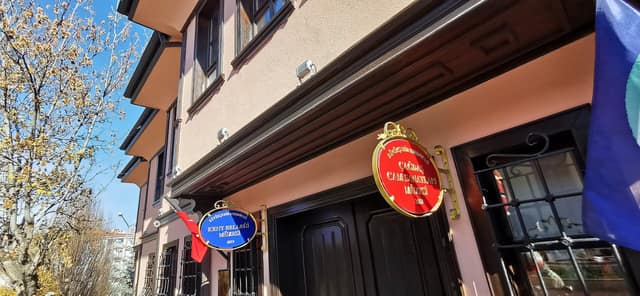
The last stop of the day is the Museum of Contemporary Glass Art, which belongs to the same City Museums Complex. According to the Provincial Directorate of Culture and Tourism, the museum opened on 1 December 2007 and is Turkey's first museum of contemporary glass art. The museum was founded through the cooperation of the Eskişehir Metropolitan Municipality, Anadolu University and the Friends of Glass Group. When you leave the wax museum you reach its entrance in a few steps, so even with tired children this last stop is easily completed. Forty minutes is enough to see the museum without hurrying.
According to the provincial directorate, the works are displayed in three halls. The Culture Portal writes that the collection includes works by 58 Turkish and 10 foreign artists. In the halls you see works made with various techniques, from hot glass blowing to cold shaping. Explain the difference between these two techniques to the children in simple words: one is the shaping of hot, soft glass, the other is the cutting and working of glass that has cooled. Then try to guess together in front of each work which technique was used.
Glass works change with the light, so even standing in front of a piece and moving a few steps to the right or left gives a different image. Ask the children to compare how the same work looks from different angles. Looking closely at how colours, bubbles and lines sit inside the glass also links with what you saw at the science centre at the start of the day. Tell the children from the start that glass is fragile and that the showcases must not be touched. Make sure that no one runs in the halls or pushes in front of the showcases.
The provincial directorate writes that after the United Nations declared 2022 the International Year of Glass, the museum took part in a collaboration organised by the Museum With No Frontiers platform. In this project, covering 39 countries, some selected works of the museum can also be viewed online. Finding these works again with the children after you return home refreshes the memory of the visit. The provincial directorate's page states that photography is allowed in the museum and that the museum is closed on Mondays and charges admission; check the current fees and hours before you go. When you finish the route here, the historic streets of Odunpazarı are right around you and you can spend the rest of the day on a short walk.
Source: Eskişehir İl Kültür ve Turizm Müdürlüğü ve Kültür Portalı, Çağdaş Cam Sanatları Müzesi.
Comments
Loading...
