

Natural BeautiesScenic Hills
Zonguldak Feneri ve Fener Bölgesi
38
No ratings yet
Sign in to like and rate
Zonguldak Lighthouse and the Lighthouse Area
About Venue
Zonguldak Lighthouse rises on the rocky headland just north of the coal harbour and is one of the structures that best tells the story of the city's relationship with the sea. In the list of places to visit kept by the Zonguldak Provincial Directorate of Culture and Tourism, the surroundings of the lighthouse appear as a separate entry in the central district under the name "Fener Bölgesi". This is not a museum but a navigation aid that still works, and the value of the visit comes from seeing the tower, the keeper's building, the harbour below the headland and the old settlement around it together.
According to the records of the Directorate General of Coastal Safety, the lighthouse was built in 1908. It stands on a headland 53 metres above the sea. The tower is 9 metres tall and the light has run on electricity since 1985. The 500 watt light shining from the tower can be seen from 20 nautical miles away, according to the Directorate General. We are talking about a light that has burned at the same spot for more than a century so that ships carrying coal could approach the harbour safely along this stretch of the Black Sea.
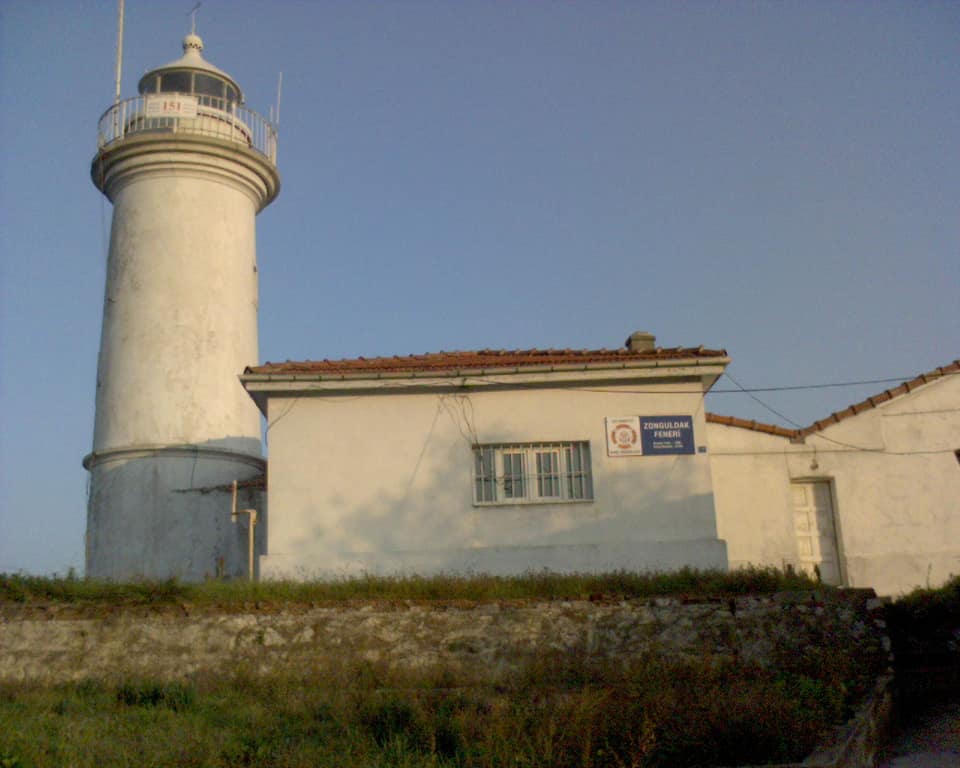
The lighthouse building attached to the tower is a single-storey masonry structure. Its hipped roof is covered with Marseille tiles and the building has a T-shaped plan. The single entrance is on the front facade, and all the rooms and the kitchen open onto a long, narrow corridor running into the building. At the end of the corridor is the concrete spiral staircase that climbs into the adjoining tower. The Directorate General also notes that the stairwell holds a pendulum mechanism used to operate the light. The lighthouse and the keeper's building are protected as national heritage by the Directorate General of Coastal Safety.
To understand the headland on which the lighthouse stands, it helps to look at how the city was founded. The history published by the Zonguldak Provincial Directorate of Culture and Tourism writes that the city came into being with the working of the coal mines in this area and that until 1896 Zonguldak was referred to in correspondence as "Zonguldak nam mevki", a locality attached to the Ereğli district. According to an article by Ahmet Apaydın of Giresun University examining the coal-related history of the city, Kozlu was first considered the centre of the mining area, and the centre shifted to Zonguldak when the harbour was built at the mouth of Üzülmez Deresi. The same article explains that the harbour was built in the mid 1890s and that the city then grew quickly as the transport and administrative centre of the coal basin.
The Zonguldak Tourism Infrastructure Service Association, which runs the Zonguldak Coal Geopark project, links the story of the Fener district to this harbour. According to the association, when the French-funded Ottoman Bank founded the Ereğli Şirket-i Osmaniyesi in 1896 and obtained the coal production concession in the basin, it first built a harbour with a single breakwater and then laid out the peninsula above it as a settlement where company families lived. The lighthouse tower was built in this period on the rocks just north of the harbour breakwater. The same source says that after the 1940s housing, a school and social and sports facilities were added, and from 1948 the employees of the coal enterprise began to move into the district.
The association writes that the Fener district, spread over about 278 thousand square metres today, contains the Governor's Residence, social facilities, sports grounds, a promenade and a children's playground. According to the same description, Fener Mahallesi is registered as an urban conservation site and an area of sustainable conservation and controlled use. So as you walk through the district, pay attention not only to the lighthouse but also to the quiet character of the old buildings among the trees and the planned layout of the peninsula.
The headland of the lighthouse is a good viewpoint for seeing the harbour and the city from above. From the headland the reach of the breakwater into the sea, the ships in the harbour and the urban fabric lined along the shore all come together in one frame. The Şarjöman Rapid İskelesi, which also appears in the list of the Provincial Directorate of Culture and Tourism, is the old pier where coal was loaded onto ships, and Apaydın's article notes that the main body of the loading facility has been placed under protection as a monument. Looking for this pier while you gaze at the harbour explains even better why the lighthouse stands exactly here.
Because the lighthouse is protected as an institutional facility, do not expect to tour the interior; the best approach is to view the tower and the keeper's building from the road around them. Leave some distance from the front of the building to catch the angle where the white cylindrical tower and the tiled roof appear together. In late afternoon light the white tower takes on a warm colour, and after dark you can watch the flashing light of the lighthouse from around the headland. On windy days the headland is exposed, so bring an extra layer and keep away from the rocky edges.
The Fener district is within walking distance of the city centre and the harbour; you can walk from the centre or take a short taxi ride. Spreading the visit over the same day as Gökgöl Cave and the coal heritage sites in the city centre is a comfortable way to see both the nature of Zonguldak and the identity it built on coal.
Comments
Loading...
Location - Zonguldak Feneri ve Fener Bölgesi
Venue Info
VenueZonguldak Merkez, Zonguldak
TypeNatural Beauties