

Historical & Cultural SitesArchaeological Sites
Zeyve Höyük (Porsuk Höyük)
No ratings yet
Sign in to like and rate
Zelve Hill (Porsuk Hill)
About Venue
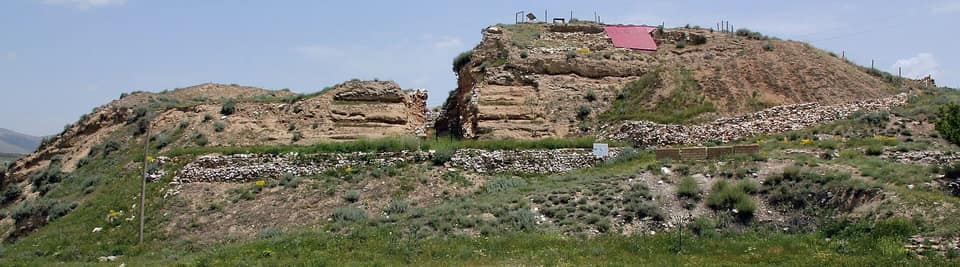
Zeyve Höyük, known by this local name and most often referred to in sources as Porsuk Höyük, is a settlement mound. The mound lies in Ulukışla district, within the boundaries of Porsuk village, in a valley running along the foot of the Taurus Mountains. Its position is on one of the great routes that connect the Anatolian plateau with Syria and Mesopotamia through the Cilician Gates. This part of the Taurus, rich in lead and silver deposits, is interpreted as the Silver Mountain mentioned in Mesopotamian texts.
The site was first mentioned by Ramsay, who came to the region in 1891 and 1902, and in 1926 Forrer examined the remains in detail. Forrer proposed identifying it with the city of Tunna or Dunna in Assyrian and Hittite texts. Around 1960, while the small road along the edge of the mound was being built, a bulldozer dislodged a stone slab inscribed in Luwian hieroglyphs. The inscription mentions a commander named Parahwaras in the service of Masaurhisas, probably a vassal of the king of Tuwanuwa, classical Tyana, and it dates to the end of the 8th century BC. This discovery led to the start of excavations: Olivier Pelon directed 15 seasons from 1968 to 2002, and Dominique Beyer took over the work after 2003. The excavations are carried on today by the French Institute of Anatolian Studies.
The mound measures about 450 by 200 metres, and seven to eight metres of archaeological deposits lie on a conglomerate base at the confluence of two streams. The earliest settlement dates to around 1600 BC, the period of the Hittite Old Kingdom, and occupation continued throughout the Hittite imperial period. In the excavation area on the western slope, a fortification system of this period with a bent passage guarded by two towers has been uncovered, and the gate walls still stand up to six metres high. Destroyed by fire in the Late Bronze Age, the settlement was reoccupied in the Iron Age after a long interval. Beside the Iron Age walls on the eastern slope, a large storage jar with a bull's head decoration and eighteen handles, repaired in antiquity with lead clamps, was found. Hellenistic and Roman settlements lie above the Iron Age layers.
The finds recovered from the mound have been brought to the Niğde Museum. The Niğde Provincial Directorate of Culture and Tourism states that the mound is visited by both Turkish and foreign visitors. The site is open ground, and some of the excavation trenches are protected by temporary roofs. During a visit, do not enter the trenches, do not step on the walls, and do not get in the way of the team during the summer excavation season. As there is little shade, it is a good idea to bring water and a hat in the hot months.
Comments
Loading...
Location - Zeyve Höyük (Porsuk Höyük)
Venue Info
AddressPorsuk köyü, Ulukışla
VenueUlukışla, Niğde
TypeHistorical & Cultural Sites