

Historical & Cultural SitesMuseums
Zeugma Mozaik Müzesi
8
No ratings yet
Sign in to like and rate
Zeugma Mosaic Museum
About Venue
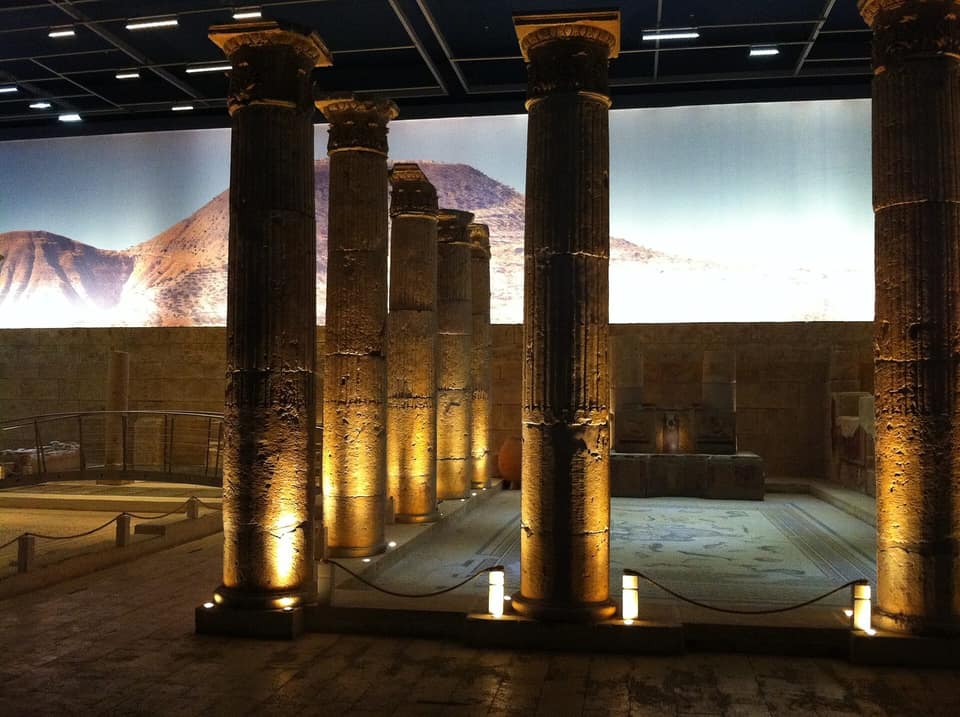
The Zeugma Mosaic Museum is a large archaeological museum in the Şehitkamil district of Gaziantep that brings together the mosaics, wall paintings and statues recovered from the ancient city of Zeugma on the Euphrates. The museum opened to visitors in 2011, and the Kültür Portalı describes it as one of the largest mosaic museums in the world in terms of both building size and the area covered by its mosaics. According to Gaziantep Metropolitan Municipality, the museum displays 2,748 square metres of Roman and Late Antique mosaics and 140 square metres of wall paintings. Alongside them are four Roman fountains, twenty columns, four limestone statues, grave stelae, sarcophagi and architectural fragments.
Zeugma, the source of these works, was founded on the banks of the Euphrates by Seleucus Nicator, one of the commanders of Alexander the Great. When the city came under Roman rule its name was changed to Zeugma, meaning bridgehead or crossing. Before the lake of the Birecik Dam covered part of the city, rescue excavations lifted the floor mosaics of its villas and moved them to Gaziantep. The promotional text of the Ministry of Culture and Tourism notes that some of these mosaics are made of as many as 500 thousand pieces.
The key idea behind the museum's layout is that the works are placed according to their positions in the ancient city. As the municipality explains, the mosaics found closest to the Euphrates stand at the entrance, while those from the houses rising towards the terraced slopes of the city follow in order through the galleries. In this way, walking through the museum is in a sense a walk through the city from the riverbank up the hill. The museum has three sections, and the first holds the mosaics recovered from Zeugma and its surroundings. The second section is devoted to Late Antique mosaics of the 5th and 6th centuries, while the third contains administrative units and conference halls.
On the entrance floor you meet the reconstructed Poseidon and Euphrates villas, where the most magnificent mosaics were found. The Kültür Portalı writes that the walls and floors of these villas were decorated with mosaics and frescoes, a sign of the wealth of the city. The Oceanus and Tethys Mosaic comes from the floor of the shallow pool of the Oceanus Villa and dates to the Early Roman Imperial period. In this panel the river god Oceanus is recognised by the crab claws on his head, and his wife Tethys by the wings on her forehead. Around them swim fish and Erotes riding dolphins, and in the centre appears a sea creature with a serpent's body.
The Achilles Mosaic is another panel dated to the 2nd century AD, decorating the pool floor of the villa named after it. It shows the moment when Achilles' identity is revealed while he is hiding on the island of Skyros. The wave motifs around the panel are thought to have made the image seem to move when the pool was filled with water. The mosaic of the Abduction of Europa was lifted from the area called Zone B one day before the dam waters covered it. The rising water damaged the face of the figure during the lifting, and the face was re-laid during restoration on the basis of the available evidence.
The museum's best-known work is not one of the large panels but a small piece dated to the 2nd century AD. The Maenad, better known as the Gypsy Girl Mosaic, was made with the three-quarter view technique of the Hellenistic painting tradition. The Kültür Portalı notes that joy and sorrow can be read on the face at the same time and that the work has become the symbol of Zeugma and Gaziantep. Twelve missing pieces of the mosaic were traced to Bowling Green State University in the United States and brought to the museum through the Ministry's efforts. Apart from the mosaics, one of the works that draws the most attention is the bronze statue of Mars.
Setting aside at least two unhurried hours is a good start for a visit to the museum. If you follow the order of the galleries from the entrance, you can also build a picture of where the mosaics stood in the city. The section where the Gypsy Girl is displayed is usually crowded, so arriving early in the morning makes for a more comfortable visit. If you also plan to see the ancient city of Zeugma, visiting the museum first makes it easier to understand what the empty floors at the excavation site once carried. Check the museum's official announcements before you go for current opening hours and admission conditions. According to the Kültür Portalı, Gaziantep Airport is about 20 kilometres from the city centre, and regular bus services link the city with many provinces.
Comments
Loading...
Location - Zeugma Mozaik Müzesi
Venue Info
VenueŞehitkamil, Gaziantep
TypeHistorical & Cultural Sites