

Historical & Cultural SitesArchaeological Sites
Zeugma Antik Kenti
34
No ratings yet
Sign in to like and rate
Zeugma Ancient City
About Venue
The ancient city of Belkıs-Zeugma lies on the bank of the Euphrates in the village of Belkıs, about 10 kilometres east of the Nizip district of Gaziantep. The Ministry of Culture and Tourism describes it as one of the two points where the Euphrates could be crossed most easily, and notes that the settlement has been in continuous use since prehistoric times. The name of the city comes from this location, since Zeugma is a word meaning bridgehead or crossing place.
According to Gaziantep Metropolitan Municipality, Seleucus I Nicator, one of the generals of Alexander the Great, founded a city named Seleucia Euphrates around 300 BC at the point where Alexander had crossed the river. A second city bearing the name of his wife Apamea was founded on the opposite bank, and the two shores were joined by a bridge. When the city came under Roman rule in the 1st century BC, its name was changed to Zeugma. The geographer Strabo called the city the fortress of Mesopotamia, and the municipality describes it as a gateway to Mesopotamia. According to the Ministry, the city was an important trade centre in the Hellenistic period, and its importance grew further in Roman times when a military unit called the IVth Legion was stationed here. Artistic activity increased in step with the growth of trade, and the city enjoyed a rich cultural life.
What makes Zeugma world famous today are the floor mosaics of the Roman villas on the slopes overlooking the Euphrates. As the municipality explains, these mosaics of the 2nd and 3rd centuries AD stand out for the density of their small stones, the skilful use of colour tones, and their sense of depth and perspective. Some mosaics carry the signatures of their makers, mythological subjects appear often, and some scenes are unique in the world in their subject matter. Sources also report, on the basis of archaeological finds, that the city was taken by Islamic armies in the 7th century AD and remained inhabited until the 10th century.
According to the Ministry, the first scientific study showing that Zeugma was the same place as modern Belkıs was published in 1917. Excavations began in 1992 under the Gaziantep Museum Directorate, and French archaeologists joined the work from 1996. Because the lake of the Birecik Dam was going to cover the lower parts of the city, emergency rescue excavations were carried out by a multinational team in the areas known as Zones A and B. During these excavations a Mars statue 1.55 metres tall was found on 3 May 2000, and many mosaics, frescoes and small finds also came to light. According to the Ministry, the number of villas uncovered since 1992 had reached seven, and the floor mosaics found exceeded one thousand square metres. Besides Turkish teams, French, American, Australian, Austrian and British archaeologists took part in the rescue work. In 1999 and 2000 seals of the Roman administrative system, bronze coins, oil lamps and marble statues were also found. The portable works were taken to Gaziantep, and the mosaics began to be displayed according to their positions in the city at the Zeugma Mosaic Museum, which opened in 2011. The Ministry's text states that the part that would not be flooded is larger than Zones A and B combined, and that long-term excavations are planned there.
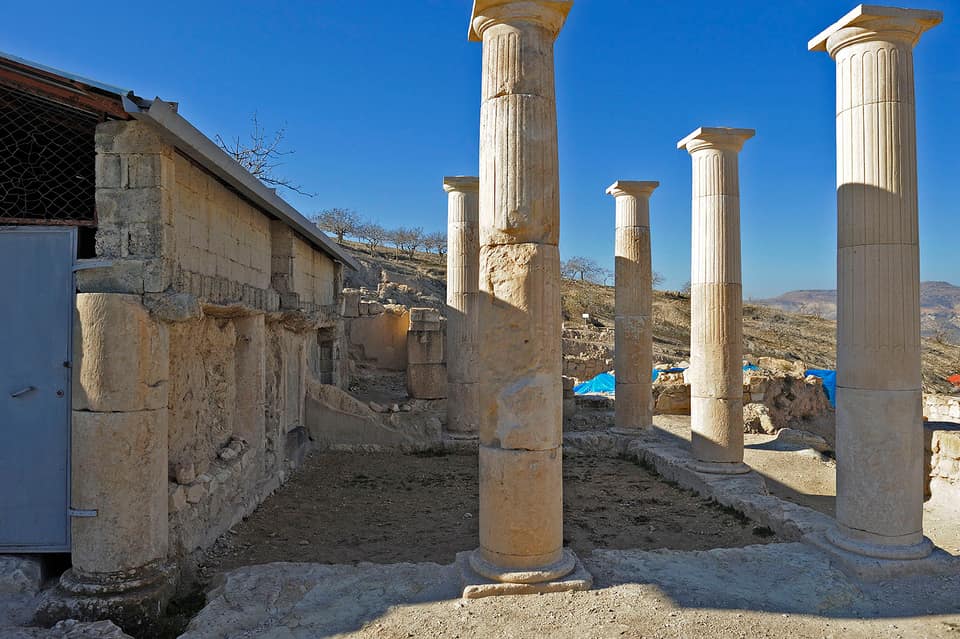
Lost works also have a place in the city's story. According to the Ministry, about two thirds of an important Dionysus mosaic found in a Roman villa in 1992 and left in place was stolen in 1998. A mosaic panel cut out by illegal digging and taken abroad years earlier was traced in 1994 to the Menil Collection in Houston and brought back to the country after negotiations. The municipality also stresses that, because of its strategic location, the city was laid out on the model of a military town. According to the municipality, excavations continue today under Prof. Dr. Kutalmış Görkay, and the architectural elements uncovered are displayed in place. While walking around the site, keep in mind that some of the mosaics have been moved to the museum and that only the plan of the buildings remains on some floors. For this reason, seeing the museum in the city first and then coming here makes it easier to picture the interiors of the villas. As you walk along the slope, the wide view of the dam lake below helps you understand why the villas were built on terraces facing the Euphrates. Since the site is open to the sky, in summer it is wise to come early in the morning or late in the afternoon and to carry a hat and water. Spring and autumn are the most comfortable seasons for both walking and photography.
Reaching Zeugma directly by public transport is difficult, so driving from Gaziantep or Nizip is the most practical option. The road between the centre of Gaziantep and the ancient city is about 50 kilometres long. Before you go, check official sources for current visiting conditions, opening hours and which parts of the site can be visited. Those who also want to see Rumkale further north along the Euphrates on the same day should plan their time accordingly.
Comments
Loading...
Location - Zeugma Antik Kenti
Venue Info
AddressBelkıs Köyü, Nizip / Gaziantep
VenueNizip, Gaziantep
TypeHistorical & Cultural Sites