

Historical & Cultural SitesArchaeological Sites
Yesemek Açık Hava Müzesi ve Heykel Atölyesi
35
No ratings yet
Sign in to like and rate
Yesemek Open-Air Museum and Sculpture Workshop
About Venue
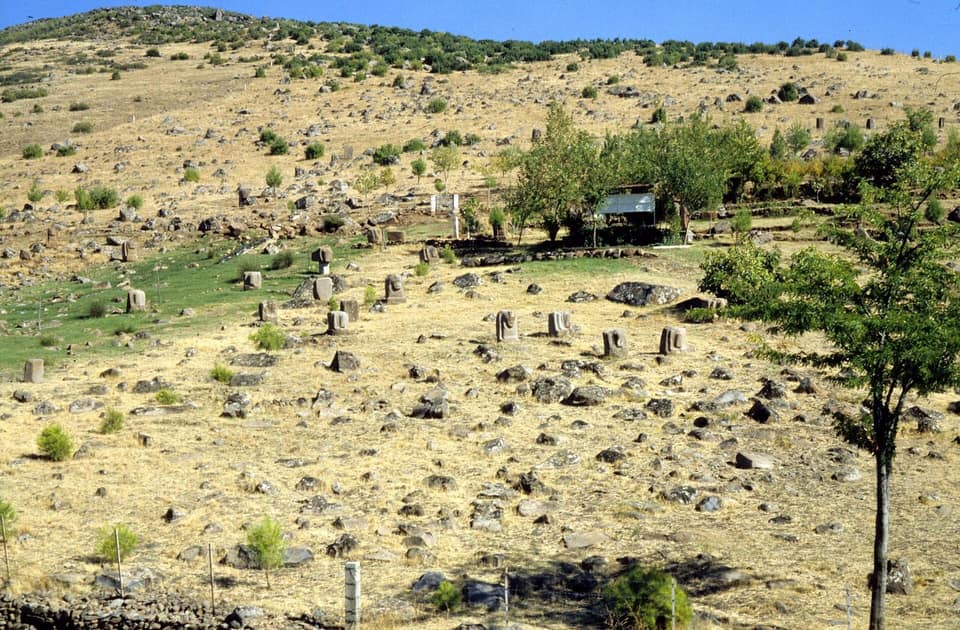
The Yesemek Open Air Museum and Sculpture Workshop lies on the Karatepe slopes of Yesemek village, about 22 kilometres southeast of the İslahiye district of Gaziantep. The Kültür Portalı and Gaziantep Metropolitan Municipality state that between the last quarter of the 2nd millennium BC and the 8th century BC, Yesemek was the largest quarry and sculpture workshop of the Near East. What sets it apart from similar places is that every stage, from cutting the stone out of the quarry to finishing the sculpture, can be seen one by one on the same slope. For this reason the sources describe the site as a school of sculpture with no equal anywhere else in the world.
According to official sources, the workshop, where the local Hurrian population worked, was opened during the reign of King Suppiluliuma I between 1375 and 1335 BC, when the region came under Hittite rule. After a period in which its activity weakened, work at the workshop intensified again in the time of the Late Hittite kingdoms. Elements of Hittite, Syrian, Aramaean and Assyrian art gained weight in the works of this new period. The Kültür Portalı reports that this style also influenced the Aegean cultures that were beginning to develop in the west. In the last quarter of the 8th century BC the Assyrians ended the workshop's activity, and it is known that the craftsmen were taken to Assyria. After that everything stayed as it had been left, and time almost stood still at Yesemek until the first excavations in 1890. Later, research was also carried out at the site under the direction of Uluğ Bahadır Alkım. The Tilmen Höyük text of Gaziantep Metropolitan Municipality reports that, while his research at Yesemek was continuing, Alkım also began excavations at nearby Tilmen Höyük in 1959. The municipality writes that this style, which combined Hittite, Syrian, Aramaean and Assyrian elements, is known as orientalising and formed the core of Greek art.
Today more than three hundred sculptures and sculpture blanks have been taken out of the ground and are displayed in a set arrangement. Most of the blanks are gate lions designed to guard the entrances of buildings. Alongside them are sphinxes, seated and winged lions, battle scene reliefs and various architectural pieces. A group of particular interest is the reliefs of the Mountain God, which are thought to represent the Amanos Mountains. All the works stand in their own natural setting, that is, on the slope where they were made, and the Gaziantep Museum Directorate has turned the site into an open-air museum through landscaping. The Yesemek Quarry and Sculpture Workshop was added to the UNESCO World Heritage Tentative List in 2012. According to the municipality, work continues for the site to be included in the permanent list. The sources stress that the workshop was evidently run as a large organisation. The municipality interprets the fact that a site of this size and so many sculptors were achieved at that time as a sign of the importance the communities living here gave to art.
As you walk around, looking at the stage of production at which each blank was abandoned is the most instructive part of the visit. Some blocks stand as raw masses broken from the quarry, while in others the head of a lion or the body of a sphinx has become recognisable. Comparing blanks of the same type side by side lets you follow with your own eyes the order in which the craftsmen worked. Since the slope is steep and stony, wear non-slip shoes and stay on the paths. Shade is limited, so in summer it is wise to come early in the morning or late in the afternoon and to carry water. When you arrive, a good approach is first to climb a little up the slope to see the overall layout of the scattered blanks, and then to go down to the individual works. Low sunlight makes the chisel marks on the surface of the stones more visible, so these hours also suit photography.
Reaching Yesemek by public transport is difficult, and driving via İslahiye is the most practical option. According to the Kültür Portalı, a road leaving the İslahiye to Yesemek road at its 10th kilometre leads to Tilmen Höyük, so the two sites can easily be visited together on the same day. These two sites tell the thousands of years old story of the plain at the foot of the Amanos in two complementary parts. Before you go, check official sources for the current visiting status and conditions of the site.
Comments
Loading...
Location - Yesemek Açık Hava Müzesi ve Heykel Atölyesi
Venue Info
AddressYesemek Köyü, İslahiye / Gaziantep
Venueİslahiye, Gaziantep
TypeHistorical & Cultural Sites