

Historical & Cultural SitesArchaeological Sites
Vize Antik Tiyatrosu
44
No ratings yet
Sign in to like and rate
Ancient Theater of Miletus
About Venue
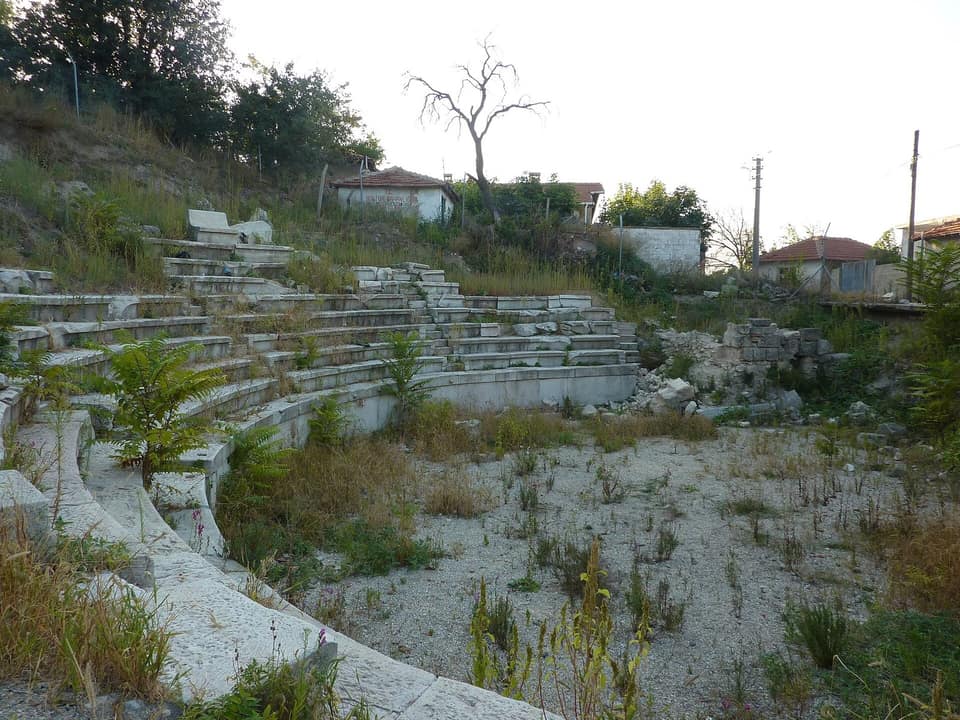
Vize Ancient Theatre is a Roman theatre at the foot of the Çömlektepe mound in Vize, brought to light by excavations in the mid-1990s. Sources present it as the only ancient theatre known so far in Turkish Thrace. The theatre is the most tangible proof that Vize, once the capital of a Thracian kingdom under the name Bizye, went on to live as an important city in the Roman period as well.
Çömlektepe, on which the theatre sits, is no ordinary hill. According to the provincial yearbook, many finds and pottery fragments recovered at Çömlektepe, one of the two mounds inside the town, show that it was used from the beginning of the Bronze Age to the end of the Roman period. The article on Vize in the Marmara Geography Journal reports the sounding made on the hill by Mansel in 1938 and notes that the hill is a mound going back to the Bronze Age. In other words, the theatre sits within layers of settlement thousands of years old.
Excavations began in 1995 under the direction of the Kırklareli Museum, with lecturers and students from the Department of Archaeology and Art History of Trakya University. According to the district governorate, the theatre was largely uncovered after about three years of work. The excavation also yielded many pottery, glass and metal finds from the Roman, Byzantine and Ottoman periods. The provincial yearbook adds that a large, finely carved marble statue of a woman from the same periods was also found.
Sources differ on the date of the theatre. The district governorate and the provincial yearbook date the building to the 2nd century AD, the late Roman period. The article in the Marmara Geography Journal, however, cites Sayar in assigning the theatre to the 1st century AD. For this reason the most cautious statement is that the building dates from the first centuries of the Roman imperial period.
Four main parts of the theatre survive today. The seating tiers, or cavea, the passages between the tiers, the stage building, or skene, and the orchestra have all come down to us. When you visit, first climb to the upper part of the tiers and look down at the orchestra; the semicircular plan and its relationship with the stage are easiest to read from here. Then go down into the orchestra and look closely at the edge profiles of the marble tiers and the passages between them.
The stage building was badly damaged in the Byzantine period. According to the district governorate, the excavations found a Byzantine structure in the eastern part of the stage and the remains of an oven in the western part. These traces show that the area was used for other purposes after the theatre lost its function. Trying to pick out the pieces of this later use among the stone heaps on the stage side turns the visit into an exercise in reading archaeology.
The theatre's most famous finds are not here but in the Kırklareli Museum. The stage friezes known as the Vize reliefs were carved in high relief on single marble blocks. One of them shows a young man half reclining on the ground in the centre, with mythological figures serving him; according to the district governorate this figure is most probably Dionysus, and the scene is framed by bunches of grapes and vine branches. The other relief depicts two naked figures fleeing in terror and a young figure chasing them, and the fleeing figures are thought to be Giants and the pursuer Dionysus. Visiting the museum after the theatre completes the picture of how the stage was once decorated.
The size of the theatre is also debated. Some promotional sources speak of a capacity of about 3,000 people, but the author of the Marmara Geography Journal article states, on the basis of his own observations on site, that the capacity was much lower. The same article notes that the theatre faces south and that it shows Vize was an urban settlement in the Roman period.
Today the area is a landscaped archaeological site. According to the provincial yearbook, the cleaning and landscaping of the excavation area was carried out in a first stage in 2003 and, after expropriations, in a second stage in 2017, and the site was fenced and made suitable for visitors. The same source notes that the expropriation work must be completed before the whole theatre and the mound can be excavated. Since grass can grow between the tiers, closed shoes are a good idea in summer.
The theatre is in the centre of Vize, on Yazı Street in the Evren neighbourhood, within the same settlement area as the remains of Vize Castle. Vize is about 56 kilometres from Kırklareli and about 142 kilometres from Istanbul; for public transport, check the current services in advance. The theatre can be reached on foot from the town centre. Before you go, it is sensible to ask the Vize District Governorate or the Kırklareli Museum about visiting conditions and whether the site is open.
Comments
Loading...
Location - Vize Antik Tiyatrosu
Venue Info
AddressYazı Caddesi, Evren Mahallesi, Vize / Kırklareli
VenueVize, Kırklareli
TypeHistorical & Cultural Sites