

Historical & Cultural SitesMonuments & Squares
Uşak Atatürk ve Kurtuluş Anıtı
No ratings yet
Sign in to like and rate
Uşak Atatürk and Liberation Monument
About Venue
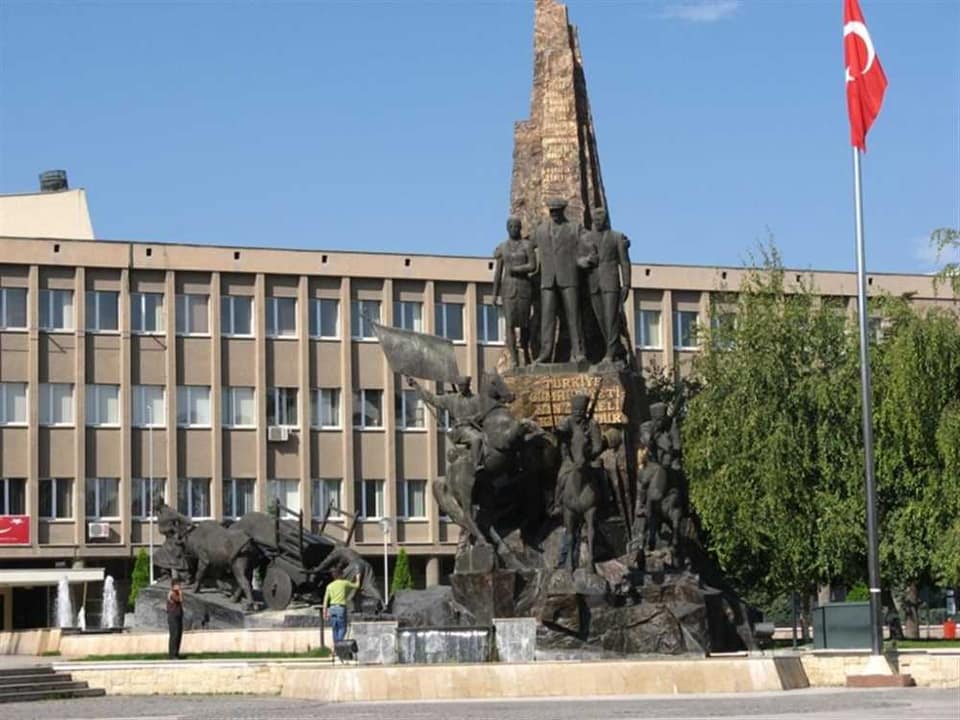
The Atatürk and Liberation Monument is a monumental, multi-figure sculptural group rising on the main square of Uşak's city centre. The Culture Portal writes that the monument was designed by the sculptor Prof. Dr. Tankut Öktem. It is 30 metres long and 17 metres high. All of the figures are gathered on a single base in three main groups. The city was liberated from occupation on 1 September 1922, and the monument's name commemorates that liberation.
The first group consists of mounted figures symbolising the liberation of Uşak by cavalry. At the centre of the second group rises a victory column symbolising that the nation cannot be held captive and will remain free for ever. In front of the column stand a figure of Atatürk and figures of a young woman and a young man carrying books inscribed with the words science and art. The Uşak Provincial Directorate of Culture and Tourism writes that this group symbolises the founding of the Republic, its entrusting to the young, and the importance given to education. The third group features female figures and an ox cart loaded with ammunition. This group tells of the courage shown by women during the War of Independence and the support they gave to the army. Among the figures stands a 17-metre-high block integrated with the base, and the block is surrounded by inscriptions.
To read the monument as a whole, it is best to look first from a little distance across the square, because only from there can you see the arrangement of the three groups on the base and the height of the column together. Walking slowly around the monument afterwards and looking at each group in turn makes it easier to notice the movement of the horses, the wheels of the cart and the stances of the figures. The cart group is composed as a scene that brings to mind the labour of the people who carried ammunition to the front. Because the victory column is tall, anyone who wants to fit the whole work into the frame should shoot from the far edge of the square. The monument is a place of remembrance, so as you walk around it you should not climb on the figures or the base, nor touch the inscriptions.
The Culture Portal notes that the monument is a meeting point for most people who live in Uşak. The phrase often heard in the city, "let's meet at the statue", therefore points directly to this monument. The Uşak Provincial Directorate of Culture and Tourism presents the monument at the head of its list of the province's monuments. The monument stands on an open city square, and since it is in the city centre it can be reached on foot or by local public transport.
The square is also a good starting point for getting to know Uşak's historic urban fabric. The Uşak Provincial Directorate of Culture and Tourism lists the historic houses on Gediz Uluyolu, Hisarkapı Uluyolu and Tirit streets as protected areas in the city. A two-storey historic building on Hisarkapı Uluyolu is used today as the Atatürk and Ethnography Museum. The street facade of this building is more elaborate than its other sides, and the house has projecting bays on three sides. According to the directorate, the walls are of rubble stone up to the plinth and rise as a timber-framed structure on the upper floors. At the main entrance the visitor is greeted by the hall known as the hayat, the rooms are arranged around this hall, and a staircase leads to the upper floor. The large number of windows on the upper floor gives the interior a bright and airy feel. The building was first restored in 1978 and opened as the Atatürk and Ethnography Museum, and it was restored a second time in 1998. The directorate states that the building dates from the second half of the 19th century. In the same list the directorate also counts Station Square among the city's squares; the Uşak Archaeological Museum near the railway station is the other major stop on a city tour made on the same day. The TDV Encyclopedia of Islam writes that Uşak grew rapidly after it separated from Kütahya and became a provincial centre in 1953, and that the avenue linking the station to the business centre became the liveliest axis of the city. The same source writes that this growth was the result of Uşak becoming an important industrial city, and that besides the sugar industry, the traditional carpet and kilim, blanket, textile and leather industries stand out in the city. After seeing the monument, you can follow this axis to observe the everyday life of the city today.
Comments
Loading...
Location - Uşak Atatürk ve Kurtuluş Anıtı
Venue Info
AddressUşak kent merkezi, ana meydan
VenueUşak Merkez, Uşak
TypeHistorical & Cultural Sites