

Historical & Cultural SitesMuseums
Troya Müzesi
10
No ratings yet
Sign in to like and rate
Troy Museum
Tevfikiye Köyü, Truva 6 Sokak No:12, Çanakkale Merkez / Çanakkale
Çanakkale Merkez, Çanakkale
Get DirectionsApple MapsAbout Venue
The Troy Museum is a new archaeological museum standing at the entrance to the Troy Archaeological Site, within the boundaries of Tevfikiye village. According to the official description on the museums website, construction began in 2013, work that had stopped in 2015 resumed in 2017, and the museum opened in October 2018. The same source reports that all the works in the Çanakkale Archaeological Museum were moved here and that the museum was officially opened on 18 March 2019. The old museum building is now closed, and the Çanakkale Museum Directorate also works from this new address.
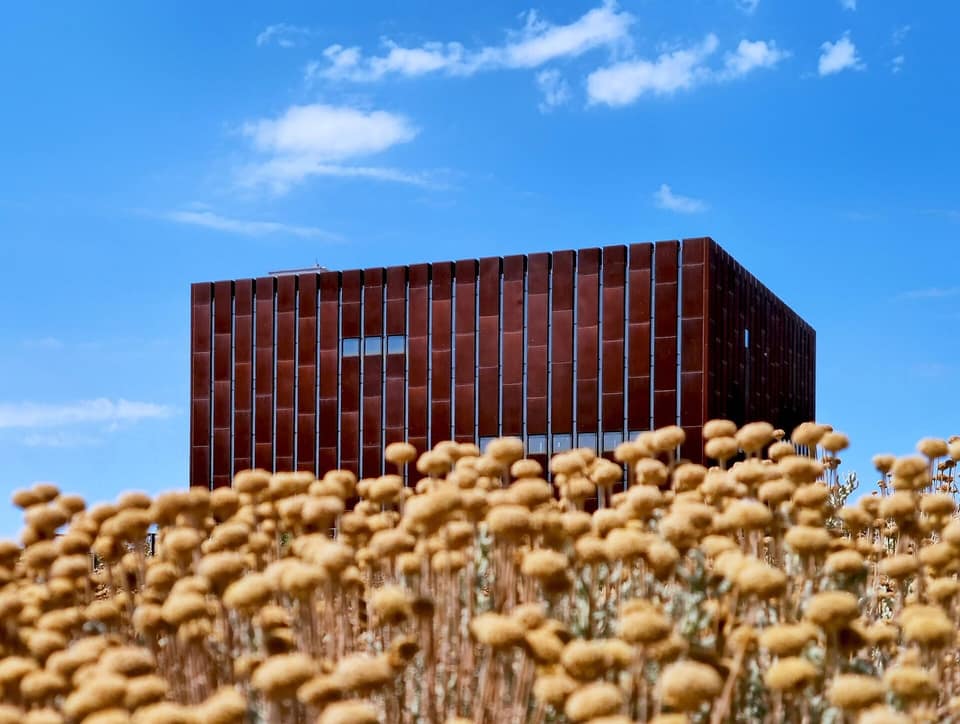
The building was chosen through an open national architectural design competition. According to the Provincial Directorate of Culture and Tourism, the competition was won by a team made up of Ömer Selçuk Baz, Okan Bal, Cenk Kurtel, Mehmet Yılmaz and Berrin Yavuz. The museum sits on a plot of about ninety thousand square metres and has more than ten thousand square metres of covered space. The museums website states that the exhibition halls take up about three thousand square metres. From outside you see a cube-shaped mass clad in rust-coloured metal; the building stands as a plain volume in the middle of the flat plain around it.
The museum's most distinctive feature is its system of ramps. The building has a ground floor and three upper floors, and visitors reach every exhibition floor by walking up a ramp. According to the provincial directorate, the ramps leading to the exhibition areas have a total length of about 480 metres. The visit begins with a ramp that descends at the entrance. In the niches along the walls of this ramp, gravestones, large statues, scene reconstructions and large photographs present the different layers of Troy. In the circulation band that follows, the basic concepts of archaeology, dating methods and terms such as mound and conservation are introduced with diagrams and drawings.
The exhibition unfolds like a story under seven headings listed by the provincial directorate: the archaeology of the Troad, the Bronze Age of Troy, the Iliad and the Trojan War, the Troad and Ilion in antiquity, the Eastern Roman and Ottoman periods, and the history of archaeology. The ground floor describes the Troad, the region surrounding Troy. Here cities such as Assos, Tenedos, the ancient name of Bozcaada, and Parion are shown on maps with panels. A thirty-four-centimetre bronze amphora decorated with figures, found in the southern cemetery of Parion in 2005, is one of the highlights of this floor. The marble sarcophagus from Altıkulaç in the district of Çan, dated to the end of the 5th century BC, is also here. The provincial directorate stresses that the painted scenes on the sarcophagus are very well preserved, which is rare among marble works.
At the centre of the ground floor, the gold of the Troad is displayed in a separate room with special lighting. Part of these works are pieces left over from the treasure Schliemann took abroad, brought here from the Istanbul Archaeological Museums. Another group consists of works that remained for many years in the collection of the University of Pennsylvania Museum and were returned to Türkiye in 2012 after analyses showed that they came from Troy. Do not rush in this room; you need to look closely into the cases to see the craftsmanship of the small pieces of jewellery. The ground floor also has discovery boxes prepared for children.
The first floor is devoted to the Bronze Age of Troy and presents the layers in chronological order. The emphasis is on Troy II and Troy VI and VII, the strongest phases of the city. On this floor the treaty made in the 1280s BC between the Hittite king Muwatalli and Alaksandu, king of Wilusa, that is Troy, is presented with a photograph and the text of the document. Bronze arrowheads found in the VI and VII layers of Troy are in the same section. The second floor looks at how the Iliad was reflected in the region from the Archaic age to the Eastern Roman period. The most important work on this floor is the Polyxena Sarcophagus, found in 1994 during a rescue excavation at the Kızöldün Tumulus near Biga. According to the provincial directorate, the sarcophagus, dated to the 6th century BC, is the earliest example of a sarcophagus with figural narrative found in Anatolia so far, and it carries thirty-seven human figures.
On the same floor stands a statue of Hadrian found at Troy in 1993, showing the emperor in armour. The provincial directorate relates that Hadrian came to the city in the year 124 and supported the remodelling of the odeion. A centaur statue found in the theatre of Parion in 2012, whose surviving part is 130 centimetres tall, is also here. The story of the Trojan War is told in an enclosed section with an animation of three to four minutes inspired by Attic vases and shadow theatre. The third floor covers the Ottoman period and the history of the excavations. Frank Calvert's first excavations, Schliemann's smuggling of the treasure, Dörpfeld's identification of forty-six building phases and the redating of the layers in Korfmann's time are followed here on panels.
Allow at least two hours to visit the museum comfortably, and wear comfortable shoes with the slope of the ramps in mind. According to the museums website, sarcophagi, columns, stelae and capitals are also displayed in the garden together with the landscaping; do not forget to step out into the garden after the indoor visit. As the museum stands at the entrance to the site, visiting the museum first and then the mound makes it easier to recognise the layers you see in the field. To get here, turn off the Çanakkale-İzmir highway onto the Tevfikiye road; the Tevfikiye minibuses leaving from the city centre also come to this point. For opening hours and the admission fee, check the current information on the museums website.
Comments
Loading...
Location - Troya Müzesi
Venue Info
AddressTevfikiye Köyü, Truva 6 Sokak No:12, Çanakkale Merkez / Çanakkale
VenueÇanakkale Merkez, Çanakkale
TypeHistorical & Cultural Sites