

Historical & Cultural SitesArchaeological Sites
Tralleis Antik Kenti
6
No ratings yet
Sign in to like and rate
Tralles Ancient City
About Venue
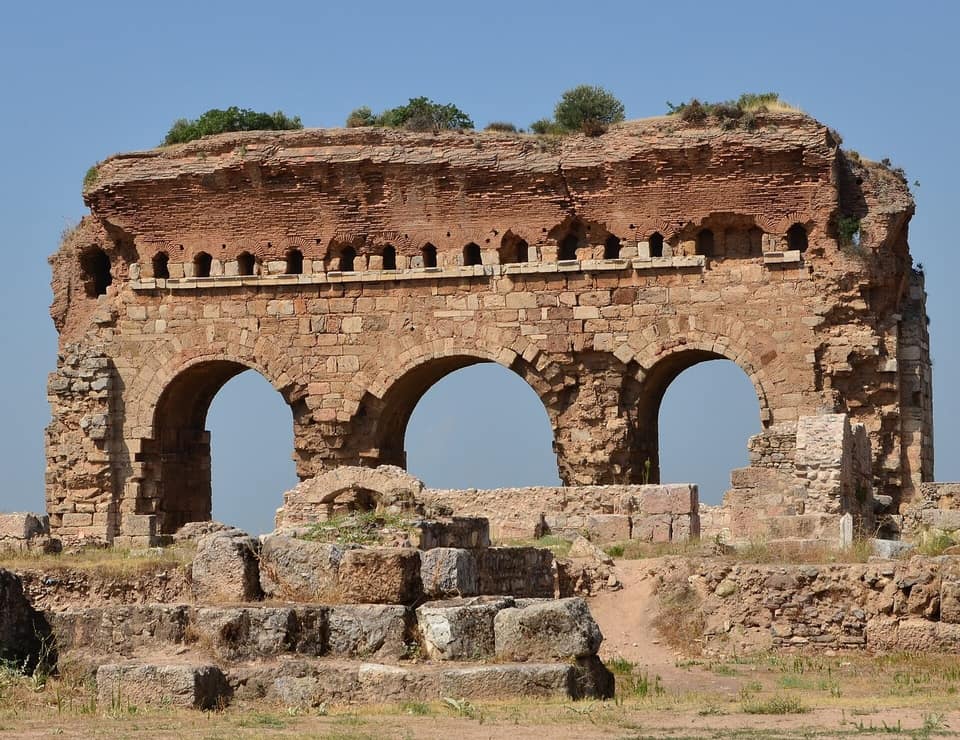
Tralleis is an ancient city built on a wide, high plateau on the southern slope of Mount Kestane, just north of today's city of Aydın. Kültür Portalı notes that it lies only one kilometre from the provincial centre, which means the ancient ancestor of Aydın stands right above the modern city. Locals call it Üç Gözler, the Three Eyes, after the ruin that gave the place its popular name. Because ancient texts sometimes took the Maeander and sometimes the mountain as the boundary, the city appears at times in Caria and at times in Lydia.
The name of the city is said to come from the Trallians and the Argives who settled here after the Dorian migrations. According to another tradition, the name comes from an Amazon called Tralla or Thiba. A publication of the South Aegean Development Agency traces the origins of the city back to the 13th century BC. Pottery from the Chalcolithic and Bronze Ages has been found at Dedekuyusu Mound, southwest of the city, which shows that settlement here goes back a very long way.
Tralleis came under Persian rule after 546 BC. With Alexander the Great's entry into Anatolia in 334 BC it voluntarily accepted Macedonian rule, and afterwards it often changed hands between the Hellenistic kingdoms. For a time it belonged to the Seleucid kingdom, then passed to the Kingdom of Pergamon, and in 133 BC it became part of Roman territory. After the great earthquake of 26 BC, Emperor Augustus supported the rebuilding of the city, and for a while it bore the name Caesarea. The city fell to the Turks in the 13th century, but settlement gradually moved down from the plateau to the foothills where today's Aydın lies.
The most impressive structure still standing today is Üç Gözler, which gave the city its popular name. Kültür Portalı writes that this ruin belongs to a gymnasium built in the 2nd century AD. In ancient cities the gymnasium was a large complex at the centre of education, sport and cultural life. The wall with its three great arches shows very clearly the Roman building technique that combined brick and stone. Looking through the arches you see the open plain in the background, and the best light for photographs comes in the morning.
Other remains uncovered by excavation surround the gymnasium. Sources list a stadium, a theatre, an agora, a bath, city walls, a public latrine, tombs and the remains of houses. Adjoining the northern wall of the bath-gymnasium complex, a long row of shops from the Late Roman and Early Byzantine periods has been uncovered. In the middle of these shops stands a semicircular fountain, and some of the shops lined up symmetrically on either side are known to have been used as glass workshops.
In antiquity Tralleis was a city famous for its craftsmanship. Kültür Portalı notes that it was known for the leather and red pottery it produced. Tralleis is said to have been, together with Ephesus, one of the production centres of the red-slipped pottery known as Eastern Sigillata in the Roman period, and traces of this tradition are said to live on today in the pottery of Karacasu. The city was also a centre of sculpture; Apollonios and Tauriskos, who made the famous Farnese Bull, were masters from Tralleis. Anthemios, one of the two architects of Hagia Sophia in Istanbul, and the renowned physician Alexander also grew up in this city.
The most intriguing legacy the city left to the world is a gravestone. Found in the early 1880s during the construction of the İzmir-Aydın railway, the gravestone of Seikilos is regarded as the oldest song to survive complete with both its words and its notes. A musical sign is written above each syllable of the song. The short poem advises shining while you live and letting nothing trouble you, because life is short. The original stone is now in the National Museum of Denmark in Copenhagen, but its lines greet visitors at the entrance of the Aydın Archaeology Museum.
The first official excavations in the city were carried out in 1888 by Carl Humann and Wilhelm Dörpfeld. After the earthquake of 1899, important statues were found while stone was being taken from Tralleis to repair buildings in Aydın, and they were sent to the museum in Istanbul. Then Ethem Bey, the son of Osman Hamdi Bey, excavated here for three seasons from 1902 onwards. In recent years the excavations have continued under the direction of the Aydın Archaeology Museum with academics from Aydın Adnan Menderes University acting as advisers.
Because the site is very close to the city centre, it can easily be visited in the same half day as the Aydın Archaeology Museum. Since an important part of the city's finds is displayed in the museum's Tralleis hall, visiting the site first and the museum afterwards completes the story. The plateau is open and shadeless, so in summer choose the morning hours. Since visiting conditions may change, check the current announcements of the Ministry or the Provincial Directorate of Culture and Tourism before you go.
Comments
Loading...
Location - Tralleis Antik Kenti
Venue Info
AddressKalfaköy, 1637. Sokak No:40, 09000 Efeler / Aydın
VenueEfeler, Aydın
TypeHistorical & Cultural Sites