

Historical & Cultural SitesArchaeological Sites
Tilmen Höyük
8
No ratings yet
Sign in to like and rate
Tilmen Mound
About Venue
Tilmen Höyük is a mound rising near the Karasu Stream, about 10 kilometres east of the İslahiye district of Gaziantep. Gaziantep Metropolitan Municipality and the Kültür Portalı present Tilmen as one of the most magnificent cities in Anatolia after the Hittite capital Hattusa. According to the Kültür Portalı, the history of the settlement goes back to 4000 BC, and it became a large city in the final period of the 3rd millennium BC. The finds from the mound show the link and mutual relations between the old cultures of Mesopotamia and Syria and the old cultures of Anatolia.
Excavations uncovered monumental buildings on top of the mound beneath a thick layer of rubble. The earliest phase of one large building, with its plan and orthostat-lined walls, closely resembles the palace in the seventh level of the Alalakh mound in the Amik Plain near Antakya. As the municipality explains, at that time the centre of the Kingdom of Yamhad was Aleppo, and in the reign of King Yarim-Lim Alalakh served for a while as the capital of this kingdom. A cuneiform document found at Mari says that Yamhad was a union of twenty kingdoms. On the basis of this information, Tilmen is thought to have been the centre of one of these twenty principalities subject to Yamhad.
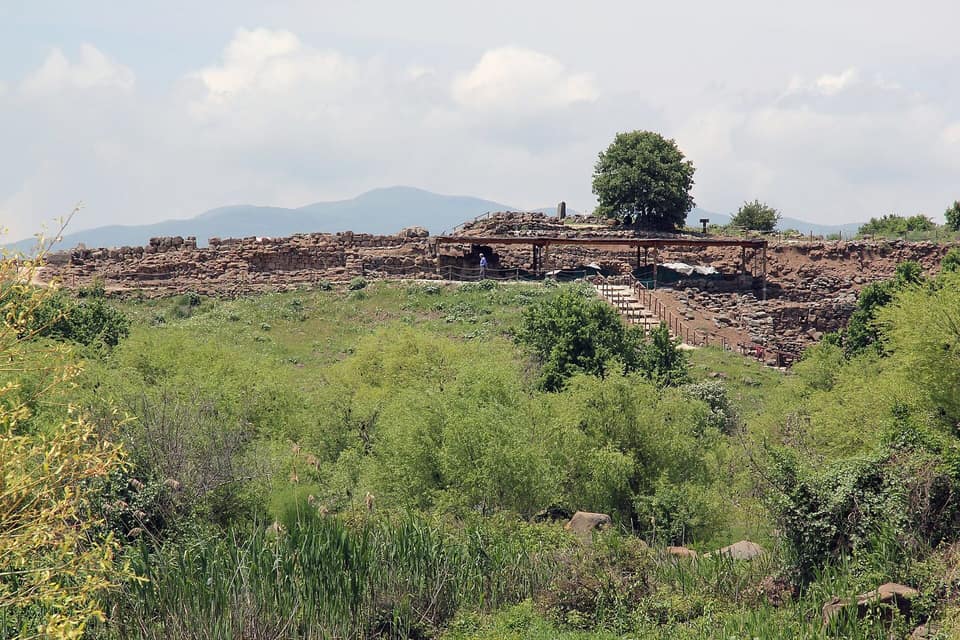
The city consists of an inner and an outer citadel and was protected by two separate systems of walls. The walls were built of large, regular cut stones in the casemate technique, with massive blocks leaning against one another. The main entrance gate of the city is on the east, and both sides of the gate were guarded by lion statues. According to the Kültür Portalı, in the northeast of the mound there are round towers 8 metres high, climbed by 17 steps and a ramp. The sources note that these walls, rising with huge stones weighing many tons, are the element that shows the grandeur of the city most clearly. Many tools, pottery vessels, seals, jewellery and ornaments were also found in the excavations.
The first excavations on the mound began in 1959 under Uluğ Bahadır Alkım and continued until 1964. According to the municipality, Alkım began these excavations while his research at the Yesemek Sculpture Workshop was continuing. In 1964 the team paused the work and moved to nearby Gedikli-Karahöyük. In 1967 the work at Gedikli-Karahöyük and nearby Kırışsal Höyük was completed. The team returned to Tilmen in 1969, and after four more years of excavation, work in the region ended in 1972. Later, excavations resumed under the direction of Nicolò Marchetti of the University of Bologna, with the participation of Refik Duru of Istanbul University and the Gaziantep Museum. The Kültür Portalı states that through this work, ongoing since 2003, Tilmen Höyük has been turned into an archaeological park.
Starting your walk in the archaeological park at the eastern gate is a good way to understand the plan of the city. After seeing where the gate lions stood, you can walk along the walls and climb to the inner citadel to look down on the stone foundations of the palace buildings. From the high point you can better grasp how the mound stands out within the plain and how the mountains behind form a backdrop to the city. Seeing the steps and ramp of the round towers in the northeast also makes the defensive layout of the walls tangible. Setting aside about an hour for the walk is usually enough to see both the walls and the palace remains without hurrying. If you have also visited Yesemek on the same day, comparing its unfinished gate lion blanks with the lions that guarded both sides of a city gate here makes the stone carving tradition of the plain tangible. Since there is little shade on the site, in summer it is wise to come early in the morning or late in the afternoon and to carry a hat and water.
According to the Kültür Portalı, Tilmen Höyük is reached by an asphalt road about 1 kilometre long that turns left at the 10th kilometre of the road from İslahiye to Yesemek. For this reason it can be visited on the same day together with the Yesemek Open Air Museum. Since reaching the area by public transport is difficult, driving via İslahiye is the most practical option. Before you go, check official sources for the current visiting status and conditions of the archaeological park.
Comments
Loading...
Location - Tilmen Höyük
Venue Info
Addressİslahiye / Gaziantep
Venueİslahiye, Gaziantep
TypeHistorical & Cultural Sites