

Historical & Cultural SitesCastles & Palaces
Tabae Antik Kenti (Kale-i Tavas)
No ratings yet
Sign in to like and rate
Tabae Ancient City (Kale-i Tavas)
About Venue
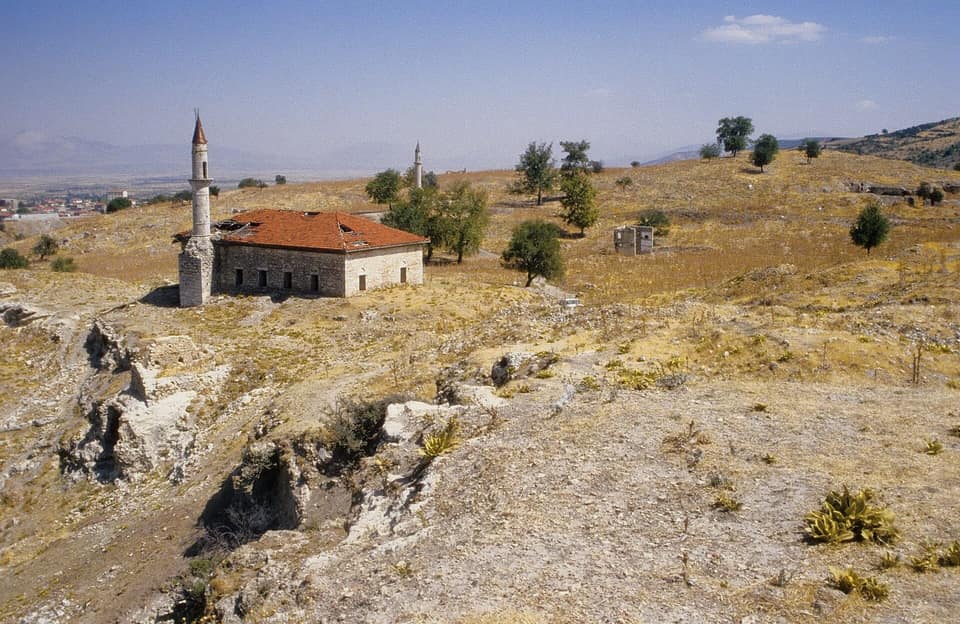
Tabae is an ancient city in the Kale district of Denizli, built on a rocky hill that looks like a natural fortress, about one kilometre south-west of the district centre. Locally it is better known today as Kale-i Tavas or Eski Kale, the Old Castle. The city is regarded as one of the city states founded in Anatolia after Alexander the Great, and in antiquity it struck coins in its own name, first in silver and later in bronze. Lying on the border between the ancient cultural regions of Caria and Lydia, at the foot of Mount Salbakos (Babadağ), Tabae had close ties with neighbouring cities such as Aphrodisias, Herakleia Salbake and Sebastopolis.
The most striking feature of the settlement is that it was lived in without a break from the Hellenistic period to the middle of the 20th century. Joined in 1330 to the lands of the Davas Beylik, a local principality, the city took the name Kale-i Tavas and soon became one of the important towns of the Menteşe Beylik. In the 1670s Evliya Çelebi described an inner castle with a mosque and an outer castle with quarters, an inn, a bathhouse and public fountains (sebil). The town was evacuated in the 1950s because of natural disasters, its people moved to the present district centre of Kale, and the old settlement gradually fell into ruin.
The most complete building still standing on the hill is the Cevher Paşa Mosque; the painted inscription over the prayer hall entrance gives the date 1235 (1819-1820). In the prayer hall, divided into three aisles by wooden posts, the painted wooden capitals and wall panels reflect the taste of provincial mosques in the 19th-century westernisation period. East of it, the Pazaryeri Mosque survives in part, and the repair inscription on its minaret is dated 1284 (1867-1868). North-east of the acropolis stands a rectangular Roman building with four niches cut into the rock on its eastern wall; the same building was also used in the Seljuk and Ottoman periods. On the steep edges of the rocky plateau there are single-room houses carved into the natural rock; door niches and sockets show that these houses were closed with wooden doors.
In excavations begun in 2007, a team from Ege University uncovered the foundations of towers and walls of the inner castle, a stone-paved road, fountains and cisterns. A large two-chamber cistern built entirely underground yielded Roman statues, oil lamps, figurines and many coins. Pottery found in the excavations shows that the city traded intensively with the settlements around it in the Roman period.
The site is reached from the Denizli-Muğla highway by coming to the centre of Kale and then turning west after a short distance on the same road towards Muğla. Kale can be reached from Denizli by bus and minibus. The ruins are an open hilltop settlement; as there is little shade, it is best to choose the morning hours, wear closed shoes and follow the warnings around the excavation areas. As excavation and conservation work continues on the site, it is wise to check the current situation before visiting with the Denizli Provincial Directorate of Culture and Tourism.
Comments
Loading...
Location - Tabae Antik Kenti (Kale-i Tavas)
Venue Info
AddressTabea Örenyeri, Kale İlçesi, Denizli
VenueKale / Denizli, Denizli
TypeHistorical & Cultural Sites