

Tourist Streets & SquaresBeach Walking Paths
Süleymanpaşa Sahili ve Bedesten Çarşısı
10
No ratings yet
Sign in to like and rate
Suleymanpasa Coastline and the Bedesten Bazaar
Rüstem Paşa Bedesteni çevresi ve kıyı yürüyüş yolu, Süleymanpaşa / Tekirdağ
Süleymanpaşa, Tekirdağ
Get DirectionsApple MapsAbout Venue
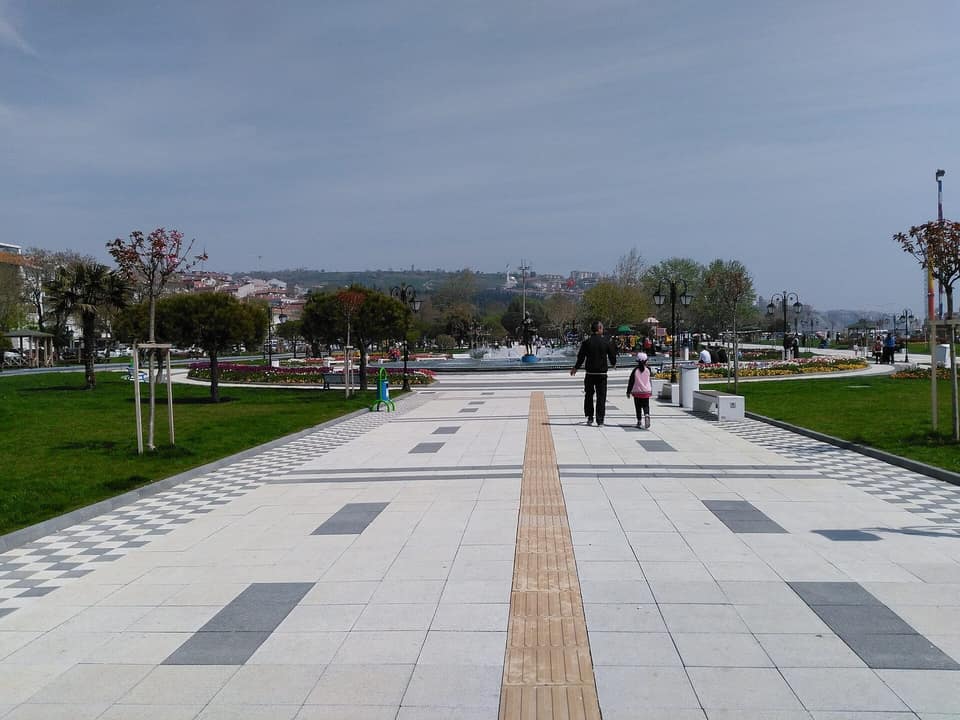
The seafront of Süleymanpaşa is not a single building but the coastal strip where the city of Tekirdağ meets the sea, together with the old market just behind it. The promenade along the shore and its green spaces, and a few streets inland the 16th-century Rüstem Paşa Bedesteni, form the two ends of this visit. After the museums this is the best place to get to know the city, because the history of a town that grew with its harbour can be read along this strip.
Even the names of the city are a coastal history. According to the history page of the Süleymanpaşa Municipality, the city was known over time as Bisanthe, Rhaedestus, Rodosto, Rodosçuk and Tekfurdağı, and took the name Tekirdağ after the founding of the Republic. The municipality writes that the city was conquered by Murad I in 1357. The present district of Süleymanpaşa was created in 2012 by Law No. 6360 and is named after Prince Süleyman Paşa, known for the crossing into Rumelia.
The TDV Encyclopedia of Islam describes the city's relationship with the shore in detail. The Ördeklidere valley, which cuts through the edge of the plateau behind the coast, reaches the sea at the point where the city was founded. The city is built on coastal terraces that mark former levels of the Sea of Marmara, and the encyclopedia counts it, together with Trabzon, Samsun and Fethiye, among the few examples of this type of city. The market and business centre lie on the second terrace at a height of about 25 metres, while the former governor's mansion stands on the terrace closest to the sea.
Today's broad coastal avenue is land gained by filling in the sea. Hükümet Caddesi, running parallel to it, is the traditional axis of the city and contains part of the old market. The marked drop between the two streets is what remains of the cliffs that rose at the shore before the land reclamation. The encyclopedia lists the other trading streets of the market as Muratlı, Çiftlikönü, Şadırvan and Peştamalcı avenues. While walking along the shore, lifting your eyes to this old cliff line shows how the city pushed the sea back.
The commercial importance of the shore goes back centuries. According to the TDV Encyclopedia of Islam, in the 15th century Çandarlızade İbrahim Paşa built a large han at the landing stage with forty-two rooms on its upper floor and seventeen shops on its lower floor. The same source notes that before the Republic the city was an important port that shipped the produce of Thrace to Istanbul by sea.
The Rüstem Paşa Complex at the heart of the market was commissioned by the Grand Vizier Rüstem Paşa. According to the TDV Encyclopedia of Islam, the complex consisted of a mosque, a madrasa, a library, a double bath, a bedesten, a caravanserai and a public kitchen. Because the sources that list Mimar Sinan's works mention only the mosque, madrasa, kitchen and caravanserai, the buildings are thought to have been completed at different times. The inscription on the mosque's portal bears the date 960 (1553), and a second inscription records the repair of 1841. The cut-stone mosque is covered by a single dome and has a double-arcaded portico in front. Today only the mosque and the bedesten of the complex survive, while the other buildings have partly or entirely disappeared.
The bedesten lies west of the mosque and is the real emblem of the market. According to the Kültür Portalı, it is a rectangular building with six domes resting on two thick piers and measures 25.5 by 19 metres. In plan and roofing it resembles the bedestens of Gelibolu, Bergama, Beyşehir, Tosya and Bursa. The domes sit on octagonal drums, and the transitions are made with pendentives. There is a door on each of the four sides, and the door arches are round on the outside and pointed on the inside. On the north facade you see rubble stone below and, above it, alternating courses of three rows of brick and one row of cut stone, while the other facades are of rubble stone. The domes are covered with lead. Because the north and east entrances lie below ground level, you go down to these doors by steps.
The recent past of the bedesten is also recorded. The Kültür Portalı writes that the building was used as a storage depot by the Directorate of Education in 1949-1950 and was thoroughly restored in 1972. New shops were built on its facade in place of the outer shops that had been demolished long ago, which is why the bedesten is still surrounded by small shops today.
The city's monuments are also around the market. According to the Provincial Directorate of Culture and Tourism, the Hürriyet Abidesi is a monumental fountain built in 1908 by the district governor Adanalı Ömer Ali Bey. The Namık Kemal Monument is a four-sided marble column erected in place of the poet's birthplace, which had been demolished. The poet's statue stands in Namık Kemal Park opposite the Government House and is the work of the sculptor Nusret Suman.
A good order is to start on the coastal promenade, watching the sea and the distant shore first, and then to climb the steep streets up to the market. Walk through the bedesten from one end to the other to see the space beneath the domes, then look at the architecture of the complex from the courtyard of the mosque. When visiting the mosque, be mindful of prayer times and dress etiquette. On the seafront the promenade is at its most beautiful in the late afternoon, when the light falls on the water.
The area is in the city centre, and according to the Kültür Portalı it can be reached on foot from the centre. The Tekirdağ Museum and the Rakoczi Museum lie a few hundred metres to the west, so it is easy to see all three stops in the same half day. The working pattern of the shops in the market varies, so on weekends and public holidays it is wise to check the current situation in advance.
Comments
Loading...
Location - Süleymanpaşa Sahili ve Bedesten Çarşısı
Venue Info
AddressRüstem Paşa Bedesteni çevresi ve kıyı yürüyüş yolu, Süleymanpaşa / Tekirdağ
VenueSüleymanpaşa, Tekirdağ
TypeTourist Streets & Squares