

Historical & Cultural SitesMuseums
Sivas Atatürk ve Kongre Müzesi
10
No ratings yet
Sign in to like and rate
Sivas Atatürk and Congress Museum
About Venue
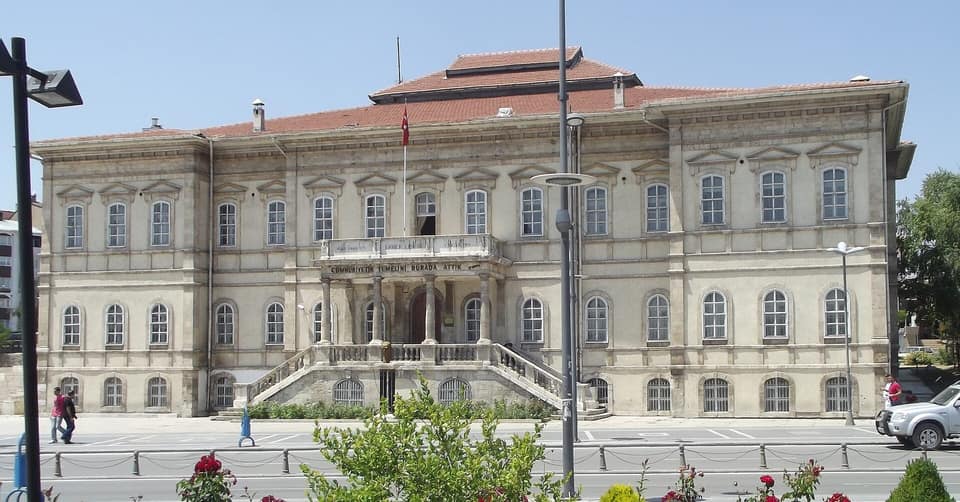
The Sivas Atatürk and Congress Museum is housed in a late Ottoman school building in the Örtülü Pınar quarter, close to the city square of Sivas. The Sivas Provincial Directorate of Culture and Tourism writes that the building was commissioned in 1892 by Governor Mehmet Memduh Bey as the Sivas İdadi, a secondary school. The Culture Portal, based on its inscription kept in the Sivas Museum, also states that the building opened on 5 October 1892 as the Civil İdadi building. According to the municipality's route page, the school was first planned under Governor Sırrı Paşa, appointed in 1887, and its foundations were laid at that time. The building was used first as an idadi and then for many years as a sultani, that is, a high school.
The building acquired its historical identity as the place where the Sivas Congress met between 4 and 12 September 1919. According to the provincial directorate, Atatürk and the Representative Committee stayed in the building for 108 days between 2 September and 18 December 1919, and it was used as their headquarters during that period. After the congress the building was briefly a school for non-commissioned officers, then taught students as Sivas High School until the 1970s and as Congress High School until 1981. In 1984 its ownership passed to the Ministry of Culture, and after repairs it opened as a museum on 19 December 1990. The provincial directorate writes that in 2018 the building was again allocated to the Ministry of Culture and Tourism and arranged as the Atatürk and Congress Museum under the Sivas Museum Directorate.
The building has a symmetrical plan and three storeys including the basement. Cut stone and rubble stone were used on the outer walls, while the inner walls were built in the dolmagöz technique, with stone filling a timber frame. According to the provincial directorate, the front and rear facades are 39.50 metres long and the side facades 33.50 metres, giving a nearly square plan with an inner courtyard. The courtyard in the middle measures 7 by 14 metres and was originally open, but was roofed over in later alterations. Of the building's four doors, two open onto the ground floor and two onto the basement.
The main entrance is on the northwest facade, on the side of Taşlı Sokak. The edges of this facade project outwards, and the entrance has a semicircular arch and a double wooden door. Mouldings that run all around the facade, empty cartouches and lozenge-shaped ornaments give the front a sense of movement. The balcony on four columns on the rear facade was added in 1930, when the arrival of the railway made İstasyon Caddesi important. The provincial directorate describes the building as an important example of the baroque and empire styles.
The Culture Portal states that the congress hall and Atatürk's study and bedroom are preserved as they were during the congress. The museum also displays the telegraph room, the hall with the congress minutes and the printing press on which the İrade-i Milliye newspaper was printed. According to the municipality, the events of the period are told with digital screens, maps, documents and wax figures. The museum also has ethnographic sections: a main room reflecting the culture of the city, a room displaying traditional costume and a classroom that recalls the building's school years. This classroom was set up in memory of the students who lost their lives at Çanakkale in 1915.
Start your visit outside the building and follow the mouldings and window arches on the cut stone facade. Inside, the corridor runs around the courtyard, which makes it easy to visit the rooms in order. According to the Culture Portal, timber was used in the interiors, so pay attention to the floors and doors of the rooms as well. Because of the change in ground level between the basement and the ground floor, there is a height difference of about two metres between the front and rear facades, which is easy to see once you go down to the rear. Check the official website for the days and hours when the museum is open.
The museum is close to the city square and, according to the municipality, easy to reach by public transport. The Seljuk madrasas on the square and the former governorship building that houses the City Museum are in the same area. According to the municipality's route page, the road to the Sivas Archaeology Museum also passes in front of this building.
Comments
Loading...
Location - Sivas Atatürk ve Kongre Müzesi
Venue Info
AddressÖrtülü Pınar Mahallesi, İnönü Bulvarı, Sivas Merkez
VenueSivas Merkez, Sivas
TypeHistorical & Cultural Sites