

Historical & Cultural SitesCastles & Palaces
Sinop Kalesi
32
No ratings yet
Sign in to like and rate
Sinop Castle
Kaleyazısı Mahallesi, Camikebir Mahallesi ve Meydankapı Mahallesi, Sinop
Sinop Merkez, Sinop
Get DirectionsApple MapsAbout Venue
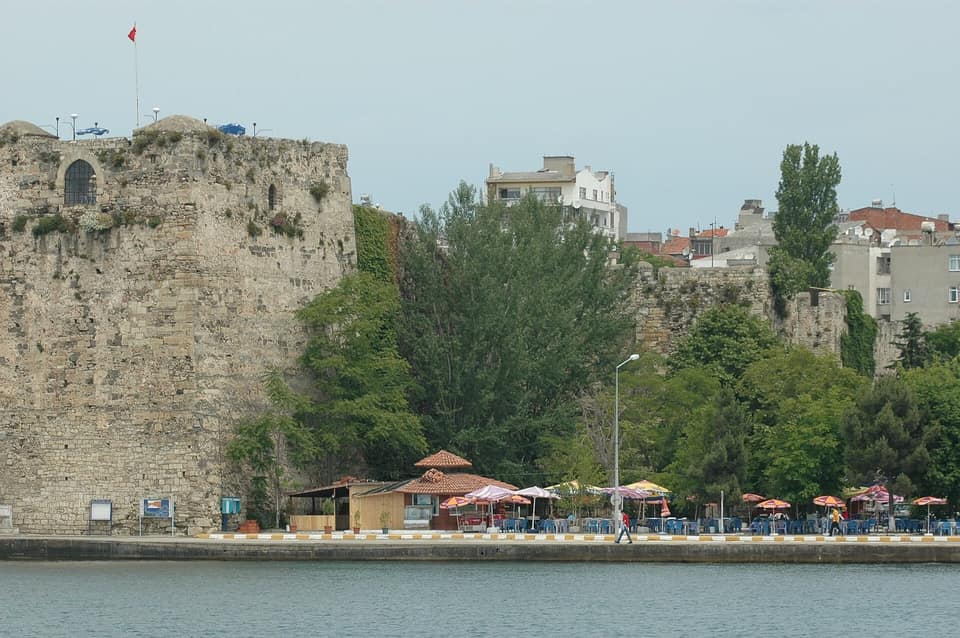
Sinop Fortress is the ring of walls built across the narrow isthmus that links the mainland with the Boztepe Peninsula, and the town lived inside these walls for most of its history. The urban cultural inventory published by the Sinop Provincial Directorate of Culture and Tourism describes the fortress as two parts, an outer fortress and an inner fortress. The western and eastern walls cut across the isthmus and separate the peninsula from the mainland, while the northern and southern walls were built right at the water's edge. This layout let the town command both the exposed northern harbour and the sheltered inner harbour to the south at the same time.
The exact founding date of the fortress is debated in the sources. The provincial inventory dates the oldest parts of the western walls to the 7th century BC, while the TDV Encyclopedia of Islam states that the fortress appears to have been built for the first time in the period of the Kingdom of Pontus. The ancient geographer Strabo described the town as protected by walls on the landward side and by steep slopes along the shore. The walls were strengthened repeatedly in the Hellenistic, Roman and Byzantine periods. After the Anatolian Seljuk Sultan Izzeddin Keykavus I took the town in 1214, the walls were repaired and enlarged, and columns, capitals and inscriptions taken from older buildings were set into them as reused material. The TDV Encyclopedia of Islam records an Arabic and Greek inscription of Izzeddin Keykavus dated 1215 on the walls.
According to the inventory, the walls of the outer fortress measure 800 metres on the north, 680 on the east, 650 on the south and 340 on the west, reaching a total of 2,470 metres. The walls are 3 metres thick and stand between 10 and 15 metres high in places. Towers and bastions with rectangular or triangular sections rise to between 20 and 25 metres. Limestone is the main material, but travertine, sandstone, andesite, tuff and pieces of marble and granite brought from ancient buildings also appear in the masonry. Look closely at the wall face and the mix of stones of different colours and sizes shows plainly how the fortress was patched over the centuries.
The present appearance of the fortress took shape after the 19th century. Old engravings show the walls intact until that century, but the Sinop raid of 1853, natural forces and later damage removed much of the southern and northern walls. The eastern and western walls, by contrast, have survived in relatively good condition. Because of the breakwater built on the north and the landfill on the south, part of the walls has lost its direct contact with the sea. Evliya Çelebi is known to have mentioned eight gates when he visited in 1640, and the TDV encyclopedia lists among them the Kum Gate, the Meydan Gate, the Tersane Gate and the Lonca Gate of the inner fortress. The rest of the list includes the Yenicekapı, the Tabahane Gate, the Uğrunkapı and the Sea Gate of the lower fortress. TDV records that Don Cossacks raided the town several times from the early 17th century, and that a document dated 1639 to 1640 mentions repairs to the fortress. According to the same source, during the Cossack raids people living outside the fortress were taken inside the walls. In the Ottoman period the Sinop shipyard was one of the main naval bases on the Black Sea, and TDV notes that fifteen galleys were built there in 1566.
A good first stop is the Lonca Gate. The inventory notes that this gate links the outer fortress with the inner fortress, and that the Seljuk inscription on the southern face of its tower is the only known inscription in Seljuk Anatolia written bilingually in Arabic and Greek. On the bastion of the eastern walls stands a square clock tower of cut stone dated 1901, with clock faces on all four sides. The inner fortress in the southwest served for a long time as a shipyard from the Seljuk period onward, and Kültür Portalı writes that two large arches of the shipyard can still be made out on the southern wall although they were later blocked up. The southern walls of the inner fortress facing the sea reach 18 metres in height and its towers 22 metres.
The most striking view of the walls is from the harbour front, along the southern face that looks onto the inner harbour. In the morning the sun lights the eastern face, and in the late afternoon the walls facing west take on a warm light. Most of the fortress is visited in the open air within the fabric of the town; there is no single entrance, and you follow the line of the walls through the neighbourhood streets. Since the Historic Sinop Prison stands inside the inner fortress, it makes sense to combine a walk along the walls with a visit to the prison museum. Kültür Portalı states that the site can be reached on foot and by city transport.
Comments
Loading...
Location - Sinop Kalesi
Venue Info
AddressKaleyazısı Mahallesi, Camikebir Mahallesi ve Meydankapı Mahallesi, Sinop
VenueSinop Merkez, Sinop
TypeHistorical & Cultural Sites