

Historical & Cultural SitesCastles & Palaces
Şeytan Kalesi
6
No ratings yet
Sign in to like and rate
Devil's Castle
About Venue
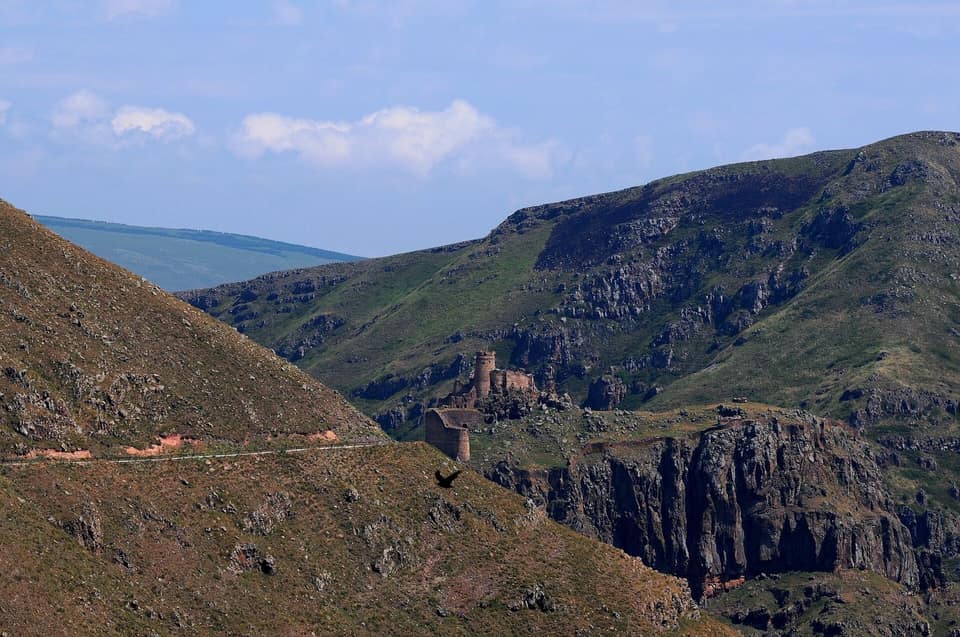
Şeytan Castle is a medieval fortress rising on a rocky hill beside a stream to the north of Yıldırımtepe, in the Çıldır district of Ardahan. According to the Ardahan Governorship, the castle lies 1.3 kilometres north of the centre of Yıldırımtepe village, whose old name was Rabat, on the right bank of the stream. The hill on which the castle sits is bounded by cliffs on three sides and can be reached from one direction only.
The Ardahan Provincial Directorate of Culture and Tourism states that the castle was built on very steep ground in the Karaçay Valley. The Çıldır District Governorship describes the castle as standing on a steep peninsula bounded by the Karaçay, which flows around it on three sides. According to the District Governorship, what sets Şeytan Castle apart from many castles in Anatolia is that it was built not on a mountaintop but on a small hill inside a narrow valley ringed by high, sheer rocks. The same page writes that the walls, which reach two metres in height, combine with the surrounding bare cliffs to make the castle far better protected.
According to the Governorship, the building is thought to have been called the Devil's Castle because of how hard it was to reach and to capture. A local legend also links the fact that the castle could never be taken to evil spirits and to the devil. The Çıldır District Governorship writes that the castle also appears in historical sources as Çıldıran Kalesi, Kal'a-ı Şeytan, Kaçiş and İblis Hisarı. The same page reports that the name comes from the old Turkish word alviz, or albız, meaning devil.
The castle stands 1910 metres above sea level and has survived in fairly sound condition. It has an asymmetrical plan and measures 161 metres by 93 metres. One of the castle's three towers is still standing intact today. The remains of a cistern and of a flight of steps descending to the stream have also survived. Other building remains can be seen inside the castle and on its lower part.
It has been suggested that the castle was built in the Urartian period, but the Governorship states clearly that these views rest on no historical source. Information from later sources shows that the building must be an early medieval castle. Even so, given its position, there is a strong possibility that a fortress stood here in earlier periods too, but no source has yet been found to prove it. The District Governorship page also relates that many states, from the Medes to the Ottomans, settled in the region, used the castle, repaired it and added to it.
As the Governorship reports, in the chronicle called Meshuri Matiane, which covers the years 1561-1587, the castle was under the rule of the principality of Samtskhe-Saatabago. The ruler of the principality, Manuchar II, came to an agreement with Lala Mustafa Pasha and handed six castles, Şeytan Castle among them, over to the Ottomans. From then on, from the 16th century onwards, the castle was also used under the Ottomans. A trading place is known to have existed near the castle, and this place, called Rabat, later turned into an ordinary settlement. Rabat, the old name of Yıldırımtepe, still recalls this past today.
According to the Governorship, the castle is now lit at night, and the illuminated walls rising out of the valley offer a different view in the dark. A paved road for vehicles runs up to the viewing hill right next to the castle, and from that point you continue on foot along a path. The District Governorship writes that the walk starts from the Yıldırımtepe neighbourhood, follows a road that is largely paved with stone blocks and takes about half an hour with views over the valley. The viewing hill is the best spot for anyone who wants to fit the castle and the valley around it into a single frame.
Because the last part of the walk is a footpath, wear shoes that do not slip and give good ankle support. Remember that the hill drops away as cliffs on three sides, and do not climb onto the edges or onto the ruined walls. After snow or rain the path can become slippery, so take the walk without hurrying. The official sources describe how to reach the castle but give no information on visiting hours, so check the current situation with the Çıldır District Governorship before you go.
According to the District Governorship, to reach Çıldır you first come to Ardahan by intercity bus and then continue to the district centre by minibus or taxi. The second option is to fly to Kars and reach Çıldır, again by minibus or taxi. The castle is the best-known historic building that can be visited together with Lake Çıldır in the same district, and it forms the historical leg of a trip to the lake.
Comments
Loading...
Location - Şeytan Kalesi
Venue Info
AddressYıldırımtepe, Çıldır, Ardahan
VenueÇıldır, Ardahan
TypeHistorical & Cultural Sites