

Historical & Cultural SitesArchaeological Sites
Selinus Antik Kenti
31
No ratings yet
Sign in to like and rate
Selinus Ancient City
About Venue
Selinus is an ancient harbour town in the Koru neighbourhood of Gazipaşa district, set on a hill and its slopes that reach into the Mediterranean like an elbow. The city grew up where the stream known today as Hacı Musa, called Selinus Potamus in antiquity, meets the sea. Its position at a river mouth where ships could shelter easily meant that Selinus was settled in the Hellenistic, Roman, Byzantine, Seljuk and Ottoman periods. Most of the surviving remains belong to the Roman period, and the walls, the agora, the large and small baths, the tombs of the necropolis and the odeon are the leading examples.
The turning point in the history of the city was the death of an emperor. According to the Antalya Provincial Directorate of Culture and Tourism, the Roman emperor Trajan fell ill off Selinus on his way back from the Parthian campaign at the end of his reign, which ran from 98 to 117, and died in the city after being brought ashore. It is recorded that he was cremated here and that his ashes were taken to Rome in a golden urn. The death of a beloved emperor here increased Roman interest in the city, and for a time it was also known as Trajanopolis. The inscription "Kutsal Şehir Selinus Trajanopolis" on coins in the Alanya Archaeological Museum documents this naming.
The structure known locally as Şekerhane or Şikarhane is one of the most striking remains in the city. Research has shown that it was first built as a cenotaph, that is a symbolic funerary monument, for the emperor Trajan. The Seljuks, impressed by the grandeur of the building, converted it with great skill into a hunting lodge to take advantage of the beauty of the view and the hunting opportunities around it. In this way Roman and Seljuk layers can be read one on top of the other in a single building.
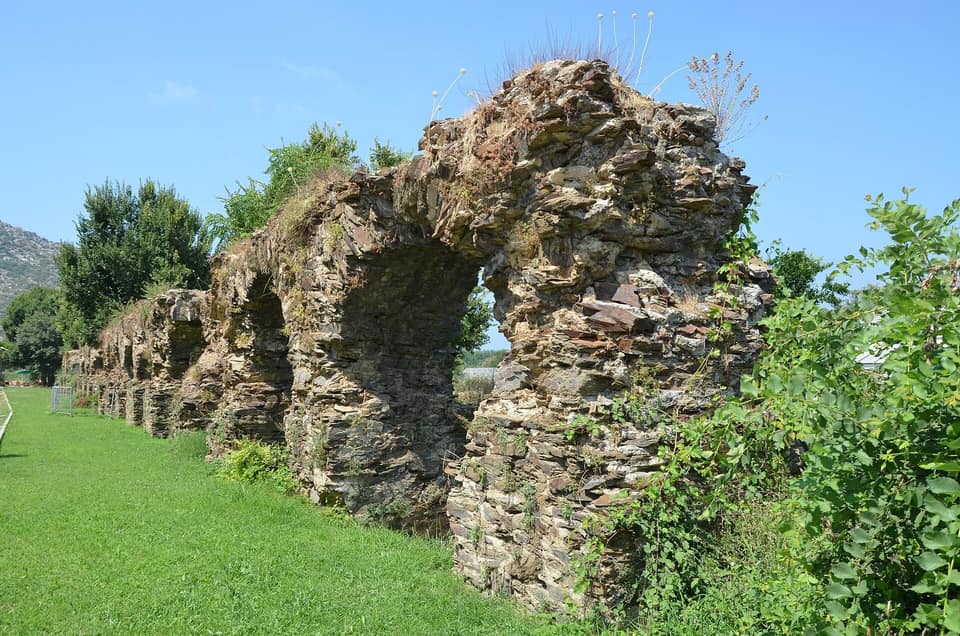
The acropolis stands on top of the hill and is reached by a staircase of roughly eight hundred steps. The cistern and the church structure inside the acropolis are among the important remains that have survived to the present day, and a medieval castle also stands on the hill. From the summit there is a view over the Mediterranean, and it becomes possible to grasp from above how the city spread down towards the shore. The other structures of the city are gathered on the shore and the slopes, and the baths, the agoras, the aqueduct and the necropolis area lie in this part. The monumental tomb in the necropolis is especially remarkable.
Most of the ostothecs displayed in the Alanya Museum were brought from the necropolis of Selinus, which suggests that a workshop existed in the city. Considered together with neighbouring cities such as Syedra, Selinus can be read as part of the series of coastal cities of Western Rough Cilicia.
Buses to Gazipaşa from Antalya and Alanya can be used to reach the site. Walking through the baths, the agora and the aqueduct on the shoreline slope before climbing the stepped ascent makes the acropolis walk easier. Because the steps are long, comfortable shoes and water are sensible. Opening hours and entry conditions can change, so check the current information on the official pages of the Ministry of Culture and Tourism and the Antalya Provincial Directorate of Culture and Tourism.
Comments
Loading...
Location - Selinus Antik Kenti
Venue Info
AddressKoru, 07900 Gazipaşa/Antalya
VenueGazipaşa, Antalya
TypeHistorical & Cultural Sites