

Historical & Cultural SitesArchaeological Sites
Selge Antik Kenti
29
No ratings yet
Sign in to like and rate
Selge Ancient City
About Venue
Selge Antique City lies in the Manavgat district of Antalya, within the boundaries of Köprülü Kanyon National Park. According to the Antalya Provincial Directorate of Culture and Tourism, the city was founded on the southern slope of the Taurus Mountains, 950 metres above sea level. Its present address is the Altınkaya (Zerk) neighbourhood, and what remains of the ancient city is interwoven with the village settlement. Selge is one of the important mountain cities of Pisidia. Accounts of its foundation differ: the Culture Portal says the city is believed to have been founded by Kalehes, while the provincial directorate, citing Strabo, points to the Dorian migrations after the Trojan War. The city stepped onto the historical stage in the 5th century BC. Although it sits in the mountains, Selge had fertile land and reached great economic strength through olive oil, medicinal and aromatic plants, and timber.
A city of Pisidia, Selge was later counted within Pamphylia and lived under Lydian, Persian, Alexander the Great's and Roman rule in turn. It flourished most in the Roman period, and according to Strabo its population at times rose to 20 thousand people. When the Turks took control in the 13th century AD, the people of Selge turned into a nomadic settlement under the name Zerk. To get there, take the 55 kilometre asphalt road that follows the Köprüçay River northwards from the Taşağıl junction on the Antalya-Manavgat highway. According to the provincial directorate, the road passes over the Oluk Bridge and reaches the ancient city on the hilltops 13 kilometres later; because the mountain road is long, it makes sense to set out in daylight.
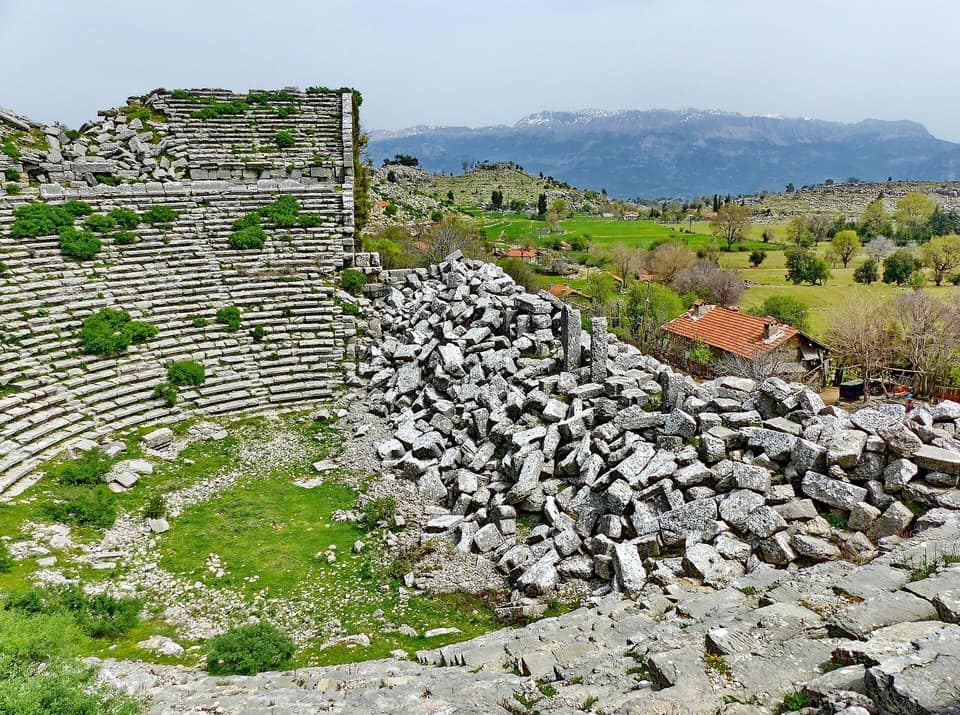
On arrival, the first things to catch the eye are the walls that the warlike people of Selge built to protect their city and the theatre, the centre of social and cultural life. Today's remains consist mostly of the walls and the acropolis. The best preserved structure to survive is the theatre, carved into the rock and restored in the 3rd century AD; from its seating, the view across the Kuyucak Dağı plateau to Akdağ is a good spot for photographs. South of the theatre are the stadium and gymnasium, west of it lie the remains of an Ionic temple with an eagle motif on its ceiling, and south of the stadium are a fountain and the agora. North of the walls that run to the southwest lies the city's necropolis, together with the monuments of Artemis and Zeus. A colonnaded street, a bath, cisterns and basilica remains are further architectural traces of the city; starting the walk at the theatre and moving towards the walls makes the layout of the settlement easier to grasp.
Köprülü Kanyon National Park is a recreation area of high landscape value, with forests sheltering many endemic species and geological canyons; on the way to Selge, the ancient structures on the Köprüçay can also be seen. For visiting days and conditions, check the current information on the pages of the Antalya Provincial Directorate of Culture and Tourism and muze.gov.tr.
Comments
Loading...
Location - Selge Antik Kenti
Venue Info
AddressAltınkaya Mahallesi, Manavgat / Antalya
VenueManavgat, Antalya
TypeHistorical & Cultural Sites